

ZhiXiang Stars Partners with Tiantan Hospital to Develop AI Language Rehabilitation Robot, Bringing Professional Language Rehabilitation from Hospital to Home
Uncle Zhang (a pseudonym) suddenly had a stroke last year, leaving his right side paralyzed and making speech a major challenge. When his wife leaned in to try and communicate with him, all she could hear was an "Uh uh uh..." response. Uncle Zhang became so frustrated that his face turned red, yet there was nothing he could do but shut himself in his room, refusing to see anyone—never had he imagined that the man who once chatted animatedly at teahouses, laughed and joked around card tables, and shone brightly in square dance teams would one day be unable to even utter the simple words, "drink water."
In fact, it is not uncommon for people like Uncle Zhang to experience language disorders due to strokes, brain injuries, or nerve damage. When the relevant functional areas of the brain are damaged, and the nerves controlling the mouth, tongue, and throat "go on strike," speaking becomes even harder than walking. Some individuals, like Uncle Wang, have unclear pronunciation; others speak in a robotic tone, lacking any emotion. Still, others struggle with disordered breathing the moment they open their mouths, making it impossible to form complete sentences... These difficulties not only complicate daily life but also leave patients feeling like they are "mute," unable to express themselves, causing emotional distress.
In the medical field, these types of conditions are collectively referred to as aphasia or speech disorders. In theory, through systematic, long-term, and personalized language rehabilitation training, some patients can significantly improve or even restore their communication abilities. However, the reality is that rehabilitation resources are highly concentrated in tertiary hospitals in major cities, the number of professional speech therapists is limited, the cost per session is not low, and high-frequency continuous intervention is required. For a large number of patients, the real challenge is not "whether the technology exists," but rather "whether it is accessible and affordable."
It is against this backdrop that Beijing Zhixiang Xingchen Medical Technology Co., Ltd. ("Zhixiang Xingchen" for short) is committed to leveraging the integration of medical and engineering expertise, utilizing large models and embodied intelligence technologies, to create a "Duolingo" for the speech rehabilitation field, striving to bring high-quality rehabilitation resources to households across China.
The founding team of ZhiXiang Xingchen exhibits a dual-strong gene in both technology and market.Founder and CEO Zhaoteng Zhao, is a former senior executive of Huaxi International Investment Group, who has invested in and developed projects such as Huaxi LIVE·Beijing Wukesong, Huaxi LIVE·Chengdu 528, and Huaxi LIVE·Chongqing Yudao, possessing rich industry-academia-research resources and management experience.Co-founder and CTO Xingjun XuHe graduated from Harbin Institute of Technology, and has worked in-depth in the AI field for many years at Baidu and Huohua Siwei. He is one of the earliest technical experts in China to explore AI applications.
Zhao Zhiteng told VCBeat that in the rehabilitation needs of stroke patients, language and cognitive rehabilitation is the second-largest rigid demand after physical rehabilitation. However, in traditional language rehabilitation scenarios, the effectiveness of treatment heavily relies on the experience and judgment of therapists: how to assess classification, how to design training pathways, and when to increase or decrease intensity all depend on years of clinical accumulation. This "highly individual-dependent" model makes it difficult to scale up quality rehabilitation resources. Therefore, Zhixiang Xingchen has proposed the vision of becoming the "Duolingo of speech rehabilitation."
In order to achieve this goal,ZhiXiang Stars has established an in-depth cooperation with Beijing Tiantan Hospital, Capital Medical University (hereinafter referred to as "Tiantan Hospital"). The rehabilitation pathways, evaluation models, and multimodal imaging and behavioral data accumulated over the years by the Jiang Tao Academician team have been structured and organized. Based on this, an adaptive algorithm system (AI Rehabilitation Management Platform) was constructed and integrated into a self-developed hardware carrier (rehabilitation terminal).Among them, the system is equipped with modules such as a comprehensive aphasia test, language-motor rehabilitation transcranial magnetic stimulation target screening, evaluation management, and training, realizing a solution that "matches personalized rehabilitation plans based on AI evaluation results," meeting the diverse scenario needs of efficient assessment, clinical rehabilitation, home training, remote guidance, and health management.
Specifically, this system has three core capabilities——First, it is the精细化评估能力.Through speech recognition, semantic understanding, and behavioral analysis, the system can stratify and classify patients, determine the type and severity of disorders, and generate preliminary training programs.Secondly, it is the dynamic adjustment capability.After patients complete training tasks at home, the system will record data such as pronunciation accuracy, intonation changes, and response time in real time, automatically analyze progress, and adjust the difficulty level instead of providing a rigid "template-based training."; Finally, it is remote human-computer collaboration.Rehabilitation therapists no longer need to stay by the patient's side at all times but instead retreat to the "cloud" for supervision and report verification, thereby exponentially amplifying the effectiveness of a single therapist.
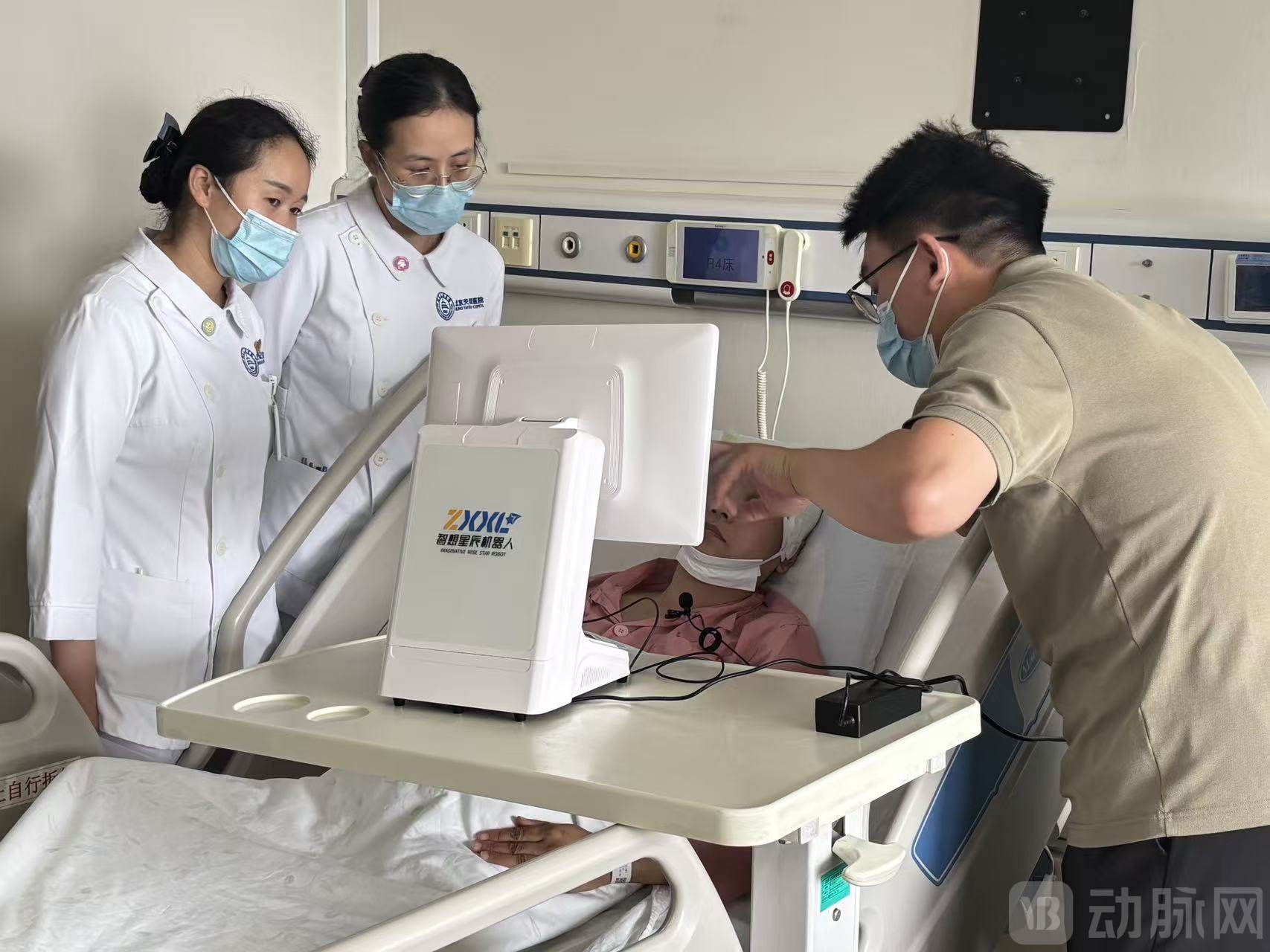 Patients Use ZhiXiang Xingchen Language Rehabilitation Robot in Clinical Settings
Zhao Zhiteng, founder of ZhiXiang Xingchen, told VCBeat that for patients with long-term aphasia who remain silent, psychological barriers are often the first hurdle to rehabilitation. Therefore, ZhiXiang Xingchen has incorporated "embodied vision" technology into its product design, which can accurately capture fatigue, anxiety, and even frustration during training and adjust interactive strategies in real time. To make the training less monotonous, the system adopts a "short-video-swiping"-like interactive experience and game-style level designs, integrating tedious phoneme and auxiliary word exercises into an achievement system that provides a sense of accomplishment.
At the same time, ZhiXiang Xingchen emphasizes realistic scenario training, utilizing AI to simulate real-life scenarios such as hospital consultations and supermarket shopping. For instance, patients can practice following instructions like "buy apples" in a virtual supermarket, naturally transferring their language skills to real life through contextual interaction. Additionally, the system encourages family members to upload cherished family photos, allowing patients to describe the images, making the rehabilitation process full of warmth and memories. This "AI + family cooperation" model not only fills the gap in home-based language rehabilitation training but also helps patients regain confidence in reintegrating into society within a familiar environment.
According to the clinical test data disclosed by the company, the effectiveness rate of language rehabilitation has significantly improved compared to traditional methods, increasing from 30% to 70%. The response rate of motor rehabilitation has also shown a significant increase, and the rehabilitation period has been notably shortened.More importantly,Patients' experience and compliance have been improved.——Gamified level-clearing mechanisms and instant feedback, along with home training that combines "AI + family member collaboration," also make the originally tedious pronunciation practice easier to sustain.
Of course, challenges remain. Dialect recognition is a major hurdle for all language-based products, and Zhao Zhiteng admitted that this is also a direction the company is currently striving to overcome.
Currently, the second-generation product of ZhiXiang XingChen has been launched inBeijing Tiantan Hospital, Beijing Peking University Rehabilitation Hospital, Southern Anhui Rehabilitation Hospital of Anhui ProvinceCollaborate with medical institutions and conduct pilot applications. In terms of commercialization, the company has adopted a multi-dimensional layout: Equipment procurement and leasing models are primarily used for B-end and G-end clients (hospitals, disabled persons' federations, and civil affairs), leveraging brand endorsement and hierarchical diagnosis and treatment; the C-end (households) represents the company’s core growth point for the future.
ZhiXiang Stars hopes to extend the entire language rehabilitation from hospitals to home scenarios. ZhiXiang Stars founder Zhao Zhiteng stated that the company plans to launch a portable hardware device priced at around a thousand yuan, paired with a "hardware + subscription service" model, reducing rehabilitation costs to one-fifth of the traditional model. This strategic move is driven by profound social concern – in grassroots areas such as rural northern China, where many elderly individuals suffer from loneliness after strokes, ZhiXiang Stars aims for this robot to be not only a rehabilitation tool but also a "home-based rehabilitation companion" capable of providing conversational interaction and emotional support at any time.
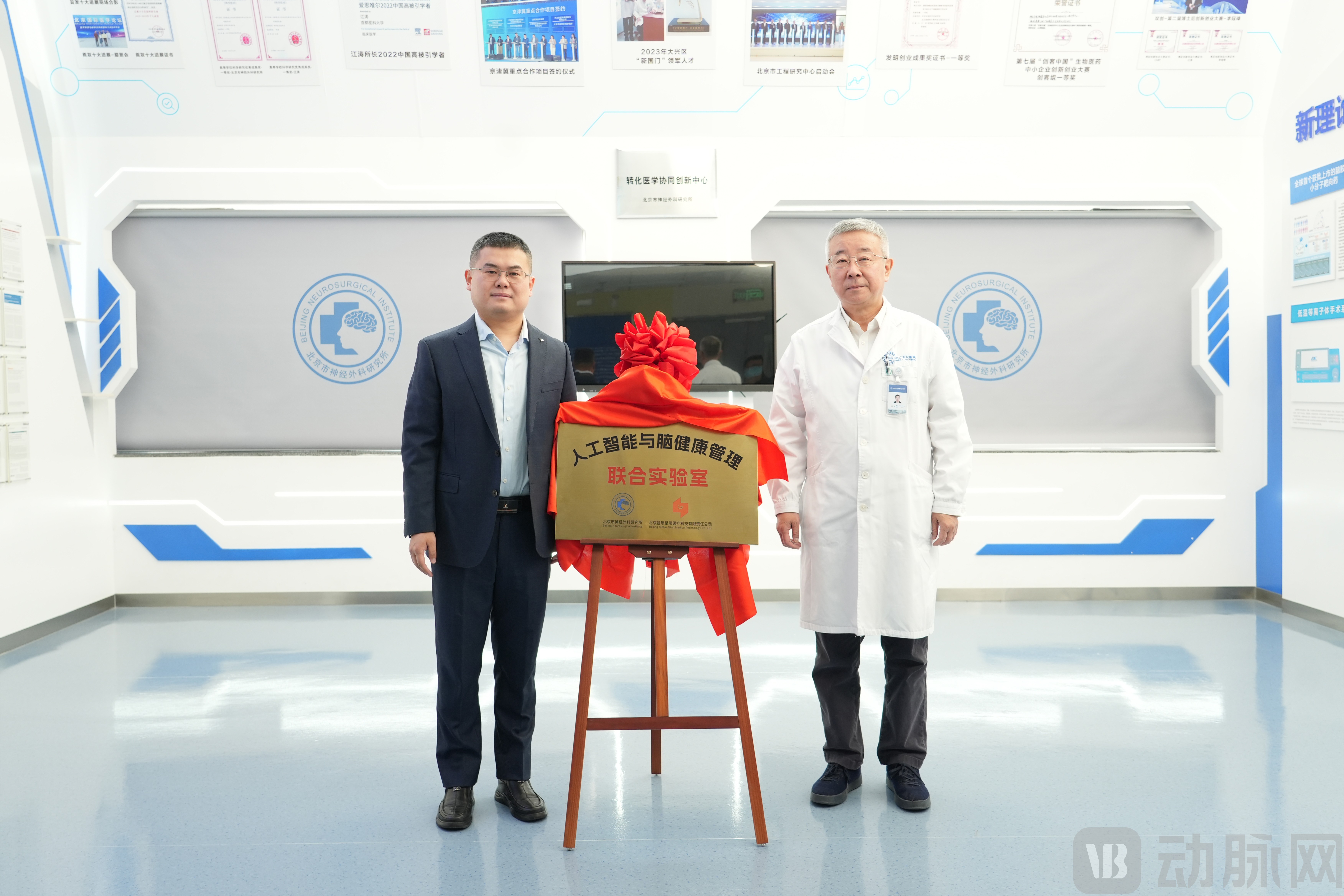
Jiang Tao (right), academician of the Chinese Academy of Engineering and director of the Beijing Neurosurgical Institute, and Zhao Zhiteng (left), founder of Zhixiang Xingchen, jointly unveiled the plaque for the joint laboratory.
It is worth mentioning that on January 27, 2026, ZhiXiang Stars and the Beijing Neurosurgical Institute jointly established the "Artificial Intelligence and Brain Health Management Joint Laboratory" to accelerate the realization of a closed loop for language rehabilitation robots: "technology development – clinical validation – practical application." As the Artificial Intelligence and Brain Health Management Joint Laboratory operates in-depth, ZhiXiang Stars is speeding up the application process for Class II medical device certification. Zhao Zhiteng stated that within the next 1-3 years, the company aims to successfully apply for recognition as a key laboratory in Beijing, with plans to achieve scaled revenue by 2027.
For millions of families with aphasia patients like Uncle Zhang, this door to a new world is slowly opening...