

SuperEye Medical Files IPO Prospectus: Pioneering Breakthrough Therapies for Incurable Ophthalmic Diseases with Nystagmus and Glaucoma Implantable Devices

Super Vision
Ophthalmic Disease Treatment Product Developer
“All R&D efforts at Super Vision stem from bold innovations in clinical practice,” pointed out Professor Wang Lejin.
Professor Wang Lejin is the founder of Super Vision, an ophthalmic device company, and a leading figure in China’s field of ophthalmology. He serves as a Professor and Chief Physician at Peking University People’s Hospital, and as the Principal Investigator for the National Natural Science Foundation of China’s Major Instrument Project. As an ophthalmologist, he has worked on the clinical frontline for 32 years, during which time he has not only cured countless patients but also identified critical pain points in the treatment of ophthalmic diseases.

(Caption: Professor Lejin Wang, Founder of Super Vision)
Driven by insights into clinical pain points, his team has developed two ophthalmic medical devices since 2004 targeting conditions such as nystagmus and glaucoma: an implantable electrical stimulator for nystagmus and an implantable micro-drainage pump for glaucoma. The implantable electrical stimulator for nystagmus features a miniaturized subscalp implantation design and has successfully completed human trials in eight cases, holding the potential to benefit 7 million patients worldwide. The implantable micro-drainage pump for glaucoma aims to achieve a complete cure by reconstructing physiological drainage pathways, potentially addressing vision impairment in approximately 60 million glaucoma patients globally. Both devices have demonstrated outstanding results in clinical trials and are currently under active review for medical device registration approval, with commercial launch expected in 2023.
As a member of the expert panel at the National CFDA Center for Medical Device and Innovative Drug Review, Professor Wang Lejin stated, “Currently, China’s overall capacity for independent research and development in the field of innovative medical devices remains insufficient.”
In his view, since the reform and opening-up, doctors in the new era have shouldered both historical and contemporary missions. On one hand, the new era has brought historical opportunities for development, allowing physicians to explore more novel therapies; on the other hand, the emerging generation of doctors must also take up their contemporary mission by continuously pioneering and innovating, so that the world can witness more “Chinese innovations.”
Congenital Nystagmus (CN): The “Incurable Disease” of OphthalmologyCongenital Nystagmus (CN) is regarded as an “incurable disease” in the field of ophthalmology. With an incidence rate of 1 in 1,000 among newborns, 85% of patients suffer from amblyopia. This condition often prevents normal school enrollment during childhood and leads to significant workplace discrimination in adulthood, severely impairing quality of life and imposing a substantial burden on families and society.
There are approximately 1.3 million nystagmus patients in China, with about 20,000 new cases annually; globally, there are around 7 million patients, with 100,000 new cases each year. Current treatment options can alleviate nystagmus but cannot provide a cure.
Professor Wang Lejin sees over 1,000 patients with ocular tremor annually. After accumulating extensive surgical experience, he pondered whether a stimulator could be developed to treat nystagmus by drawing on Functional Electrical Stimulation (FES) technology, given that nystagmus is a muscular movement caused by abnormal neural impulses.
“In 1961, Liberson discovered the use of Functional Electrical Stimulation (FES) for treating foot drop. This led me to consider whether FES could be combined with extraocular muscles to design an Implantable Extraocular Muscles Electrical Stimulator (IEMES) tailored for ophthalmic needs, thereby eliminating nystagmus and improving vision,” said Professor Lejin Wang. Following this proposal, Professor Wang began in-depth research in 2004. By comparing the effects of electrical stimulation on patients’ extraocular muscles before and after treatment, as well as against healthy controls, he observed that electrical stimulation was indeed effective in alleviating symptoms. “This concept was proposed in 2004, and we have persisted with experimental work ever since. Expert evaluations commenced around 2008, device development trials began in 2012, and in 2014, we were awarded a Major Instrument Project by the National Natural Science Foundation of China,” stated Professor Wang.
After years of R&D, substantial capital investment, numerous animal studies, and validation through eight human clinical cases, the stimulator chip and electrodes have undergone multiple iterations, and the prototype of the nystagmus treatment device has taken initial shape.
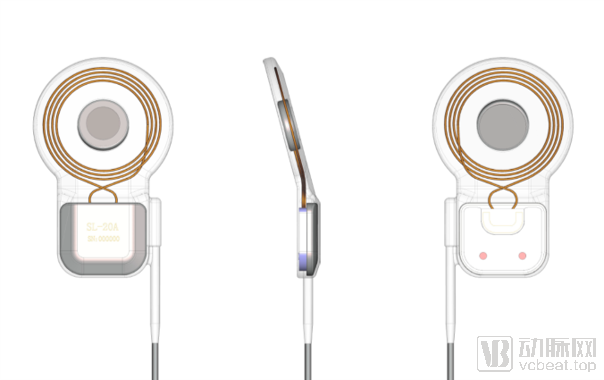
(Figure Caption: Nystagmus Treatment Device)
Professor Wang Lejin introduced that the nystagmus treatment device developed by his team is expected to fill a gap in the field of nystagmus therapy. Referencing the pricing of pacemakers and cochlear implants, if the product is launched in China at a price of RMB 200,000, it would create an annual market size of RMB 2–4 billion in the Chinese market, with a global market potential exceeding USD 10 billion.
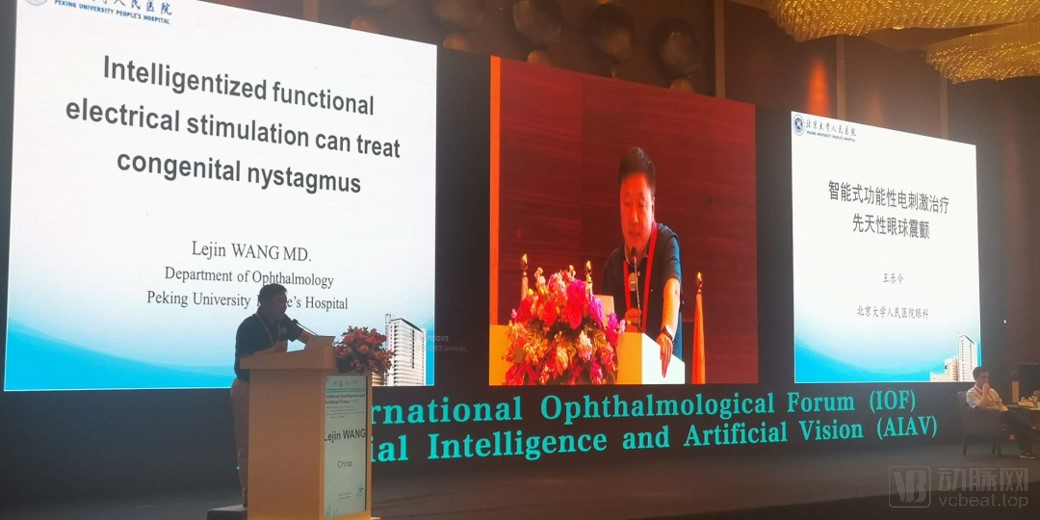
(Figure caption: At the Shenzhen International Ophthalmology Forum, Professor Wang delivered a keynote speech on the topic of nystagmus.)
While achieving significant breakthroughs in the field of nystagmus, Professor Wang Lejin has not ceased his clinical exploration. “We must address the most pressing pain points,” he stated. Building on this philosophy, he has focused his research and development efforts on glaucoma, the second leading cause of blindness worldwide.
Glaucoma is a global disease, currently affecting approximately 60 million people worldwide, with 7 million of them blinded by the condition. Referred to by physicians as the “thief that steals sight,” glaucoma presents with insidious symptoms; 75% of patients are diagnosed at moderate to advanced stages, and the disease cannot be completely cured. From a health economics perspective, the cumulative costs of medical care and medications for glaucoma patients from diagnosis until the end of life exceed 300,000 yuan. The societal costs attributable to glaucoma are even more difficult to quantify.
Glaucoma is an ocular disease characterized by visual field defects and even blindness caused by elevated intraocular pressure. Increased intraocular pressure compresses the retina and damages the optic nerve, leading to narrowed visual fields and impaired vision, which may ultimately result in blindness.
“Glaucoma is particularly difficult to treat and currently incurable. I aim to develop a new therapeutic approach that can completely cure this disease, so patients no longer have to worry about future vision loss,” said Professor Wang Lejin. Super Vision’s core product—the world’s only implantable micro-drainage device for ophthalmology—actively drains aqueous humor via chip-controlled micro-drainage technology, establishing new outflow pathways with adjustable flow rates to precisely maintain intraocular pressure (IOP) between 10 and 15 mmHg. The compact device can be implanted within the orbital cavity, featuring a simple and rapid surgical procedure. With low cost and minimal complications, it offers a potential complete cure for glaucoma, representing the most advanced direction in treatment. “Active implantable devices capable of controlling and regulating intraocular pressure represent the future of exploring new therapies for glaucoma.”
This product is currently undergoing clinical development, and Professor Wang Lejin is highly optimistic about its market prospects. According to GlobalData, the global glaucoma market was projected to reach $20 billion by 2020, while China’s glaucoma market was expected to reach RMB 17.2 billion. With rising health awareness among residents and the increasing availability of early screening methods for glaucoma, the market for early intervention and treatment of glaucoma will continue to expand, representing a vast blue-ocean market.
Super Vision Technology, Inc. was officially established in June 2018, built upon the invention of two cutting-edge ophthalmic medical devices. The team comprises members from top-tier universities and institutions, including Peking University People’s Hospital, Tsinghua University, the Chinese Academy of Sciences, Peking University Health Science Center, and Beijing University of Technology, boasting exceptional R&D capabilities.
Professor Wang Wensi, Chief Technology Officer, serves as the Deputy Dean for Research at the School of Microelectronics, Faculty of Information Technology, Beijing University of Technology. A professor and doctoral supervisor, he is an expert in chip R&D and oversees the company’s overall technological development. CEO Wang Tianfang holds a Master’s degree from the University of Minnesota and an MBA from Tsinghua University. With extensive experience in venture capital and investment, he is responsible for corporate financing, operations, and project management. Dr. Wang Dengwei, R&D Director, graduated from Beijing University of Posts and Telecommunications. With 20 years of professional experience, he possesses strong expertise in both theoretical research and practical product development. He previously served as a Senior Engineer at the Chinese Academy of Sciences and as an R&D Department Manager at listed companies and multinational corporations. Dr. Miao Zequn, Head of Medical Affairs, earned his Ph.D. from Peking University Health Science Center. He has participated in multiple projects funded by the National Natural Science Foundation of China and key national R&D programs, holds two invention patents, and oversees clinical medical affairs.
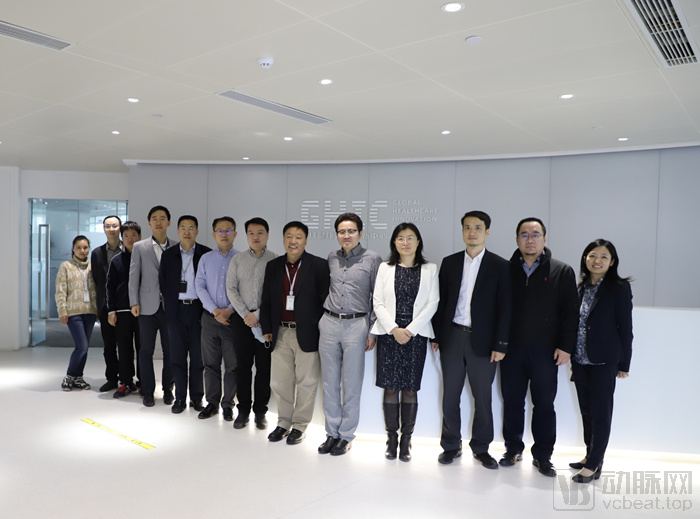
(Figure caption: Super Vision team)
Outstanding innovative products + top-tier technical talent: Super Vision has frequently attracted capital attention and favor since its establishment. At the very beginning, it received angel-round investment co-led by Shuimu Ventures and Peking University Healthcare.
Meanwhile, Super Vision has also won numerous awards in domestic innovation and entrepreneurship competitions. In September 2020, at the conclusion of the biomedical industry finals for the Beijing division of the 9th China Innovation and Entrepreneurship Competition, hosted by the Torch High Technology Industry Development Center of the Ministry of Science and Technology, as well as the 3rd China Medical Device Innovation and Entrepreneurship Competition, organized by the China Association of Medical Device Industry, Super Vision secured first prize in both events, earning recognition from the government, industry, and social capital.
Regarding future plans, Professor Wang Lejin stated that the company will continue to explore the field of artificial intelligence in terms of product development, while also innovating its business model. Its independently developed ophthalmic devices will not be limited to pure sales; instead, the company will directly guide patients in their use by establishing its own hospitals or collaborating with existing medical institutions.
“Super Vision’s ultimate vision is to build an intelligent ophthalmology platform that integrates teaching, clinical practice, scientific research, and industry. On this platform, every professor can embark on entrepreneurship, every student will have future career development opportunities, every patient will receive high-quality treatment, and every enterprise growing on our platform will enjoy a brighter future,” stated Professor Lejin Wang.