


On September 20, Eli Lilly and Company announced that abemaciclib, in combination with standard adjuvant endocrine therapy (ET), significantly reduced the risk of breast cancer recurrence by 25% compared with standard adjuvant ET alone in patients with hormone receptor-positive (HR+), human epidermal growth factor receptor 2-negative (HER2-) high-risk early breast cancer (HR: 0.747; 95% CI: 0.598, 0.932; p = 0.0096). Consistent statistically significant benefits were observed across all prespecified subgroups, with a between-group difference of 3.5% at 2 years of treatment (92.2% in the abemaciclib group vs. 88.7% in the control group). These results derive from a prespecified interim analysis, which identified 323 invasive disease-free survival (IDFS) events in the intention-to-treat population (136 in the abemaciclib group and 187 in the control group). The findings were presented on September 20 (European time) in the Presidential Symposium at the 2020 European Society for Medical Oncology (ESMO) Virtual Congress and were simultaneously published in the Journal of Clinical Oncology (JCO).
The safety data from the monarchE study were consistent with the known safety profile of abemaciclib from previous studies, and no new safety signals were observed. At the time of analysis, approximately 70% of patients in each group were still within the 2-year abemaciclib treatment period. The median follow-up time was approximately 15.5 months in both groups. The median duration of abemaciclib treatment was 14 months.
Dr. Stephen Johnston, Professor of Breast Oncology and Consultant Medical Oncologist at The Royal Marsden Hospital in the UK, and principal investigator of the monarchE study, stated: “This represents an important milestone for patients with high-risk, HR-positive, HER2-negative early breast cancer. It may be one of the most significant therapeutic advances for this patient population in the past two decades. Abemaciclib in combination with standard adjuvant endocrine therapy significantly improves invasive disease-free survival in both male and female patients with HR-positive, HER2-negative early breast cancer who are at high risk of recurrence. If approved, it will become the new standard of care for these patients.”
The monarchE study randomly enrolled 5,637 patients with HR+, HER2- high-risk early breast cancer from more than 600 centers across 38 countries. High risk was defined as lymph node involvement, large primary tumor size, or high cellular proliferation (as determined by tumor grade or Ki-67 index). Patients received abemaciclib for 2 years (treatment period) or until discontinuation criteria were met. Following the treatment period, all patients continued to receive endocrine therapy for a total of 5–10 years, based on clinical indications.
Dr. Maura Dickler, Vice President of Eli Lilly’s Oncology Division and Head of Late-Stage Product Development, stated, “We are pleased that abemaciclib has been demonstrated to meaningfully reduce the risk of recurrence in patients with high-risk, HR+, HER2- early breast cancer. Eli Lilly extends its gratitude to the patients and researchers worldwide who participated in this clinical study. The finding that abemaciclib significantly improves invasive disease-free survival is highly significant, offering hope to patients with high-risk early breast cancer who are at risk of recurrence. Eli Lilly will submit these results to regulatory authorities in various countries as soon as possible. We look forward to providing abemaciclib as a new treatment option for these patients. The results of the monarchE study further solidify the robust clinical evidence previously established for abemaciclib, and we are very proud of this achievement.”
Abemaciclib in combination with adjuvant endocrine therapy also improved patients’ distant recurrence-free survival (DRFS), thereby delaying the time to cancer spread to other parts of the body. The combination of abemaciclib and endocrine therapy reduced the risk of metastasis by 28% (HR: 0.717; 95% CI: 0.559, 0.920), with the greatest reductions observed in the incidence of liver and bone metastases. Consistent treatment benefits were demonstrated across all prespecified subgroups. The 2-year DRFS rate was 93.6% in the abemaciclib group, compared with 90.3% in the control group.
Jean Sachs, CEO of Living Beyond Breast Cancer, a nonprofit organization dedicated to caring for and supporting the breast cancer community, stated, “The results from the monarchE study are exciting news for our breast cancer community. Up to 30% of patients with HR+ early-stage breast cancer may experience recurrence. Therefore, this represents an encouraging advancement for patients with high-risk, HR+, HER2- early-stage breast cancer, particularly because the study included all female patients, whether premenopausal or postmenopausal, as well as male patients.”
Overall survival results are not yet mature, and the monarchE study will continue until its completion (expected in June 2027). The significant benefit in invasive disease-free survival (IDFS) observed in the interim analysis is confirmatory. All patients enrolled in the monarchE study will continue to be followed until the primary analysis is completed and overall survival and other study endpoints are fully assessed. Eli Lilly will submit the results of the monarchE study to regulatory authorities by the end of 2020.
About the monarchE Study
monarchE is a randomized, open-label, multicenter Phase III clinical study that enrolled 5,637 patients with high-risk, early-stage, hormone receptor-positive (HR+), human epidermal growth factor receptor 2-negative (HER2-) breast cancer with positive lymph nodes. Participants were randomly assigned in a 1:1 ratio to receive either abemaciclib (150 mg twice daily) combined with standard adjuvant endocrine therapy or standard adjuvant endocrine therapy alone. Patients received treatment for 2 years (i.e., the treatment period) or until discontinuation criteria were met. Following the treatment period, all patients continued to receive adjuvant endocrine therapy for a total of 5–10 years based on clinical indications. The primary endpoint was invasive disease-free survival (IDFS) as defined by the Standardized Definitions for Efficacy End Points (STEEP) criteria. In adjuvant breast cancer studies, this endpoint is defined as the time to cancer recurrence, new primary cancer, or death. Secondary endpoints included distant recurrence-free survival, overall survival, safety, pharmacokinetics, and health outcomes.
High risk is explicitly defined as female patients (including premenopausal and postmenopausal) and male patients with HR+, HER2- early invasive breast cancer who have either ≥4 positive axillary lymph nodes (ALNs), or 1 to 3 positive ALNs plus at least one of the following high-risk features: primary invasive tumor ≥5 cm; histological grade 3 tumor; or a Ki-67 index ≥20% as determined by a central laboratory. Prior to enrollment, patients must have completed adjuvant chemotherapy and radiotherapy (if applicable) and recovered from all acute adverse effects of treatment.
# About Early-Stage Breast Cancer
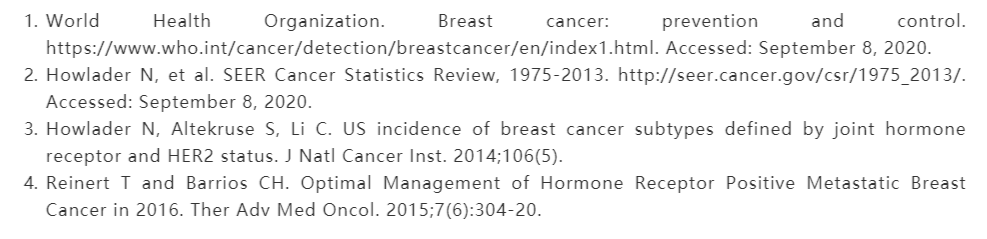
Breast cancer is the most prevalent cancer among women worldwide¹. It is estimated that 90% of breast cancer cases are diagnosed at an early stage². The most common subtype is hormone receptor-positive, human epidermal growth factor receptor 2-negative (HR+, HER2-) breast cancer, which accounts for approximately 70% of all breast cancer cases³. Even within this subtype, HR+, HER2- breast cancer exhibits considerable complexity. Many factors, such as lymph node metastasis and the biological characteristics of the tumor, can influence the risk of disease recurrence. Among patients diagnosed with early-stage HR+, HER2- breast cancer, approximately 30% face the risk of cancer recurrence and even progression to incurable metastatic disease⁴.
About Abemaciclib
Abemaciclib is an inhibitor of cyclin-dependent kinases (CDK) 4 and 6. In estrogen receptor-positive (ER+) breast cancer cell lines, CDK4 and 6 are activated by binding to cyclin D1, promoting the phosphorylation of the retinoblastoma protein (Rb), thereby driving cell cycle progression and accelerating cell proliferation.
In vitro, continuous exposure to abemaciclib inhibits Rb phosphorylation and blocks cell cycle progression from the G1 phase to the S phase, thereby inducing cellular senescence and apoptosis (cell death). Preclinical studies have demonstrated that uninterrupted daily treatment with abemaciclib results in significant tumor shrinkage. Inhibition of CDK4 and 6 in healthy cells may cause side effects, some of which can be severe. Clinical evidence also indicates that abemaciclib can cross the blood-brain barrier. Studies involving patients with advanced cancer, including breast cancer, have shown that the concentrations of abemaciclib and its active metabolites (M2 and M20) in the cerebrospinal fluid are comparable to the unbound plasma concentrations.
Abemaciclib is Eli Lilly’s first solid oral drug, manufactured using a faster and more efficient “continuous manufacturing” model. “Continuous manufacturing” is an advanced, novel production model in the pharmaceutical industry, and Eli Lilly is one of the earliest companies to adopt this technology.
Note:
1. The relevant products or indications have not yet been approved
2. Eli Lilly does not recommend the use of any unapproved drugs/indications