


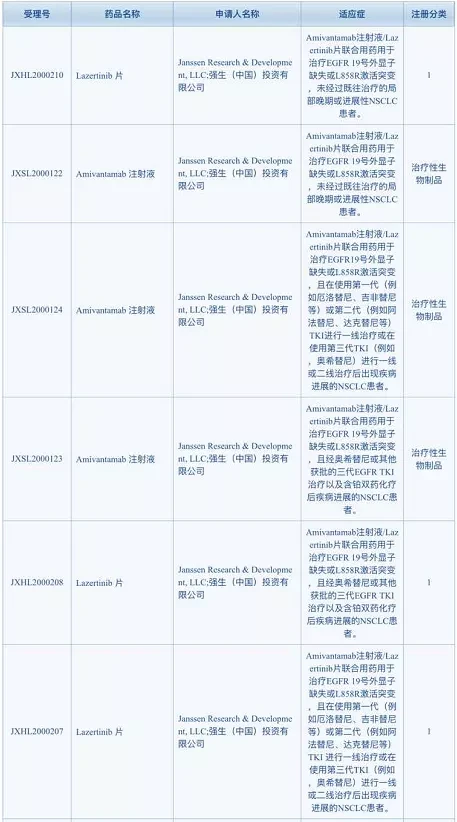
Recently, Johnson & Johnson’s amivantamab (an EGFR-MET bispecific antibody) and lazertinib (a third-generation EGFR-TKI) received approval in China for two clinical trials: 1) combination therapy for patients with locally advanced or progressive non-small cell lung cancer (NSCLC) harboring EGFR exon 19 deletions or L858R activating mutations who are treatment-naïve; and 2) combination therapy for NSCLC patients with EGFR exon 19 deletions or L858R activating mutations who have experienced disease progression following first-line treatment with first-generation (e.g., erlotinib, gefitinib) or second-generation (e.g., afatinib, dacomitinib) TKIs, or following first- or second-line treatment with a third-generation TKI (e.g., osimertinib).
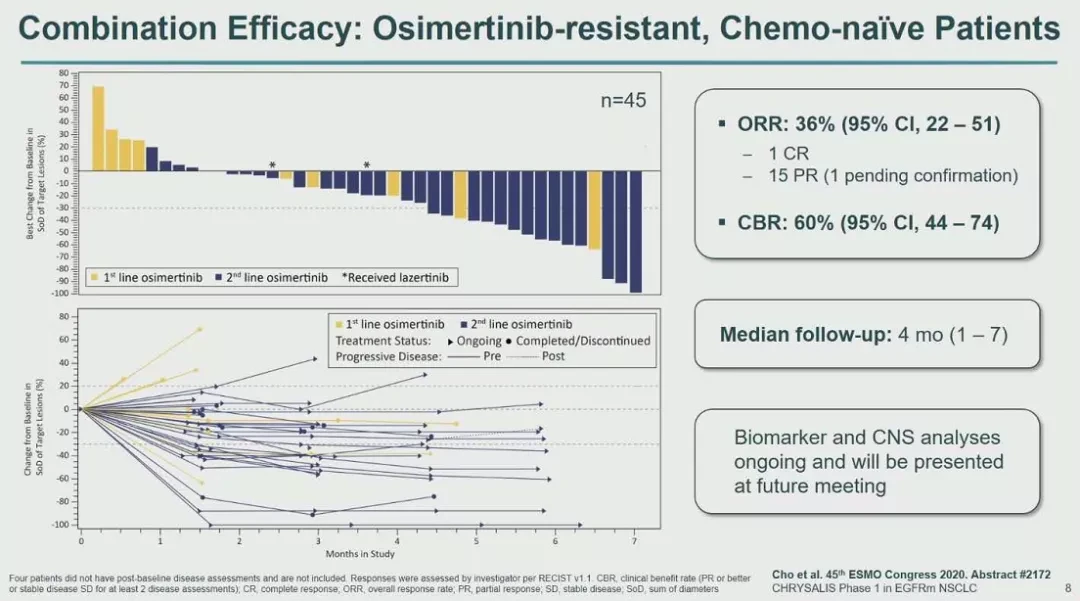
Amivantamab and Lazertinib were the “star” products at the recently concluded ESMO 2020 Congress. Results from a Phase I clinical study codenamed CHRYSALIS (NCT02609776) showed that the combination of these two drugs achieved an objective response rate (ORR) of 100% in patients with non-small cell lung cancer (NSCLC) harboring EGFR 19Del or L858R mutations, and an ORR of 36% in patients who had developed resistance to osimertinib.
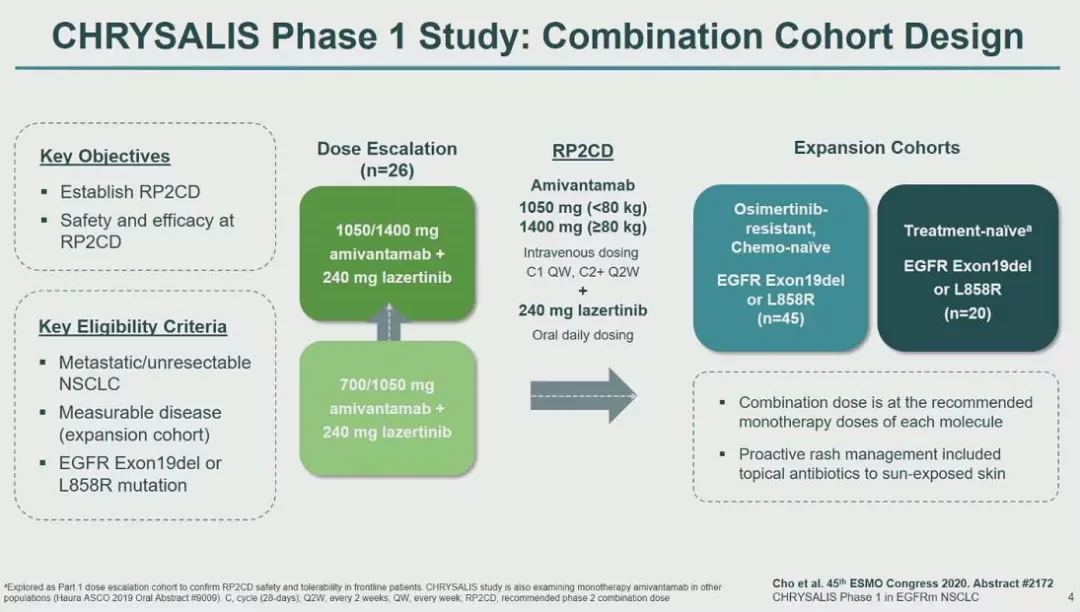
The CHRYSALIS study consists of two parts: dose exploration and expansion cohorts. Upon entering the expansion cohort, patients will be divided into an osimertinib-resistant group (n=45) and an EGFR treatment-naïve group (n=20).
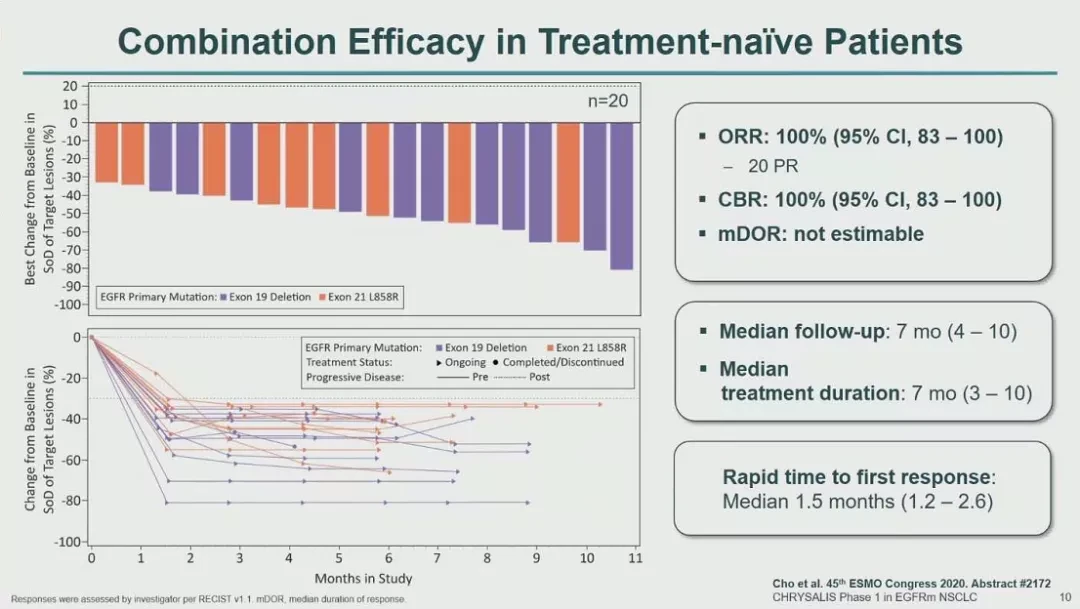
Results presented at this ESMO Congress showed that the combination of amivantamab and lazertinib achieved an objective response rate (ORR) of 100% in 20 EGFR treatment-naïve patients, comprising 20 patients with partial response (PR). The median follow-up time and median treatment duration were both 7 months, and the median duration of response (mDOR) had not yet been reached.
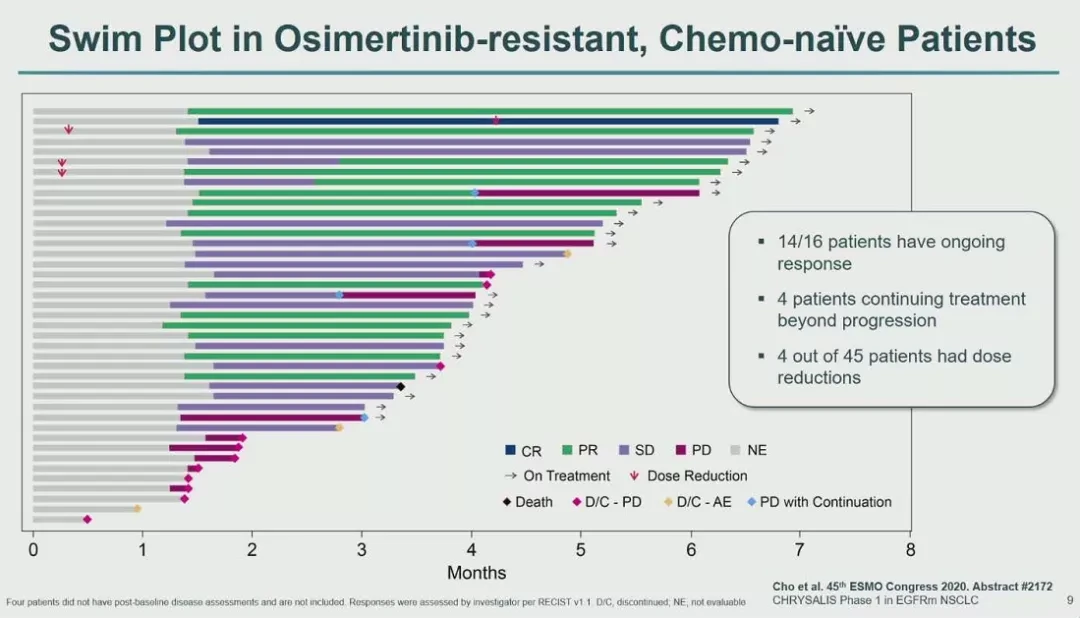
Among 45 patients with osimertinib resistance, the objective response rate (ORR) for the amivantamab plus lazertinib combination therapy was 36%, including one complete response (CR) and 15 partial responses (PR); the clinical benefit rate (CBR) was 60%. With a median follow-up of 4 months, 14 of the 16 patients who achieved disease response were still receiving treatment.
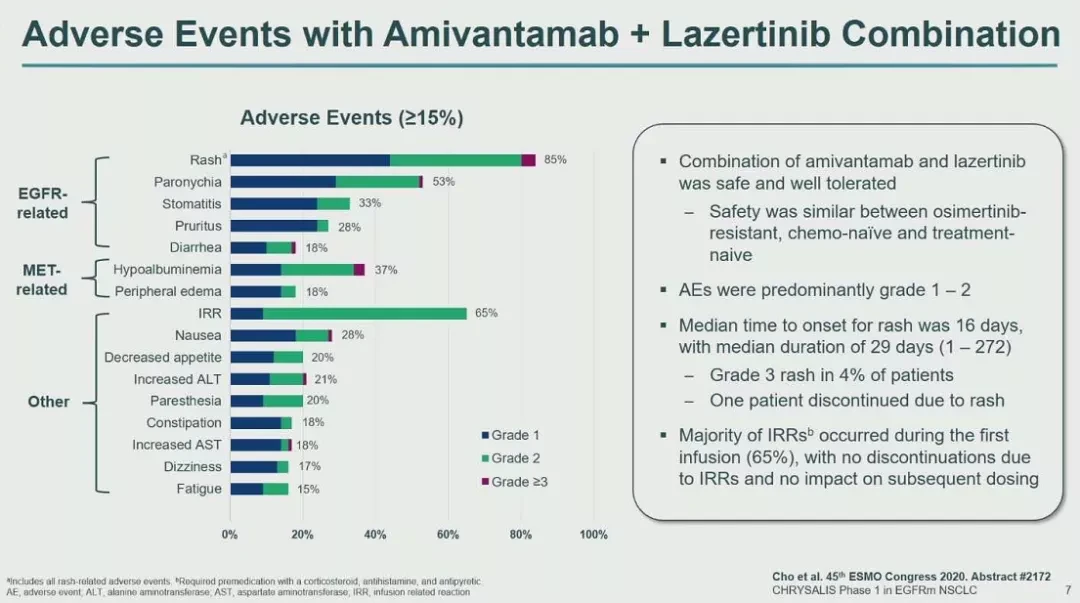
Amivantamab plus lazertinib combination therapy demonstrated a favorable safety and tolerability profile, with common adverse reactions including rash, infusion-related reactions, paronychia, and hypoalbuminemia.
Currently, the Phase III MARIPOSA study has been conducted to evaluate the efficacy and safety of the amivantamab plus lazertinib combination regimen compared with osimertinib in the treatment of EGFR-mutated non-small cell lung cancer (NSCLC).