

26 Years of Technical Accumulation: Shanghai Union Technology Corporation Advances 3D Printing in Medical Application Scenarios

UnionTech
3D Printing Equipment Provider for the Dental Industry
As the silver economy accelerates, medical needs closely related to the elderly population, such as dental restoration and orthopedic treatments, continue to grow. The healthcare system's reliance on precise and personalized solutions also deepens. However, alongside this expanding demand,The limitations of traditional medical manufacturing models in terms of efficiency, stability, and individual adaptation have been further magnified.
In the field of dental prosthetics, the production of dentures involves multiple steps and a long cycle, with the quality of the finished product highly dependent on the technician's experience. Fluctuations in precision and inadequate fit are not uncommon. Similarly, in the field of orthopedics, standardized implants often fail to match the individual skeletal structure of patients, and preoperative planning relies more on experiential judgment, limiting both treatment outcomes and surgical complexity.
It is against this backdrop that 3D printing began to enter the medical field. With its personalized shaping ability based on digital models, patient data can be directly transformed into customized products, complementing or even replacing traditional manufacturing models in terms of precision, efficiency, and consistency. Changes in the market further confirm this trend: According to the latest report by Business Research Insights in 2026, the global digital dentistry market size is projected to reach $7.79 billion by 2026 and grow to $18.86 billion by 2035, with a compound annual growth rate (CAGR) of 10.3% from 2026 to 2035, demonstrating strong growth momentum.
The domestic market is also heating up. Driven by both policy and demand, the dental 3D printing materials market continues to expand. In November 2025, Beijing included full dentures in the medical insurance payment scope, clearing a key payment barrier for the clinical implementation of related technologies and accelerating the industrialization process.
In this round of resonance between technology and demand, Shanghai Union Technology Corporation (hereinafter referred to as "Union Technology"), which has been deeply engaged in industrial-grade 3D printing for more than two decades, relies onMature R&D and innovation capabilities for the integrated development of equipment, materials, and software, along with forward-looking market positioningEnter the medical track and become a leading player in the industrialization process of medical 3D printing.
From Industrial Accumulation to Medical Implementation
Shanghai Union Technology Corporation, established in 2000, early on became deeply involved in the industrial-grade 3D printing field. Its technology and equipment have been widely applied in high-end industries with stringent requirements for precision and stability, such as aerospace and electronics. After more than two decades of accumulation, the company...Cumulatively delivered over 10,000 industrial-grade SLA 3D printing devices and served more than 8,000 customers.
In the industrialization process, Shanghai Union Technology Corporation (LianTai Technology) graduallyBuild a full-chain solution covering equipment, software, and materials.. Its location inShanghai Lingang Songjiang Science and Technology CityIt has provided a complete manufacturing support, testing conditions, and industrial collaboration environment, allowing high-precision equipment, material research and development, and small-batch trial production to be completed within the same system. This also provides a practical foundation for its expansion into high-barrier fields such as healthcare.
Healthcare enters the business horizon of Shanghai Union Technology Corporation precisely against this backdrop. The company regards it as a field for continuous in-depth cultivation, while constantly iterating and updating its existing industrial-grade technologies and products.Solve the application challenges in medical clinics.
In multiple medical细分 scenarios,Shanghai Union Technology Corporation's Digital Oral Healthcare Field. To address the personalized and high-precision demands of dentistry, which have long been constrained by the limitations of manual, rough processing methods. "The personalized shaping enabled by 3D printing aligns perfectly with the customized needs of dentistry," said Qu Honglai, Sales Director of the Dental Division at Shanghai Union Technology Corporation, during an interview.
At the same time, Shanghai Union Technology Corporation has built a professional digital oral healthcare sales and after-sales team. Closely adhering to the application needs of digital oral diagnosis and treatment technologies, they are developing specialized digital oral products that meet market demands. On one hand, an engineering technology team with years of experience in 3D printing continues to be responsible for the iteration of underlying technologies; on the other hand,Introduce professional talents with a medical industry background to participate in product design and application validation., ensuring that the technical solution can closely align with real clinical scenarios.
At the business level, the company adoptsParallel Sales and Deployment of EquipmentThe cooperation model aims to adapt to the differences in capital scale and business volume among digital dental clinics, denture factories, and hospitals, while providing technical training and process optimization services to promote the practical implementation of technology.
Looking back at this cross-boundary journey, healthcare was not the earliest business direction for Shanghai Union Technology Corporation, but it has become one of the most market-tested applications of its technical capabilities. For this company transitioning from the industrial sector, entering the healthcare field was not a radical transformation, but rather a move more inclined towards...Long-termismSelection.
Industrial-Grade DLP Technology Empowers Personalized Medical Services
After truly entering the medical field, Shanghai Union Technology Corporation quickly realized that this was not a simple technology transplantation. The medical scenario is not "more difficult," but it has special requirements that are closer to clinical realities, necessitating a scenario-based reconstruction.
Centering on medical 3D printing, Shanghai Union Technology Corporation (SUTC) has gradually built a technical foundation supported by three collaborative platforms: an industrial-grade printing technology platform centered on Digital Light Processing (DLP), a digital workflow platform for dental applications, and a medical-grade material research and development platform.
In terms of underlying technology, Shanghai Union Technology Corporation willIndustrial-Grade DLP Printing StandardIntroducing medical applications, ensuring printing accuracy and long-term operational stability through autonomous calibration and path planning algorithms. Based on this, a device layout ranging from single machines to automated production lines has been formed to meet different needs such as instant printing in dental clinics and large-scale production in denture factories.
At the process level, Shanghai Union Technology Corporation's digital dental platform directly integrates intraoral scan data into the model design and 3D printing stages, reducing errors caused by traditional manual impressions and intermediate transportation. The overall workflow consists of "intraoral scanning—model design—3D printing—post-processing," compressing the originally more than ten manual operation steps into 3–4 relatively standardized key stages.
On the material front, Shanghai Union Technology Corporation is simultaneously advancing the independent research and development of dental resin and other medical device materials. It strictly adheres to regulatory requirements for registration and filing to ensure that technical solutions have a compliant basis for implementation. Currently, Class I materials such as dental models have been approved and stably applied for many years, while Class III materials like full denture materials are in the process of filing.
From industrial-grade technology沉淀 to the collaboration of three major platforms, and then to the in-depth adaptation of medical scenarios,Shanghai Union Technology Corporation Brings Requirements for Precision and Stability Directly into Medical Scenarios, which not only solves the pain points of traditional medical manufacturing but also provides more suitable solutions for core users such as the elderly population.
From Oral Cavity to Multiple Medical Scenarios
Shanghai Union Technology Corporation builds a systematic product matrix supporting multi-scenario expansion based on industrial-grade 3D printing technology, combined with a digital process platform and a medical-grade material system.
In the dental healthcare scenario, Shanghai Union Technology Corporation has formed a complete layout of "on-site printing in outpatient clinics - mass production in denture factories - specialized processing for orthodontics," covering all core aspects such as orthodontics, implantology, prosthodontics, and removable appliances. Its dental 3D printing applications encompass various types, including orthodontic models, surgical guides, and artificial gingiva, suitable for the entire process of preoperative planning, surgical guidance, and prosthetic fabrication.
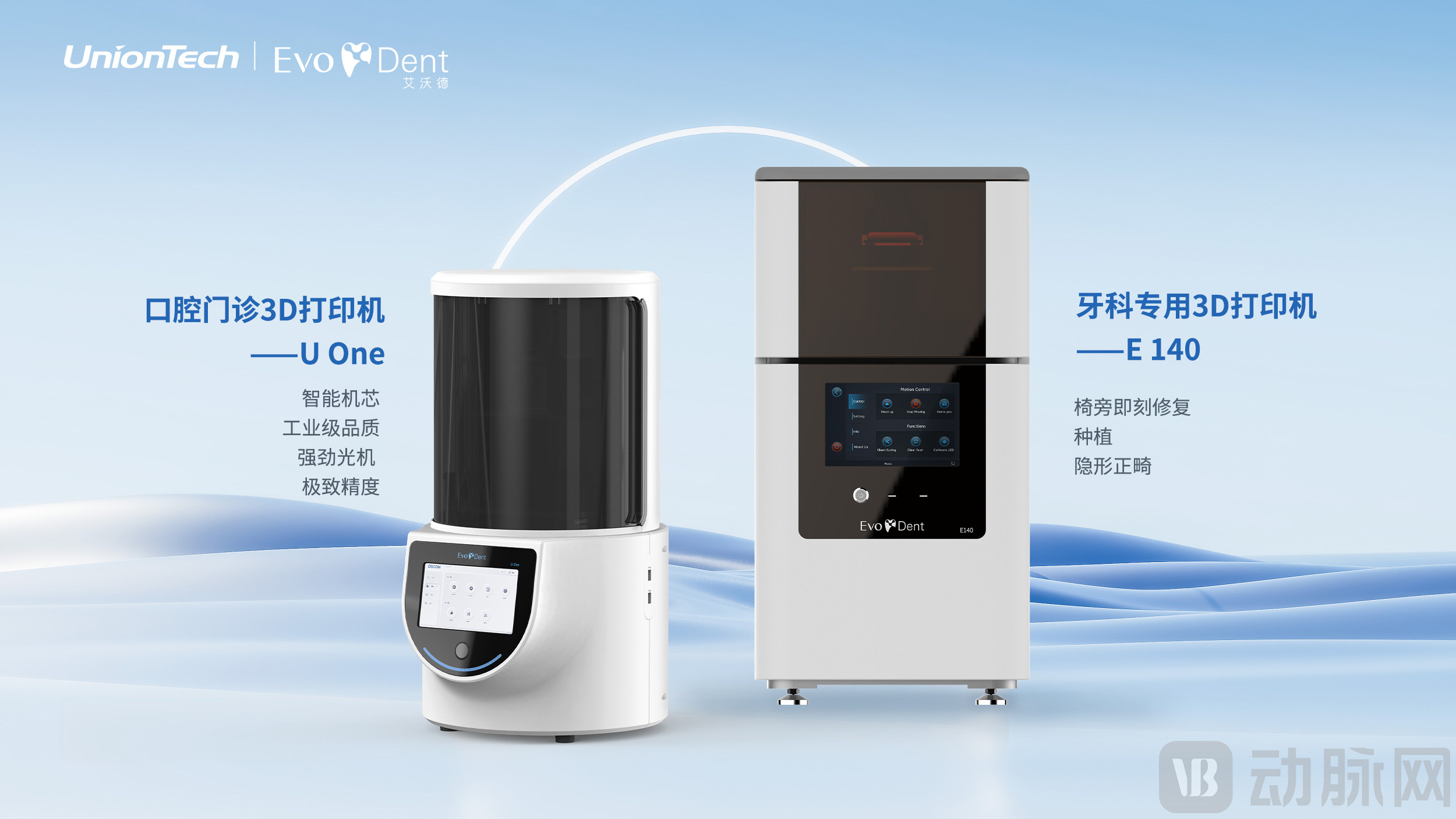
For dental clinics, the U One and E 140, two medium-to-small-sized devices, precisely meet chairside needs: The U One is equipped with "5+2" AI intelligent control technology, achieving 93% light intensity uniformity, with a pixel precision of 56μm supporting over 8 printing scenarios, completing temporary crowns in just 10 minutes; the E 140 features high-precision and compact design, focusing on small-batch rapid output for restoration and implant models.
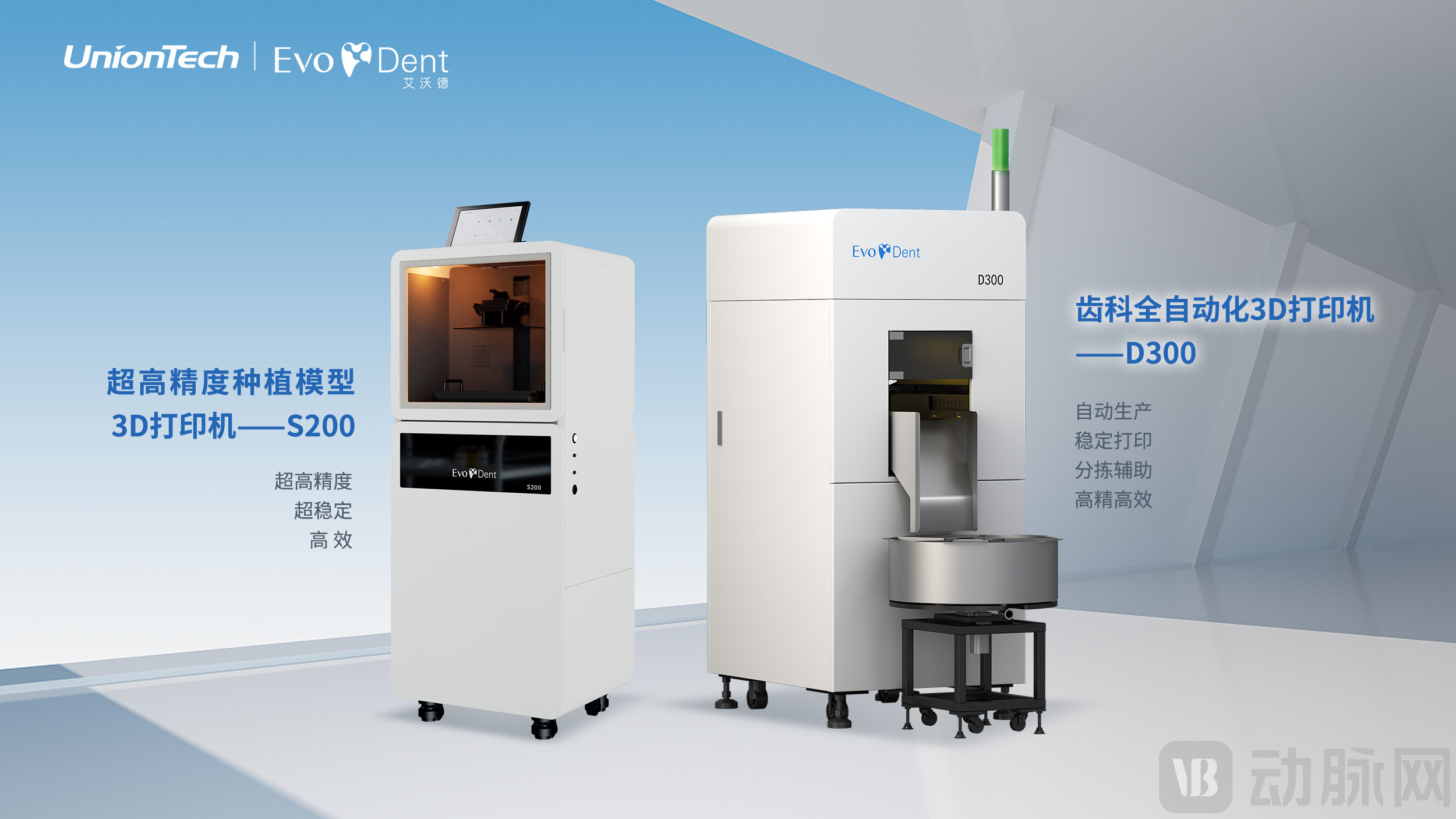
For dental laboratories, the S200 and D300 focus on large-scale production: The S200 is equipped with an industrial-grade 4K light engine, capable of printing 6-12 half-arch dental models in one go and completing 100 half-arch models within a day; the D300 achieves full-process automation, operating 7×24 hours unmanned, with a daily output of approximately 180 dental models and a full-plate accuracy deviation of less than 0.05mm.
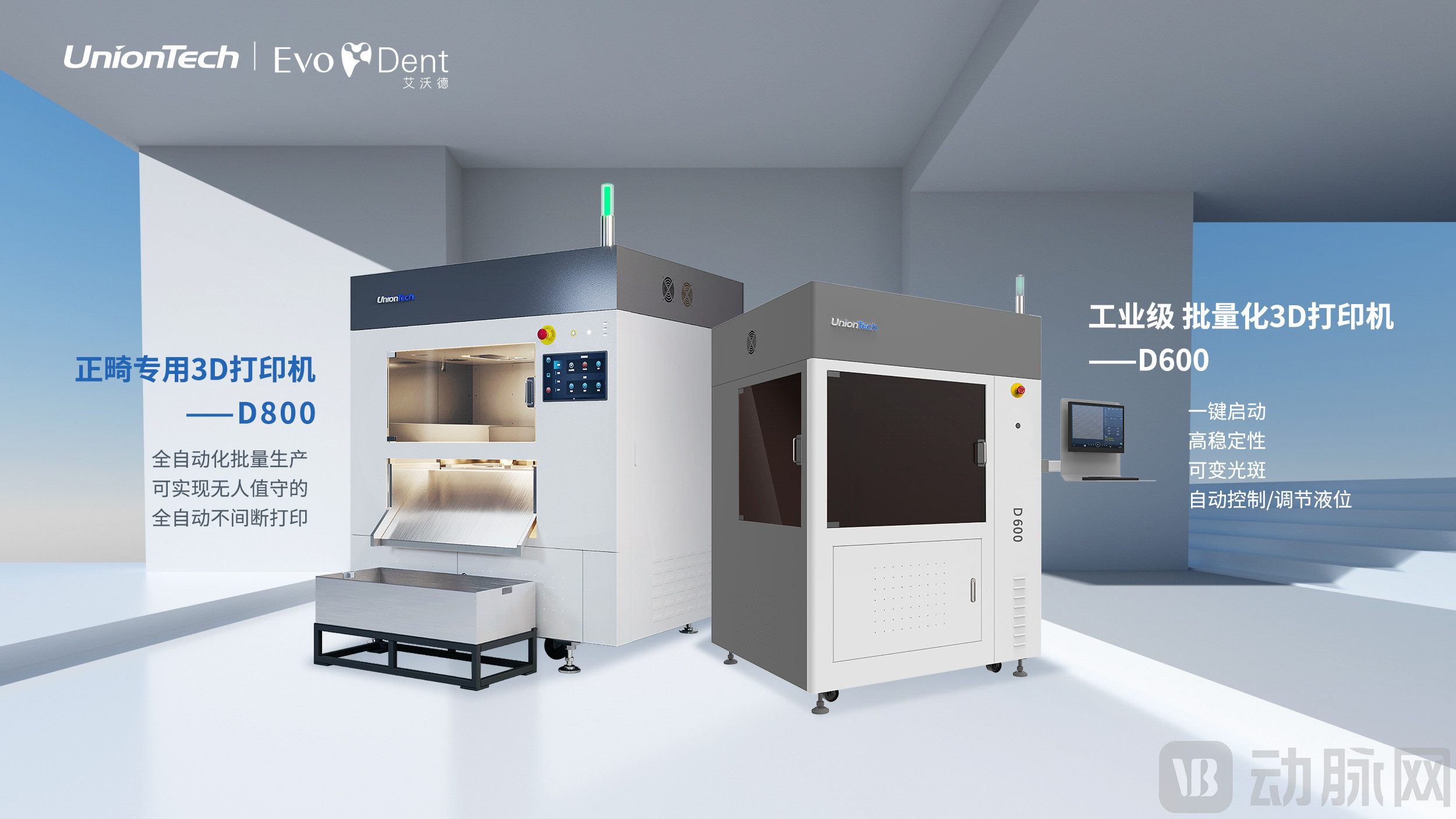
The orthodontic specialty features the D800 and D600 high-efficiency mass production combination: The D800, with its ultra-large printing area, can simultaneously print 96 half-mouth dental models, completing a full print in just 45 minutes; the D600, utilizing SLA technology, can print over 100 orthodontic models in 1.5 hours, meeting the needs of large orthodontic factories. These devices achieve a layer thickness accuracy of 0.1 millimeters, ensuring both efficiency and consistency.
Industry collaboration has become an important validation for the implementation of technology. Shanghai Union Technology Corporation (SUTC) has partnered with Kangerdent Denture Group to serve hundreds of thousands of patients through 3D-printed dental implant guides, reducing treatment cycles and improving fitting accuracy. At the same time, the equipment has entered institutions such as Shanghai Ninth People's Hospital, Peking University School of Stomatology, and Sichuan University Dental Hospital for clinical testing. Currently, SUTC’s equipment coverage in China’s denture factories is close to 30%, serving over 1,000 facilities.
In the field of orthopedics, Shanghai Union Technology Corporation's 3D printing products focus on preoperative planning and personalized assistance. Doctors can use patients' CT or magnetic resonance imaging (MRI) data to print physical models, simulate surgical paths, and evaluate implant compatibility, improving the accuracy of preoperative decision-making. The company has already collaborated with medical institutions such as Shanghai Ninth People’s Hospital and Yunnan First People’s Hospital, accumulating application feedback in scenarios like joint surgeries and pelvic repairs to provide a basis for product optimization. Additionally, Shanghai Union Technology Corporation has also expanded into other niche areas such as rehabilitation devices and surgical assistance models.
Apart from the medical field, Shanghai Union Technology Corporation's 3D printing business has covered multiple industries: On the industrial end, it provides industrial-grade equipment and solutions for fields such as aerospace and electronics; on the consumer manufacturing end, the equipment is applied to the rapid development of shoe lasts and midsoles in the footwear industry. The precision control and scaling experience accumulated through these cross-industry practices provide solid support for the stable performance of its medical devices.
Medical Business Contributes 10% Revenue, Second Growth Curve Takes Shape
From the market feedback, the medical sector has become an important component of Shanghai Union Technology Corporation's business structure. The interview revealed that medical-related businesses currently contribute nearly 10% of the company’s overall revenue. The company plans to maintain an annual growth rate of over 30% in this sector within the next two to three years. While continuously increasing the penetration rate of 3D printing in China’s dental healthcare market, it aims to gradually cultivate a clear second growth curve beyond its main industrial 3D printing business.
In the Chinese dental 3D printing equipment market, Shanghai Union Technology Corporation's products have entered the first tier. Its competitiveness is not only reflected in hardware performance that rivals imported equipment but also in its deep understanding of clinical and production processes, as well as the synergistic advantages of localized service response and system integration capabilities. These strengths enable its devices to be seamlessly integrated into the daily workflows of dental clinics and denture factories. Building on this阶段性成果, the company plans to participate in the 31st South China International Dental Exhibition, scheduled for March 3-6, 2026, where it will showcase its comprehensive solutions and implementation progress in dental digitization and medical 3D printing.
In future plans, Shanghai Union Technology Corporation will continue to focus on dental healthcare as the most mature and certain application direction, while also exploring expansions into other medical subfields such as orthopedics and medical aesthetics.Its expansion path does not pursue rapid coverage but advances step by step based on the maturity of technology and the rhythm of clinical needs. Whether it is the improvement in the efficiency of dental prosthetics or the better matching of surgical plans to individual differences, it ultimately points to the same issue:Whether technology can truly improve people's health and quality of life.
For Shanghai Union Technology Corporation, this is not a race for speed, but a long-term path of gradually embedding engineering technology into the healthcare system, with repeated verification and optimization through real-world usage. By continuously refining equipment stability, process controllability, and compliance capabilities, the value of technology is constantly amplified in specific scenarios. As such enterprises continue to grow, medical 3D printing is also expected to move from localized exploration to more stable and replicable clinical applications, benefiting a broader population and further advancing the healthcare industry toward precision and personalized care.
Shanghai Lingang United Development Co., Ltd. is an integrated service provider and general operator of innovative industrial park ecosystems, focusing on park investment attraction and operations, professional corporate services, and science and technology industry investments. It is a subsidiary of Shanghai's urban security state-owned enterprise, Lingang Group, and an important component of the listed entity "Shanghai Lingang (600848)."
The parks under Lingang United Company have gathered more than 100 upstream and downstream enterprises in the medical device industry, covering well-known companies in the fields of high-value consumables, medical equipment, and in vitro diagnostics. The park has introduced the Shanghai Yangtze River Delta Medical Device Industry Development Promotion Association, providing one-stop services for policy interpretation and registration application consultation; it also integrates resources within and outside the group and the park to provide enterprises with convenient testing channels, addressing various testing needs during the R&D and registration application stages.