

Johnson & Johnson Medical Supports Non-Profit Initiative on Post-Mastectomy Breast Reconstruction Education

Johnson & Johnson
Medical Device R&D and Manufacturer
Shanghai, October 16, 2020 /PRNewswire/ -- With the support of Johnson & Johnson Medical (China) Ltd. (hereinafter referred to as "Johnson & Johnson Medical"), the China Primary Health Care Foundation officially launched the 2020 Public Welfare Health Education Project on Breast Reconstruction today. The Foundation proposes designating October 16 as China's first public welfare health awareness day dedicated to post-mastectomy breast reconstruction for breast cancer patients – "Pink Blossom Day."
Hu Ningning, Vice Chairman of the China Primary Health Care Foundation; Professor Yin Jian, Director of the Breast Reconstruction Department at Tianjin Medical University Cancer Institute and Hospital; Professor Cao Ayong, Deputy Director of the Breast Surgery Department at Fudan University Shanghai Cancer Center; Dr. Chen Xi, General Manager of the Cardiovascular & Specialty Solutions Division of Johnson & Johnson Medical China; Mo Huilan, World Women’s Gymnastics Champion; Chen Zhuo, renowned young sculptor; Zhang Yan, Editor-in-Chief of Fashion Health; along with patient representatives who underwent breast reconstruction after mastectomy and physician representatives from hospitals across China, jointly attended the launch ceremony.
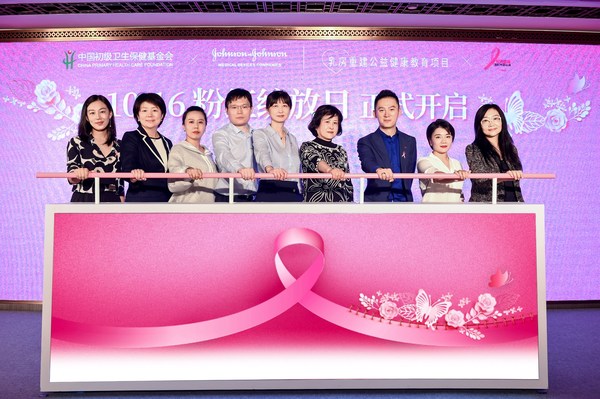
10.16 Group Photo at the Launch Ceremony of Pink Bloom Day (from left to right: Chen Zhuo, renowned young sculptor; Tao Yue, Vice President of Corporate Communications and Public Affairs, Johnson & Johnson China; Ms. Chen, patient representative for breast cancer breast reconstruction; Cao Ayong, Department of Breast Surgery, Fudan University Shanghai Cancer Center; Yin Jian, Director of the Breast Reconstruction Department, Tianjin Medical University Cancer Institute and Hospital; Hu Ningning, Vice Chairman of the China Primary Health Care Foundation; Chen Xi, General Manager, China Region, Cardiovascular and Specialty Solutions, Johnson & Johnson Medical; Mo Huilan, World Women’s Gymnastics Champion; Zhang Yan, Editor-in-Chief of Fashion Health)
Representatives from all parties read aloud the “Pink Blossom Initiative” at the meeting, aiming to enhance awareness among patients, healthcare professionals, and the general public regarding post-mastectomy breast reconstruction through a series of public welfare health education and science popularization activities. The initiative encourages women to prioritize breast health and calls on all sectors of society to jointly foster a positive and supportive public opinion environment for breast cancer patients.
Impact of Mastectomy on Quality of Life in Breast Cancer Patients
According to data released by the National Cancer Center in 2019, there were approximately 304,000 new cases of female breast cancer annually in China. In 2015, breast cancer accounted for 17.1% of all malignant tumors in women, ranking first among female malignancies.[1], and the onset of the disease shows a significant trend toward younger populations. With the continuous improvement in the standardization of clinical diagnosis and treatment of breast cancer in recent years, the 5-year survival rate for breast cancer patients in China has reached 83.2%.[2], breast cancer has entered the ranks of chronic disease management.
A questionnaire survey showed that 97.5% of breast cancer surgery patients felt anxious, 93.3%[3]Breast cancer surgery patients experience heightened feelings of inferiority. Professor Yin Jian, Director of the Breast Reconstruction Department at Tianjin Medical University Cancer Institute and Hospital, stated, “Currently, it is particularly important for post-mastectomy breast cancer patients to return to normal life. A survey involving 110 hospitals showed that, as of 2017, the breast reconstruction rate in China was only 10%.”[4]around, compared to 40% in developed countries[5]The aforementioned disparities are significant. The high incidence rate coupled with an extremely low reconstruction rate leaves female patients living under the shadow of mastectomy, bearing substantial physical and psychological burden.”
Dr. Chen Xi, General Manager of Johnson & Johnson MedTech’s Cardiovascular and Specialty Solutions China Division, stated, “Many patients undergoing total mastectomy are completely unaware of breast reconstruction as an option, thereby missing the optimal timing for the procedure. Many patients continue to regret their incomplete breasts years after surgery, with some even unable to return to normal life as a result. Breast reconstruction is a mature, scientifically validated solution that has been extensively clinically verified internationally.”
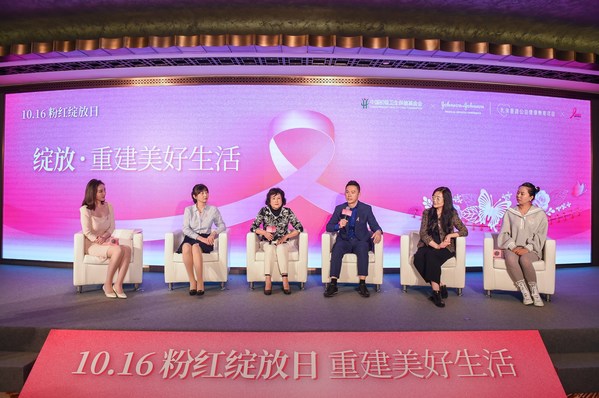
Chen Xi, General Manager of Johnson & Johnson Medical’s Cardiovascular and Specialty Solutions Business in China, participated in the roundtable discussion.
Strengthening the Training of Breast Reconstruction Surgeons to Meet the Growing Needs of Patients
When aware of breast reconstruction surgery, breast cancer patients demonstrate a strong willingness to undergo the procedure. In February 2018, a multicenter survey titled “A Multicenter Survey on the Willingness for Breast Reconstruction among Chinese Female Breast Cancer Patients” showed that 35.1%[5]of the respondents expressed interest in breast reconstruction.
“Currently, both doctors and patients in China still lack sufficient awareness of the safety of reconstruction.” Professor Yin Jian introduced, “Considering factors such as the high technical starting point, significant difficulty, and long training cycle for reconstruction surgery, we should strengthen the cultivation of specialized talent. We should also advocate for a multidisciplinary team (MDT) collaborative treatment model.””
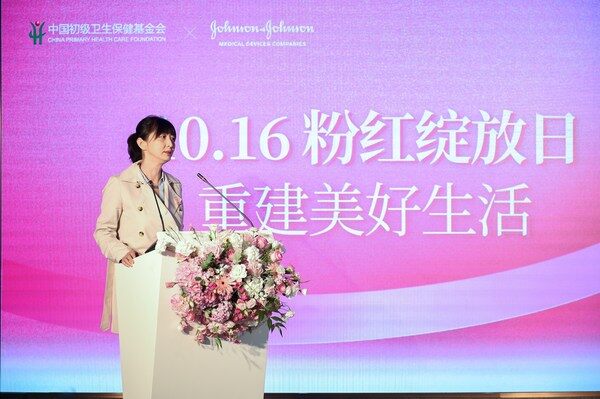
Address by Dr. Yin Jian, Director of the Department of Breast Reconstruction, Tianjin Medical University Cancer Institute and Hospital
Professor Yin Jian stated that breast reconstruction not only helps patients who are unable to undergo breast-conserving surgery to regain their breasts and restore bodily integrity, but also improves their psychological well-being and quality of life in the long term. A study presented at the 2017 American Society of Clinical Oncology (ASCO) Annual Meeting indicated that patients with favorable postoperative psychological status had better survival outcomes than those with poor psychological status.[6]Extensive international clinical experience has demonstrated that breast reconstruction following mastectomy for breast cancer is oncologically safe; it does not interfere with postoperative adjuvant therapy, disease outcomes, or the detection of recurrence.
Professor Yin Jian emphasized, “Clinically, surgeons often pay insufficient attention to breast reconstruction. During mastectomy, they may neglect to discuss breast reconstruction as an option, causing a significant number of patients to miss the optimal timing for reconstruction. It is hoped that more physicians will recognize breast reconstruction as an integral component of comprehensive breast cancer treatment.”
Mobilizing Social Forces to Enhance Public Awareness of Breast Reconstruction
At the event, as representatives from various sectors activated the launch mechanism, China’s inaugural “Pink Blossom Day” was officially established. Young physician representatives from across the country read aloud the “Pink Blossom Initiative,” expressing their firm commitment to actively advancing breast cancer treatment standards and breast reconstruction, and calling on all stakeholders to join forces in providing breast reconstruction as a clinical option for breast cancer patients.
Building on “Pink Blossom Day,” the China Primary Health Care Foundation will also launch a nationwide series of science popularization and education activities, including public education campaigns to be rolled out in multiple cities such as Guangzhou, Shanghai, Xi’an, and Chongqing, as well as continuing medical education programs for clinicians.
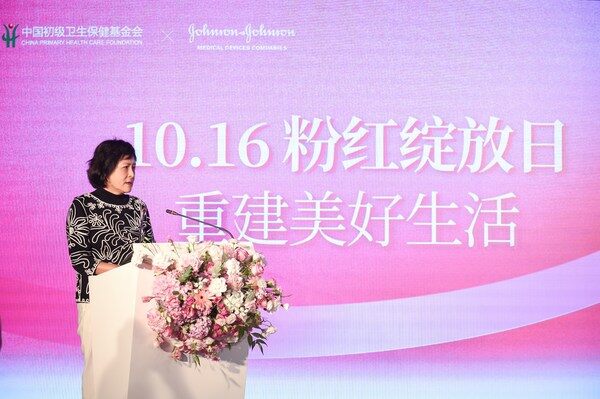
Address by Hu Ningning, Vice Chairman of the China Primary Health Care Foundation
Ms. Hu Ningning, Vice Chairperson of the China Primary Health Care Foundation, stated, “The public welfare campaign initiated by the China Primary Health Care Foundation represents an active response to and implementation of the Healthy China 2030 strategy. We hope this initiative will enable more patients to become informed earlier, exercise their right to choose, and embrace a healthy life once again.”
Dr. Chen Xi, General Manager of the Cardiovascular and Specialty Solutions segment of Johnson & Johnson Medical China, stated, “This public welfare health education initiative aims to address awareness gaps regarding clinical options such as breast reconstruction, integrating breast reconstruction into the concept of early diagnosis and treatment of breast cancer as well as into public discourse. Supporting the public welfare health education project on breast reconstruction and the establishment of ‘Pink Blossom Day’ demonstrates Johnson & Johnson Medical’s care for breast cancer patients and its determination to show compassion through action, reflecting the company’s commitment to empowering Healthy China through innovation.”
Zhang Yan, Editor-in-Chief of Fashion Health, stated, “As the media outlet that introduced the ‘Pink Ribbon’ campaign to China, Fashion Health has consistently kept a close watch on new developments in the field of breast cancer treatment, actively disseminated knowledge on breast cancer prevention and control, and advocated for women to care for themselves and pay attention to breast health. This year, we have had the opportunity to collaborate with various parties to advocate extending the journey of breast cancer treatment to include breast reconstruction, bringing this topic into a broader social context, which is of great significance. We hope to seize the ‘Pink Blossom Day’ as an opportunity to convey love and hope to millions of Chinese women, generating a powerful force that transforms the arduous path of fighting breast cancer into a warm and loving journey.”
The Foundation stated that it would harness multi-stakeholder efforts to establish “Pink Blossom Day” as an open platform for breast cancer prevention and control advocacy, aiming to enhance public awareness of breast cancer diagnosis and treatment, further promote the concept of breast reconstruction within the medical profession, and explore systematic approaches to cultivating relevant healthcare professionals, thereby addressing the current imbalance in medical resource distribution.
[1] National Cancer Center. 2019 National Cancer Statistics
[2] Allemani C, et al. Global surveillance of trends in cancer survival 2000-14 (CONCORD-3): analysis of individual records for 37 513 025 patients diagnosed with one of 18 cancers from 322 population-based registries in 71 countries. Lancet. 2018 Mar 17;391(10125):1023-1075.
[3] Liu Siwen, et al. Research Progress on Psychological Problems and Nursing Interventions in Breast Cancer Patients. Modern Nursing, 2003, 9(5): 341-342
[4] Xiu BQ, et al. A cross-sectional survey of postmastectomy breast reconstruction in China. Chinese Journal of Oncology, 2019, 41(7): 546-551
[5] Breast Surgery Group, Surgical Branch of Chinese Medical Association. Chinese expert consensus on postmastectomy breast reconstruction (2019 edition). Chinese Journal of Practical Surgery, 2019, 39(11): 1145-1147
[6] Beith. Abstract: LBA10000. 2017 ASCO