

Impulse Dynamics Files for IPO: Pioneering CCM Therapy for Heart Failure Reaches Global Markets Across 40+ Countries

Impulse Dynamics
Chronic Heart Failure Medical Device Developer
In late August 2020, the Centers for Medicare & Medicaid Services (CMS) announced a proposal under which CMS agreed to provide coverage for medical devices designated as Breakthrough Devices by the FDA.
Once the proposal takes effect, U.S. Medicare coverage will also become effective on the date the Breakthrough Device receives FDA marketing approval, with a validity period of four years.For patients, this translates into substantial cost savings and a reduced financial burden on their families; for the startup that developed the breakthrough device, it enhances product visibility and expands the device’s market reach.
The products are sold in more than 40 countries and regions, with over 80 papers published cumulatively.
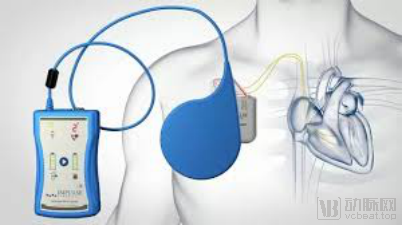
The announcement of this proposal has drawn widespread attention from U.S. startups, including Impulse Dynamics.Impulse Dynamics’ Optimizer® system received the FDA’s Breakthrough Device designation in 2015., and received commercialization approval in the United States in 2019.
To date, the Optimizer® has been implanted in more than 4,000 patients and is currently marketed in Europe, China, Brazil, India, and over 40 other countries worldwide.Impulse Dynamics has completed numerous clinical studies, including several randomized controlled trials, and has published more than 80 papers in medical journals.
In 1996, Simos Kedikoglou quietly founded Impulse Dynamics in London, United Kingdom. For the subsequent years, Impulse Dynamics remained dedicated to the research and development of innovative devices for heart failure. The company primarily focuses on electrical therapy for the treatment of heart failure, an approach inspired by scientific discoveries that tissue function responds to electrical stimulation.
A Decade of Solitary R&D: Brewing Wine to Discuss Heroes in Due Time
Based on these scientific findings, Impulse Dynamics aims to improve tissue characteristics and function through predictable and reproducible delivery of electrical signals. Product development is a long and lonely journey,In 2006, Impulse Dynamics publicly announced that its Optimizer® device had successfully completed its first implantation.Prior to this, there had been no other news reports related to Impulse Dynamics, a silence that lasted for 10 years.
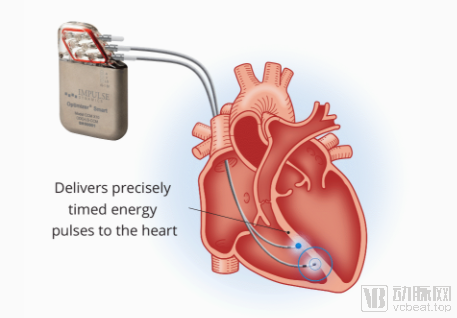
Optimizer® Three-Lead System
The Optimizer® Three-Lead System is a device developed based on Cardiac Contractility Modulation (CCM) technology, with an appearance similar to that of a pacemaker. It delivers non-excitatory electrical stimuli to the myocardium, thereby inducing various biochemical and neurohormonal changes in the cardiac muscle.In this way, myocardial contractility is enhanced without a corresponding increase in oxygen consumption, ultimately achieving the goal of more efficient cardiac work.。
The Optimizer® System consists of several components, including an implantable pulse generator, a battery charger, a programmer, and software.The pulse generator is implanted subcutaneously in the upper left or right chest and connected to three leads implanted in the heart. After device implantation, the physician will test and program the device to deliver electrical pulses to the heart during the effective refractory period of the ventricles, thereby helping to improve cardiac contractility.
Common pacemakers and defibrillators restore normal heart rate by regulating cardiac rhythm. The Optimizer® is unique in that it primarily modulates myocardial contractility, and as of 2006, no other device operated on the same principle as the Optimizer®.
This is also one of the reasons why Impulse Dynamics needs to spend a lot of time on research and development. After all, the birth of new things always makes it impossible to stop people from having doubts. Before there are credible experimental results, refuting these doubts cannot be justified. Only practice can lead to true knowledge.
50 Trial Sites, 760 Patients: 2-Year Study Demonstrates Product Safety and Efficacy
In the same year,Impulse Dynamics also plans to recruit heart failure patients to conduct a randomized clinical trial named FIX-HF-5.This study aims to investigate the impact of Optimizer® on approximately 50 patients with Stage III or IV heart failure in New York, USA.
In June 2007, the Optimizer® System received CE marking in Europe., and obtained approval for sales in Europe. Meanwhile, patient enrollment for the FIX-HF-5 Congestive Heart Failure (CHF) study commenced.
However, the actual number of enrolled participants far exceeded 50; Impulse Dynamics underestimated the enthusiasm of heart failure patients for the Optimizer® device. The FIX-HF-5 trial was conducted at more than 50 study sites across the United States.These sites recruited 760 patients within just two years, fully demonstrating public confidence in this technology and reflecting the urgent needs of heart failure patients.。
To ensure a unified assessment of the product’s efficacy, the company has also established a set of standardized criteria. Functions performed by Impulse Dynamics during the trial and throughout the follow-up periodThe assessment includes cardiopulmonary treadmill exercise testing, the six-minute walk test, NYHA classification, and quality of life scores.. In addition, an independent Data and Safety Monitoring Committee is also monitoring the safety of the device, such as by analyzing hospitalization rates, case fatality rates, and determining the causes of patient deaths.
This randomized clinical trial lasted nearly two years, and the results of the FIX-HF-5 study were announced at the 58th Annual Scientific Session of the American College of Cardiology in 2009. The results indicated that, in terms of efficacy, patients treated with the Optimizer® device showed a significant improvement in exercise tolerance compared to the control group, as evidenced by an increase in peak oxygen consumption (p = 0.02) and improved quality of life.
Clinical trial data from 760 patients have confirmed the safety and efficacy of the Optimizer® device; however, there is still a long road ahead to obtain regulatory approval for market launch in the United States. Before that can happen, Impulse Dynamics must prioritize how to make its device accessible to heart failure patients worldwide while achieving profitability.
Securing financing to drive commercialization in Europe and planning the next clinical trial
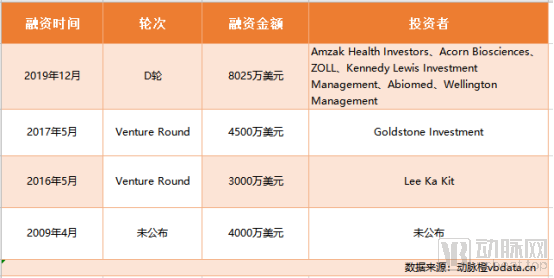
To address the relevant issues, Impulse Dynamics has decided to launch a round of financing.In April 2009, Impulse Dynamics completed a $40 million round of financing., the financing will be used to advance the commercialization of Optimizer® in Europe and to conduct the next phase of clinical research programs in the United States.
As for how to advance the commercialization process in Europe, Impulse Dynamics has decided to seek collaborative business partners.In February 2012, Impulse Dynamics and the newly established Australian company Vitality Devices signed a strategic Asia-Pacific distribution agreement.Under the agreement, Vitality will distribute Impulse Dynamics’ Optimizer® device for the treatment of chronic heart failure (CHF). The device will be marketed in multiple countries and regions, including Australia, Singapore, Malaysia, and South Korea.
Subsequently, Impulse Dynamics focused more on conducting clinical trials to penetrate markets in other countries.In 2015, the Optimizer® device received the FDA Breakthrough Device designation.. The conduct of clinical trials requires substantial human and material resources, which necessitates the injection of funding.
From 2016 to 2017, Impulse Dynamics completed two rounds of financing, raising a total of $75 million. The funds were used to continuously expand the scope of product commercialization and to advance clinical and product development.
Meanwhile, it has also been approved in China.In December 2017, Impulse Dynamics announced that it had received approval from the CFDA., and decided to initiate commercial sales in China. In May 2018, the results of the FIX-HF-5C trial were presented at the Heart Rhythm Society meeting held in Boston and published in the Journal of Cardiac Failure.
This study primarily investigates the safety of the device and the efficacy of CCM therapy. The results indicate that, compared with the control group, patients receiving CCM therapy demonstrated improved exercise tolerance and significantly better quality of life. Additionally, the hospitalization rate among heart failure patients was reduced, wherein35% of Patients Achieved Clinical Efficacy Exceeding Expectations。
Received FDA Commercialization Approval; Launched Second-Generation Device
As the saying goes, “Hard work pays off, and the stars shine for those who press on.” Compelling clinical trial data led to the FDA’s approval for commercialization of the Optimizer® device in March 2019. The first commercial implantation was performed in May of the same year; the entire procedure took less than an hour, and the patient met discharge criteria the following day.
Impulse Dynamics is a company that operates with quiet determination, as evidenced by the nearly decade-long period of dormancy between its founding and the successful clinical trials for product implantation. In the absence of convincing evidence to present to the public, Impulse Dynamics did not disclose any information to the outside world.
This time is no different,In October 2019, a few months after the Optimizer® device received commercial approval, Impulse Dynamics publicly announced the second-generation Optimizer® dual-lead system., and the system has received PMA approval, allowing for commercialization. The study results indicate that patients receiving the dual-lead system have better outcomes, including improved VO 2Peak (a common measure of exercise tolerance) and device-related complications.
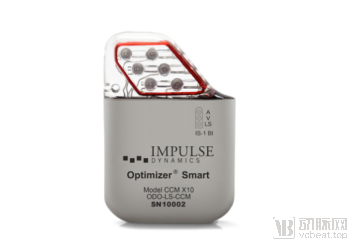
Second-Generation Optimizer® Dual-Lead System
To make the company’s devices more widely accessible to heart failure patients,Impulse Dynamics Advances Optimizer® Through Transitional Pass-Through (TPT) Payment DesignationAfter confirming that Optimizer® delivers substantial clinical improvements for patients with heart failure, the Centers for Medicare & Medicaid Services (CMS) accordingly adjusted reimbursement rates for this technology to facilitate broader patient access. This regulation, which took effect on January 1, 2020, streamlined the process for hospital outpatients to receive Cardiac Contractility Modulation (CCM) therapy and also increased reimbursement amounts.
Although reimbursement amounts have increased, the geographic coverage for current breakthrough devices primarily depends on the policies of Medicare Administrative Contractors (MACs). This often results in coverage being limited to a single state, excluding others. Consequently, while patients in covered states can benefit from insurance reimbursement, patients in other states must bear the full cost of treatment out-of-pocket.
In response to this, the Centers for Medicare & Medicaid Services (CMS) introduced a rule this year that provides coverage for breakthrough devices. Although public feedback is still being monitored, current indications suggest that it is beneficial for the majority of patients. This means that following the implementation of this rule, more patients will be able to access the Optimizer® device under more favorable terms.
Heart failure is the final frontier in the field of cardiovascular medicine. Therapeutic goals can be achieved through valve repair or heart rate control. Device-based therapy, as an important modality, is also included among the key approaches for managing heart failure.Currently, device-based therapeutic modalities include CRT, ICD, CCM, and VNS.
With the advancement of technology, more biomarkers, new materials, and novel technologies will be discovered. However, the discovery of new innovations requires more rigorous and compelling experimental data. What companies or researchers can do is to devote themselves to dedicated research and development. Take Impulse Dynamics’ Cardiac Contractility Modulation (CCM) therapy as an example: at that time, there were no similar therapeutic devices on the market. Impulse Dynamics spent nearly a decade focusing on R&D, ultimately breaking into the market by virtue of successive successful clinical trial results.
Countless researchers in this field have pressed forward, one after another, to develop new solutions and explore uncharted territories. Whether driven by fame, profit, public welfare, or other motivations, their efforts have ultimately brought greater hope to patients. Thus, no matter how tedious or protracted the research and development process may be, it is undoubtedly worthwhile.