

CASIBrain Unveils Innovative, Non-invasive, Real-time Cerebral Oxygenation Monitoring Devices for Multi-scenario Clinical Applications

Casibrain Technology
Brain Diagnostic and Therapeutic Equipment Developer
On October 22, the 83rd China Medical Equipment Fair (CMEF) concluded successfully at the National Exhibition and Convention Center in Shanghai. As the only large-scale medical device exhibition held this year, the event not only attracted significant attention from domestic and international media but also gathered numerous leading industry players, including Casibrain Technology. At this year’s CMEF, Casibrain Technology showcased two products: a non-invasive cerebral oximetry monitor and a wireless cerebral oximetry monitoring headband. The company also successfully hosted a special session on non-invasive cerebral oximetry monitoring themed “Wireless Freedom, Unlimited Care.” Distinguished attendees included Dr. Wu Jingxiang, Director of the Department of Anesthesiology at Shanghai Chest Hospital affiliated with Shanghai Jiao Tong University, and Dr. Zhang Xin, Chairman of Casibrain Technology.
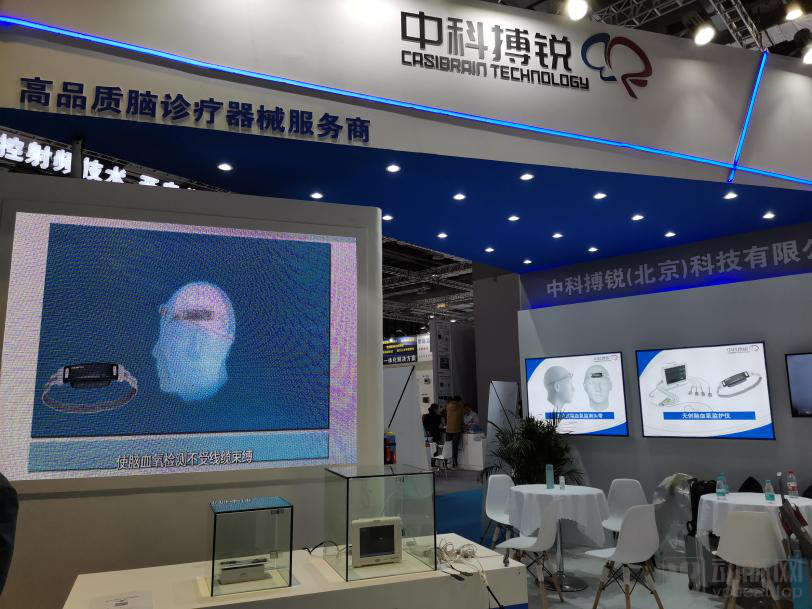
Casibrain Technology, established in 2017 as a spin-off from the Institute of Automation of the Chinese Academy of Sciences, is a national high-tech enterprise integrating research and development, manufacturing, and sales of high-quality brain diagnostic and therapeutic devices. Since its inception, Casibrain Technology has consistently adhered to a “brain-centric” R&D philosophy, focusing on developing brain monitoring products and building an ecosystem for brain diagnosis and treatment.
According to Dr. Zhang Xin, founder of Casibrain Technology, jugular bulb catheterization has long been regarded as the gold standard for cerebral oxygen monitoring. On one hand, the procedure requires deep venous puncture, which carries a certain risk of bleeding and can only be performed by experienced medical personnel. On the other hand, this method involves significant time gaps during each detection process, failing to ensure real-time diagnostic capability.
To this end, Casibrain Technology has launched two non-invasive, real-time cerebral oxygen monitoring devices based on near-infrared spectroscopy technology.
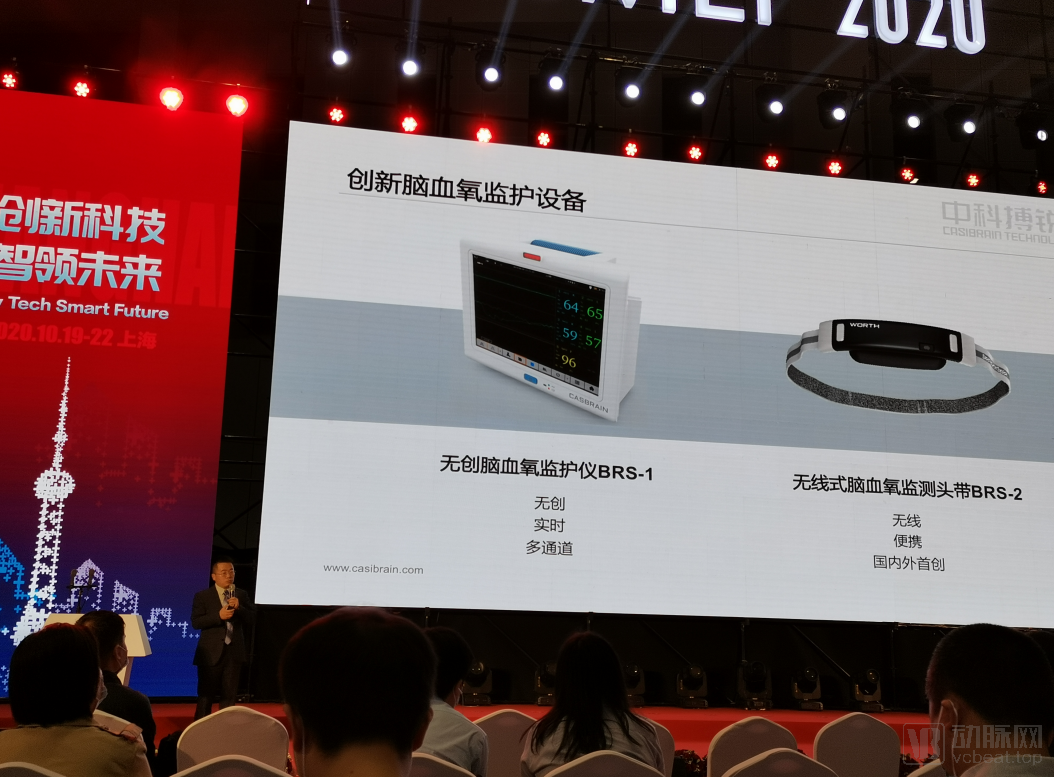
Non-invasive Cerebral Oxygen Monitor: Achieving Precise, Real-time Monitoring of Brain Oxygenation
Casibrain Technology’s portable non-invasive cerebral oximeter features non-invasive, multi-channel capabilities, enabling continuous clinical monitoring of oxygen saturation in the brain, somatic tissues, and peripheral extremities, thereby facilitating early detection of hypoxic-ischemic conditions in the brain and limbs.
Furthermore, this product features a compact design and user-friendly operation, offering significant advantages in intensive care units (ICUs) and during patient transport. Clinical trials have been successfully completed at Xuanwu Hospital of Capital Medical University and Beijing Tiantan Hospital, Capital Medical University. The study established a series of stable blood oxygen saturation stages by adjusting the fraction of inspired oxygen (FiO2) in healthy adult volunteers. Compared with invasive arterial blood gas analysis, the results demonstrated an error margin of no more than 2%.
Dr. Zhang Xin stated that achieving non-invasive, real-time monitoring presents challenges primarily in two aspects: first, overcoming the interference of the skull; and second, selecting optical signals correlated with cerebral blood oxygenation, while also accounting for the influence of skin tone on these optical signals.
Casibrain Technology utilizes near-infrared spectroscopy to filter out environmental interference and physiological noise, while acquiring multi-site blood oxygen saturation data to ensure the accuracy of cerebral oximetry monitoring.
It is reported that the product obtained its Class II medical device registration certificate this year and can be used in multiple departments, including intensive care, anesthesiology, and extracorporeal circulation. Meanwhile, the product’s CE certification is currently underway, laying the foundation for expansion into overseas markets.
Wearable Wireless Cerebral Oxygen Monitoring Headband: Expanding Application Scenarios
Casibrain Technology’s wireless cerebral oximetry headband resembles a hairband in appearance. To use it, simply attach the oxygen saturation sensor to the patient’s forehead, enabling real-time monitoring of cerebral oxygen saturation via multiple smart terminals. Leveraging its wireless capabilities, this cerebral oximetry headband overcomes distance limitations associated with traditional monitoring, thereby extending its application scenarios to departments such as rehabilitation, emergency medicine, and neurology.
During the on-site demonstration of cerebral oxygen saturation monitoring, many attendees tried out the oxygen monitoring headband. If the headband was not worn correctly, the smart terminal would immediately provide feedback to alert the operator to make corrections. Additionally, this headband can be used in conjunction with Casibrain Technology’s patient monitors, effectively improving monitoring efficiency for patients.
Currently, all products under Casibrain Technology are 100% independently developed. The company also operates its own production lines and wholly-owned factories, which has optimized the production costs of its non-invasive cerebral oxygen monitoring devices, giving them a significant competitive advantage in pricing.
Regarding future product development, Dr. Zhang Xin stated that Casibrain Technology will gradually expand its portfolio of brain diagnosis and treatment products, building upon cerebral physiological monitoring to include series for brain consciousness assessment and training, as well as brain functional activity evaluation and regulation. Meanwhile, adopting a five-step strategy comprising standalone monitoring devices, intelligent cloud-based monitoring, intelligent assessment systems, neonatal care, and rehabilitation assistance systems, the company will leverage its technological advantages in brain science to broaden application areas and establish a data platform enabling interoperability and shared access between information and devices.