

Maoxing Bio Receives SATOL Innovation Award for Allogeneic CAR-T Therapy and Files IPO Prospectus
Maximum Biology
Developer of Novel Immunotherapy Technologies
ZJU
Comprehensive, Research-Oriented, and Innovative University
Suzhou, November 12, 2020 /PRNewswire/ -- Recently, the 4th World Life Science and Technology Conference (SATOL) and the Life Science and Technology Innovation and Entrepreneurship Forum, co-hosted by the Chinese Academy of Engineering, the Jinan Municipal People's Government, and Zhejiang University, were held in Jinan City, Shandong Province. Suzhou Maoxing Biotechnology Co., Ltd., an innovative enterprise in the field of life sciences and technology, attended the forum and stood out among hundreds of projects with its forward-looking allogeneic (universal) CAR-T cell therapy, winning the TOP 10 Innovation Award presented by the conference organizing committee. More than 20 academicians, including Academician Li Lanjuan, Academician Zhang Boli, and Academician Yang Shengli, attended the event.
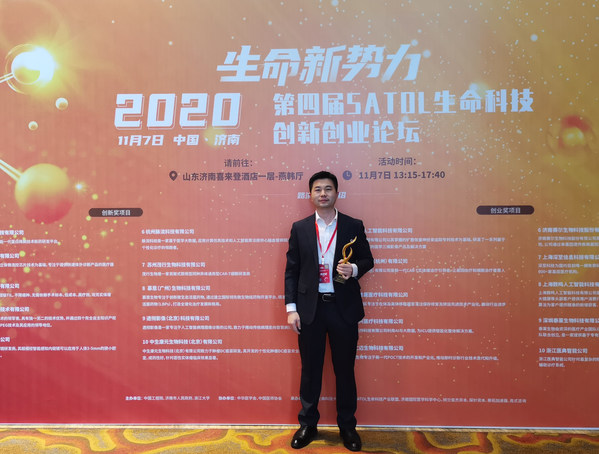
Maoxing Biotechnology Wins Innovation Award at the World Life Sciences Conference
Since its inception, SATOL has garnered widespread attention in the broader healthcare industry for its rigorous scientific approach and innovative drive in translating new technologies. “We are deeply honored to receive the Innovation Award presented by the conference. Life sciences are providing new momentum and direction for human health development. We look forward to closer collaboration with clinicians, life scientists, and the venture capital community to effectively translate research achievements into accessible and affordable clinical solutions, thereby truly benefiting patients,” said Dr. Shang Xiaoyun, Founder and CEO of Suzhou Maoxing Biotechnology Co., Ltd.
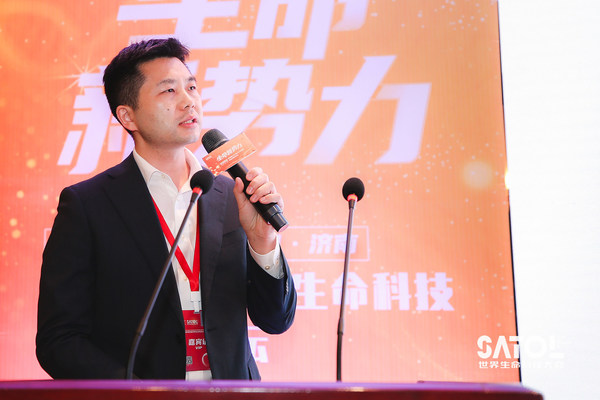
Dr. Shang Xiaoyun Delivers Keynote Address at the Conference
The allogeneic (universal) CAR-T cell therapy, for which Suzhou Maoxing Biotechnology Co., Ltd. was recently awarded, innovatively combines gene editing technology with immunotherapy. Dr. Shang Xiaoyun explained, “Autologous CAR-T therapy involves extracting a patient’s own healthy T cells, expanding them in vitro, and then reinfusing them into the patient to attack tumor cells. However, this approach is costly, and one-third of patients with advanced-stage cancer are unable to obtain sufficient quantities of high-quality lymphocytes or experience failure during ex vivo manufacturing. In contrast, allogeneic CAR-T therapy utilizes mass-produced, off-the-shelf T cells, employing gene editing technologies to overcome immune rejection issues before infusion into cancer patients for anti-tumor treatment. Allogeneic (universal) CAR-T therapy can effectively reduce treatment costs, achieve superior therapeutic outcomes, and bring hope to a broader population of cancer patients.”
Cell therapy represents a novel therapeutic approach for treating major malignant diseases such as cancer. Cell therapy technologies, including those utilizing stem cells and immune cells, have already demonstrated clinical efficacy unattainable by conventional chemotherapy or targeted drugs. According to the National Comprehensive Cancer Network (NCCN), the global market size for CAR-T therapy in hematologic malignancies is approximately $21.2 billion, while the market potential for solid tumors is estimated to be 20 times larger than that of hematologic malignancies. Nevertheless, due to the high cost of autologous CAR-T therapy, its potentially transformative impact on oncology treatment has yet to meet expectations. By adopting allogeneic CAR-T therapy, on one hand, immune cells derived from young, healthy donors are healthier than those from cancer patients, thereby increasing the likelihood of successful manufacturing; on the other hand, scalable production enables off-the-shelf products, which not only reduces costs but also allows for immediate clinical application. “I believe allogeneic CAR-T cell therapy is the future trend,” added Dr. Shang Xiaoyun.
Currently, Suzhou Maoxing Biotechnology Co., Ltd. is conducting collaborative research with medical institutions including the First Affiliated Hospital of Soochow University, the First Affiliated Hospital of Zhengzhou University, the First Affiliated Hospital of Anhui Medical University, the Affiliated Hospital of Nantong University, Suzhou Children's Hospital, and Zhongshan People's Hospital on its allogeneic (universal) CAR-T cell therapy, covering various indications such as hematologic malignancies and solid tumors. Upon successful commercialization, this technology is expected to enable Maoxing Biotechnology to leverage its proprietary platform to reduce the market price of CAR-T therapy to under RMB 50,000, thereby providing patients with an affordable anti-tumor clinical solution.
Whether for autologous or allogeneic CAR-T therapy, the establishment of a public immune cell bank is particularly urgent and critical. Extracting and storing healthy immune cells from high-risk individuals prior to disease onset or in the early postoperative period after tumor resection, as well as encouraging healthy volunteers to proactively store immune cells for allogeneic matching, will provide ample resources and a solid foundation for the long-term development of immune cell therapies. Raising public awareness of immunity and strengthening immune assessments across society are effective approaches to reducing overall healthcare costs. Therefore, Suzhou Maoxing Biotechnology Co., Ltd. is actively integrating key upstream and downstream nodes, collaborating with the Ministry of Science and Technology, the National Health Commission, and multiple local governments to co-establish a public immune cell resource platform. Leveraging its profound insights and deep understanding of cellular immunology, the company aims to facilitate the further advancement of CAR-T therapy in China.
Humanity’s quest for health is unending. Following the countless miracles that biomedicine has created for health development, cell therapy will offer new possibilities and expand new frontiers for human health.