

DragonFly-T™ Achieves Major Breakthrough with First-Ever Transcatheter Tricuspid Valve Repair in Mainland China

Valgen Medtech
Minimally Invasive Interventional Device Developer

SAHZU
China's First Grade III Class A Hospital
Hangzhou, December 18, 2020 /PRNewswire/ -- On December 15, 2020, the team led by Professor Wang Jian'an from the Second Affiliated Hospital of Zhejiang University School of Medicine successfully performed the first human clinical application of the DragonFly-T™ transcatheter tricuspid valve clipping system in mainland China. The patient's tricuspid regurgitation was reduced from severe torrential regurgitation (5+) preoperatively to mild regurgitation (1+) postoperatively, and the patient was discharged smoothly on December 17.This is the first domestically developed transcatheter tricuspid valve repair product via the femoral vein in China to be successfully applied in clinical practice, and alsoMainland ChinaThe First Transcatheter Tricuspid Valve Repair Procedure Marks a Major Breakthrough in China’s Field of Interventional Tricuspid Valve Therapy。

Figure 1. Postoperative group photo of the surgical team
This case involves a 79-year-old female patient who presented primarily with “recurrent chest tightness for over 1 year”"AdmissionThe patient was diagnosed with atrial fibrillation, functional tricuspid regurgitation, NYHA Class IV heart failure, and ascites. Preoperative transthoracic echocardiography revealed severe-to-critical tricuspid regurgitation, biatrial enlargement (left atrial transverse diameter 5.69 cm, left atrial longitudinal diameter 6.24 cm, right atrial transverse diameter 4.69 cm, right atrial longitudinal diameter 6.61 cm), a tricuspid regurgitant vena contracta width of approximately 0.84 cm, an effective regurgitant orifice area of 0.84 cm², and a pulmonary artery systolic pressure of 39 mmHg. The patient had a more than 10-year history of atrial fibrillation managed with warfarin anticoagulation, and comorbidities including coronary artery disease, renal insufficiency, and hyperuricemia. Despite optimized medical therapy, the patient experienced recurrent heart failure episodes. Given the prohibitively high risk of open-heart surgery and the inability to obtain effective treatment at multiple hospitals, Professor Wang Jian’an’s heart team decided to perform minimally invasive transcatheter tricuspid valve repair via the transfemoral venous approach using the DragonFly-T™ transcatheter tricuspid valve clip system.
This procedure marked the first transcatheter tricuspid valve repair performed in mainland China. To ensure the safety and efficacy of the treatment, Professor Wang Jian’an’s team conducted extensive preoperative assessments of tricuspid valve anatomy, imaging, and procedural techniques. They held multiple detailed preoperative discussions with Professor Scott Lim from the University of Virginia Medical Center in the United States and Professor Lin Yixian from the Asia Pacific Medical Center in Hong Kong, formulating a rigorous and comprehensive treatment plan. Scientific and thorough perioperative management was implemented to ensure the patient underwent the procedure in optimal condition. Intraoperatively, Professor Wang Jian’an’s team engaged in real-time technical exchanges with Professor Scott Lim and Professor Lin Yixian via video conference.
The procedure was performed under general anesthesia via a femoral venous approach. Under the guidance of transesophageal echocardiography (TEE) and fluoroscopy, the DragonFly-T™ clip delivery system was advanced into the right ventricle to capture and clamp the anterior and septal leaflets of the tricuspid valve. After closing the clip device and repeatedly confirming the procedural efficacy using TEE, the tricuspid valve clip was finally released. A total of three clips were implanted during the procedure. The position and function of the clips were satisfactory. Tricuspid regurgitation severity decreased from grade 5+ preoperatively (Figure 2) to grade 1+ immediately postoperatively (Figure 3), with significant improvement in hepatic venous flow (Figure 4). The procedure was completed successfully.
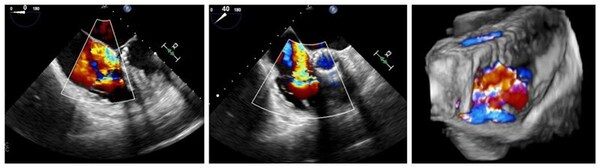
Figure 2. Preoperative transesophageal color Doppler ultrasound image
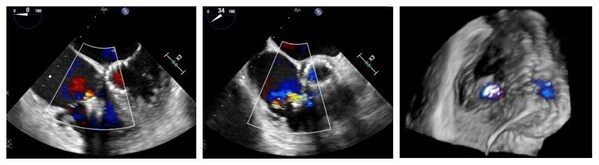
Figure 3. Postoperative transesophageal color Doppler ultrasound image
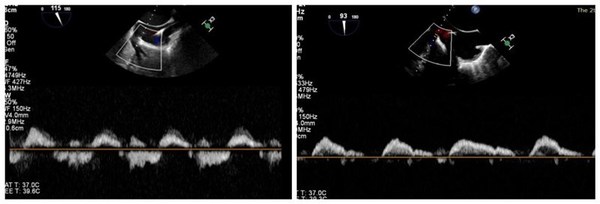
Figure 4. Preoperative (left) and postoperative (right) transesophageal pulsed Doppler hepatic venous flow profiles
On the second postoperative day, the patient was able to ambulate independently with ease of movement, and the preexisting discomfort symptoms were significantly alleviated. The patient was discharged two days after surgery. Pre-discharge transthoracic Doppler echocardiography demonstrated mild tricuspid regurgitation, graded as 1+ (Figure 5).
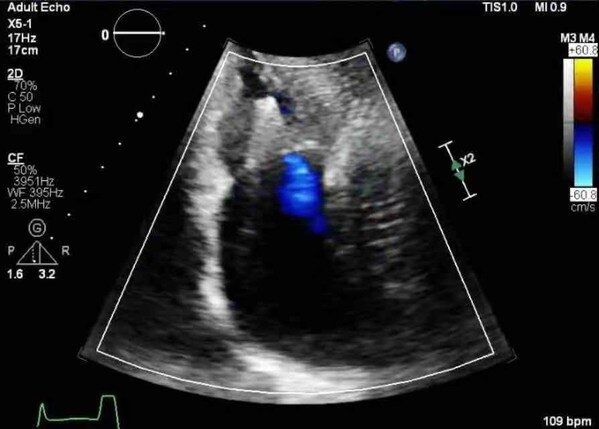
(Figure 5. Pre-discharge transthoracic color Doppler echocardiogram)
In recent years, transcatheter intervention for tricuspid regurgitation has become a research hotspot and a significant challenge in the field of heart valve disease treatment. The anatomy of the tricuspid valve is extremely complex, featuring a larger annulus and valve area compared to the mitral valve, with the greatest variability, more fragile annular tissue, and thinner leaflets and chordae tendineae. Its complex adjacent structures make it prone to causing damage to surrounding tissues. The tricuspid annulus has a semi-lunar saddle shape, is irregular, and is most susceptible to dilation; furthermore, the severity of tricuspid regurgitation is most easily influenced by volume load. In addition, the right ventricle contains abundant trabeculae carneae, muscular columns, and chordae tendineae, and has a thin free wall. Moreover, the low blood flow velocity in the right ventricle predisposes to thrombus formation, posing significant challenges to the design and application of surgical devices.
Currently, transcatheter intervention for tricuspid valve disease worldwide remains in the early stages of research and development or initial clinical validation. China’s DragonFly-T™ is the third transcatheter tricuspid valve repair system globally, following Abbott’s TriClip and Edwards Lifesciences’ PASCAL. Abbott’s MitraClip has already been used in more than 2,000 patients with tricuspid regurgitation worldwide, accumulating substantial clinical evidence. The next-generation TriClip, specifically designed by Abbott for the treatment of tricuspid regurgitation, demonstrated excellent outcomes in its one-year follow-up results from the TRILUMINATE trial, which were presented at the EuroPCR conference in 2020. These results confirmed the safety, efficacy, and good technical reproducibility of the edge-to-edge repair technique in treating tricuspid regurgitation. Currently, both devices have received CE Mark approval in the European Union, while large-scale clinical studies for FDA approval in the United States are actively underway.
The DragonFly-T™ product used in this procedure is a tricuspid valve repair system independently developed over many years by Valgen Medtech Co., Ltd. and Professor Wang Jian’an’s team at the Second Affiliated Hospital of Zhejiang University School of Medicine (Zhejiang University Second Hospital). Built upon the robust technical platform of the DragonFly™ mitral valve system, its core functions and technical parameters are comparable to those of TriClip and PASCAL, while also offering unique advantages that enhance procedural efficacy, safety, and ease of use.
Professor Wang Jian’an, Party Secretary of the Second Affiliated Hospital of Zhejiang University School of Medicine, stated postoperatively: “The population of patients with tricuspid regurgitation in China is substantial, often presenting with multiple comorbidities. The five-year survival rate for patients with severe tricuspid regurgitation is approximately 34%, and the ten-year survival rate is only about 14%. Currently, clinical pharmacological management yields suboptimal outcomes, while surgical intervention for tricuspid valve disease carries high procedural risk. Furthermore, clinical guidelines lack specific recommendations for the treatment of tricuspid regurgitation. In this case, we achieved favorable procedural outcomes using the DragonFly-T™ device, which is highly encouraging. We look forward to further studies demonstrating the efficacy and safety of the DragonFly-T™.”
Valgen Medtech, headquartered in Binjiang, Hangzhou, specializes in the research and development of therapeutic technologies for structural heart disease, with a particular focus on mitral and tricuspid valve interventions. The company provides systematic solutions (Tool Box Concept) for mitral and tricuspid valve pathologies. Valgen Medtech developed China’s first transapical interventional product for mitral regurgitation, MitralStitch®, which was successfully applied in human clinical cases in January 2018. Additionally, the company developed DragonFly-M, China’s first transfemoral mitral valve repair device.™, was applied clinically on July 23, 2020, and has successfully completed 22 cases of exploratory clinical application;DragonFly-T™, China's First Transfemoral Tricuspid Valve Repair Device,Applied in human clinical trials on December 15, 2020. Valgen Medtech is dedicated to the research and development of a full suite of technologies for minimally invasive interventional treatment of mitral and tricuspid valves, striving to advance the field of structural heart disease therapy and bringing Chinese innovation to benefit the world.