

YouNao Galaxy Secures Over RMB 100 Million in Pre-A Funding to Advance Precision Diagnosis and Treatment of Brain Disorders

Neural Galaxy
Neurological Diagnosis and Treatment Equipment Developer

FreeS Fund
Venture Capital Firms

BOHE Angel Fund
Pharmaceutical and Healthcare Angel Investment Fund

3E Bioventures
Healthcare Industry Investment Institutions
On January 7, VCBeat (WeChat ID: vcbeat) learned that Beijing Neural Galaxy Technology Co., Ltd., a brain science company, announced today the completion of its Pre-A financing round, raising over RMB 100 million. The funds will be used to further accelerate product research and development and optimization, attract top-tier talent, and thereby promote the advancement of precision diagnosis and treatment for brain disorders.
This round of financing was led by Lightspeed China Partners, with participation from FreeS Fund, Peppermint Angel Fund, 3E Bioventures, Qingyuan Capital, and Ray Stata. In late 2019, Neural Galaxy secured a RMB 42 million angel round led by FreeS Fund, with participation from Peppermint Angel Fund, Qingyuan Capital, Ray Stata, and others.
Currently, approximately 1 billion people worldwide suffer from brain disorders, including Alzheimer’s disease, stroke, Parkinson’s disease, epilepsy, and pediatric autism, accounting for 28% of the global burden of disease. As China’s population ages, brain disorders are likely to pose significant challenges to Chinese families and society in the future. Meanwhile, China is experiencing rapid economic growth, and the working population has become a high-risk group for psychological and mental health issues. Public data indicates that over 54 million people in China suffer from depression, making brain disorders an unavoidable social issue.
Diseases such as Alzheimer’s disease and Parkinson’s disease have become pressing social challenges that cannot be ignored. Gaining a deeper understanding of the brain is crucial for comprehending these conditions and represents a key focus of scientific research efforts.
Data released by Alzheimer’s Disease International in 2018 showed that in 2017, the global number of people with dementia was 50 million, equivalent to the population of South Korea or Spain. Of these, approximately two-thirds had Alzheimer’s disease; the remaining one-third included vascular dementia, mixed dementia, dementia with Lewy bodies, and frontotemporal lobar degeneration. All of these conditions cause irreversible damage to the brain. Worldwide, one person develops dementia every three seconds. It is projected that by 2050, the global number of people with dementia will reach 152 million, equivalent to the population of Russia or Bangladesh. Globally, the total cost of caring for people with dementia was estimated at $1 trillion in 2017, and this figure is expected to double to $2 trillion by 2030.
Among these cases, patients in China account for a substantial proportion. A recent study by Professor Jia Jianping’s team at the National Center for Neurological Disorders, Xuanwu Hospital of Capital Medical University, published in The Lancet Public Health, titled “Prevalence, risk factors, and management of dementia and mild cognitive impairment in adults aged 60 years or older in China: a cross-sectional study,” estimated the current status of dementia among the elderly in China, revealing concerning results.
Research estimates indicate that the prevalence of dementia among adults aged 60 and above in China is 6.0%. Specifically, Alzheimer’s disease accounts for 3.9%, vascular dementia for 1.6%, and other types of dementia for 0.5%. Among the Chinese population aged 60 and above, there are 15.07 million individuals with dementia, including 9.83 million with Alzheimer’s disease, 3.92 million with vascular dementia, and 1.32 million with other types of dementia. The prevalence of mild cognitive impairment is 15.5%, affecting approximately 38.77 million people.
However, despite the growing global patient population and rising incidence rates, the actual proportion of patients receiving treatment remains very low due to insufficient public awareness of the disease and the stigma associated with it among most patients. The first "Survey Report on the Living Conditions of Families of Alzheimer's Disease Patients" in China showed that only 7.58% of patients sought medical attention after noticing abnormalities such as forgetfulness and confusion. Data indicates that globally, only 22% of Alzheimer's disease patients have received a diagnosis; in China, merely 21% of patients have received a standardized diagnosis, and only 19.6% have undergone pharmacological treatment.
In fact, some patients with Alzheimer’s disease can prevent the progression of the disease or even achieve a cure through early intervention. The Lancet Commission on Dementia Prevention, Intervention, and Care posits that more than one-third of dementia cases worldwide could be prevented through timely interventions. The 2018 Chinese Guidelines for the Diagnosis and Treatment of Dementia and Cognitive Disorders, published in the Chinese Medical Journal, indicate that diagnosis and treatment during the “stage known to the patient but unknown to the physician” would significantly alleviate patient suffering and might even lead to a cure.
Since 1998, the global community has launched successive offensives against dementia. A total of 100 drug candidates have entered clinical trials, yet only four have gained regulatory approval, and their indicated populations and symptomatic applications remain highly restricted. Although there are currently no interventions capable of halting disease progression in its late stages, evidence suggests that early detection of Alzheimer’s disease enables effective pharmacological management and control. Such intervention can help improve patients’ cognitive function and delay clinical progression by 10 to 15 years.
It is for this reason that the United States, the European Union, and Japan have successively launched brain science initiatives since 2013. The EU took the lead by launching the €1 billion Human Brain Project; subsequently, the United States introduced the $4.5 billion BRAIN Initiative. In 2016, “Brain Science and Brain-like Research” was designated as one of the major scientific and technological innovation projects and programs in China’s 13th Five-Year Plan Outline. According to GlobalData forecasts, the global market for Alzheimer’s disease treatments alone was projected to reach $13 billion in 2023.
Neural Galaxy is an innovative brain science company dedicated to the precise diagnosis and treatment of brain disorders. The company was co-founded in July 2019 by Professor Hesheng Liu of Harvard Medical School, Academician Robert Desimone of the Massachusetts Institute of Technology (MIT), Academician Guoping Feng of MIT, and entrepreneur Kecheng Wei, building upon scientific breakthroughs achieved over many years of research at the Martinos Center, a joint initiative of Harvard University and MIT. In late 2019, the company secured RMB 42 million in angel-round funding.
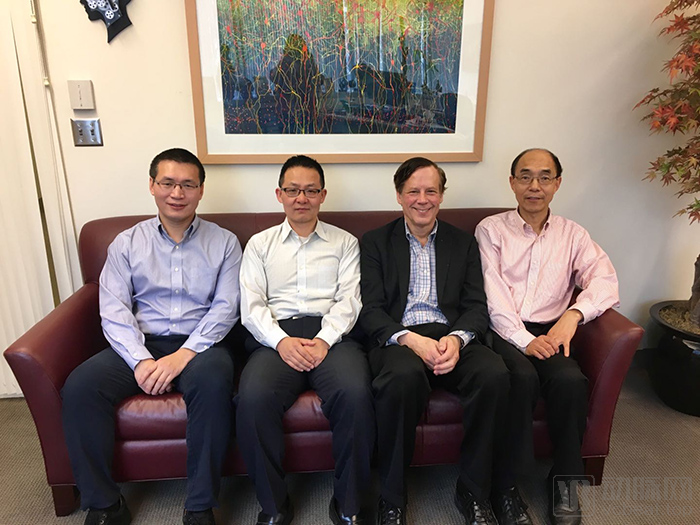
From left to right: Liu Hesheng, Wei Kecheng, Robert Desimone, and Feng Guoping
Neural Galaxy believes that the bottleneck in addressing brain diseases lies in the lack of in-depth understanding of their mechanisms, necessitating urgent scientific breakthroughs. Through over a decade of dedicated efforts, the Neural Galaxy team has successfully developed the world’s first and currently only “Individualized Precision Brain Functional Atlas,” which can precisely quantify more than 200 functional regions across the entire human brain.
Building on the "Individualized Precision Brain Functional Atlas," Neural Galaxy has launched its initial series of products, including the Individualized Precision Brain Function Platform and the Brain Atlas Instrument, leveraging novel hardware and software technologies. Currently, the company’s products have been applied in thousands of cases at renowned Grade A tertiary hospitals, such as Beijing 301 Hospital and Shanghai Huashan Hospital, achieving success in clinical diagnosis and treatment. Neural Galaxy is currently conducting clinical trials for indications including depression, hemiplegia, aphasia, Parkinson’s disease, drug addiction, obsessive-compulsive disorder (OCD), and autism.
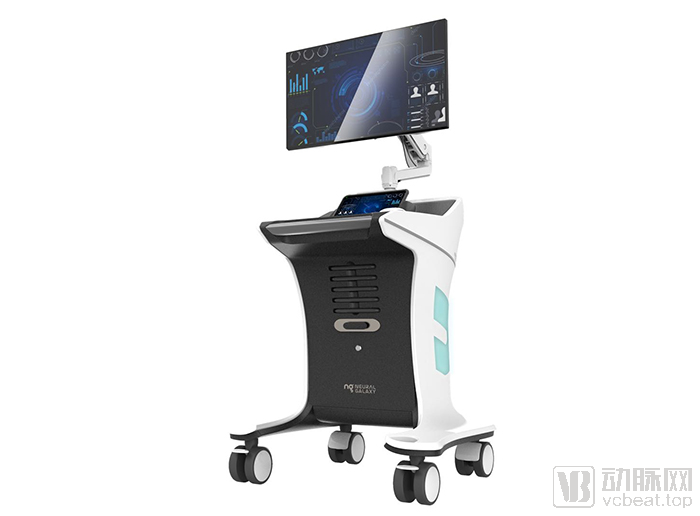
Neural Galaxy Brain Atlas Device
Mi Qun, Founding Partner of Lightspeed China Partners, expressed strong confidence in this round of investment. “Many brain disorders, including Alzheimer’s disease, depression, and pediatric autism spectrum disorder, represent significant challenges facing society today. Neural Galaxy’s interdisciplinary technological breakthroughs have opened an entirely new pathway for the treatment of these brain diseases. Our lead investment reflects Lightspeed’s confidence in Neural Galaxy, a company deeply engaged at the forefront of brain science. We are optimistic about the team’s globally leading R&D capabilities and their determination to innovate. We eagerly anticipate that the company will bring revolutionary changes to the diagnosis and treatment of brain diseases, thereby helping more patients.”
“The future of China’s healthcare sector will be as prosperous as the internet is today.” Ms. Liu Qianye, Founding Partner of 3E Bioventures, also expressed strong confidence in the future of brain science, stating, “Neural Galaxy’s globally groundbreaking medical innovations in brain health have opened up a blue ocean for addressing human brain diseases.”
“Brain diseases represent both a global challenge facing humanity and a vast opportunity for scientific research and the market,” said Wei Kecheng, Co-founder and CEO of Neural Galaxy. “Our understanding of the human brain is still in its early stages. We aim to advance this understanding by developing breakthrough products, providing novel diagnostic technologies and therapeutic approaches, thereby helping to address the global challenge of brain diseases.”
Robert Desimone, a co-founder of Neural Galaxy, a member of both the U.S. National Academy of Sciences and the National Academy of Medicine, and Director of the McGovern Institute for Brain Research at MIT, stated, “In the past, brain science was largely fundamental research far removed from practical applications. Today, after decades of accumulation, brain science is entering an explosive period of application, with a entirely new hundred-billion-dollar industry based on brain science taking shape. We are now able to develop novel therapies based on a fundamental understanding of brain mechanisms. Neural Galaxy’s Individualized Precision Brain Function Platform will help hospitals understand disease mechanisms, identify specific neural circuits requiring treatment, and provide scientifically grounded diagnostics and personalized therapy for each patient.”