

Digital Transformation of Multinational Pharmaceutical Companies in 2020: Navigating Pandemic-Driven Innovation

Takeda
Biopharmaceutical Manufacturer

GSK
Pharmaceutical R&D Manufacturer

Sanofi
Pharmaceutical R&D Developer

Pfizer
Pharmaceutical R&D Developer

AstraZeneca
Biopharmaceutical Manufacturer

Roche
Oncology Drug Research, Development, and Manufacturing

Eli Lilly
Global Pharmaceutical R&D and Production Company
Looking back at 2020, two keywords are unavoidable: “pandemic” and “internet.”
The highly contagious SARS-CoV-2 virus forced people to restrict their social interactions to maintain “social distancing,” yet the internet has shrunk this distance back to zero. While the offline economy inevitably suffered a severe impact from the pandemic, the online economy experienced robust growth. 2020: a year full of challenges and opportunities.
The integration of digital technologies with various industries played a pivotal role during the pandemic, particularly in the healthcare sector. While the operations of brick-and-mortar hospitals were hindered by the epidemic, public demand for medical services continued to rise, ushering in the most robust growth in the history of internet healthcare.
The strategic layout of industry giants has always seemed to serve as a barometer for sector development. With footprints spanning the globe, theseMultinational pharmaceutical companies are leveraging technologies and platforms such as artificial intelligence, machine learning, big data, and electronic data capture to accelerate drug R&D efficiency, expedite clinical trial processes, strengthen relationships with physicians and patients, and comprehensively revolutionize pharmaceutical business workflows.
By understanding the strategic layouts of multinational elite enterprises in the healthcare industry, we may gain some insight into the future development trends of the medical sector.
In our previous article, “2020: New Strategic Moves by Pharmaceutical Giants,” we analyzed and summarized the revenue performance, innovation indices (R&D pipelines, new drug launches, and digital transformation), and strategic layouts of the world’s top 10 pharmaceutical companies. In this article, VCBeat will examine the latest initiatives undertaken by multinational pharmaceutical giants in digital transformation, focusing specifically on their digital health strategies.
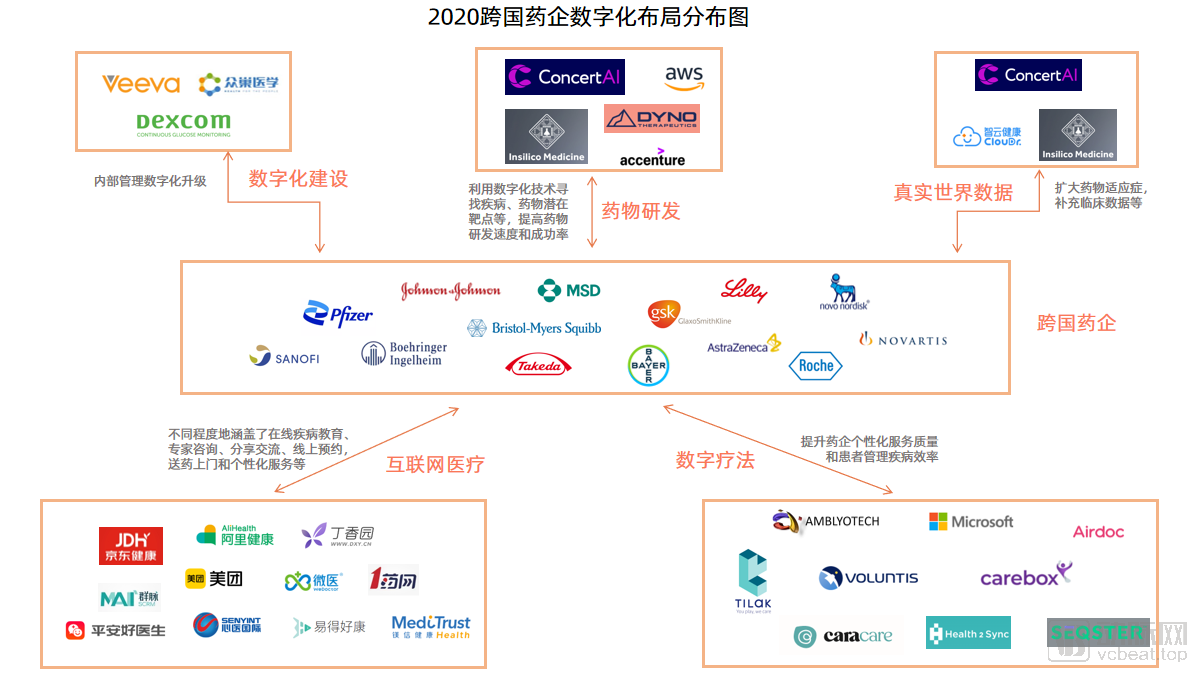
2020 Distribution Map of Digital Layouts by Multinational Pharmaceutical Companies
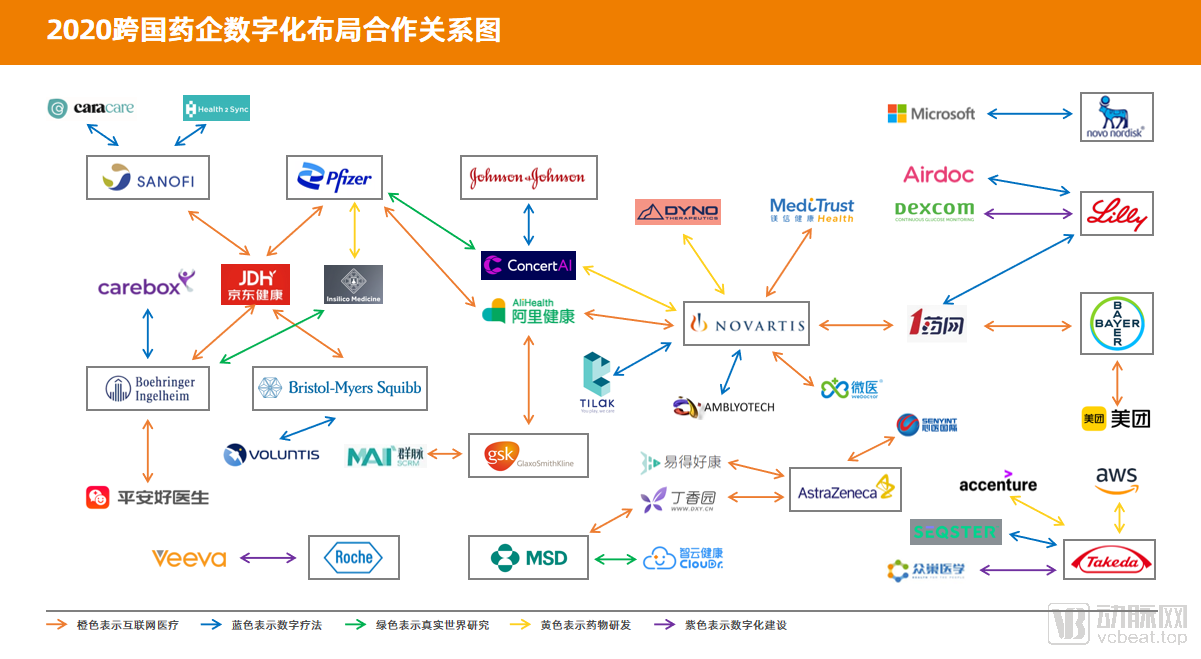
2020 Digitalization Layout and Partnership Map of Multinational Pharmaceutical Companies
By reviewing and analyzing 3,479 topic-related information items and specific news articles from the past five years concerning multiple multinational pharmaceutical companies with strategic layouts in digital healthcare, we have drawn the following conclusions:
1. From 2016 to 2018, multinational pharmaceutical companies were in the early stages of their digital transformation, collaborating with numerous digital technology firms primarily to build digital platforms and upgrade internal management systems digitally; during this period, real-world studies began to emerge.
2. From 2019 to 2020, most multinational pharmaceutical companies had relatively mature digital infrastructure, with their primary focus and emphasis placed on extensive collaborations with internet healthcare providers; digital therapeutics were emerging, and the deployment of real-world evidence studies accelerated.
3. Major pharmaceutical companies partner with internet healthcare providers, focusing on chronic disease management;
4. Digital Therapeutics Help Large Pharmaceutical Companies Enhance the Quality of Personalized Services and Improve Patient Disease Management Efficiency
Building on the aforementioned conclusions, we will now present a detailed discussion and analysis using charts and text. Unless otherwise specified, all data in this article are sourced from the Artery Orange database.
By analyzing specific news events, we have categorized the digital strategies of multinational pharmaceutical giants over the past five years into five aspects, namelyInternet healthcare, digital infrastructure, drug R&D, digital therapeutics, and real-world data.
It should be noted that “Internet healthcare” primarily refers to collaborative initiatives between multinational pharmaceutical companies and internet healthcare enterprises or internet hospitals. From 2016 to 2018, “digitalization” mainly referred to the establishment of smart healthcare platforms by multinational pharmaceutical companies both domestically and internationally, as well as internal digital upgrades. From 2019 to 2020, digitalization primarily denoted the use of digital technologies by multinational pharmaceutical companies to enhance internal operational efficiency.
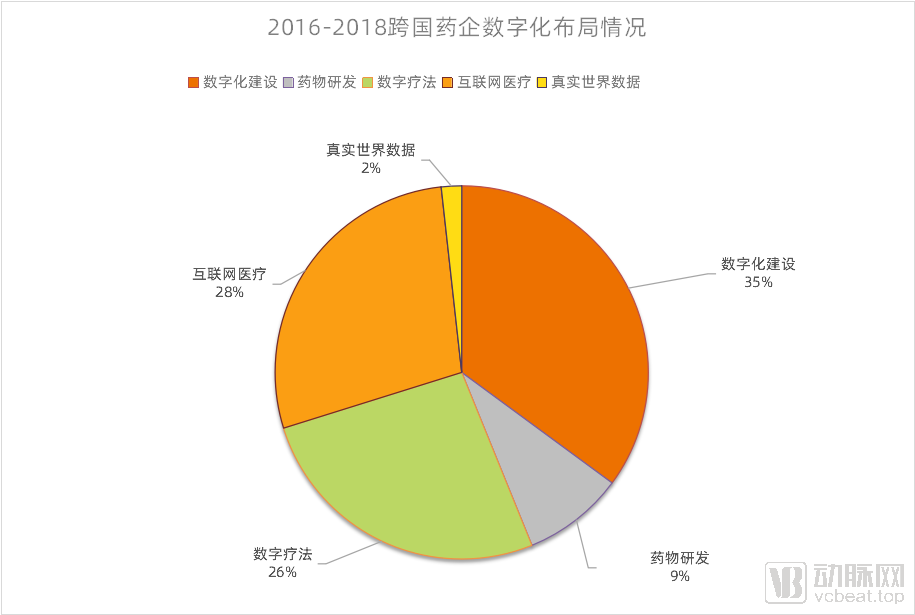
Figure 1
As shown in Figure 1, we can observe thatFrom 2016 to 2018, multinational pharmaceutical companies accounted for the largest proportion of digitalization initiatives, at 35%.This is followed by internet healthcare layout (28%), digital therapeutics layout (26%), digitalization of drug R&D layout (9%), and real-world data layout (2%).
The above data indicate that,In the early years, when the application of digital technology in the healthcare industry was still immature, multinational pharmaceutical companies primarily collaborated with relevant digital technology firms to establish smart healthcare platforms both domestically and internationally, as well as to drive internal digital transformation.Multinational pharmaceutical companies have also made numerous attempts in the fields of internet healthcare and digital therapeutics.
In 2016, the U.S. Congress passed the 21st Century Cures Act, which explicitly authorized the FDA to use real-world data (RWD) as evidence for regulatory approval of post-market studies and new indication development for medical devices and pharmaceuticals, where appropriate. Real-world study (RWS) immediately became a hot topic and an important direction for expansion by major pharmaceutical companies. However, progress clearly required time; as shown in Figure 1, multinational pharmaceutical giants had relatively limited deployment in the application of real-world data between 2016 and 2018.
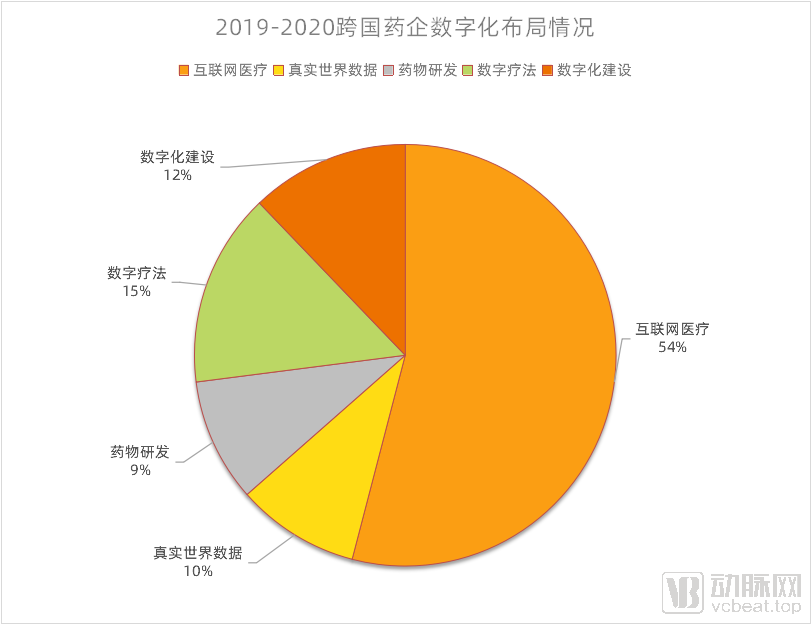
Figure 2
Figure 2 shows that,From 2019 to 2020, multinational pharmaceutical companies were the most active in deploying internet healthcare initiatives (accounting for 54%),The strategic layouts in digital infrastructure, digital therapeutics, digitalization of drug R&D, and real-world data research are now largely comparable. It should be noted that,Unlike in 2016–2018, multinational pharmaceutical companies’ digitalization efforts in 2019–2020 were primarily aimed at enhancing internal operational efficiency, by which time their digital platforms had become relatively well-established.
It is worth noting that,Real-world data research has developed rapidly, with its share of multinational pharmaceutical companies' digital strategies rising from 2% to 10% between 2016 and 2018.In April 2019, the FDA approved Pfizer’s supplemental application for a new indication of Ibrance (generic name: palbociclib, abbreviated as PAL), based on real-world evidence. The approval allows for the use of Ibrance in combination with an aromatase inhibitor or fulvestrant for the treatment of male patients with HR-positive, HER2-negative advanced or metastatic breast cancer.
This marks the first time the FDA has approved a drug indication based on real-world data, overturning our traditional understanding of drug evaluation. This approval also demonstrates that high-quality real-world studies can serve as primary evidence for drug approval in corresponding regulatory submissions.
The successful application of real-world data in FDA drug reviews marks a milestone for real-world studies in the field of drug approval. It is foreseeable thatIn the coming years, real-world studies will continue to maintain this momentum, becoming a new wave in pharmaceutical informatization.
To provide readers with a more intuitive view of how multinational pharmaceutical giants have adjusted their digital health strategies over the past five years, VCBeat has conducted a comparative analysis of these companies’ digital health layouts during 2016–2018 versus 2019–2020.
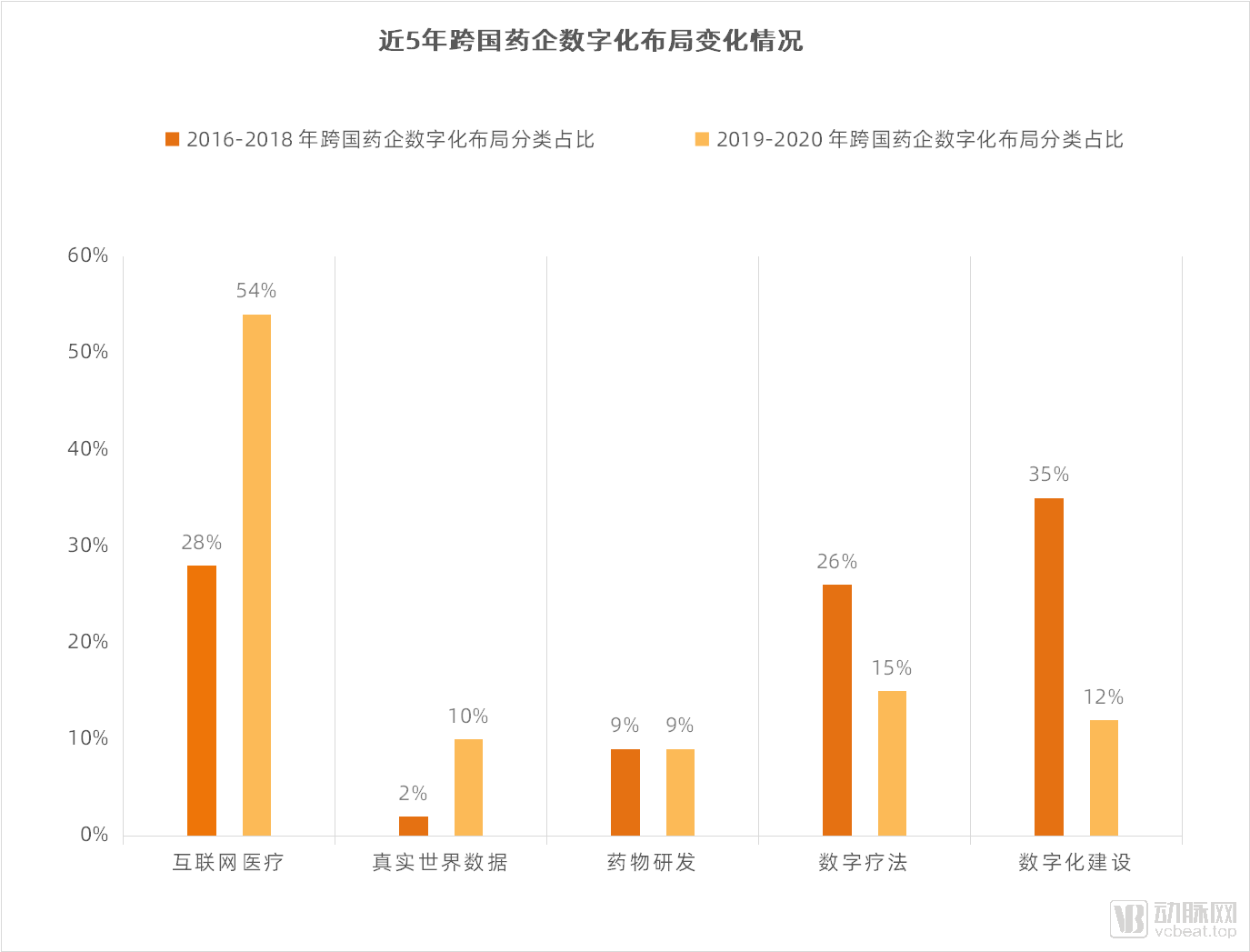
Figure 3
In addition, to help readers gain insight into specific events, we have excerpted key updates on multinational pharmaceutical companies (due to space constraints, only their digital strategies in 2020 are included here), as detailed below. In the subsequent sections, we will focus our analysis and discussion on the digital strategies adopted by major multinational pharmaceutical companies in 2020.

Table 1
China’s internet healthcare industry has evolved from its initial online consultation model into a comprehensive closed-loop service ecosystem encompassing online consultations, remote treatment, external prescription fulfillment, and home medication delivery, thereby serving as an effective supplement to public medical resources. The emergence of electronic prescriptions, mobile payments, and remote video consultations has not only enabled patients to complete the entire diagnosis and treatment process online but also facilitated more seamless two-way communication between doctors and patients.
During the pandemic, internet healthcare was once again thrust into the spotlight and achieved significant growth. Confined by external viral lockdowns, the public gradually adapted to seeking medical consultations and purchasing medications online. This shift in behavior will undoubtedly drive the upgrading of the entire industry chain, including medical institutions, retail pharmacies, and pharmaceutical companies.
We can observe that,In recent years, multinational pharmaceutical companies have continued to actively engage with internet healthcare enterprises, placing increasing emphasis on their strategic layout in the internet healthcare sector.So, why has internet healthcare garnered such significant attention from major pharmaceutical companies? What benefits can pharmaceutical companies derive from sustained and in-depth collaboration with internet healthcare platforms?
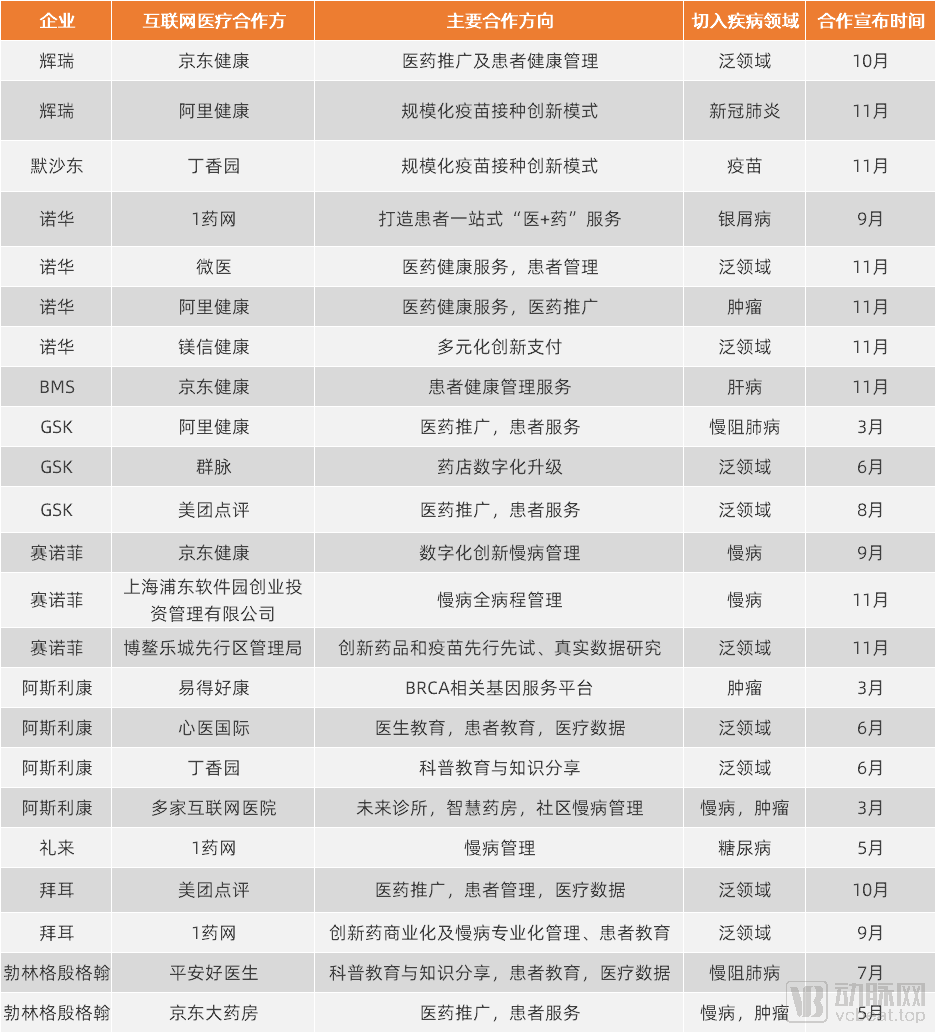
Table 2. Overview of Internet Healthcare Layouts by Multinational Pharmaceutical Giants in 2020
We compiled the latest disclosed partnerships between major multinational pharmaceutical companies and the internet healthcare sector in China in 2020, aiming to gain insights into their strategic intentions.
Multinational pharmaceutical companies often collaborate with leading internet healthcare firms, focusing on long-term disease management.
First, it is evident that multinational pharmaceutical companies predominantly partner with leading domestic players in the internet healthcare sector. The high user traffic and mature digital technology platforms possessed by these top-tier internet healthcare enterprises are clearly the key resources valued by multinational pharmaceutical firms.
Meanwhile, we can also find thatIn collaboration with internet healthcare,Multinational pharmaceutical companies primarily focus on areas requiring long-term disease management, such as chronic diseases, oncology, and geriatric conditions.Long-term disease management implies a continuous, long-term demand for medications. Multinational pharmaceutical companies have successfully achieved pharmaceutical promotion by providing corresponding disease management services to patients in these areas, including patient education and physician engagement.
By leveraging “Internet + Healthcare” technologies and online platform resources, multinational pharmaceutical companies have not only further met the medication and diagnosis/treatment needs of a broad patient population but also successfully expanded the accessibility of their drugs in the Chinese market.
Cooperation Models for Internet Healthcare LayoutIt covers multiple aspects to varying degrees, including online disease education, expert consultations, knowledge sharing and exchange, online appointment scheduling, home delivery of medications, and personalized services.Amidst the undercurrents of competition among major pharmaceutical companies, all are striving to build comprehensive digital healthcare innovation solutions and closed-loop services.
In the course of collaborating with internet healthcare platforms, multinational pharmaceutical companies have not only disseminated knowledge about their proprietary drugs more efficiently and at a lower cost, but also obtained direct feedback from physicians and patients regarding products, diagnosis and treatment, and other services, as well as relevant patient follow-up data. Compared to the traditional approach of acquiring such information through offline hospital channels, online internet healthcare offers greater efficiency and speed.
Internet Healthcare May Become the Third Major Pharmaceutical Marketing Channel for Big Pharma, with Collaboration with the Insurance Industry Being the Future Development Trend
November 12, 2020, “The General Office of the National Medical Products Administration publicly solicited comments on the "Measures for the Supervision and Administration of Online Drug Sales (Draft for Comments)," formally providing direction for the online sale of prescription drugs by permitting their online sale and the display of prescription drug information.The news has opened up a new landscape for internet-based medical and pharmaceutical sales, finally lifting the regulatory ban that had imposed a blanket prohibition on the online sale of prescription drugs.
The implementation of the new regulatory measures for online drug sales has undoubtedly opened a new avenue for the promotion of internet-based pharmaceuticals.From the perspective of pharmaceutical promotion and sales,Internet healthcare may become the third major channel for pharmaceutical marketing, alongside traditional hospitals and retail pharmacies.
The entire process of internet healthcare can fully meet the various needs of pharmaceutical companies in terms of drugs. It seems natural that internet healthcare has become a high ground that multinational pharmaceutical companies are vying to occupy.
Furthermore, the table reveals that some multinational pharmaceutical companies, such as Novartis and Sanofi, are also deploying diversified innovative payment solutions.Through integrated innovation with insurance services and in-depth collaboration with internet healthcare providers, we have enhanced the accessibility of high-quality, innovative medical products and services, while also improving diagnostic and treatment quality and healthcare affordability.This is also inevitably the long-term development trend for large pharmaceutical companies in the future.
An Analysis of the Digital Strategies of Multinational Pharmaceutical Companies (2019–2020): We observe that over the past two years, multinational pharmaceutical companies have prioritized digital therapeutics second only to internet healthcare. Compared with traditional therapies, what are the specific advantages of digital therapeutics? Why are pharmaceutical companies increasingly investing in this field?
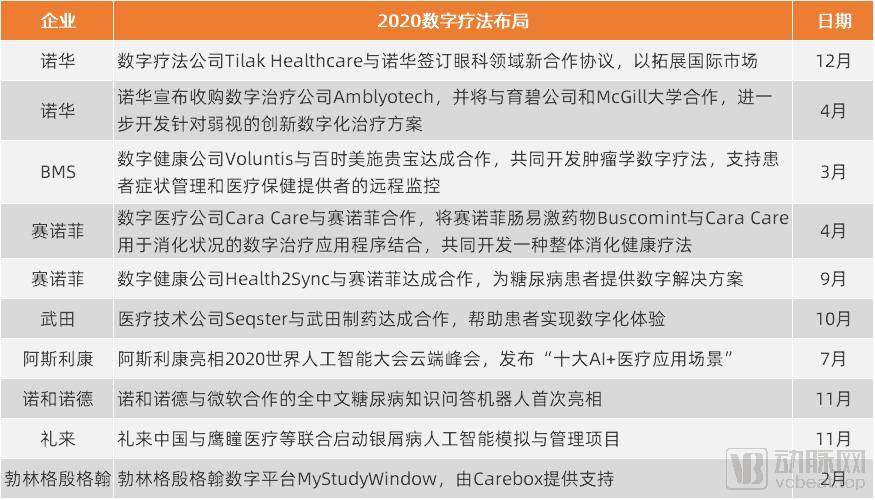
Table 3
As can be seen from the table above, multinational pharmaceutical companies accelerated their deployment of digital therapeutics in the second half of 2020. This was partly attributable to the joint release by the U.S. Department of Health and Human Services and the FDA in the first half of 2020“Mandatory Policies for Digital Health Devices Used in the Treatment of Mental Disorders During the COVID-19 Pandemic”. The policy document mentions the temporary waiver of requirements for low-risk software tools related to mental health, such as those concerning reporting corrections and deletions, as well as registration and listing requirements.
This policy had an immediate positive impact on digital therapeutics. Within a short period after its introduction, several digital therapeutic products received emergency approval, further accelerating the already burgeoning development of digital therapeutics abroad. Pharmaceutical companies have also significantly increased their strategic investments in this field.
Why Invest in Digital Therapeutics? How Can Pharmaceutical Companies Leverage Digital Therapeutics to Benefit Patients?
Enhance the quality of personalized patient services and capture effective patient data
As a clinically validated diagnostic and therapeutic approach, digital therapeutics can obtain real-world, actionable patient data, which not only optimizes patient treatment outcomes but also prevents disease progression, thereby reducing hospitalizations.By leveraging digital therapeutics, patients, caregivers, and clinicians can also access real-time updates on treatment progress, thereby enabling intelligent care management and optimized clinical decision-making.
Furthermore,Leveraging biosensor technology and patient-specific health data transmitted via wearable devices plays a pivotal role in helping pharmaceutical companies enhance patient services and drive subsequent improvements to their products and medications.
Regarding this point, the CEO of Medidata, a U.S. digital technology company Glen de Vries stated in an interview with VCBeat,“Digital solutions comprehensively collect the physical or physiological characteristics of a specific patient cohort, and by synthesizing and comparing multiple factors within each patient, they can precisely ascertain how inter-individual variations impact treatment outcomes,”thereby determining which therapeutic products are more suitable for which types of patients, and further providing patients with precise, tailored treatment plans that address their specific conditions across all stages, including diagnosis, medication, surgery, and rehabilitation.
Meanwhile, Glen de Vries also believes that the pandemic has made the public aware of the importance of data collection and has further stimulated and accelerated the adoption and use of existing digital solutions. He firmly believes that digital solutions can help pharmaceutical companies collect and apply data more effectively.
Therefore, one of the objectives for multinational pharmaceutical giants to deepen their strategic presence in this field is to enhance the quality of personalized patient services, interpret the vast amounts of data generated by digital therapeutics feedback, and extract valuable insights.
Enhancing the efficiency of patient disease management and improving patient experience
Furthermore, we can observe from the table that large pharmaceutical companies’ strategic focus in digital therapeutics mirrors that of internet healthcare providers, with the majority concentrating on chronic diseases requiring long-term care.Aiming to provide patients with more intelligent and personalized precision services at a lower cost, thereby improving the efficiency of disease management and enhancing patient experience.
Taking Novartis and Novo Nordisk as examples.
NovartisAnnounces Acquisition of US Startup Software Company Amblyotech, and Will Collaborate with Ubisoft and McGill University to Further Develop Innovative Digital Therapies for Amblyopia. Novartis stated that this digital therapy aims to treat amblyopia by training patients' eyes to view special images through active gaming and passive video technologies.
Gamified approaches have significantly enhanced patients’ treatment experience, while digital solutions primarily offer convenience, enabling disease management in the simplest and most comfortable manner, thereby allowing pharmaceutical companies to incur lower costs.
Novo Nordisk"Teacher Xiao Nuo," an intelligent Q&A chatbot for diabetes science popularization co-developed with Microsoft, is primarily designed to help more Chinese patients with diabetes understand knowledge in the fields of diabetes prevention and treatment, thereby conducting patient education.
On the one hand, intelligent robots have effectively helped patients strengthen their learning of diabetes knowledge and enhance their awareness of disease treatment, while also further improving patients' understanding of medications, thereby facilitating pharmaceutical promotion and expanding Novo Nordisk's potential patient consumer base.
On the other hand, compared to offline patient education and physician education, intelligent robotic services are more precise and personalized, with a higher degree of engagement, thereby enhancing patient participation; furthermore, they offer lower costs compared to human resources.
Digital therapeutics hold promise for helping traditional pharmaceutical companies expand their profits, which also implies that major drug manufacturers will pursue broader and deeper strategic layouts in the field of digital therapeutics in the future.