



Reporter |
After the South African variant of the coronavirus sparked global concern, South Africa will take the lead in vaccinating high-risk groups with the COVID-19 vaccine before its national regulatory authorities have approved its use.
On the evening of January 7, local time, the South African Department of Health announced the importation of 1.5 million doses of the AstraZeneca COVID-19 vaccine from India, with 1 million doses scheduled for delivery later in January and the remaining 500,000 doses to be delivered in February.
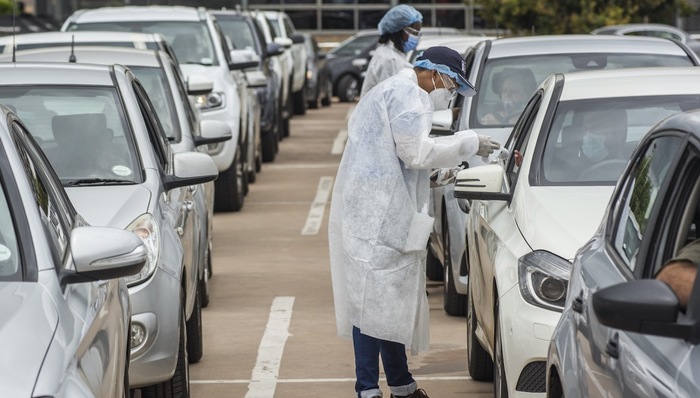
Procured vaccines will be distributed to local healthcare workers, as the new wave of infections driven by the SARS-CoV-2 variant in South Africa resulted in 5,000 healthcare workers testing positive for COVID-19 in December alone, further exacerbating the imbalance between the supply and demand of medical resources.
The Wall Street Journal wrote that other sub-Saharan African and developing countries may follow South Africa’s lead by accelerating vaccination for high-risk groups before regulators make a final decision.
Some countries, lacking national drug regulatory authorities, will rely on the World Health Organization’s emergency authorization decisions. Previously, after reviewing the safety, efficacy, and quality of the COVID-19 vaccine jointly developed by BioNTech and Pfizer, the WHO determined that the vaccine met its standards and granted it Emergency Use Listing.

However, South Africa has already established a drug registration and regulatory system, making this circumvention of regulations particularly notable. This is seen as a significant manifestation of public pressure on the government amid the intensifying pandemic, urging it to accelerate efforts to secure vaccines.
On the other hand, this is also closely related to the lack of enthusiasm among mainstream vaccine manufacturers in submitting vaccines for registration in some underdeveloped countries.
A senior official from the South African Department of Health recently stated publicly that no vaccine manufacturers have yet submitted final documentation for approval to the South African regulatory authorities.
Anban Pillay, an official from the South African Department of Health, also stated at a press conference that they had attempted to persuade Moderna, whose COVID-19 vaccine has already received emergency use authorization in the United States and the European Union, to submit registration materials for its vaccine in South Africa. “However, it is evident that they have no intention of submitting such materials at this stage.” Nevertheless, Anban Pillay indicated that Pfizer and Johnson & Johnson are expected to complete their local applications for COVID-19 vaccines with the South African Medicines Regulatory Authority by the end of this month.
Major vaccine manufacturers have shown limited enthusiasm for registration in developing countries, likely because the current and near-term production capacity of COVID-19 vaccines has already been secured by developed countries and regions.
The Duke Global Health Innovation Center compiled publicly available data on vaccine procurement and production, revealing that 7.2 billion doses of COVID-19 vaccines have currently been ordered by countries and international organizations, with an additional 2.4 billion doses under negotiation or reserved for expanded orders. Of the 7.2 billion doses already ordered, high-income countries account for 3.9 billion doses, representing 54% of the total.
As a result, Canada secured vaccine doses for nearly five times its population, the United States for nearly twice its population, while the European Union and Australia achieved coverage for 100% of their populations.
This has forced many low-income countries to pin their hopes on obtaining COVID-19 vaccines through COVAX, an initiative jointly launched and implemented by the Coalition for Epidemic Preparedness Innovations (CEPI), Gavi, the Vaccine Alliance, and the World Health Organization (WHO) to promote equitable global vaccine distribution, thereby enabling low- and middle-income countries to access COVID-19 vaccines.
However, to cover 20% of the population in 92 participating countries with COVID-19 vaccines, COVAX would need to raise $4.6 billion in 2021.