

Takeda Launches myPKFiT®, China's First PK-Guided Management Tool for Hemophilia A, Nationwide

Takeda
Biopharmaceutical Manufacturer

NANFANG HOSPITAL SOUTHERN MEDICAL UNIVERSITY
Large Comprehensive Grade A Tertiary Hospital and National Regional Medical Center

Nanjing Drum Tower Hospital
Large Comprehensive Tertiary A Hospital

Beijing Children's Hospital Capital Medical University
Grade A Tertiary Comprehensive Pediatric Hospital
Shanghai, January 26, 2021 /PRNewswire/ -- On January 26, 2021, myPKFiT, a pharmacokinetics (PK)-guided management tool for hemophilia A under Takeda®Launched for the first time across China. Nanfang Hospital of Southern Medical University, Shandong Blood Center, Nanjing Drum Tower Hospital, Beijing Children’s Hospital Affiliated to Capital Medical University, and the Institute of Hematology of Harbin First Hospital became the first batch in China to use myPKFiT.®Hospital. myPKFiT®The application not only ushers in a new era of personalized treatment for hemophilia in China, but also demonstrates Takeda’s breakthrough in the digital application of clinical medicine.
As of now, myPKFiT®YesChina's First and Currently OnlyThe National Medical Products Administration Approves Support for Pharmacokinetics (PK)-Guided Management Tools for Hemophilia A, in conjunction with Advate®When used in combination, it can reduce the risk of bleeding, optimize patients' treatment outcomes and drug accessibility, enhance patients' confidence in treatment and improve adherence, thereby helping patients achieve the treatment goal of "zero bleeding." Currently, myPKFiT®Launched in over 50 countries and regions worldwide, registered for use by nearly 1,100 medical institutions, and cumulatively benefiting more than 8,000 patients globally.
Hemophilia is a rare hereditary disorder primarily caused by coagulation impairments resulting from a deficiency of clotting factors in the patient’s body. Currently, there are approximately 136,000 hemophilia patients in China, with Hemophilia A accounting for 80%–85% of cases.[1]“Patients exhibit varying bleeding tendencies, lifestyles, and drug metabolism rates; therefore, a uniform treatment regimen that merely adjusts drug dosage cannot meet the need for ‘tailored’ therapy.”Professor Sun Jing, Nanfang Hospital of Southern Medical Universitystated, “In recent years, the latest guidelines both domestically and internationally, such as the most recent guidelines from the World Federation of Hemophilia”[2]and the Chinese Guidelines for Hemophilia Treatment (2020 Edition), both of which place particular emphasis on the importance of individualized treatment.”
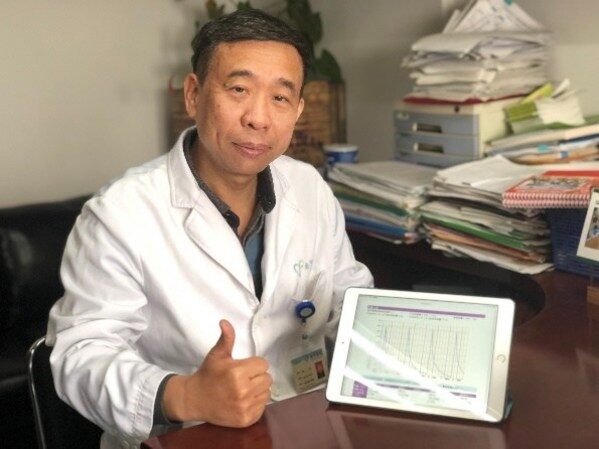
Professor Sun Jing from Nanfang Hospital of Southern Medical University uses myPKFiT
"Traditional PK analysis faces significant challenges in clinical applications, primarily due to cumbersome procedures and the variability in the time required for patients' FVIII levels to decline to a specific trough level, making assessment difficult."Professor Zhang Xinsheng, Shandong Blood Centerstated, “Due to limited awareness and inadequate prior treatment, most patients currently continue to receive low-dose regimens. Clinical practice has demonstrated that this approach fails to reduce joint pathology and bleeding episodes still occur.”[3]In fact, patients with hemophilia only need to receive long-term, regular, and standardized treatment to effectively reduce the frequency of bleeding episodes, achieve “zero bleeding,” and return to normal life.”
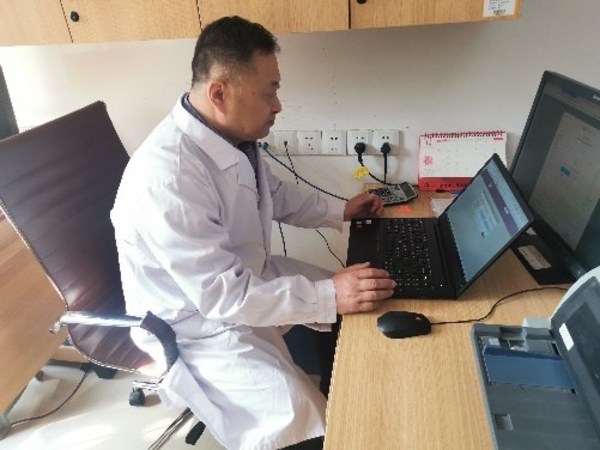
Professor Zhang Xinsheng from the Shandong Provincial Blood Center Uses myPKFiT
"Pharmacokinetic-guided individualized treatment can calculate the pharmacokinetic parameters for each patient, helping doctors develop personalized treatment plans and enabling patients to reasonably arrange their daily activities."Professor Zhou Rongfu, Nanjing Drum Tower Hospitalstated: “For example, if a patient wishes to engage in high-intensity exercise on weekends, the physician may increase the dose of clotting factor infusion; conversely, when daily activity levels are lower, the infusion dose can be appropriately reduced. This approach not only improves patient adherence but also alleviates the financial burden on patients.””
Interim analysis data from the UK-PK study showed that PK-guided standardized treatment increased the proportion of patients with zero bleeding episodes to 50% and improved patient adherence by 90%.[4]. In terms of treatment costs, a comparative study showed that PK-guided therapy can reduce the number of infusions by 30% compared to standard therapy[5], reducing the overall treatment cost by 10.67%[6]。
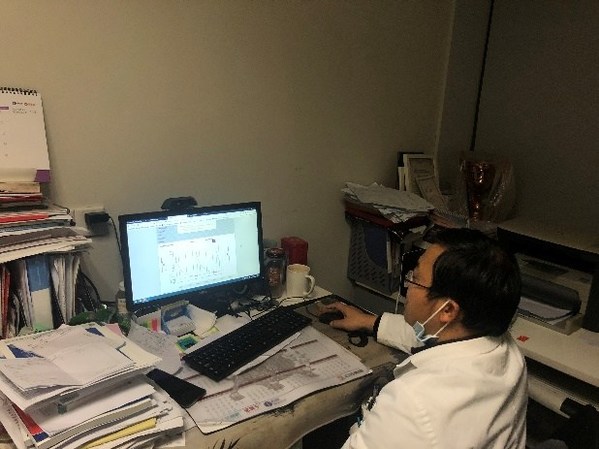
Professor Zhou Rongfu of Nanjing Drum Tower Hospital Uses myPKFiT
Professor Chen Zhenping, Beijing Children’s Hospital, Capital Medical UniversityandProfessor Hao Wenpeng, Institute of Hematology, Harbin First HospitalmyPKFiT was also used for the first time in patients with hemophilia A in Beijing and Harbin, respectively.®. From the northernmost to the southernmost end of China, myPKFiT®...have blossomed, making personalized treatment accessible to the vast population of hemophilia A patients in China.

Professor Chen Zhenping from Beijing Children’s Hospital, Capital Medical University, and Professor Hao Wenpeng from the Institute of Hematology, Harbin First Hospital, respectively used myPKFiT
Statement
1. This article aims to convey frontier information in medicine and pharmaceuticals, and does not constitute a recommendation or promotion of any drug or treatment regimen.
2. If you wish to learn more about diseases or obtain information related to medications, diagnosis, and treatment, please consult a healthcare professional.
About Takeda Pharmaceutical Company Limited
Takeda Pharmaceutical Company Limited (Tokyo Stock Exchange Code: 4502(NYSE: TAK) is a global, values-based, R&D-driven biopharmaceutical company headquartered in Japan. Takeda is committed to translating scientific discoveries into highly innovative medicines that safeguard patients’ healthy lives and promising futures. Takeda focuses on drug development in four therapeutic areas: oncology, gastroenterology, neuroscience, and rare diseases, with dedicated R&D investments in plasma-derived therapies and vaccines. We remain steadfast in our pursuit of highly innovative medicines, expanding novel treatment options and strengthening our collaborative R&D engine to build a robust and diverse product pipeline that helps improve people’s lives. Our employees are present in approximately 80 countries and regions, working hand in hand with local healthcare partners to deliver health benefits to patients worldwide.
Takeda entered China in 1994. Takeda China is headquartered in Shanghai, with its main business centers located in Beijing, Shanghai, Tianjin, Guangzhou, and the Hong Kong Special Administrative Region. The company has offices in major cities across China and currently employs over 2,000 people in the country. With China’s economic development and the growing demand for healthcare, China has become one of Takeda’s most important emerging markets globally.
For more information, please visithttps://www.takeda.com
Forward-Looking Statements
This manuscript and any materials distributed in connection therewith may contain forward-looking statements, views, or opinions relating to Takeda’s future business, future conditions, and operating performance, including Takeda’s estimates, forecasts, targets, and plans. Forward-looking statements often include, but are not limited to, words such as “aim,” “plan,” “believe,” “hope,” “continue,” “anticipate,” “intend,” “ensure,” “will,” “may,” “should,” “would,” “could,” “expect,” “estimate,” “forecast,” or similar expressions or their negative forms.
The forward-looking statements in this article are based solely on Takeda’s estimates and assumptions as of the date of publication. Such forward-looking statements do not constitute any guarantee by Takeda or its management regarding future performance, and involve known and unknown risks, uncertainties, and other factors, including but not limited to: economic conditions affecting Takeda’s global operations, including the macroeconomic environments in Japan and the United States; competitive pressures and developments; changes in applicable laws and regulations; the success or failure of product development programs; decisions by regulatory authorities or the timing thereof; fluctuations in interest and exchange rates; claims or concerns regarding the safety or efficacy of marketed products or product candidates; the timing and impact of post-merger integration efforts for acquired companies; and the ability to divest assets non-core to Takeda’s operations and the timing of any such divestitures. All of these factors may cause Takeda’s actual results, performance, achievements, or financial condition to differ materially from any future results, performance, achievements, or financial condition expressed or implied by such forward-looking statements.
For further information on the above and other factors that may affect Takeda’s results, performance, achievements, or financial condition, please refer to “Item 3. Key Information—D. Risk Factors” in Takeda’s most recent Annual Report on Form 20-F filed with the U.S. Securities and Exchange Commission, as well as other reports. Please consult Takeda’s website for details.https://www.takeda.com/investors/reports/sec-filings/orwww.sec.govTakeda’s future results, performance achievements, or financial position may differ materially from those expressed or implied by forward-looking statements. Recipients of this press release should not place undue reliance on any forward-looking statements. Takeda has no obligation to update any forward-looking statements contained in this press release or any other forward-looking statements it may issue, except as required by law or securities trading regulations. Past performance is not indicative of future results, and Takeda’s performance described in this press release neither represents nor constitutes an estimate, forecast, or projection of Takeda’s future performance.
[1] The Prevalence of Hemophilia in Mainland China: a systematic review and meta-analysis, Southeast Asian J Trop Med Public Health. 2014 Mar;45(2):455-66
[2] Ushering in a New Era of Personalized Therapy for Hemophilia, Frontiers in Hematology, October 10, 2020,https://mp.weixin.qq.com/s/CyA2ixwY1xeo03qkZ10lNA
[3] Guidelines for the Diagnosis and Treatment of Rare Diseases (2019 Edition), People's Medical Publishing House, 2019, p. 177
[4] UKPK trial interim analysis: Use of Pharmacokinetic intervention to optimise Factor VIII prophylaxis in severe haemophilia A,https://www.postersessiononline.eu/173580348_eu/congresos/WFH2018/aula/-T-MP_87_WFH2018.pdf
[5] A randomized comparison of two prophylaxis regimens and a paired comparison of on-demand and prophylaxis treatments in hemophilia A management, https://onlinelibrary.wiley.com/doi/10.1111/j.1538-7836.2011.04611.x
[6] PK-driven prophylaxis versus standard prophylaxis: When a tailored treatment may be a real and achievable cost-saving approach in children with severe hemophilia A,https://pubmed.ncbi.nlm.nih.gov/28692842/