

CorWave Advances Innovative Wave-Membrane Heart Assist Devices with Over $500 Million in Cumulative Funding
CorWave
Cardiac Assist Device Developer
CorWave, a developer of cardiac assist devices, recently announced the completion of a $40 million Series C financing round. Investors in this round included M&L Healthcare Investments, the European Innovation Council, Financière Arbevel, Bpifrance, Novo Holdings, Seventure, Sofinnova Partners, and Ysios Capital. The proceeds will be used to finalize the development of the company’s initial product, expand its production infrastructure, complete the regulatory testing required for human implantation, and initiate human clinical trials.
Development of Cardiac Assist Devices Based on Wave Membrane Blood Drive Technology
In recent years, the incidence of cardiovascular disease has shown a significant upward trend globally, with approximately 16.5 million deaths annually attributed to cardiovascular conditions. Among these, chronic heart failure is one of the most prevalent and detrimental diseases. Ventricular assist devices and heart transplantation are internationally recognized as effective treatments for end-stage heart failure.
However, heart transplantation is highly dependent on donors, and there is a shortage of cardiac donors worldwide, resulting in an extremely low rate of heart transplant surgeries. Against this backdrop, artificial hearts have become a focus of research and development for some companies.
CorWave, founded in 2011 and headquartered in Paris, France, was incubated by MD Start, a European medical technology startup incubator. The company aims to develop advanced implantable devices for patients with heart failure. In terms of product development, CorWave has been able to secure a robust technological foundation, largely thanks to the high-quality partner companies and resources provided by MD Start.
Currently, the technology used in CorWave’s products originates from an actuator for heart pumps invented by Jean-Baptiste Drevet, which employs a pulsating membrane to drive blood flow. In 1996, Jean-Baptiste Drevet co-founded the AMS R&D Center in collaboration with the French National Centre for Scientific Research (CNRS). In 2011, MD Start entered into an exclusive licensing agreement with the AMS R&D Center, enabling CorWave to subsequently incorporate this pulsating membrane technology into its product development.
In terms of corporate management, CorWave has also assembled a management team with many years of in-depth experience in the medical device and cardiology fields.
CorWave’s current CEO, Louis de Lillers, graduated from EDHEC Business School in France with an MBA. He further pursued specialized studies in cardiac and cardiovascular systems at the Faculty of Medicine of Sorbonne University in Paris, earning a corresponding degree. In his spare time, Mr. de Lillers also taught himself computer programming. Since 2000, he has embarked on an entrepreneurial journey, ranging from student social forums to online marketplaces, thereby accumulating extensive experience in market operations.
In 2007, Louis de Lillers joined Ernst & Young, and subsequently served as an analyst at Clipperton Finance and Sofinnova Partners, providing advisory services for mergers and acquisitions and venture capital transactions.
Louis de Lillers officially entered the medical field with the founding of PlugMed in 2010. PlugMed is a company engaged in the research and development of human implantable devices, initially focusing on left ventricular assist devices (LVADs) and total artificial hearts, and later gradually shifting its focus to the R&D of innovative vascular access systems for dialysis.
In 2015, Louis de Lillers left PlugMed and officially joined CorWave as CEO. His extensive experience in market analysis and product development brought significant benefits to the company's growth.
CorWave’s Chief Technology Officer, Carl Botterbusch, brings nearly 30 years of experience in the medical device industry. He earned a Bachelor’s degree in Mechanical Engineering and an MBA from Lehigh University. Prior to joining CorWave, Mr. Botterbusch served as Vice President of Research and Development at Teleflex Medical and Arrow International, gaining extensive expertise in areas such as artificial hearts and cardiac delivery systems.
Repeatedly Joining Incubation Platforms to Accelerate Corporate Growth
A review of CorWave’s development since its inception reveals a notable phenomenon: the company has joined business incubation platforms on three separate occasions. What resources did CorWave gain from these three incubation experiences, and how did they contribute to the company’s growth?
As its first incubator, CorWave was born out of the MD Start incubation platform, as mentioned earlier. Leveraging the platform resources of MD Start, CorWave laid the technological foundation for its future product development and promotion.
In 2012, CorWave joined the French innovative technology incubation platform Agoranov. According to publicly available financing data, CorWave also secured a seed funding round from Agoranov in June 2012.
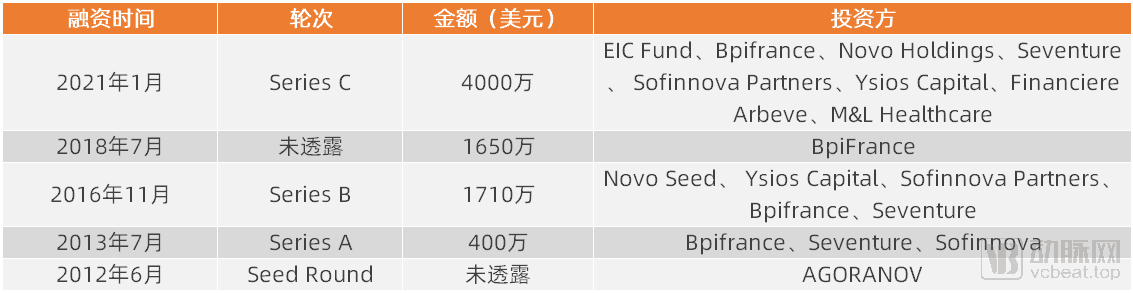
CorWave's Funding History
In 2014, CorWave joined Paris Biotech Santé, an incubation platform focused on the healthcare sector. With the platform’s support, CorWave significantly accelerated its product development. Buoyed by the company’s strong growth trajectory, CorWave secured $17.1 million in Series B funding in 2016.
From technology and funding to product development, CorWave has gained substantial industry resources by participating in multiple incubation platforms, significantly accelerating its corporate growth.
Innovative Left Ventricular Assist Device Reduces Mortality Risk in Heart Failure
Typically, an artificial heart refers to a mechanical device made from synthetic materials that temporarily or permanently, partially or completely replaces cardiac function to maintain normal blood circulation in the human body.
Artificial hearts can be categorized into two main types: ventricular assist devices (VADs) and total artificial hearts (TAHs). Clinically, TAHs are primarily used as a bridge to heart transplantation for patients with severe heart disease. VADs include three subtypes: left ventricular assist devices (LVADs), right ventricular assist devices (RVADs), and biventricular assist devices (BiVADs). Compared with TAHs, VADs offer higher safety profiles and are more widely adopted. CorWave’s current core product, “CorWave LVAD,” is a left ventricular assist device (LVAD).
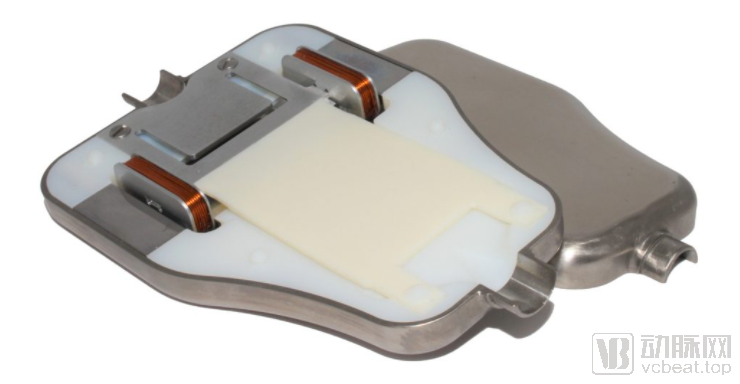
Based on the principles of wave membrane technology, the CorWave LVAD employs a disc-shaped membrane driven by an electromagnetic actuator. Waves generated on this membrane propagate from the outer edge toward the center, propelling blood toward the central orifice and mimicking the pulsatile flow of the natural heart. This approach differs from existing rotary LVADs on the market. In rotary LVADs, blood, which serves as a lubricant during operation, is often subjected to shear stresses far exceeding normal physiological levels. This can cause varying degrees of blood damage, thereby increasing the risk of thrombosis.
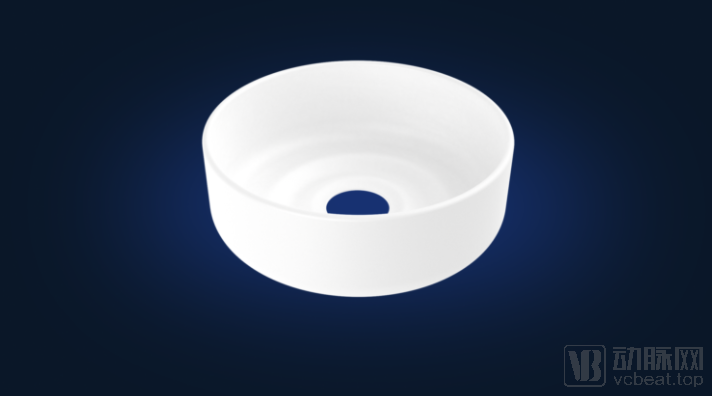 Disc-shaped membrane for CorWave LVAD
During device implantation, physicians can surgically place the CorWave LVAD via thoracotomy, connecting it between the left ventricular apex and the aorta to assume the left ventricle’s pumping function. To ensure sufficient power supply for the CorWave LVAD’s operation, an external power source is employed, connected via a pump cable that traverses from inside to outside the body; the power unit and external controller are worn on a belt.
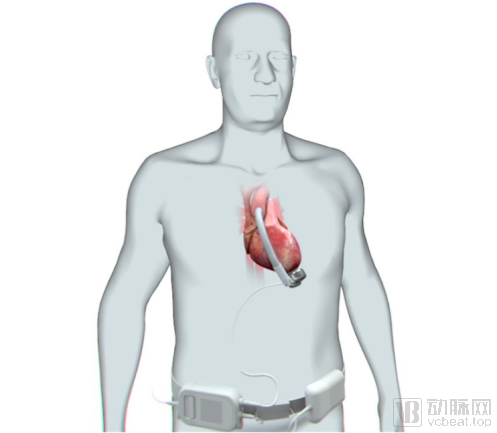
CorWave LVAD
Currently, CorWave is advancing product development through collaborations with Lille University Hospital and the Pitié-Salpêtrière Hospital in Paris, France, and has successfully completed preclinical trials. Moving forward, CorWave will further conduct clinical studies to lay the groundwork for the product’s market launch.
Innovative Cardiac Pump for Patients Unsuitable for Open-Heart Surgery
For some patients with heart failure, medication alone is insufficient to control the condition, and their physical status makes them unsuitable for cardiac surgical procedures such as heart transplantation or left ventricular assist device (LVAD) implantation. Nevertheless, they require innovative therapies and devices to help reduce cardiac load.
In response, CorWave has developed Nemo, a minimally invasive cardiac pump based on its wave membrane technology, designed for this patient population. Implantable via minimally invasive interventional procedures, Nemo delivers a blood flow rate of 3 L/min, accelerating perfusion to peripheral organs. This not only improves blood flow to vital organs but also reduces the pressure impedance faced by the heart after contraction.
Minimally Invasive Heart Pump Nemo
Domestic Artificial Heart Market Overview
China, with its large population, has a substantial number of patients with end-stage heart disease. In the field of heart transplantation, the country continues to face a severe shortage of donor organs. Due to the limited availability of donors and the high complexity of the surgical procedure, most hospitals in China capable of performing heart transplants conduct approximately 10 cases per year. Furthermore, post-transplant patients must contend with challenges such as chronic rejection and infections, while also bearing the significant financial burden of long-term immunosuppressive therapy.
Since the 1990s, China has been exploring the application of artificial hearts. Currently, some domestic enterprises are actively collaborating with medical institutions to develop artificial heart devices, which have gradually entered clinical trials and the approval process for market launch.
To date, three generations of artificial heart technologies have emerged: pulsatile, rotary, and magnetically levitated. Pulsatile artificial hearts have gradually been phased out of clinical use due to their large size and high mechanical failure rates. Rotary artificial hearts cause significant blood trauma; therefore, to minimize the risk of hemolysis, most domestic artificial heart developers have adopted magnetically levitated designs as their foundational approach.

Financing Status of Domestic Artificial Heart R&D Enterprises
In addition to the companies shown in the figure above, enterprises such as Taixin Technology, Jiuanxin, and Yongrenxin Medical are also actively promoting the development and application of artificial hearts in China. Among them, Yongrenxin Medical’s implantable left ventricular assist system was approved in August 2019, becoming the first artificial heart approved for market launch in China.
Reflections for Entrepreneurs in China
Despite the large domestic market for artificial hearts, entrepreneurs seeking to expand their market on a large scale must address challenges related to technological R&D and treatment costs.
As a specialized electromechanical system implanted in the human body, the artificial heart involves technologies from multiple disciplines, including fluid dynamics, precision mechanics, electrical motors and automatic control, materials engineering, physiology, and clinical medicine. The numerous technical contradictions and mutual constraints among these fields create exceptionally high technological barriers. Furthermore, in recent years, domestic and international enterprises have pursued product miniaturization alongside research and development, posing new challenges to the design and development of artificial hearts.
Regarding treatment costs, the price of artificial hearts abroad mostly ranges from $100,000 to $300,000. The prices of domestically produced artificial hearts that have been approved for marketing in China are relatively lower compared to those abroad, but they still represent a significant treatment expense for ordinary families.
As the most effective surgical treatment for heart failure besides heart transplantation, artificial hearts will undoubtedly benefit more patients in the future with technological advancements; however, there is still a long way to go before they achieve widespread market adoption.