

YuanSheng Bio: Challenging the 60-Year Definition of "Senescent Cells," New Drug for "Rejuvenation" Mechanism to Soon Yield Human Data
At the critical juncture where the longevity science and anti-aging sector is transitioning from concept to industrial competition, a fundamental question is surfacing: As billions of dollars globally pour into research pipelines aimed at eliminating "zombie cells" or inhibiting the Senescence-Associated Secretory Phenotype (SASP), is there a more fundamental, disruptive path— one that doesn't just eliminate or slow aging, but directly reverses it?
The answer from Yuansheng Biotechnology and its founder, Academician Ji Guangju, is affirmative. This enterprise, co-founded in 2015 by Ji Guangju, a researcher at the Institute of Biophysics of the Chinese Academy of Sciences and a foreign academician of the Russian Academy of Natural Sciences, along with Zhang Dan, co-founder of ClinChoice and chief scientist of Xiehe Innovation Port, did not chase the then-booming wave of stem cell clinical applications. Instead, it chose a more fundamental, yet more challenging path of exploration:Starting from understanding the essence of cellular aging, search for biological switches that "reverse" rather than merely "delay" aging.
This crystallization of scientific belief has been given the new name OS110. It does not kill senescent cells, nor does it merely suppress their harmful secretions; instead, it directly targets the cell cycle inhibition pathway, restoring the ability of stagnant senescent cells to divide and proliferate. In early 2025, this research was published in the top journal *Cell Metabolism* and featured in a special report by *Nature*, marking the first time that "reversing aging" transitioned from a theoretical concept to being systematically validated at the molecular mechanism and animal model levels.
The continuous exploration of Source Bio is rapidly narrowing the gap between concept validation and widespread application.
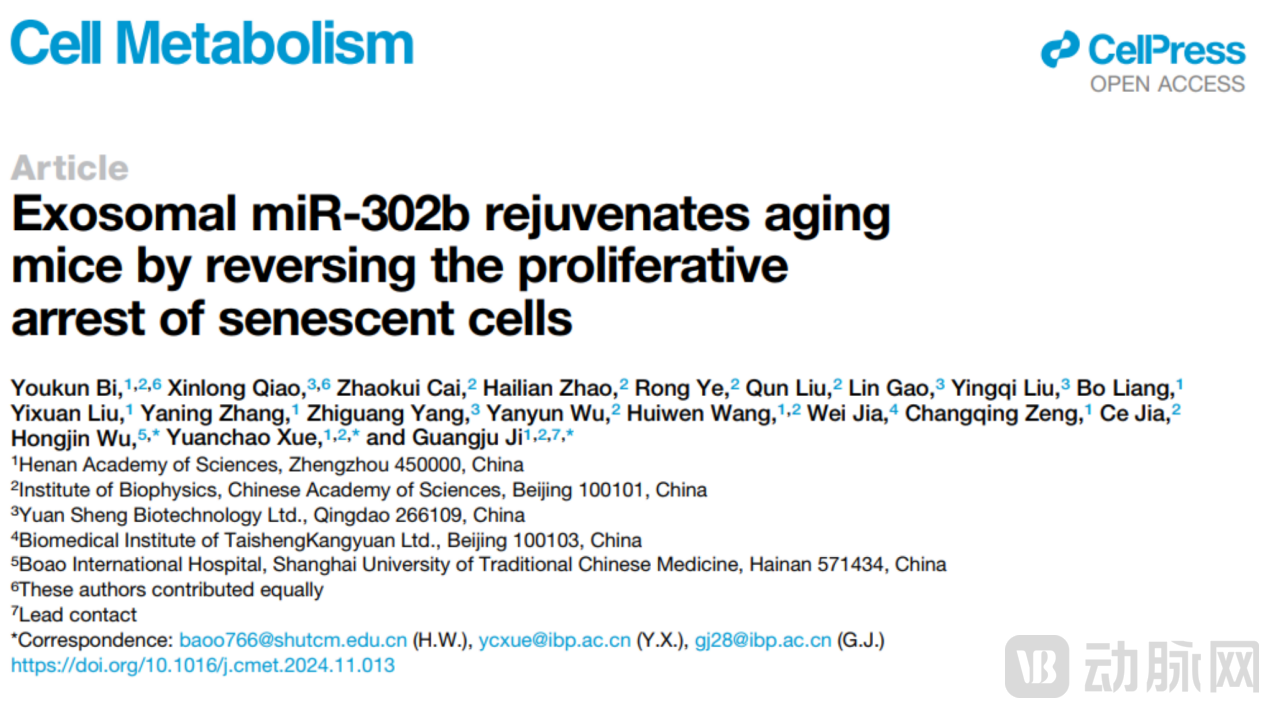 The article on the OS11 mechanism was officially published in the international top journal Cell Metab on January 15, 2025.
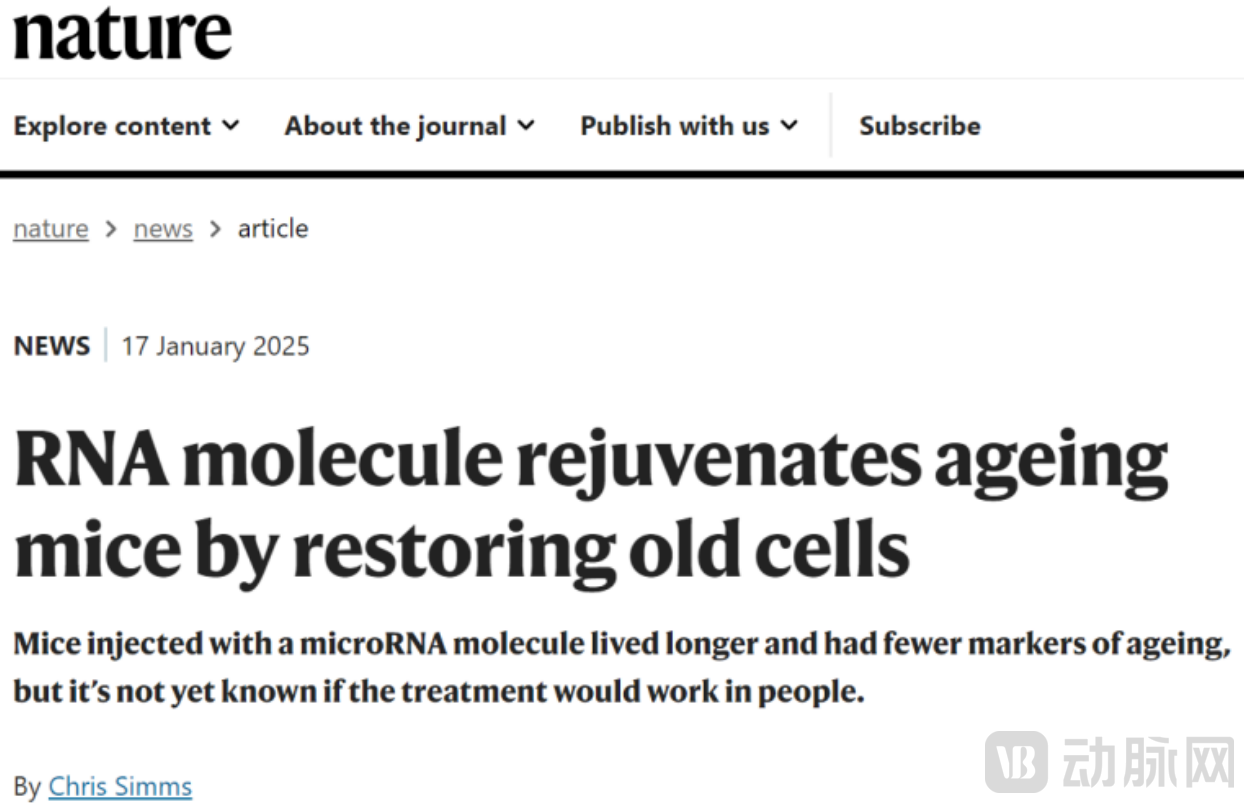 The article was reprinted and reported by Nature.
OS110: After Three Technological Iterations, the Key Lever from "Anti-Aging" to "Reverse Aging"
Ji Guangju's scientific career is itself a microcosm of the development of stem cell and regenerative medicine in China. At the end of the 1990s, the establishment of human embryonic stem cell lines triggered the first wave of research enthusiasm; in 2007, the iPSC technology focused on by Shinya Yamanaka's team, as well as the subsequent influx of funds brought about by the lifting of US policy restrictions, promoted the second and third waves. Ji Guangju personally experienced these moments and maintained a researcher's calmness amidst the waves.
Initially, his team used stem cell interventions to combat aging, which extended the lifespan of mice by about 20%. However, "the challenges of developing stem cells into drugs, along with many unknowns regarding their metabolism and functional integration in the body," led them to shift focus to stem cell exosomes. They discovered that a specific type of exosome derived from embryonic stem cells showed remarkable effects, extending the lifespan of mice by nearly 30%. Nevertheless, the composition of exosomes is extremely complex, with one exosome containing thousands of components, making it difficult to distinguish between beneficial and harmful elements, thus presenting equally challenging obstacles for drug development.
The追问 on "drugability" drove the team's third key technology iteration; at the same time, there was also a反复的问询 into the essence of aging. Research reveals that the essence of cellular aging is the permanent stagnation of the cell cycle due to various stresses. Based on this, mainstream anti-aging strategies are no more than two categories: one is to eliminate senescent cells (Senolytic), and the other is to inhibit harmful factors released by senescent cells (such as SASP). However, Ji Guangju, from a medical background, always had doubts: "In an elderly person, with a large accumulation of senescent cells in the body, how can they be completely eliminated? And if they are eliminated, where would organ function be?"
The Yuansheng Bio team discovered that exosomes derived from human embryonic stem cells exhibit a significant "rejuvenation" phenotype. Through in-depth analysis, the team identified key effector molecules enriched within them——OS110Further research found that miR-302b can precisely target and suppress two key cell cycle checkpoints/inhibitors:Cdkn1a (encoding p21 protein) and Ccng2 (encoding Cyclin G2 protein)These two factors act as the "brakes" of cell proliferation; their overexpression forces cells to exit the cycle and enter a state of senescence.
The core achievement of Yuansheng Biotechnology, small nucleic acid OS110 (its active component is similar to or based on the mechanism of action of a miRNA), effectively downregulates the expression of Cdkn1a and Ccng2 by delivering this signal. This is equivalent to, at the molecular level,Released the "brakes" on aging cells, enabling the reactivation of proliferation drivers such as cyclin-dependent kinases (CDKs), thereby promoting senescent cellsRe-enter the DNA synthesis phase (S phase) and undergo mitosisThe study intuitively observed at the single-cell level that senescent cells treated with OS110 were able to restart the "one divides into two" proliferation process.
Overall, the advanced mechanism of OS110 by Source Biologics lies in,It goes beyond the traditional approach of passively "eliminating" or "calming" senescent cells, actively pursuing "functional repair" of these cells.By precisely targeting the core hub of cell cycle arrest (Cdkn1a/Ccng2), OS110 "rejuvenates" senescent cells, restoring their proliferation and tissue repair functions, thereby achieving an "age-reversal" effect from the cellular to the organismal level. This provides a novel, mechanism-based drug development strategy for treating age-related functional decline and diseases (such as muscle loss, cognitive decline, and hair loss).
In animal experiments, the team injected OS110 into 24-month-old mice, equivalent to 70 years old in human terms. Two months later (equivalent to 75 years old), the mice showed improvements in their appearance, such as reduced hunchback and hair loss. Their motor, balance, and learning and memory abilities were significantly enhanced. Moreover, due to the reduction in pro-inflammatory cytokine levels, chronic inflammation was alleviated. Meanwhile, the average lifespan of the mice was extended from 28 months to 34 months (equivalent to extending a human life from 77 years to 98 years). More importantly, in multi-batch safety experiments covering hundreds of animals, there was no increased risk of disease or tumors, indicating good long-term safety. Based on the mechanism of OS110, Ji Guangju's team proposed a new concept of "SenoReverse," distinct from traditional "Anti-aging."
The proposal of this concept is not only based on empirical evidence at the cellular level but also stems from deeper reflections on the laws of life. Ji Guangju frankly stated that humans should not pursue the illusion of "eternal life." Cellular division has its natural limit (approximately 50-60 times), and the biological upper limit of human lifespan is around 120 years. "What we focus on is not how long one lives, but how healthily one lives. Our goal is to enable people to live healthily up to the biological limit of their age."
With "anti-aging" as the core engine, the product is applied in multiple scenarios of serious medical and consumer medical fields.
At present, the product pipeline of Yuansheng Biotechnology appears to be diversified, covering both serious medical and consumer medical fields, but its core is highly unified:All pipelines revolve around the core mechanism of "reversing cellular aging.", all targeting pathological conditions or external manifestations closely related to aging. The logic behind the project initiation is clear, reflecting a combination of scientific exploration and commercial reality.
The company has built a "one body, two wings" product portfolio: "One body" is the anti-aging technology platform centered on OS110; "Two wings" are the serious medical pipeline and consumer medical pipeline extended from this platform. "The composition is very clear and very simple," emphasized Ji Guangju. OS110 precisely meets the core requirements of new drug development for having a clear composition and controllable mechanism, while also avoiding regulatory restrictions on the use of complex cellular components in the cosmetics field.
In the selection of specific indications, full consideration was given to the drug development pathway, clinical needs, and market potential. For example, although the team had accumulated a large amount of effective data on type 2 diabetes at the stem cell stage, considering the numerous competing drugs in this field, the high cost of clinical trials, and the relatively low technical barriers of mesenchymal stem cells, it was ultimately decided to shift the focus to a new direction with stronger patent protection and market differentiation.
Among them, the serious medical series pipeline focuses on specific aging-related diseases as a breakthrough point, aiming to apply for new drug approval.
TargetingAndrogenetic AlopeciaThe pipeline is one of the fastest progressing pipelines for Source Bio. The pipeline's IIT trial was conducted at a leading tertiary hospital in Shenzhen, with the initial aim of verifying safety. The team designed a transdermal formulation that is convenient for patients to apply daily by themselves. In the exploratory observation of the first two patients receiving low-dose, 14-day dosing, the results exceeded expectations:

At the same time, this will also be the first indication for which Source Bio plans to file for dual approval in China and the United States.
SarcopeniaIt is one of the most significant diseases in all countries entering aging. The global treatment market size for sarcopenia in major markets is estimated to grow from $2.276 billion in 2025 to $5.626 billion by 2034. Facing a global elderly population in the hundreds of millions—with a prevalence rate of 10% in people over 60 and over 50% in those above 80—this indicates a rapidly expanding patient base in the hundreds of millions. More critically, there are currently no approved drugs globally, and clinical interventions are still limited to lifestyle management. The company’s relevant pipeline has completed animal model experiments with significant results, and it is now advancing all pre-clinical declaration studies while simultaneously conducting IIT trials, with plans to formally apply for Phase I clinical trials in the near future.
Premature Aging in HIV Infected IndividualsThe relevant pipeline is collaborating with a top-tier tertiary hospital in Beijing to initiate an IIT, systematically observing the effects of OS110 on improving indicators related to premature aging (such as muscle loss, cognitive function, and organ fibrosis).
The Alzheimer's disease-related pipeline has completed animal model experiments with significant results. The company is currently conducting preclinical safety studies on intrathecal administration in animals to address the challenge of blood-brain barrier delivery, in preparation for subsequent IIT.
Amyotrophic Lateral Sclerosis (ALS, Lou Gehrig's disease)The relevant pipeline has completed preliminary exploratory attempts in six patients, observing improvements in aspects such as head lifting, sitting, and speech. In addition, Source Bio has also developed an iterative cell therapy for type 2 diabetes (in animal experiments, a single dose effect can last for months), and cutting-edge explorations such as intracellular bispecific antibody degradation technology for AD.
The company's consumer healthcare products have enabled the direct application of OS110 in the field of skin anti-aging, aiming to quickly achieve technology transfer and market value. Its skincare series has completed the registration of four products and plans to expand to 13, covering facial cleansers, serums, creams, and masks. The products are divided into a high-end line (targeting groups with existing wrinkles) and a mid-range line (targeting groups focused on aging prevention) based on the concentration of OS110 added.
At the same time, a series of skincare products have recently undergone a 28-day human efficacy trial involving 33 participants (used twice daily), and are currently in discussions with leading large-scale skincare companies regarding cooperation models, including OEM, private labeling, ingredient supply, and other directions.
The professional line of medical aesthetics focuses on the "non-invasive introduction of freeze-dried powder + cooperative equipment" model, positioning itself as a professional anti-aging project within medical aesthetic institutions through the non-invasive introduction of high-concentration OS110. Product manuals have been developed, and contacts have been made with agents across China and large medical aesthetic chain institutions, with positive market feedback.
Technical Barriers Established, Entering the Critical Period of Data Monetization and Commercial Implementation
After nearly a decade of dedicated research and development, Yuansheng Biotech has built a solid competitive barrier in terms of technological innovation, resource integration, and commercial layout.
As clinical validation is approaching the harvest period, in 2026, Yuansheng Bio's multiple IITs will successively read out the first batch of human data. These preliminary human efficacy data will become a key milestone in verifying the clinical transformation potential of its "rejuvenation" theory, driving the company’s value to undergo reevaluation.
The consumer healthcare segment of the company plans to achieve significant sales growth by 2026. Yuansheng Biotech aims to complete the registration process for all 13 cosmetic products and officially launch market sales. In terms of sales strategy, the company may adopt a "medical aesthetics channel first" approach, conducting professional market education through project collaborations or product bundling, while actively exploring diverse channels such as high-end communities and online e-commerce platforms. Substantial progress is also expected this year in negotiations with international cosmetics giants for raw material supply, paving the way for B-end business growth.
To support market expansion, capacity and process optimization are being advanced simultaneously. The company plans to build a GMP-standard production base in Shenzhen and continues to tackle challenges in small nucleic acid synthesis technology, aiming to significantly reduce the current cost of over 100,000 yuan per gram to a few thousand yuan. This will fundamentally resolve mass production bottlenecks and pave the way for widespread adoption of the products in consumer markets.
In addition, the company's capital and registration strategies have been clarified. Source Bio will launch a new round of financing at the appropriate time to continuously fund clinical research for multiple pipelines. In terms of registration, the company will fully advance the dual filing in China and the U.S. for male pattern baldness as the first indication, formally submitting an IND application to the NMPA and FDA, marking a key step towards becoming a global pharmaceutical enterprise.
At the end of the interview, Academician Ji Guangju emphasized once again that he is essentially still a researcher. He has not delved deeply into the profound meaning behind the company's name, "Yuan Sheng." However, perhaps the two words "Yuan Sheng" can precisely interpret the core of this enterprise: tracing the source of aging life and reigniting the power of cellular regeneration.
Amid the frenzy of capital chasing the longevity concept and the market filled with anti-aging gimmicks, Source Biotech has chosen a more difficult but fundamental path—starting from the classical definition of cellular aging, using solid scientific evidence to challenge and reshape it. From stem cells, exosomes to small nucleic acids, the three iterations are not only a technological evolution but also the understanding and practice of scientific and market principles by a research-driven enterprise.
When the lyophilized powder with OS110 is integrated into the skin of beauty enthusiasts through microneedles, when the topical formulation subtly improves the hairline of patients with hair loss, and when it may potentially reverse the progression of sarcopenia and Alzheimer's disease in the near future, the story of Yuansheng Biotech is gradually transitioning from top journal papers into the real-life trajectories of human lives. Its future is not only about the success or failure of a biotech company but also about whether humanity can achieve a qualitative leap in its understanding and control of "aging" and "longevity."