

Senti Biosciences Secures $105M Series B Funding to Advance Gene Circuit-Engineered Allogeneic CAR-NK Therapies for Cancer

Goodman Capital
Venture Capital Firms

Lux Capital
Investment Institutions in the Fields of Physical and Life Sciences

Senti Biosciences
Gene and Cell Therapy Developer

8VC
Venture Capital Firm

Nest.Bio Ventures
Investment Institutions

Omega Funds
Venture Capital Firm

Menlo
Venture Capital and Private Equity Firms

New Enterprise Associate
Venture Capital Firms

LifeForce Capital
Investment Institutions

Amgen Ventures
A venture capital firm based in California

Pear Ventures
Early-Stage Venture Capital Firms
Biotechnology remains a persistent investment hotspot in the healthcare industry.
Recently, biotechnology company Senti Biosciences (hereinafter referred to as “Senti Bio”) announced the completion of a $105 million Series B financing round. The round was led by Bayer’s G4A program, with participation from existing investors New Enterprise Associates, 8VC, Amgen Ventures, and Lux Capital, as well as new investors Matrix Partners China, Mirae Asset Capital, Ridgeback Capital, and Intel Capital.
Senti Biosciences plans to use the proceeds from this funding round to accelerate the development of next-generation cell and gene therapy products.
Previously, Senti Biosciences completed a $53 million Series A financing round in February 2018. Over the following three years, the company’s cumulative funding from its Series A and Series B rounds exceeded $150 million.
Among the myriad biotech startups, why has Senti Biosciences garnered such strong favor from investors? VCBeat examines the company to uncover the answer.
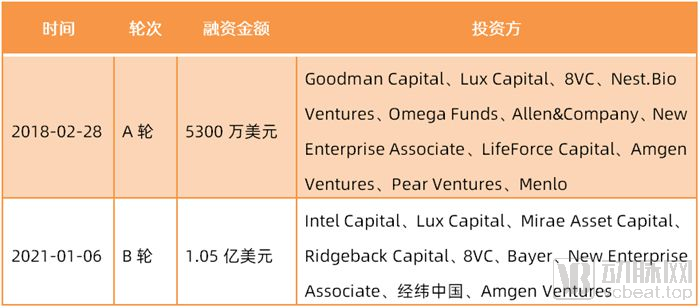
Senti Biosciences Funding History (Data Source: VCBeat)
Senti Biosciences, founded in 2016 and headquartered in California, USA, is a biotechnology company specializing in human cell engineering. With a mission to treat the most complex and challenging diseases, Senti Biosciences leverages synthetic biology to design “gene circuits” for the treatment of tumors and cancers. Since its inception, Senti Biosciences has been a highly anticipated “star enterprise.”
To understand the success of Senti Biosciences, one must delve into the entrepreneurial journey of its co-founder and CEO, Dr. Timothy Lu.
During his undergraduate and master’s studies, Lu Guanda studied electrical engineering and computer science at the Massachusetts Institute of Technology (MIT). Around 2003, with the booming development of synthetic biology in the United States, Lu developed a strong enthusiasm for exploring this emerging discipline. During his doctoral studies, he shifted his focus to synthetic biology and joined the laboratory of synthetic biologist Jim Collins. There, Dr. Lu developed bacteriophages capable of degrading biofilms.
Dr. Luke Guan-da Lu is an Associate Professor in the Department of Electrical Engineering, Computer Science, and Bioengineering at MIT. More widely recognized than his academic role is his identity as a “serial entrepreneur” in the field of synthetic biology.
In 2009, leveraging biofilm degradation technology, Dr. Lu Guanda collaborated with two graduate students to establish a biotechnology company (now named Sample6), providing customized phages for detecting food contamination.
In 2013, Dr. Timothy Lu founded another biotechnology company, Synlogic, to attempt treating human infectious diseases by engineering the genes of probiotics.
In 2014, he continued to drive innovation by founding two biotechnology companies: Eligo and Engine. Eligo is dedicated to developing biotherapeutic platforms to bring precision medicine to the microbiome, producing a type of biological nanorobot constructed from DNA and proteins—called Eligobiotics—to target and kill bacteria. Engine is an artificial intelligence-driven platform for new drug discovery, with proprietary technologies including methods for generating genomic biological experimental data and AI algorithms for data analysis and cell atlas construction. These patented technologies have significantly accelerated the development of innovative therapies for major diseases.
In 2015, Dr. Lu Guanda co-founded the microbiome company BiomX with two Israeli scientists: Professor Eran Elinav, an expert in human microbiomics, and Professor Rotem Sorek, an expert in genetic engineering and bacterial genetics. BiomX is dedicated to developing customized phage therapies aimed at selectively eliminating harmful bacteria associated with chronic diseases such as inflammatory bowel disease (IBD) and colorectal cancer (CRC).
Senti Biosciences was co-founded in 2016 by Dr. Guanda Lu and Dr. Philip Lee. Dr. Lee possesses extensive expertise in cell biotechnology, having previously served as Business Director and Technical Director of Cell Culture at Merck KGaA. Together, they established Senti Biosciences to leverage synthetic biology for the design of “gene circuits,” with the aim of treating cancers and immune-mediated diseases using cell and gene therapies.
Subsequently, in 2017, Lu Guanda co-founded Tango, a company dedicated to the development of novel cancer immunotherapies, alongside six other scientists. Tango is committed to leveraging next-generation DNA sequencing and CRISPR gene-editing technologies to develop innovative cancer immunotherapies.
Having founded multiple biotechnology and pharmaceutical companies, Dr. Guan-Da Lu has become a veritable entrepreneurial star in the field of synthetic biology. He has received numerous honors, including the NIH New Innovator Award, the Presidential Early Career Award for Scientists and Engineers (PECASE), and the Young Investigator Awards from the U.S. Navy and Army.
In 2010, Dr. Lu Guanda, at the age of 28, was named one of the "35 Innovators Under 35" by MIT Technology Review. The publication commented on Dr. Lu: “In the field of synthetic biology, he created the first successful commercial application.”
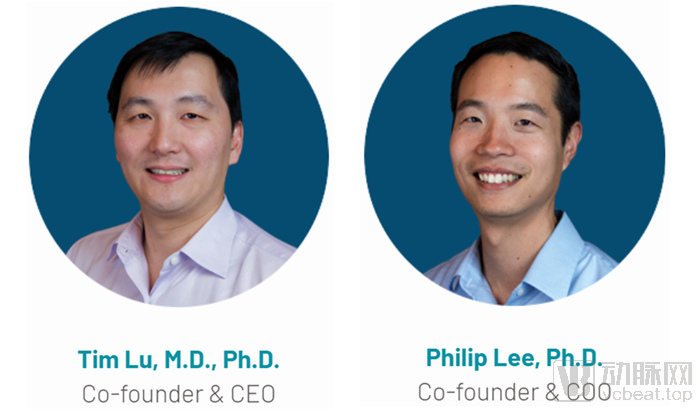
Senti Biosciences Founders: Dr. Guanda Lu (left) and Dr. Philip Lee (right) (Image source: Senti Biosciences official website)
“Gene circuits can be deployed across a range of modalities in next-generation cell and gene therapies. We believe that gene circuit therapies can address unmet needs in multiple therapeutic areas.”
——Dr. Lu Guanda
“Circuits” fall within the realm of physics, while “genes” belong to the domain of biology. What sparks might fly when these two fields collide?
Dr. Lu Guanda envisions that by applying the “switching mechanism” of electrical circuits in physics, synthetic biology approaches can be used to design and construct a similar biological pathway—a gene circuit. By inserting genetic engineering components into cells, the gene circuit is activated when a drug binds to a specific target on cancer cells, leading to the expression of various proteins (such as cell surface proteins, cytokines, and chemokines) that guide T cells to recognize and kill tumor cells.
“The technical challenge of gene circuits lies in precision,” noted Dr. Lu Guanda. Cancer cells are only easily targeted when they appear in clusters; it is difficult to distinguish whether a single cell is normal or cancerous. Dr. Lu drew an analogy to the “AND gate” structure in integrated circuits—A and B.
In layman's terms, A and B are two essential criteria for identifying a cell as cancerous. Only when both criteria A and B are met is the cell classified as cancerous, thereby triggering the drug response mechanism. If neither criterion is met, or if only one is satisfied, the cell is not considered cancerous, and the drug response mechanism is naturally not activated.
Dr. Lu Guanda refers to the aforementioned development as “Gene Circuit 2.0.” This next-generation gene circuit technology enables more precise identification of cancer cells, prevents off-target cell killing, and enhances the efficacy, precision, and controllability of cell and gene therapies.
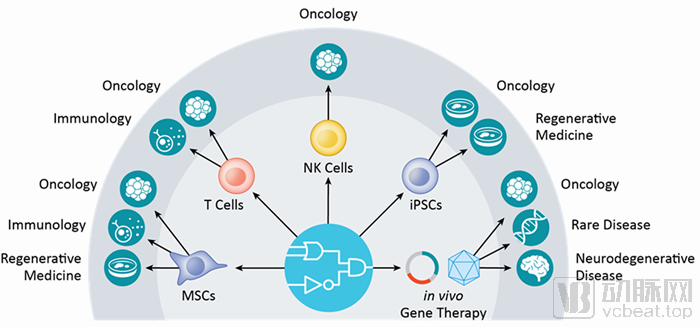
Schematic Diagram of Senti Biosciences’ “Gene Circuits” (Image Source: Official Website of Senti Biosciences)
CAR-T and CAR-NK are two major cell therapy technologies for addressing highly prevalent, refractory cancers.
The clinical value of CAR-T in the international oncology market is well established. At this stage, leveraging its proprietary synthetic biology platform, Senti Bio is developing a pipeline of gene circuits focused on allogeneic CAR-NK cells.
The human immune system comprises three lines of defense: the skin, mucous membranes, and their secretions constitute the first line; bactericidal substances in body fluids (such as lysozyme) and phagocytes constitute the second line; and immune organs and immune cells constitute the third line. Natural killer (NK) cells serve as the first line of defense against tumors.
NK cells can non-specifically and directly kill target cells. This natural cytotoxic activity does not require prior sensitization by antigens or antibody involvement, and is not restricted by MHC (Major Histocompatibility Complex).
Compared with CAR-T T cells, NK cells can facilitate transplantation, combat infections, and control cancer recurrence without causing graft-versus-host disease (GVHD), while retaining the graft-versus-tumor (GVT) effect. Currently, NK cells are also being applied in immune cell therapy.
Senti Biosciences’ star pipeline candidates include SENTI-202, SENTI-301, and other undisclosed solid tumor target candidates.
Utilizing OR + NOT gating technology, SENTI-202 is designed to precisely target relapsed/refractory AML (heterogeneous acute myeloid leukemia) cells, including key leukemic stem cells that drive cancer recurrence, while preventing damage to healthy hematopoietic stem cells.
SENTI-301 offers a revolutionary new approach to the treatment of recurrent/refractory hepatocellular carcinoma (HCC). By leveraging gene circuits that express combinatorial immune effector payloads, SENTI-301 effectively enhances NK cell activity and improves anti-tumor efficacy.
In addition to its application in allogeneic CAR-NK cell therapy for cancer, Senti Bio’s gene circuit technology platform can also be applied to various other cell and gene therapy delivery modalities, spanning diverse therapeutic areas such as immunology, neuroscience, cardiovascular disease, regenerative medicine, and genetic disorders.
CAR-NK Cell Therapy and CAR-T Cell Therapy Are Complementary. Building on the principles of CAR-T therapy, NK cell therapy leverages the biological characteristics of NK cells' non-specific immunity.
As the clinical value of CAR-NK cell therapy becomes increasingly prominent, both pharmaceutical giants such as Sanofi and Bristol Myers Squibb, and biotechnology startups like Catamaran Bio and Artiva Bio, have successively entered the CAR-NK arena.
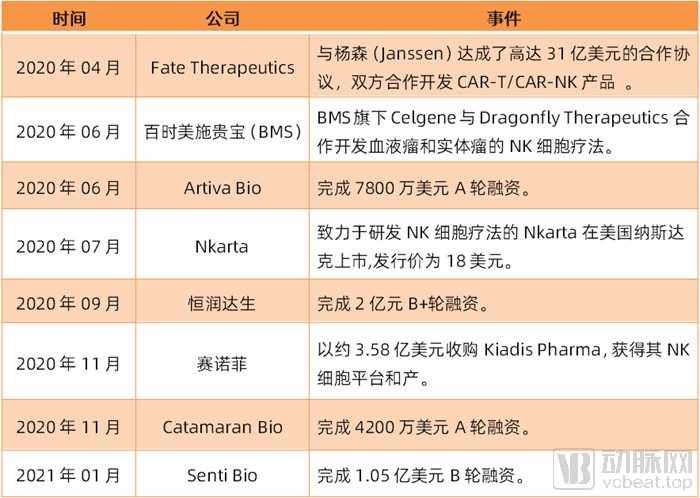
CAR-NK Sector Collaborations and Transactions Since 2020 (Incomplete Statistics Based on Public Information by VCBeat)
Evidently, CAR-NK has become the most compelling engineered cell therapy following CAR-T.
Currently, global CAR-NK cell therapies are largely in the early stages of clinical trials, with a primary focus on hematologic malignancies. From a capital dynamics perspective, most CAR-NK companies are securing financing between the seed round and Series B. Whether in terms of product clinical research or capital support, CAR-NK therapy holds significant potential for growth.
According to Frost & Sullivan’s projections, the market size of cellular immunotherapy products in China will surge from RMB 1.3 billion in 2021 to RMB 10.2 billion in 2023, representing a compound annual growth rate (CAGR) of 181.5%. The market is expected to reach RMB 58.4 billion by 2030. Thus, CAR-NK cell therapy can be described as a sunrise industry targeting a blue-ocean market worth tens of billions of yuan.
At this stage, dozens of biotechnology companies in China have entered and established a presence in the CAR-NK field. Notable players include Suzhou Ascletis, Suzhou Bio-Therapeutics, Shenzhen Mosaicell, Hangzhou Imunopharm, and Shanghai Hengrun Dasheng. Among them, Suzhou Ascletis is an early entrant in the CAR-NK space.
Asco Therapeutics, founded by Dr. Li Huashun in Suzhou in 2013, is a biotechnology company dedicated to the research and development of CAR-NK therapies. According to public records, as early as 1999, Dr. Li Huashun discovered ROBO1, the target for CAR-NK cell therapies, and was the first globally to elucidate the molecular guidance mechanism of ROBO1 in migrating cells. This target is highly expressed in 80% of solid tumors.
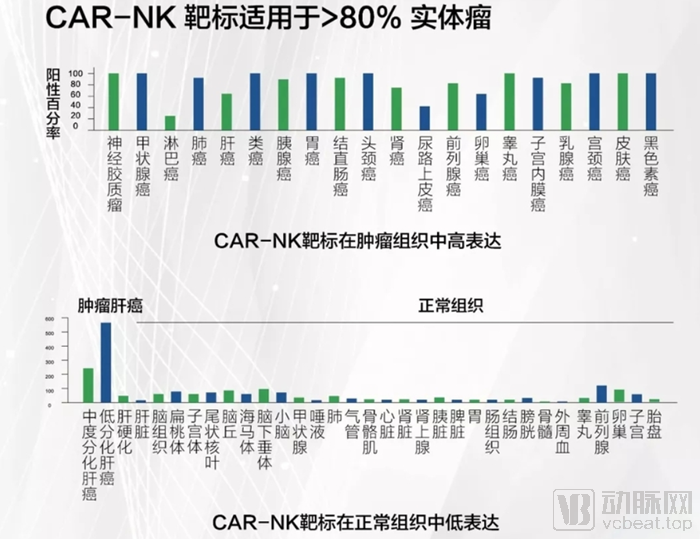
Expression of CAR-NK Targets in Cell Tissues (Image Source: Asclepix Official Website)
Dr. Li Huashun stated in an interview, “ROBO1CAR-NK technology has broken through the bottlenecks of CAR-T (chimeric antigen receptor T-cell) therapy, enabling the targeting of novel therapeutic antigens, and features scalable manufacturing and a high safety profile.”
According to clinical data from 17 cases published by Asclepius, ROBO1 CAR-NK cell therapy has demonstrated significant efficacy against breast cancer, colorectal cancer, lung cancer, pancreatic cancer, and liver cancer. The study participants were predominantly patients with stage IIIb/IV tumors who had failed prior standard treatments, including surgery, radiotherapy, and chemotherapy. The disease control rate reached 76.5%, the median overall survival exceeded 20 months, and no serious adverse events were reported.
At this stage, AscoLife’s CAR-NK cell therapy has obtained approval from the ethics committees of three Grade A tertiary hospitals, including Shanghai Ruijin Hospital, Suzhou Jiulong Hospital, and Suzhou Municipal Hospital, and has initiated partial clinical research on CAR-NK.
In recent years, with the deepening of basic research and sustained capital investment, personalized cancer immunotherapy has made tremendous progress. The approval of Novartis’s Kymriah and Kite Pharma’s Yescarta, two CAR-T therapies, has offered new hope for treating cancer with cell and gene therapies.
Currently, the industry holds high expectations for directions such as CAR-T, CAR-NK, UCAR-T, and TCR-T. We have reason to believe that there will be continuous new technological breakthroughs in this field in the future.
However, the hotter the sector, the more crucial it is for entrepreneurs to maintain rationality. A review of founders of biotech startups both domestically and internationally reveals that most are leading researchers in biology or celebrated serial entrepreneurs. The immunotherapy sector is characterized by high barriers to entry and high potential returns. While biotechnology companies recognize the market opportunities, they must also carefully consider various factors, including technological thresholds, patent landscapes, and clinical trial design complexities, rather than blindly following trends.
At the current stage, cancer immunotherapy in China remains in its initial phase. While personalized cancer immunotherapy has demonstrated significant efficacy in the treatment of hematologic malignancies, progress in the treatment of solid tumors has been slow, creating an urgent need for novel technological innovations to address this challenge.