

MicroClear Medical: Pioneering a Full Portfolio of Ophthalmic Imaging Systems through Independent Innovation to Fill Domestic Gaps

Microclear Medical
Provider of Medical Imaging and Ophthalmic Diagnosis and Treatment Equipment
The newly released "Global Eye Health Report" shows that in 2020, 1.1 billion people worldwide suffered from vision impairment, of whom 596 million had cataracts, glaucoma, or diabetes-related eye complications.In China, influenced by factors such as deepening population aging, lifestyle changes, increased allergens, and improper eye use, the prevalence of ophthalmic diseases including cataracts, glaucoma, dry eye syndrome, and keratoconjunctivitis is rising year by year, leading to a sharp increase in demand for ophthalmic diagnosis and treatment.
Driven by multiple factors including patients, capital, and policies, China's ophthalmic device market is experiencing rapid growth. According to data from the "China Medical Device Industry Development Report,"The market size of China's ophthalmic medical device industry grew from RMB 11.1 billion in 2014 to RMB 26.7 billion in 2019, with a compound annual growth rate (CAGR) of nearly 20%, and is projected to reach RMB 37.6 billion in 2021.
China's ophthalmic medical device market is experiencing rapid growth; however, it is noteworthy that over 80% of the market share is dominated by foreign manufacturers. Domestic ophthalmic device manufacturers must therefore actively promote the substitution of imported devices with domestically produced alternatives.
Fortunately, some domestic companies have developed ophthalmic medical devices with quality leading internationally, and import substitution is promising in the future.
Suzhou Microclear Medical Instruments Co., Ltd. (hereinafter referred to as "Microclear Medical"), established in 2011, is a high-tech enterprise specializing in ophthalmic medical devices and optometric services.Its independently developedConfocal Laser Scanning Ophthalmoscope, Fundus Camera、Handheld Digital Slit Lamp、Vision ScreenerProducts such as these have obtained medical device registration certificates in China, the United States, and the European Union, and have been exported to Europe and the United States.50multiple countries and regions.
How has Microclear Medical broken through to capture market share from foreign manufacturers? What are the advantages and features of its products? How does Microclear Medical view the domestic ophthalmic device market? To address these questions, VCBeat conducted an exclusive interview with Dr. Li Chaohong, CEO of Microclear Medical.
Dr. Li Chaohong is one of the leading experts in the fields of optical imaging and ophthalmic imaging diagnostic engineering. During his doctoral studies, he researched the applications of adaptive optics high-resolution imaging in astronomy and healthcare. In 2007, Dr. Li earned his Ph.D. from the Institute of Optics and Electronics, Chinese Academy of Sciences, and subsequently went to the United States for further study, where he served as a system engineer for ophthalmic imaging instruments. Dr. Li’s extensive expertise in the research, development, and application of world-class ophthalmic medical devices laid a solid foundation for his entrepreneurial ventures upon returning to China.
Since returning to China in 2011 to found Microclear Medical, Dr. Li Chaohong has received support from multiple talent programs—including the National Major Talent Project, Jiangsu Province’s Mass Innovation and Entrepreneurship Program, Gusu Leading Talent Program, and Suzhou Industrial Park Science and Technology Leading Talent Program—due to his outstanding achievements. He has also been awarded research grants from various initiatives, such as the National Science and Technology Support Program, the National Key R&D Program, the National Natural Science Foundation, and the Jiangsu Provincial Science and Technology Development Program.
In addition, Dr. Li Chaohong has undertaken multiple national-level research projects, published nearly 20 SCI-indexed papers, filed over 50 domestic and international invention patents, and authored one academic monograph. Currently, Dr. Li Chaohong is appointed asDistinguished Professor, Wenzhou Medical University; Suzhou Institute of Biomedical Engineering and Technology, Chinese Academy of Sciences; Department of Biomedical Engineering, Southeast University,Dedicated to Innovative R&D in Cutting-Edge Technologies and Industrialization。
Through years of accumulation, Dr. Li Chaohong has amassed extensive academic, industry, and industrialization resources, leveraging these advantages to drive the rapid growth of Microclear Medical and accelerate the import substitution of ophthalmic devices in China.
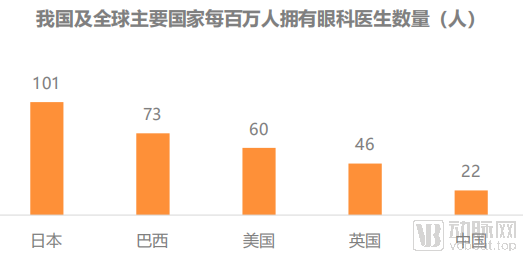
Dr. Li Chaohong told VCBeat, “Currently, there are three major pain points in China’s ophthalmology market. First,”Ophthalmologists are relatively scarce, China has only about 35,000 ophthalmologists, with an average of just 22 ophthalmologists per million people. In contrast, the United States has 60 ophthalmologists per million people, and Japan has 101 per million. Second, while Chinese ophthalmologists rank among the world leaders in clinical expertise and patient volume,Over 80% of ophthalmic medical devices are imported products, with domestically produced ophthalmic devices accounting for only a small share of the market.Third,Domestic Ophthalmic Medical Devices Still Lack in Technology and Quality, it is also necessary to increase investment in research and development."
(Image provided by Microclear Medical)
Microclear Medical is most concerned with the third pain point, namely the technical and quality issues of domestically produced ophthalmic devices. Dr. Li Chaohong stated, “The mission of Microclear Medical is to provide high-quality medical services to patients and healthcare professionals, and to manufacture high-quality medical devices that are our own.”
To address the shortage of ophthalmologists, Microclear Medical’s solution is to intelligentize its devices, enabling diagnostic data to be transmitted freely and viewed remotely, while also launching artificial intelligence tools to assist physicians in screening and diagnosis, thereby improving their work efficiency.
To address import substitution, Microclear Medical leverages Dr. Li Chaohong’s technical expertise and confocal laser technology to independently develop a comprehensive portfolio of ophthalmic imaging products, including fundus cameras, digital slit lamps, ultra-widefield laser color photography systems, ultra-widefield laser angiography systems, and vision screening devices, thereby capturing domestic market share through superior product performance.
Dr. Li Chaohong remarked, “Microclear Medical is committed to developing the best technology and the best products. This is the core of Microclear Medical.Values, which is also the essence of Microclear Medical's smooth development. We believe that only by excelling in technology and products can we have the opportunity to surpass overseas enterprises.”
Under the leadership of Dr. Li Chaohong, Microclear Medical has equipped its ophthalmic imaging devices with “ultra-widefield” screening capabilities through technological innovation. Notably, only three companies worldwide, including Microclear Medical, have fundus imaging devices with ultra-widefield screening capabilities.and Diagnosisfunctionality. Among these three companies, only Microclear Medical and another overseas enterprise have applied confocal laser technology to ophthalmic imaging devices.
Currently, most ophthalmic imaging devices on the market employ conventional imaging methods. However, in these traditional approaches, fluorescence is also excited outside the focal plane of the objective lens, resulting in a certain degree of blurring in the fluorescent image at the focal plane. Additionally, the sample in the target region suffers from interference caused by fluorescence excited in adjacent areas within the same focal plane, thereby reducing image contrast.
Compared with traditional methods,Confocal laser technology uses a laser as the light source, employs confocal principles and instrumentation, and utilizes computers for digital image processing, analysis, and output of target specimens. Additionally, confocal laser technology performs point-by-point scanning, meaning that each “point” is a focal point.giving it an absolute advantage in image clarity, clinicians using confocal laser ophthalmic imaging devices canObservation of More Subtle LesionsandCapillaries.
Leveraging leading technologies such as ultra-widefield imaging and confocal laser scanning, Microclear Medical has developed and launched a portfolio of products including fundus cameras, ultra-widefield laser color photography systems, ultra-widefield laser angiography systems, handheld digital slit lamps, and vision screening devices.
Microclear Medical’s ultra-widefield laser color imaging system employs globally leading ultra-widefield technology and confocal laser scanning ophthalmoscopy to perform real-time retinal scans and acquire high-definition fundus images, enabling in-depth fundus examination for various conditions such as diabetes, glaucoma, retinal vascular diseases, and macular degeneration.
In terms of imaging angle,TraditionOpticsFundus Camera Imaging Field of View: Averagefor45degrees, while ultra-widefield laser color photography can reachSingle-Image Intraocular Imaging150DegreeOphthalmologists can accurately diagnose fundus diseases using ultra-widefield high-definition images, thereby avoiding misdiagnosis and missed diagnoses. Compared with conventional optical cameras, ultra-widefield laser color photography employs monochromatic light with low-intensity flash, offering greater patient comfort. It enables clear imaging through undilated pupils, allowing dynamic, real-time recording of fundus images without the need for mydriasis, which facilitates screening and diagnosis by ophthalmologists. In comparison to ultra-widefield devices from two overseas manufacturers, Microclear Medical’s ultra-widefield laser color photography system achieves 20x optical zoom, enabling in vivo observation of retinal photoreceptor cells, thus demonstrating a distinct absolute advantage.
Ultra-widefield laser color photography has currently received market approval. Also approved concurrently is ultra-widefield laser angiography, a product primarily used for the examination of ophthalmic conditions such as diabetic retinopathy, retinal vascular diseases, and macular degeneration. Compared with similar products, Microclear Medical’s ultra-widefield laser angiography offers 20x optical zoom, achieving an intraocular imaging angle of up to 150 degrees per single frame and 220 degrees in montaged images.
In addition, Microclear Medical’s products are equipped with head frames to facilitate physician operation. In terms of after-sales service, Microclear Medical has established its own service team to provide localized support for physicians.
Dr. Li Chaohong stated: “Microclear Medical is dedicated to replacing imported products with high-end ophthalmic medical devices, such as ultra-widefield laser color imaging, ultra-widefield laser angiography, and swept-source OCT. By deploying products like handheld cameras and digital slit lamps in primary healthcare institutions, the company aims to help address the challenges facing grassroots healthcare in China.“Import substitution and alleviating primary healthcare challenges are not only the responsibilities of Microclear Medical as a leading enterprise, but also the essence of its social value.”