

From Zero to $36.3 Billion: The Rise of Singapore as Asia’s Biomedical Hub

GSK
Pharmaceutical R&D Manufacturer

Novartis
Drug Development and Manufacturing
What comes to mind when you think of Singapore? The iconic Merlion statue spouting water by the riverside in the city center, or Nanyang Technological University, the world-class institution ranked number one in Asia? While both are highly representative, they do not encompass all that Singapore is. Surprisingly, this city-state, with a land area of only 719.1 square kilometers, has a hidden moniker: “Asia’s Biopolis.”
As the fastest-growing biopharmaceutical cluster in Asia, Singapore leverages its robust digital technology capabilities and vibrant research ecosystem to continuously drive innovation in the biopharmaceutical industry. In just 40 years, it has evolved from an obscure newcomer in the biopharmaceutical field into a global hub for clinical research and trial management of pharmaceutical products, attracting world-class pharmaceutical companies such as Pfizer, Roche, and Novartis to establish their Asia-Pacific headquarters there.
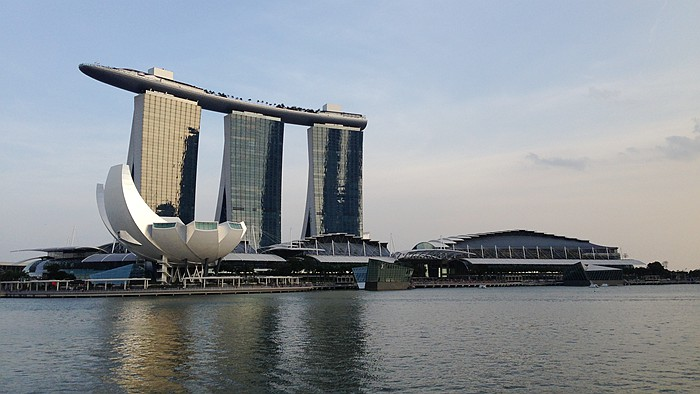
Photo by VCBeat reporter
According to data released by the Singapore Economic Development Board,In 2019, the total output value of Singapore's biomedical industry reached US$36.3 billion., with the pharmaceutical industry’s output value reaching $21.9 billion and the medical device industry’s output value reaching $14.4 billion, accounting for more than 10% of the national gross domestic product. Notably, based on annual revenue during the same period, Singapore’s biopharmaceutical industry in 2019The total output value is equivalent to that of six Shanghai Zhangjiang Hi-Tech Parks.(Note: In 2019, the industrial output value of the biopharmaceutical industry in Zhangjiang, Shanghai reached RMB 40 billion.)
To date, Singapore in the field of biomedicineThere are more than 300 enterprises, over 50 manufacturing plants, and more than 50 research institutions, with the number of industry-related practitioners exceeding 24,000., its vast market size and highly skilled talent pool have driven a stepwise enhancement of its international competitiveness, gradually making it a key link in the global biopharmaceutical value chain.
The development of any industrial cluster involves both inevitable trends and contingent circumstances. So, for Singapore’s biopharmaceutical industrial cluster, how did it grow the sector from scratch to a market size worth billions of US dollars within just forty years? What resource advantages and operational systems have enabled it to attract global pharmaceutical giants to establish their presence there? What lessons can its successful model offer to biopharmaceutical industrial parks in China, and which experiences are replicable? Let us find answers to these questions behind a series of figures.
In the 1980s, Singapore had already completed its first wave of economic takeoff, with growth gradually slowing down and even experiencing a recession in 1985. Clearly unwilling to put all their economic eggs in one basket, Singaporeans sought diversification. After careful consideration, the Singaporean government decided to initiate an economic transformation, shifting away from excessive reliance on labor-intensive industries and focusing instead on the biopharmaceutical sector, renowned for its high technology and high value-added output.
The strategic direction had been set, but the urgent challenge facing the Singaporean government was that they were starting from scratch in the biopharmaceutical sector. In the 1980s, Singapore’s life sciences landscape was sustained solely by the Faculty of Science at the National University of Singapore; despite its strong capabilities, its research focus was predominantly on botany, with minimal engagement in biological sciences. Compounding the government’s dismay was the absence of any locally based pharmaceutical companies with international influence, as well as a complete lack of mature educational infrastructure to cultivate relevant talent.
1Launch the “External Support Policy” to Accelerate Industry Development
But unwilling to concede defeat, Singaporeans did not give up; instead, they began to “chart a new course.” By engaging with multiple parties, the Singaporean government sought to recruit a cohort of star scholars in the life sciences from around the world to help establish its own biomedical industry, and Sydney Brenner was the first professional to recognize Singapore’s potential.
Sidney BrennerWho exactly is this figure? He is a founder of molecular biology. In 2002, he was awarded the Nobel Prize in Physiology or Medicine for elucidating the “genetic code” and the function of messenger RNA. He became the first and only Nobel laureate in Singapore’s history to join the country’s workforce on a full-time basis, and is hailed as the “Father of Singapore’s Biomedical Industry.”
In 1985, Brenner arrived in Singapore, where the biomedical sector was virtually nonexistent, and began helping the country establish its first research institution—the Institute of Molecular and Cell Biology (IMCB)—marking the starting point of Singapore’s transformation toward a biomedical industry.
Since then, Brenner has been dedicated to helping Singapore establish a comprehensive pharmaceutical R&D system, particularly in the critical area of talent development. He single-handedly founded the Graduate School of the Agency for Science, Technology and Research (A*STAR), cultivating a large cohort of high-caliber professionals in biomedicine for local research institutes and universities. This initiative laid a solid foundation for Singapore’s subsequent emergence as a hub for the Asian pharmaceutical industry.
2Clarify top-level design planning, with clear division of responsibilities among functional departments
Entering the 21st century, Singapore, with its long-standing accumulation in the biotechnology sector, gradually established the biomedical industry as a strategic pillar and formulated detailed“BMS” Program, the plan primarily involves three functional agencies: the Biomedical Sciences Group (EDB), Bio*One Capital (BOS), and the Biomedical Research Council (BMRC). Among them, EDB is responsible for industrial development, BOS handles strategic investments in innovative companies, while BMRC coordinates and funds public sector and academic research, and supports scientist training.
On the other hand, the government has simultaneously intensified its support efforts, continuously launching initiatives such as“RIE2020” (Research, Innovation and Enterprise 2020 Plan), Pharmaceutical Innovation Programme (PIPS)Incentive policies are being implemented to drive the growth of this industry, in collaboration with pharmaceutical companies to cultivate specialized talent. For foreign investors, the Singapore Economic Development Board (EDB) also provides substantial preferential policy support, helping them establish partnerships and ensuring the smooth development of international biopharmaceutical enterprises in Singapore.
After nearly half a century of relentless effort, Singapore has completely shed its label as a “novice in biopharmaceuticals” and emerged as a “dark horse,” becoming a critically important player in the global biopharmaceutical industry. In terms of more compelling output value,Since 2005, Singapore’s market size has remained at the multi-billion-dollar level for 16 consecutive years, sustaining continuous growth without any decline.
The development of an industrial cluster is inseparable from the establishment of core parks. As one of the largest biopharmaceutical industrial clusters in Asia, Singapore’s biopharmaceutical industry has formed a structure centered on“Dashi Manufacturing” as the industrial foundation, “Qiao R&D” as the source of innovationindustrial agglomeration pattern, with a total planned area of 5.8 square kilometers.
1Daishi Biomedical Park: Centered on pharmaceutical manufacturing enterprises, aiming to generate tax revenue and employment
Tuas Biomedical Park is Singapore’s first officially established biomedical industrial park. Invested in by the Jurong Group with USD 6 million and completed in 2000, it covers a total area of 360 hectares. Located in the Tuas area of eastern Singapore, the park is 8 kilometers from One-North in the central region and only a 20-minute drive from Jurong Port, Singapore’s sole international multi-purpose port, thereby occupying a highly strategic location.
The core positioning of the Taisei Biopharmaceutical Park is biologics and medical devices, primarily providing biopharmaceutical companies with facilities for constructing production plants.The park features comprehensive infrastructure, including highways, sewage systems, power supply, water supply, and telecommunications lines. It has also introduced third-party utilities and services such as steam, natural gas, cooling water, and waste treatment, creating a favorable manufacturing and production environment for resident enterprises.
To date, the Tuas Biomedical Park has attracted large-scale manufacturing facilities and corporate headquarters of numerous international giants, including Merck & Co., Pfizer, Roche, Amgen, and AbbVie. The successive establishment of these global leaders has not only propelled Tuas Biomedical Park to become a biomedical manufacturing hub in Asia, but also further enhanced the overall competitiveness of the entire biomedical industry cluster.
2Singapore Biopolis: Centered on Research Institutions, Aiming to Drive R&D Innovation and Technology Transfer
Qiao Life Science Park is located in the heart of Singapore, only a 20-minute drive from the main urban area, offering excellent transportation convenience. The park has been under preparation since 2000,The specific industrial segmentation is positioned in the fields of biopharmaceutical research and production, medical device R&D and manufacturing, and disease research, with industrial links covering high-end technology development and scientific experimentation.
As a “mecca” for biomedical R&D, Qiao Life Science Park is located near two world-class universities—the National University of Singapore and Nanyang Technological University—and hosts seven research institutes and key laboratories in the life sciences, with more than 2,000 researchers.
In response to the substantial demand within universities for the commercialization of technologies and patents, Qiyao Park has fully leveraged its role as a platform for technological exchange and sharing, accelerating the progression of scientific achievements from R&D to clinical application and further commercialization. This has established a complete industrial innovation chain spanning upstream R&D to downstream development. Additionally, the Singapore government has established the Agency for Science, Technology and Research (A*STAR) within Qiyao City to strengthen ties between industry and academic research. A*STAR facilitates the smooth establishment of enterprises by certifying industrial projects within the park, providing financial grants, and coordinating park resources.
To date, the Biopolis life sciences park has undergone five phases of construction, with the sixth phase scheduled for completion in 2022. As a core hub for Singapore’s biomedical industry, the development of Biopolis is closely intertwined with the ongoing implementation of Singapore’s “Biomedical Sciences” (BMS) initiative. The park prioritizes technological innovation and has systematically established a comprehensive industrial incubation ecosystem, steadily advancing toward the ultimate vision of the BMS initiative: becoming Asia’s Biopolis.
Enterprises are always the core elements of industrial clusters and an important driving force for their development. For Singapore, although there are currently only over 300 biopharmaceutical enterprises, these established companies have extremely high "gold content," and the value they can generate is more significant.
To date, Singapore has attracted a large number of top global pharmaceutical companies, mainly includingGlaxoSmithKline, Merck & Co., AbbVie, Novartis, Pfizer, Roche, Sanofi, Amgenamong others. These companies have all established their Asia-Pacific headquarters in Singapore, investing heavily to build large-scale manufacturing plants and R&D centers there.
GlaxoSmithKline PLC.As the first world-class pharmaceutical company to establish its presence in Singapore, with roots dating back to the 1970s when its operations primarily involved basic production and marketing, GlaxoSmithKline (GSK) has continuously expanded its coverage in the Asian market, leveraging the rapid development of Singapore’s industrial cluster. To meet evolving strategic needs, GSK officially relocated its Asia-Pacific headquarters to Singapore in 2015, transferring nearly 150 global and regional executives to the city-state to facilitate faster and more effective decision-making in the region.
Since the turn of the new century, GlaxoSmithKline (GSK), having reaped the benefits of its growth, has undertaken significant initiatives in Singapore. The company has invested $400 million to establish three manufacturing plants and its first preclinical laboratory in the country. Currently employing over 500 staff, GSK Singapore produces 13 active pharmaceutical ingredients (APIs) primarily used for treating respiratory diseases, oncology conditions, allergies, viral infections, and neurological disorders.
Hot on the heels of competitors’ advances, Swiss pharmaceutical giantNovartisIt has also begun to exert significant influence in the Asia-Pacific region, investing $680 million sequentially to establish a pharmaceutical manufacturing plant and a world-class biotechnology production facility in Singapore. These facilities primarily support clinical and commercial production of potential new products, including monoclonal antibodies for the treatment of autoimmune diseases, respiratory disorders, and cancer.
In addition, driven by the deepening implementation of the Belt and Road Initiative, China-Singapore economic and trade cooperation has ushered in a rare historical opportunity. Some domestic pharmaceutical companies have begun to "enter" Singapore, using it as an important "springboard" for expanding into the Southeast Asian market. Take WuXi Biologics, an open biotechnology platform from Jiangsu, China, as an example,WuXi BiologicsIn 2018, it officially established its presence in Singapore, marking the first overseas production initiative in the Asian region, and planned to invest SGD 80 million (approximately RMB 380 million) to set up a modern biopharmaceutical production base in Singapore.
Driven by strong macro-policy support and the continuous backing of complementary resources, Singapore has emerged as a global pharmaceutical industry cluster attracting intense competition among drug companies for establishment. To date, 11 world-leading pharmaceutical and biotechnology companies have invested in constructing more than 25 large-scale production facilities in Singapore, with research focuses primarily on clinical science, genomics, bioengineering, molecular/cellular biology, pharmaceutical biology, bioimaging, and immunology.
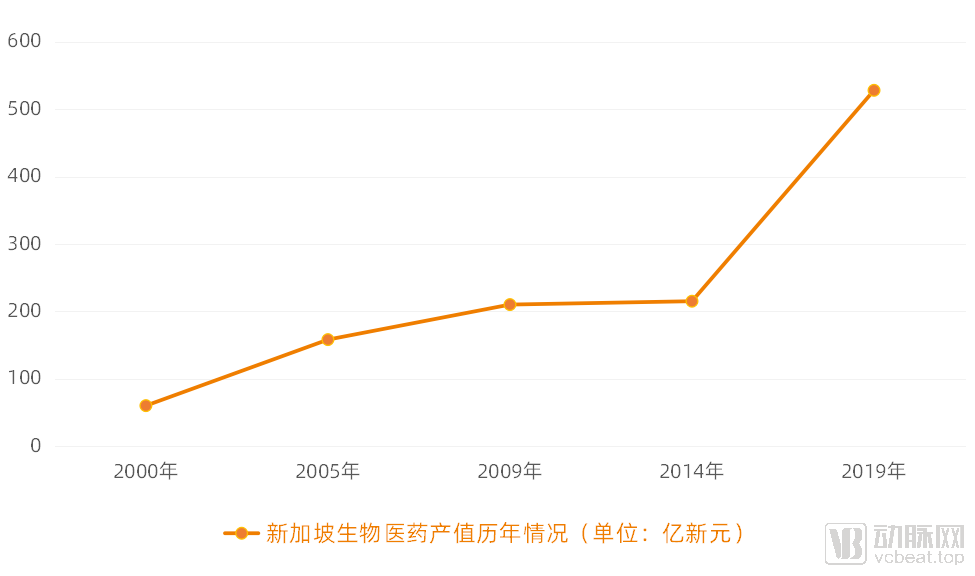
The comprehensive capabilities and development prospects of an industrial cluster can be assessed from multiple dimensions, such as scientific research proficiency, talent resources, enterprise scale, and incubation capacity; however, the most influential and tangible indicator remains the gross output value.
 Data source: Singapore Economic Development Board; chart by VCBeat
2000 marked the year when the Singapore government formally elevated the biopharmaceutical industry to a national strategic level, with the biopharmaceutical market size amounting to approximately SGD 6 billion. Within just five years, Singapore’s biopharmaceutical output value reached SGD 15.8 billion, equivalent to approximately USD 10.3 billion at the exchange rate at that time, representing Singapore’s performance since its entry into the biopharmaceutical sectorFirst Breakthrough of the $10 Billion MarkEntering a new stage of development, Singapore’s biopharmaceutical industry has made significant strides in its transformation and upgrading, reaching a historic high output value of USD 39.3 billion in 2019—six times the scale of Zhangjiang Hi-Tech Park’s pharmaceutical industry.
As we entered 2020, Singapore’s overall economy contracted by 1% to 4% due to the global COVID-19 pandemic. Despite these adverse conditions, the output value of Singapore’s manufacturing sector still achieved growth in 2020, with a year-on-year increase of 16.5%. Among various sectors, preliminary data from the Singapore Economic Development Board indicated that the biomedical industry performed most strongly, with its output value increasing by nearly 20% year on year.
With the continuous rise in gross domestic product, biomedicine has gradually emerged as a new growth engine for Singapore’s economy and become an extremely important component of its industrial economy.
From any perspective, Singapore’s biopharmaceutical industry ranks at the forefront in Asia and is gradually becoming a critical link in the global biopharmaceutical value chain. Specifically, compared with major Asian competitors such as China, Japan, and India, Singapore’s competitiveness in pharmaceuticals is second only to India, while its competitiveness in medical technology products is the strongest among these four countries.
# Ultimately, What Is the Underlying Logic Behind the Development of Singapore’s Biopharmaceutical Industry?
1Incorporated into National Strategic Planning
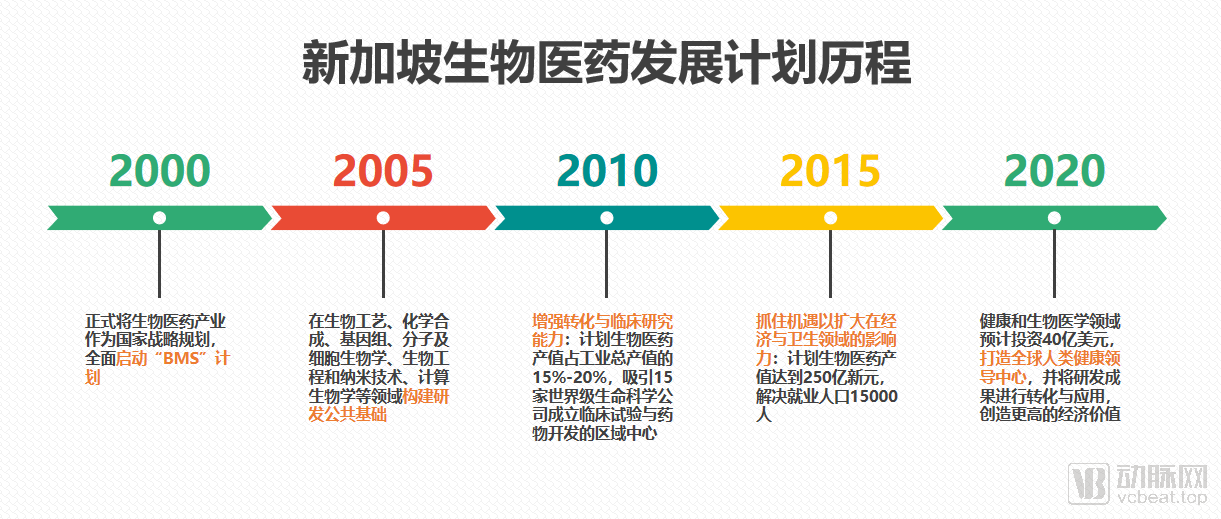
Singapore’s biomedical industry development features a clear top-level design and planning.In 2000, Singapore launched a 15-year Biomedical Sciences Initiative., implemented in three phases: building the industrial foundation (2000–2015), enhancing translation and clinical research capabilities (2006–2010), and seizing opportunities to expand influence in the economic and healthcare sectors (2011–2015), with the aim of establishing a global manufacturing hub for pharmaceuticals and medical technologies; from 2016 to 2020, the Singapore government further designated health and biomedical sciences as one of the strategic domains under its Research, Innovation and Enterprise 2020 (RIE2020) plan, striving to build a global leading center for human health.
2Inclusive Industrial Policy
Singapore invests approximately S$1.5 billion annually in biomedical research and development, with an additional S$3.7 billion allocated for the construction of R&D infrastructure.Biopharmaceutical companies establishing international or regional headquarters in Singapore can enjoy a corporate tax incentive rate as low as 15%. For qualifying capital expenditures incurred in the construction, renovation, or expansion of qualifying buildings or structures, businesses are granted an initial 25% tax allowance, followed by an annual 5% tax allowance in subsequent years. In terms of talent development, Singapore has launched the "Life Sciences Manpower Development Programme" to encourage more professionals in the pharmaceutical sector to engage in research and development within the life sciences field.
3Comprehensive Industry-Academia-Research Translation System
The Singapore Government has established a multi-stakeholder collaboration platform to foster partnerships among multinational corporations, local enterprises, universities, and public institutions, thereby accelerating the commercialization of scientific research achievements.For instance, Roche collaborated with various scientific research and medical institutions in Singapore to establish a Translational Medicine Center; Bayer HealthCare partnered with the National University of Singapore to advance the Bayer Integrated Translational Clinical Network project; and Novartis jointly invested with the Singapore Economic Development Board to establish the Novartis Institute for Tropical Diseases. These initiatives have invigorated innovative research within Singapore’s biopharmaceutical industry.
 Data source: China Business Industry Research Institute; Chart by VCBeat
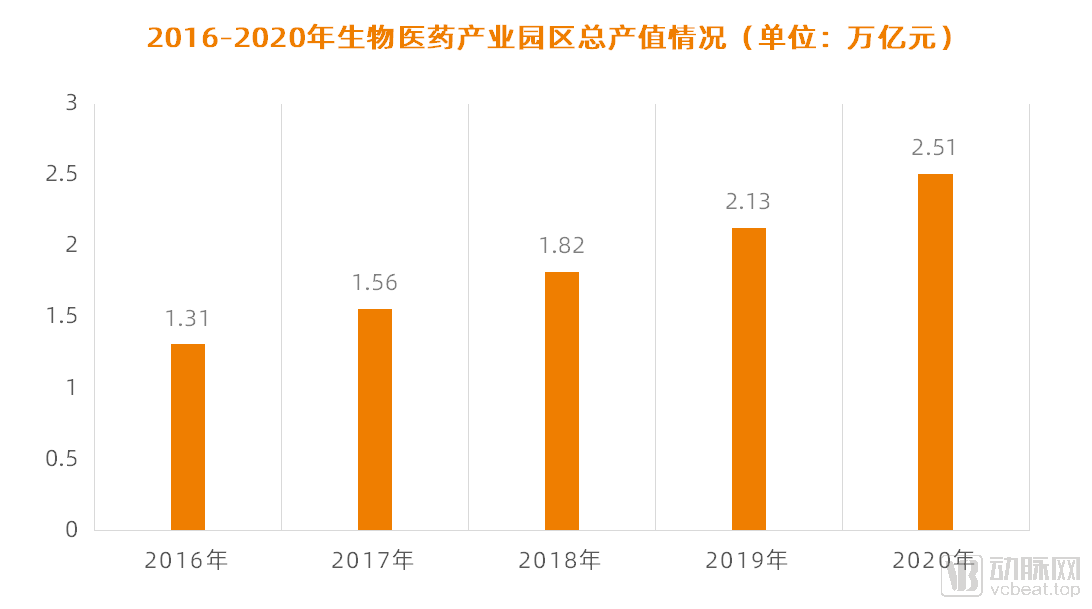
The development of China's biomedical industrial parks originated in the 1990s, and to date, the overall industry scale has continued to expand.Output value has increased from RMB 0.6 trillion in 2013 to RMB 2.5 trillion in 2020.In terms of the number of industrial parks, thanks to the support of national macro policies,As of the end of 2019, there were 193 biopharmaceutical industrial parks in China., with the Shanghai Zhangjiang High-Tech Industrial Development Zone, Suzhou Industrial Park, and Zhongguancun Science Park being the most typical.
As a crucial pillar for the development of China's biopharmaceutical industry, the growth trajectory of biopharmaceutical parks has always been closely aligned with national and local policy guidance and strategic planning. First,National Level, continuously select regions with strong industrial foundations, robust innovation capabilities, favorable business environments, and high levels of openness to support the establishment of biopharmaceutical industrial parks; secondly,Local Level, local governments have gradually strengthened top-level design and prioritized planning. By formulating industrial plans and policies, they guide industrial agglomeration and promote the development of distinctive biomedical industrial parks across various regions.
From a macro perspective, China’s biomedical industrial parks have made significant progress; however, to sustain growth, the following challenges must be addressed:First, the lack of coordinated planning has led to a scattered park layout and severe industrial homogenization. Second, imperfect mechanisms for industry access, exit, and assessment have resulted in insufficient long-term momentum for industrial development. Third, the weak linkage among innovation elements within the parks has adversely affected the performance of their innovation networks. Fourth, the separation between industrial zones and urban areas has created a developmental dilemma characterized by "industry without city."
Therefore, for the major biopharmaceutical industrial parks currently existing or in the planning stages within China, there is an urgent need to transform along their original paths, identify breakthroughs suited to their own development to achieve industrial upgrading, further enhance corporate competitiveness, and comprehensively accelerate regional economic growth. Based on this, we need to adopt a global perspective to find solutions. What insights can the “Singapore” model offer us?
1Self-Improvement: Leveraging Others’ Resources to Achieve Your Goals
Talent has always been one of the core elements driving the development of industrial parks. A distinctive feature of Singapore’s strategy to promote its biomedical industry is “leveraging external resources for global expansion and local growth,” by recruiting talent from countries and regions around the world for its own use. Since 1990, the Singaporean government has actively sought out skilled professionals, aggressively importing specialized talent from across the globe. To attract outstanding researchers, the Singaporean government offers numerous incentives, including favorable contracts, low taxes, comfortable living and working environments, high salaries, vacation benefits, housing subsidies, educational allowances for children, and spousal employment assistance, while also encouraging these individuals to acquire Singaporean citizenship.
According to incomplete statistics,Foreign talent accounts for approximately 70%–80% of the research field in Singapore, and the arrival of a large number of outstanding biomedical talents has significantly enhanced Singapore’s capabilities in biotechnology research, while further promoting and driving the influx of talent, serving as the key factor propelling Singapore’s biopharmaceutical industry to the forefront of Asia.
2Strategic Deployment: “3C”-Led, with Increased Capital Investment
For a long time, the development of biomedicine has been a key R&D strategy established by the Agency for Science, Technology and Research (A*STAR) in Singapore, and has been summarized asHuman Capital, Patent Capital, and Industrial CapitalThree main parts. The first letter of the English word “capital” is “C”, so this strategy is also abbreviated as“3C” StrategyAll investments made by the Singapore government—whether in talent cultivation and acquisition, research, or industry development—are ultimately aimed at achieving industrial value addition and profit maximization. Therefore, the formulation and implementation of its strategies revolve around the theme of “capital,” with “capital” serving as the core element of these strategies.
3Prioritizing Innovation: Comprehensive Investment and Optimized Development
After two to three decades of development and accumulation, Singapore has evolved from scratch into Asia’s most dynamic biomedical R&D hub, attracting numerous world-class pharmaceutical companies to conduct front-end product design and research and development locally. This achievement is by no means accidental; rather, it is the result of a series of strategic plans and phased initiatives.
First, the Singapore government took proactive initiatives by successively establishing official research bodies such as the Ministerial Committee on Life Sciences.Strengthen Intellectual Property Protection, to foster a favorable R&D environment; secondly, by promulgating a series of supportive regulations and providing substantial resources toAttract World-Class Pharmaceutical Companies to Establish R&D Institutions Here, and promote collaboration among enterprises to expand the scope of R&D coverage, thereby forming industrial cluster advantages; finally,Cultivating and Attracting Technical Talent, leveraging welfare policies such as the “Talent Fund” and “Talent Subsidy Program” as breakthrough points, we will continuously strengthen the development of our technical talent pool and comprehensively enhance capabilities in both basic and applied biological research.
4Achievement Commercialization: Multi-Party Collaboration and Investment Attraction
Leveraging policy advantages and a favorable revenue environment, Singapore has attracted numerous renowned multinational pharmaceutical companies and international talents to invest and establish operations there. However, new perspectives are needed on how to achieve capacity conversion. Standing at a new stage of development, the Singapore government has chosenIncrease efforts in investment promotion to foster the formation of a scaled biopharmaceutical industry.
Since 1991, the Singapore Economic Development Board (EDB) has cumulatively invested S$436 million through equity stakes, supporting nearly a hundred companies of various sizes and significantly facilitating the formation of industrial scale. Direct investment in establishing processing enterprises represents another approach to developing the biopharmaceutical industry. In 2002, the EDB invested S$150–200 million to build the largest local biologics manufacturing facility, which primarily produces monoclonal antibodies and provides raw materials and services—including cell culture, purification, analytical testing, and quality control—to major pharmaceutical companies.
Over the next five years, Singapore’s biomedical research will prioritize four key areas: cancer therapy, ophthalmology, medical devices, and infectious disease treatment. The country will strengthen its capabilities in technology translation and clinical research. Meanwhile, the focus of Singapore’s biomedical research will shift from Phase I basic scientific experimentation to the translation of research findings and clinical trials, aiming to expedite the conversion of scientific achievements into patient-benefiting products, such as the development of pharmaceuticals and medical devices.
Unlike European and American countries, Singapore had neither a talent reserve nor representative local enterprises in the biopharmaceutical sector, let alone sufficient financial support, making it impossible to identify any foothold related to this field. Yet, under such “adverse” conditions, innovative and breakthrough-minded Singaporeans started from scratch, relying firmly on"Government Guidance," "External Aid Policy," "Technological Innovation," "Capacity Conversion"and other approaches, it has carved out a distinctive development path, steadily growing into the “Asian Bio-City.”
Compared with China, Singapore shares many similarities with numerous Chinese cities, such as limited planning area and insufficient resource reserves. However, as things stand, there is a significant gap between the development of China’s biopharmaceutical industry and that of Singapore. This disparity is evident in terms of the market size of individual parks, overall innovation and R&D capabilities, and even the concentration of leading pharmaceutical companies.
However, there is reason to believe that with the increasing support in terms of policies and funding, China's biopharmaceutical industry will achieve a qualitative leap in the future, and more "Singapore-style" success stories will emerge across this land of China.
References:
1. Insight: Singapore Biopharmaceutical Development Report
2. Insights from the Development of Singapore’s Biopharmaceutical Industry and Industrial Parks
3. Scale of China's Biopharmaceutical Industrial Parks in 2020 and Forecast of Future Development Trends