

Bolttech Neuro Completes Over RMB 100 Million Series B Funding Led by Sequoia China, Files IPO Prospectus

Neuracle
Developer and Manufacturer of Brain-Computer Interface Systems and Related Equipment
VCBeat has learned that Neuracle Technology (Changzhou) Co., Ltd. (“Neuracle”), the first company to achieve industrialization of brain-computer interface technology, recently completed a Series B financing round exceeding RMB 100 million.This round of financing was exclusively led by Sequoia Capital, with existing shareholders Kaifeng Venture Capital and Rongtuo Capital continuing to participate. Neuracle stated that the funds from this round will continue to be used for product development, production line investment, sales network construction, and other areas.
Over the past year, attention to the brain science industry has continued to rise.
Following the successive launch of their respective “Brain Initiatives” by the U.S. government and the European Union in 2013,China’s 13th Five-Year Plan Outline also listed “Brain Science and Brain-Inspired Research” as one of the “Major Projects for Scientific and Technological Innovation 2030.”With the official launch of the China Brain Project, brain-computer interface (BCI) technology in China has entered a new stage of development. In November 2020, the "Proposal of the Central Committee of the Communist Party of China on Formulating the Fourteenth Five-Year Plan for National Economic and Social Development and the Long-Range Objectives Through the Year 2035" also pointed to targeting frontier fields such as brain science and implementing a batch of forward-looking and strategic national major scientific and technological projects. The inclusion of brain science research at the national strategic level signifies its enormous market potential.
In the medical field,The advancement of brain science has also facilitated improved diagnosis and treatment of various major brain disorders, including Alzheimer’s disease, epilepsy, stroke, Parkinson’s disease, and depression.The potential for billion-dollar unicorns to emerge in the field of neurological diseases has made brain science a hot research area.
As Musk’s Neuralink held a press conference, it also brought the representative technologyBrain-Computer Interface: One of the Most Cutting-Edge Technologieswas presented to the world, sparking widespread attention.
From an application perspective, the development of brain science will undoubtedly change the world as we know it. In the view of Huang Xiaoshan, founder and CEO of Neuracle,Humanity’s Two Ultimate Challenges: One Is the Origin of the Universe, and the Other Is Brain Science.
Develop EEG Devices to Achieve Multi-Sector Industrialization, Leveraging Technical Reserves to Secure Industry Leadership
Electroencephalogram (EEG) signals are bioelectrical signals induced by neuronal activity, characterized by the absence of a fixed rhythm and high time-varying properties. EEG signals contain information related to human cognitive processes and serve as the foundation for brain-computer interface (BCI) technology research. The successful acquisition and feature recognition of these signals play a crucial role in studying the laws of human cognition and realizing BCI technologies. EEG signal acquisition equipment holds a foundational position in the BCI industry, analogous to the role of gene sequencers in precision medicine.
Due to high technical barriers, EEG acquisition equipment in China's scientific research sector was long dominated by foreign manufacturers. With the state's increasing emphasis on brain science development, market demand has been continuously unleashed. Building upon extensive prior exploration and R&D efforts,Neuracle has also successively iterated its EEG acquisition devices, which have gained widespread market popularity, and continues to achieve import substitution.
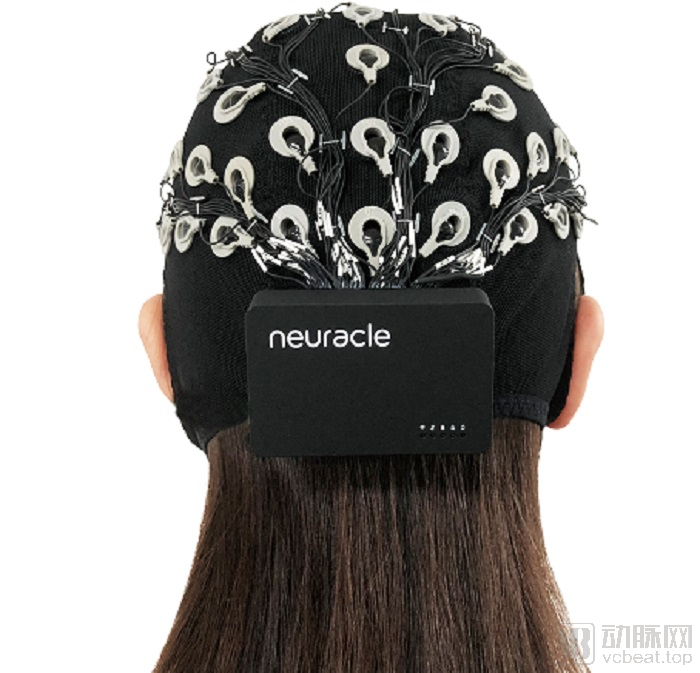
Neuracle Wireless EEG Acquisition System
In fact, as early as 1999, the Neuroengineering Laboratory at Tsinghua University School of Medicine began exploring the field of brain-computer interfaces, and the core team members of Neuracle wereFrom Tsinghua University’s Neuroengineering Laboratory, ranked among the top five globally in brain-computer interfaces, and medical market experts in the field of clinical neurology.
Despite such a formidable lineup, a significant gap still remains between R&D and the production of commercially viable brain-computer interface (BCI) products. In 2015, with the influx of angel-round financing, Neuracle accelerated the industrialization of its BCI technology.Research in the field of brain science at major universities has transitioned from relying solely on foreign EEG acquisition devices to utilizing domestically produced ones, with related research findings and papers published in major international mainstream journals, marking significant breakthroughs.
Beyond its applications in brain science research, brain-computer interface (BCI) technology undoubtedly holds equally vast market potential in the clinical diagnosis and treatment of neurological disorders.In September 2020, Neuracle successively obtained medical device registration certificates for its medically designed event-related potential (ERP) instrument, developed to meet clinical needs for brain function monitoring and initial screening of mental disorders, as well as its high-frequency, high-channel digital electroencephalogram (EEG) machine, designed to serve the needs of surgical localization of epileptic foci.Among these, the medical event-related potential (ERP) system is the first domestically developed all-in-one EEG and evoked potential device featuring active noise cancellation, while the high-frequency, high-density digital EEG system is the world’s first 1024-channel high-frequency EEG device to obtain medical certification.
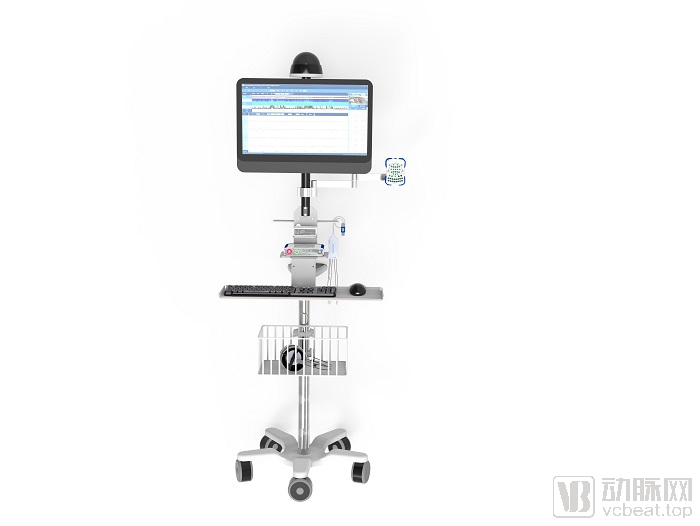
Neuracle Medical Event-Related Potential Instrument
Huang Xiaoshan stated,"High-frequency, high-density EEG acquisition systems for intraoperative localization in neurosurgery have core specifications, such as channel count and sampling rate, that meet or even surpass those of leading international products."As an outcome of the National Science and Technology Support Program, this product is currently being promoted and widely adopted.
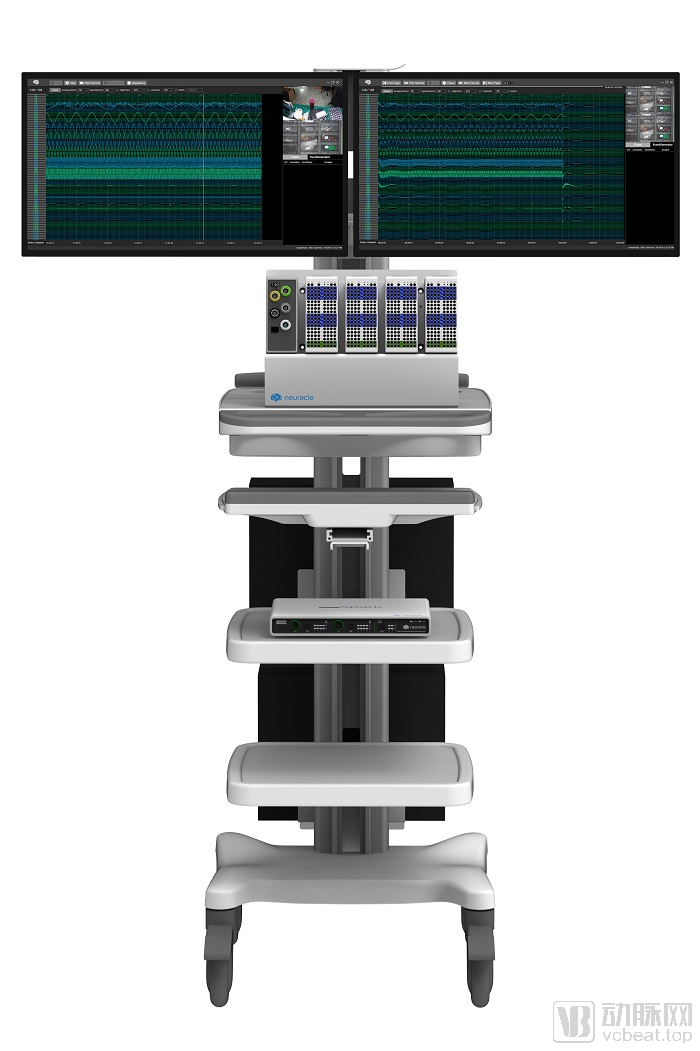
Neuracle High-Frequency, High-Density Digital EEG System
Neuracle has been continuously accumulating research achievements and experience by undertaking or participating in major national R&D projects, such as the National Science and Technology Support Program during the 12th Five-Year Plan period and the National Key R&D Program during the 13th Five-Year Plan period.Neuracle has successfully commercialized its products in the fields of brain science research and neurological diagnosis and treatment, establishing a clear first-mover advantage in brain-computer interface (BCI) technology and products. With the continuous evolution of BCI technology, Neuracle has laid a solid foundation for future development: as BCI technology matures and becomes applicable in a wider range of scenarios, the company can leverage its accumulated expertise to rapidly deploy new products.
Regarding Neuracle’s position in the brain-computer interface (BCI) industry, it may be illustrative to quote Professor Hong Bo, a BCI expert at Tsinghua University: “Electroencephalography (EEG) holds tremendous potential in the diagnosis and treatment of neurological and psychiatric disorders. With the generational advancements in microelectronics and intelligent technologies, the precision of EEG acquisition has improved significantly, enabling the extraction of increasingly rich information on brain states.”Neuracle has developed China’s own EEG products, employing a novel design philosophy that has enabled us to gradually achieve leadership in EEG signal acquisition and open up multiple avenues for clinical EEG applications.”
Non-invasive and Minimally Invasive Brain-Computer Interface Technologies Advance in Tandem
Last September, Musk’s Neuralink held a press conference that drew significant attention. In fact, the ideal brain-computer interface (BCI) can not only help researchers collect neural signals and decode the information encoding of brain activity, but also encode specific instructions and write them into neural cells via the BCI, enabling precise modulation of brain activity to achieve closed-loop disease treatment. To realize this process, the following steps must be completed: signal acquisition → signal decoding → writing encoded signals → feedback stimulation.
Professor Hong Bo pointed out that there are currently two technological evolution paths in the field of brain-computer interfaces:One approach involves invasively inserting hundreds to thousands of electrodes into the cerebral cortex to acquire signals; the other employs a non-invasive EEG cap that collects electroencephalographic (EEG) signals from the scalp via conductive gel or similar contact methods.Elon Musk’s Neuralink undoubtedly adopts the former technological approach.
Both technologies have their own advantages and disadvantages.: When invasive techniques are employed, the human body is prone to rejection responses and inflammation. Furthermore, signal amplitude decreases once glial cells encapsulate the electrodes. In non-invasive approaches, signal transmission fails when the conductive gel loses its efficacy. Moreover, compared to the former method involving electrode insertion into the cerebral cortex, the latter yields relatively weaker signals.
Neuracle team works closely with experts in brain science and clinical neurological diagnosis and treatment,A novel minimally invasive brain-computer interface is under development. The coin-sized implanted device is embedded within the skull and communicates wirelessly with the external unit through the skin, ensuring high signal quality while preserving the dura mater and avoiding damage to neural cells.Professor Hong Bo stated, “We have found a balance between signal strength and implantation-induced damage. The stable environment within the skull ensures long-term, reliable signal quality, enabling both robust acquisition of brain signals and closed-loop feedback stimulation. This represents a distinctive brain-computer interface (BCI) approach that can achieve long-term, stable, and reliable bidirectional BCI.”
Looking at the evolution of brain-computer interface (BCI) technology, it will go through three stages: the first stage centered on EEG signal acquisition technology, the second stage centered on bidirectional closed-loop feedback technology, and the third stage centered on human-machine hybrid intelligence.Over the past few decades, Neuracle has developed a comprehensive product portfolio for EEG signal acquisition and successfully commercialized its offerings. Currently, Neuracle is increasing its R&D investment in bidirectional closed-loop feedback technologies for both non-invasive and minimally invasive brain-computer interfaces.Among these, the non-invasive brain-computer interface (BCI) products under development will be used for stroke rehabilitation, sleep monitoring, brain function assessment, and preliminary screening for psychiatric and psychological disorders; whereas minimally invasive BCI products will be employed in the treatment of major neurological conditions such as epilepsy, laying the foundation for future advancements into human-machine hybrid intelligence.
Starting from Epilepsy Treatment, Exploring Broader Applications
The exploration of novel brain-computer interfaces has also revealed their broad application prospects.Currently, Neuracle is conducting closed-loop treatment for epilepsy via minimally invasive brain-computer interface access.Indications for EEG Devices in EpilepsyThe inclusion of epilepsy as an indication for electroencephalogram (EEG) devices is related to the specific nature of the disease: if a patient’s seizures remain uncontrolled after more than two years of treatment with first-line antiepileptic drugs, surgical intervention should be considered. Surgical treatment for drug-resistant epilepsy primarily involves resecting or ablating the epileptogenic zone to block epileptic discharges and their propagation.
Relatively speaking,Neuracle's minimally invasive implantation solution reduces the risk of surgical trauma.Neuracle’s decades of research in the field of brain science have yielded a substantial body of achievements, enabling rapid translation into clinical applications. Furthermore, Neuracle’s minimally invasive brain-computer interface (BCI) implantation system effectively meets the long-term durability and stability requirements inherent to epilepsy treatment.
In fact, with the introduction of policy guidelines led by the China Association Against Epilepsy, more epilepsy centers will be established in the future. According to statistics, there are currently only 31 certified tertiary epilepsy centers. However, in the next one to two years, more secondary and primary epilepsy centers will be established and accredited; this year alone, 362 institutions have applied for certification. AndFor epilepsy centers, EEG is a fundamental piece of equipment, which will bring about a huge market.
Neuracle can further expand research in other fields by leveraging its accumulated data.In the future, implanting minimally invasive brain-computer interface (BCI) devices into the cranial locations corresponding to the motor or language cortex is expected to help stroke patients accelerate recovery from hemiplegia and aphasia, and may even be applied to cognitive rehabilitation for Alzheimer’s disease. Through a standardized minimally invasive implantation system, integrated development with other interfaces can be achieved.
andIn the realm of non-invasive brain-computer interface (BCI) systems, where it has already achieved significant breakthroughs, Neuracle is implementing applications for rehabilitative and augmentative brain functions.For instance, it can be applied to the rehabilitation of stroke patients without the need for implantation, helping them establish a bridge for communication with the external environment in the short term. Furthermore, non-invasive brain-computer interfaces will play a significant role in the assessment, diagnosis, treatment, and rehabilitation of psychiatric and psychological disorders.
Why Is Capital Bullish on Neuracle?
As a hard-core technology, brain-computer interfaces are favored by capital due to their early stage of development and infinite possibilities in the future. So why did capital choose Neuracle?
Yang Yunxia, Partner at Sequoia Capital China Fund, stated“Brain-computer interface (BCI) technology can be applied in numerous fields, including brain science, clinical medicine, and consumer electronics. In particular, BCI is expected to play a significant role in the diagnosis and treatment of brain disorders. Neuracle is the first team in China to commercialize BCI technology. After more than a decade of development, the company has broken the monopoly of imported products and mastered the core underlying technologies across the entire BCI value chain. With clearly defined technological advantages, its products have attracted Sequoia Capital’s attention due to their strong growth potential.”
Kaifeng Venture Capital, which focuses on healthcare and hard technology sectors, was the investor in Neuracle’s Pre-A round, A round, and current funding round.Kaifeng Ventures stated“This approach is justified, first, because Neuracle’s team has a solid foundation in basic research within the brain-computer interface (BCI) field, with technological reserves far ahead of domestic competitors; second, Neuracle’s team has experienced rapid growth over the past three years, and we believe it holds significant potential to become a key player in the global BCI market.”
Investment sectors include healthcare, advanced manufacturing, and energy conservation and environmental protection.Zhang Honggang, Founding Partner of Rongtuo CapitalIt pointed out: “As an early investor in Neuracle, Rongtuo Capital is bullish on the brain-computer interface (BCI) sector. BCI is a platform technology with extensive downstream applications. China needs to cultivate its own companies in this field; otherwise, it will be constrained by others. Tsinghua University boasts the strongest fundamental research in this area, and Neuracle, incubated by the university, is poised to become one of the most competitive companies globally in this field.”