

Flexolink AI: A High-Tech Startup Pioneering Non-Invasive Brain-Computer Interfaces for Sleep Monitoring and Management

FlectoThink
Brain-Computer Interface Field Product Developer
In 2020, frontier sciences, such as brain science, witnessed an investment boom.
On the one hand, China’s 13th Five-Year Plan Outline designated “Brain Science and Brain-Inspired Research” as a key project under the “Science and Technology Innovation 2030 – Major Projects,” officially launching the China Brain Project and ushering brain-computer interface (BCI) technology in China into a new stage of development. Advances in brain science have facilitated improved diagnosis and treatment of various major brain disorders, and in the field of neurological disease therapy, unicorn companies valued at tens of billions of yuan are expected to emerge.
On the other hand, a growing number of investors have come to realize that hard-tech companies with innovative core competencies will enjoy more substantial long-term growth opportunities in the future. This shift in investment preferences has also led to a surge in investment activity within the hard-tech sector. At the national level, the STAR Market has paved the way for the listing and development of hard-tech companies.
This is an era friendly to hardcore technology companies.
Against this backdrop, Dr. Sun Yu, a serial entrepreneur returning from the United States, leveraged his unique advantages to establish FlectoThink. Headquartered in Hangzhou, Zhejiang, the company maintains offices in Shenzhen, China, and the United States. As a player in the brain-computer interface (BCI) sector, FlectoThink is dedicated to the development of fully flexible intelligent wearable devices, enhancing users' sleep experiences through sleep-assistance interventions.
From the US to China: The Entrepreneurial Journey of Sun Yu, Founder of FlectoThink
Dr. Sun Yu’s entry into the field of brain-computer interfaces was not a whimsical impulse.
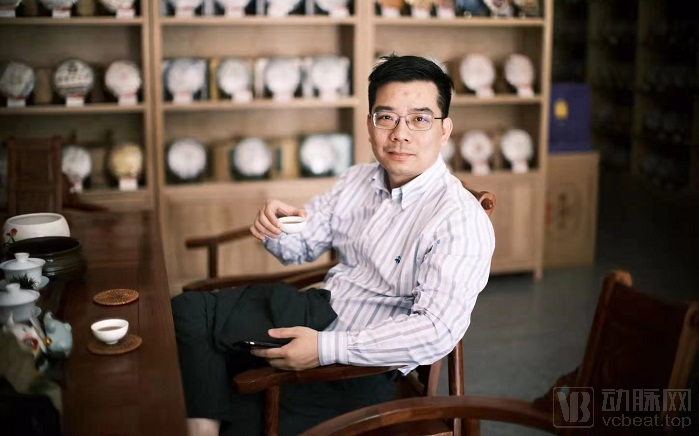
Dr. Sun Yu, CEO of FlectoThink
After earning his bachelor’s degree from Zhejiang University, Sun Yu completed his doctoral studies in polymer science—a program ranked first in the United States—at the University of Akron in Ohio. His research group had previously assisted the National Aeronautics and Space Administration (NASA) in analyzing the Space Shuttle Challenger disaster.
Driven by a strong curiosity for novel concepts and a passion for the unknown and challenging, Sun Yu founded a pharmaceutical CRO company during his master’s studies. At that time, the company had already achieved annual revenues nearing one million US dollars. With the onset of the 2009 financial crisis, Sun returned to academia to complete his doctoral degree. He subsequently joined the world’s largest carbon materials company—a Fortune 500 enterprise—in the United States as a scientist, where he focused on research into graphene nanomaterials and led the development of multiple series of graphene composite products.
This also laid the groundwork for his later explorations in the field of brain-computer interfaces. During his tenure at this company, he embarked on his second entrepreneurial venture. He operated a technology consulting firm—Andrew Tech Culture Communication Inc. (USA)—providing consulting services and investment advice focused on hard-tech sectors to investors and entrepreneurs traveling from China to the United States. These sectors included new materials, new energy vehicles, aerospace, brain-computer interfaces, compact medical devices, and medical wearables.
His continuous interactions with a diverse range of individuals fostered closer ties with prominent institutions, including Silicon Valley entities, patent offices, research laboratories, and incubators at prestigious Ivy League universities on the U.S. East Coast, as well as the Carter Foundation. With a personal commitment to graphene material research, he later founded a company dedicated to the development of novel graphene materials. In retrospect, Dr. Sun Yu pointed out that the brain-computer interface (BCI) sector and the field of novel graphene material research are not entirely unrelated within their respective industrial chains.
Long before Elon Musk’s Neuralink made its sensational debut, Dr. Sun Yu was already providing industry insights into the brain-computer interface (BCI) sector. At that time, he predicted that market-ready BCI products would emerge within the next three years, while also highlighting the field’s long-term growth prospects. After launching his venture in the BCI space, he recognized that a significant number of sensors utilize graphene-based composite materials, and that the BCI industry relies heavily on sensors made from polymer composites. This realization underpins his remark that “the two are by no means unrelated.”
Dr. Sun Yu’s early entrepreneurial experiences brought him into contact with a vast pool of talent and capital. Some of these connections were even forged as a result of his long-term dissemination of knowledge and insights on brain-computer interfaces (BCIs) on Zhihu. A significant number of professionals who share the belief that brain science represents a critical future direction have begun to coalesce around FlectoThink. Top-tier experts from the Massachusetts Institute of Technology (MIT), the Chinese Academy of Sciences, Fudan University, Nanjing University, Duke University, the University of Chicago, the University of California, Berkeley, and the University of Cambridge—including materials scientists, hardware engineers, and neuroscientists—have started to gather.
Beyond founding FlectoThink, Sun Yu assumes two additional roles. On one hand, he facilitates professional exchange in the brain-computer interface (BCI) field by managing a BCI community in North America that attracts numerous industry leaders, thereby indirectly fostering the growth of FlectoThink. On the other hand, he serves as a technology “evangelist,” delivering the course Frontier Technologies: Brain-Computer Interfaces on the Dedao app, which has garnered over 40,000 subscribers. Through his ongoing science communication efforts, he is helping to bridge the gap between the general public and this cutting-edge technology.
The Development History of FlectoThink, Centered on Sleep Monitoring and Management
FlectoThink specializes in the application of non-invasive brain-computer interfaces (BCI) in the consumer electronics and healthcare sectors. The company is currently developing products in two main directions: one focuses on using flexible electrode electroencephalography (EEG) for sleep monitoring, targeting medical applications such as early screening for Alzheimer's disease and chronic disease management, as well as AIoT-based smart sleep management solutions in the consumer electronics space; the other direction involves a myoelectric-electromyographic motion control system that encodes nerve endings in the upper arm, primarily designed for game control in VR and AR environments, aiming at the trillion-dollar market in game development.
In fact, at present, more brain-computer interface (BCI) companies are focusing their efforts on the research and treatment of conditions such as epilepsy. In contrast, FlectoThink has taken an innovative approach by concentrating its research on sleep monitoring and management. This raises an intriguing question: why have they made this particular choice?
According to Dr. Sun Yu, the reasons are that “there are currently some relatively mature technologies available for epilepsy monitoring and treatment, and the market audience is relatively narrow.”
By positioning sleep monitoring and management, along with Alzheimer’s disease screening and intervention, as key application scenarios, FlectoThink addresses two critical needs. On one hand, sleep monitoring and management present a relatively high technical barrier. FlectoThink utilizes core electronic materials combined with multi-layer deep learning neural networks and machine learning algorithms to monitor and analyze user sleep data. This approach enables the acquisition of sleep EEG signals comparable in quality to those from traditional EEG caps, using only a minimal number of electrodes. Furthermore, with hundreds of millions of people currently suffering from sleep disorders, there is an urgent need for interventions to improve population-level sleep quality. Meanwhile, identifying potential Alzheimer’s patients through sleep EEG screening allows for early intervention, thereby delaying disease onset and progression.
FlectoThink’s Smart Sleep Health Series introduces its first flexible sleep patch product, “SmartSleep 1.0.” Crafted from fully flexible materials and weighing only 8 grams—about the size of a bandage—it enables users to wear it imperceptibly during rest. Traditionally, hospital-based sleep monitoring relied on bulky equipment; however, FlectoThink’s device shifts this monitoring scenario into everyday life. By analyzing users’ electroencephalogram (EEG) signals during sleep, the system generates personalized intelligent intervention models. Leveraging AI-driven music composition and integration with IoT-enabled smart home ecosystems, it dynamically creates effective sleep-assistance intervention combinations in real time, delivering a customized and highly efficient sleep-enhancement experience.
“We may be more concerned about the precision of monitoring and subsequent implementation issues,” stated Dr. Sun Yu, adding that FlectoThink will continue to optimize its products from the following two dimensions:
In terms of consumer applications, FlectoThink plans to leverage large volumes of data generated across different regions and demographic groups to iteratively enhance product accuracy. By analyzing users’ sleep EEG patterns, the company employs IoT devices to deliver personalized sleep interventions. Currently, FlectoThink is also advancing collaborations with numerous B-end clients to further integrate its prototype products with relevant application scenarios.
In the healthcare sector, they are currently initiating project development, attempting to implement sleep monitoring and management for patients with sleep disorders, while simultaneously pursuing FDA and NMPA certifications. This aims to provide patients with more convenient medical-grade monitoring and offer hospitals remote patient monitoring and management services.
FlectoThink also emphasized that its products are not limited to monitoring electroencephalogram (EEG) signals but can also be used to monitor indicators such as electrocardiogram (ECG) and blood oxygen levels. Previous studies have shown correlations between sleep and the immune system, cardiovascular diseases, diabetes, and stroke. The company plans to conduct further exploration and research in these related fields in the future.
Product Iteration Enriches the Product Matrix, Collaborative Implementation of New Scenarios
FlectoThink’s angel financing round is currently nearing completion. According to its plans, the company will achieve mass production of its first-generation flexible sleep patch, “SmartSleep 1.0,” this year, while also developing the second-generation flexible sleep patch and launching products such as a gesture-recognition smartband. In the long term, FlectoThink aims to continuously iterate its products and develop new offerings to enrich its product portfolio over the next five years. Meanwhile, the company stated that it will gradually upgrade from consumer electronics to medical-grade products and is poised to obtain relevant certifications from the National Medical Products Administration (NMPA).
Looking further ahead, FlectoThink aims to become the gateway to a nighttime Internet of Things (IoT) platform. Centered on bedroom scenarios, the company plans to collaborate with smart hardware manufacturers in related fields, starting with products such as curtains and bedding, to gradually build a suite of nighttime IoT devices that connect to its system platform.
As a pioneer in the field of brain-computer interfaces (BCI), FlectoThink is a technology-driven company. Its core competencies lie in flexible materials, AI core algorithms, and product design. As a technology-driven enterprise, FlectoThink is continuously seeking practical application scenarios. The company aims to integrate its products and applications with real-world use cases, establish extensive collaborations with enterprises, empower traditional industries, and thereby promote both industry advancement and its own growth.