

Tuttlingen: The Apex of County-Level Industrial Clusters and 'Silicon Valley' of Medical Innovation Submits IPO Prospectus

Aesculap
Surgical Medical Device Provider

Karl Storz
Medical Endoscope Manufacturer
"Tuttlingen" is a small county town in the state of Baden-Württemberg, Germany,The total land area is 734.35 square kilometers, with a county-wide population of only 35,000 residents., compared with the vast majority of county-level cities in China, such a scale is hardly worth mentioning.
Yet, despite being a small city with “little land and even fewer people,” it boasts many renowned “titles,” such as “"Europe's Largest Medical Device Industry Cluster," "World Medical Technology Center," "Global Capital of Surgical Instruments"Wait, these “honorary titles” are not mere self-aggrandizement by “Tuttlingen”; they are indeed substantiated by real data.
Tuttlingen nurturesWith more than 400 medical technology enterprises, approximately two-thirds of the currently produced medical device products are exported, ranking second in the world in terms of export value, only behind the United States., with the European Union being the largest export market, accounting for approximately 40% of export revenue, followed by China at around 20%. There was once a joke in Europe describing its market influence: “There is a 50% chance that any medical device you see comes from Tuttlingen.”
In terms of specific niche sectors, Tuttlingen primarily focuses on the production of surgical instruments, mainly led by two global market leadersAesculap (a subsidiary of B. Braun) and KLS Martin (a global leader in the medical endoscopy market)as the main focus,With an annual production and sales volume of surgical instruments reaching 20 million units, accounting for more than half of the global surgical instrument market, it is hailed as the “Hidden Champion Hub” of the surgical instrument industry.
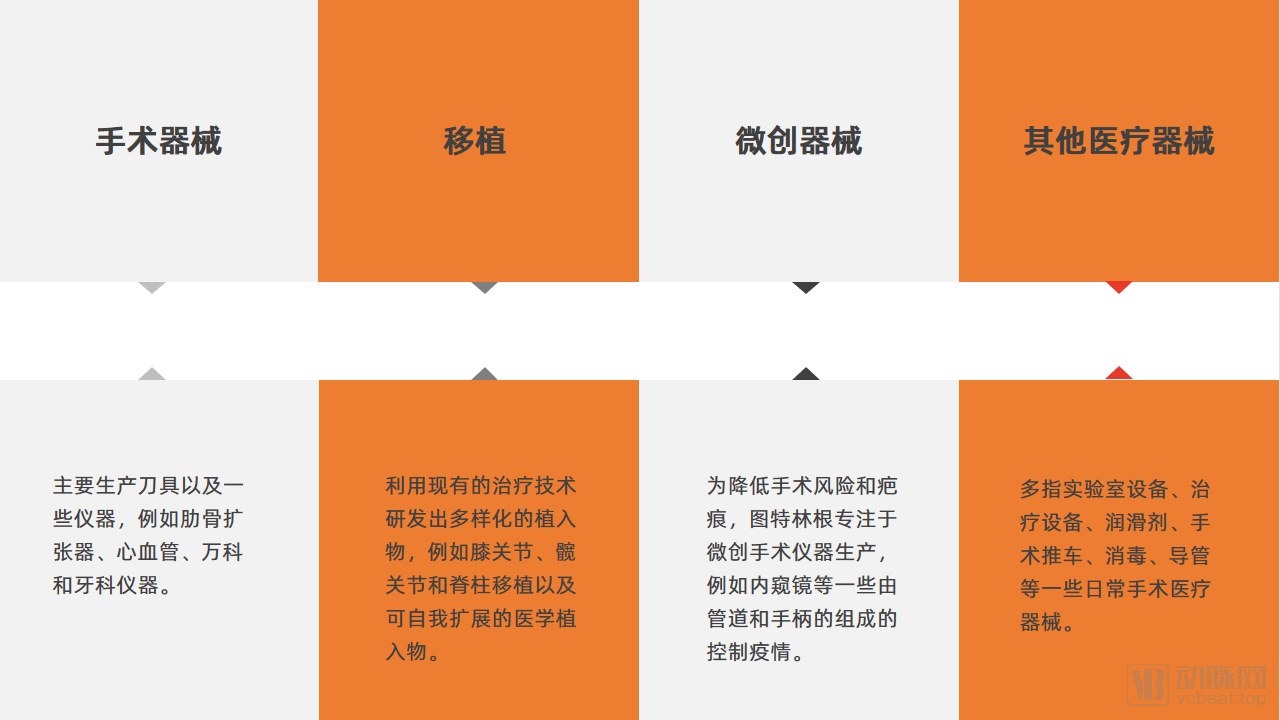 Figure 1. The Four Major Industrial Sectors of Tuttlingen
In addition to large-scale production, Tuttlingen is also dedicated to technological R&D, with both its R&D investment and efficiency ranking among the global leaders. It is reported that medical device companies in Tuttlingen allocate 8% of their annual sales profits to R&D, which is twice the average level in Western countries. More impressively, their R&D efficiency is exceptionally high: the development cost for a new medical device ranges from €8 million to €10 million, whereas developing the same product in the United States would cost $80 million (approximately €60 million).
It is not difficult to see that although this small town in southern Germany is not as widely known within China as Silicon Valley, it indeed has a prestigious background. So, what exactly is its connection with Silicon Valley?
As is well known, Silicon Valley in Northern California, USA, is the world’s most successful and influential high-tech industrial cluster, regarded as the “ceiling” for city-level industrial clusters. So where lies the “pinnacle” of county-level industrial clusters? Without a doubt, it is Tuttlingen, which, due to its highly representative nature and global influence, is hailed as the “Silicon Valley” of another dimension.
The development of any industrial cluster involves both inevitable trends and contingent circumstances. How did the small town of Tuttlingen grow into Europe’s largest medical device industrial cluster? What is the underlying logic behind its development? In terms of feeding back into China’s county-level medical device industrial clusters, what references can the “Tuttlingen Model” provide for China, and what experiences are replicable? Addressing these questions, VCBeat will provide detailed answers by examining the development path of the Tuttlingen medical device industrial cluster.
Tuttlingen was among the first regions worldwide to develop industrial clusters, with origins dating back to the 1770s—30 years earlier than Silicon Valley. Unlike contemporary industrial clusters that are primarily shaped by unified government planning, Tuttlingen’s cluster emerged through entirely “organic growth.” It is a quintessential example of a “board first, ticket later” model (i.e., enterprises preceded the formation of the cluster), driven by the radiating influence of leading companies.
From the late 17th century to the early 18th century, Tuttlingen leveraged its abundant iron ore deposits and timber resources to develop a highly advanced steel industry, becoming a central hub for steel production in Germany. Supported by an advanced industrial system, Tuttlingen began exploring various business sectors that could be organically integrated, with forged knife manufacturing being the most representative. By 1810, there were 20 large-scale manufacturers in Tuttlingen specializing in forged knife production. Within just 50 years, this number grew to over 100, establishing extensive market coverage across Europe.
It was also at this time that some people from Tuttlingen began to follow the export routes of "forged knives" and gradually spread to various corners of the world.Gottfried Jetter(Gottfried Jetter) was one of them. In 1867, Gottfried arrived in Paris, the capital of France. An eager learner, he brought back the advanced local medical device manufacturing technology to Tuttlingen and established a small workshop, which marked the beginning of the Tuttlingen medical device industry cluster.
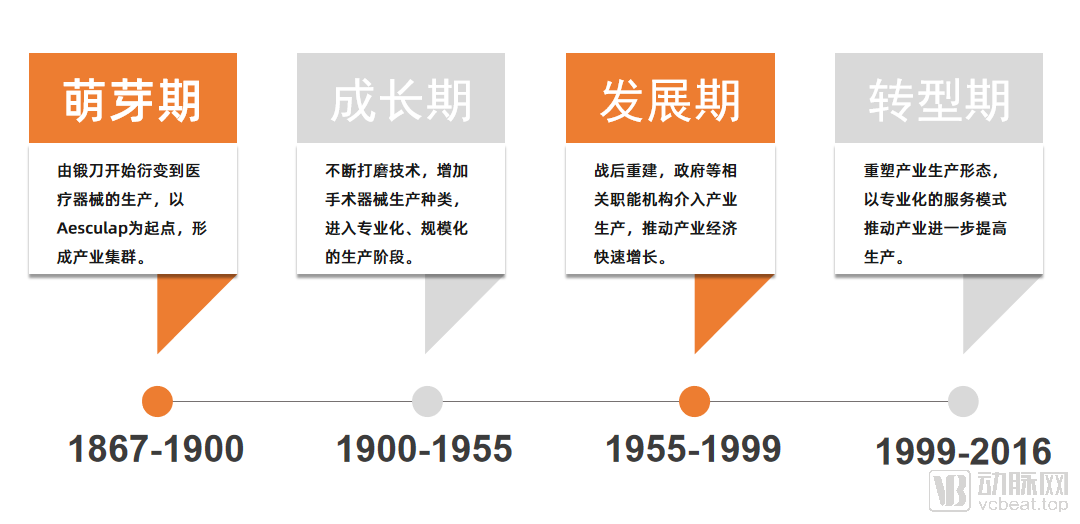
Figure 2. The Development History of Industry in Tuttlingen
With its outstanding quality and exquisite craftsmanship, Gottfried’s small workshop expanded rapidly, transforming into a standardized production facility within just ten years. It was officially established and named “JeRer&Scher” in 1887, and two years later, it was renamed “Aesculap,” widely known as the “Snake Brand.”
Under the influence of the “Aesculap Success Model,” Tuttlingen gradually concentrated its productivity in the field of medical devices, leading to a fundamental shift in its overall industrial direction. However, industrial transformation cannot succeed automatically; it requires the close coordination of numerous conditions. So, for Tuttlingen at that time, what factors drove its leap into the emerging industry of medical devices?
First, Internal Factors, Tuttlingen has ample production experience and technical accumulation in surgical blade forging., thereby providing robust technical support for the production of simple medical devices such as scalpels, scissors, forceps, and needles;Next are external factors, from the early 19th century to the mid-19th century, the whole of Europe was deeply mired in the "quagmire" of war, henceDemand for medical devices is stronger than ever before., this has also opened the door to the medical device market to some extent.
Driven by prior accumulation and external factors, the medical device industry in Tuttlingen has initially achieved scale.By 1955, the number of medical device manufacturers had reached 149., its products have captured a significant market share in Europe, making it a major exporter and technological innovation hub for medical devices in the region.
Prior to the new millennium, the medical device industry cluster in Tuttlingen had already matured, embarking on a path of industrialized and large-scale production.By 1999, more than 85% of Germany's medical device companies were located in Tuttlingen., gradually forming a clustered medical device industry group jointly led by two global giants, Aesculap and KLS Martin.
However, competition is ever-present. Although Tuttlingen holds a significant market share in the medical device industry, this does not mean that its progress can stagnate. With the end of the war, an increasing number of regions began to develop their industrial economies. Tuttlingen was no longer the sole dominant player and started to face strong challenges from other industrial clusters. Among these, the "Medicon Valley" and the "City of Sialkot" are the most typical examples. These two major industrial clusters have been capturing Tuttlingen’s market share from different dimensions through top-down strategies, placing it in the awkward predicament of facing both internal troubles and external threats.
"Internal troubles" refers to the "Med Valley" located in Nuremberg, Germany.Its development originated in the late 18th century, a full 30 years later than Tuttlingen. Despite this "late start," the Medical Valley has experienced rapid growth. Driven by Siemens Healthineers, a global leader in medical technology, the Medical Valley has given rise to a cohort of healthcare companies focused on the research and development of cutting-edge technologies. These companies have targeted technology-driven sectors such as computed tomography (CT), magnetic resonance imaging (MRI), interventional diagnostic imaging, laser refractive surgery, lithotripsy, and endoscopic treatment systems.Challenging Tuttlingen in the upstream sector of the medical device industry.
“External threat” refers to the city of Sialkot in northeastern Pakistan., unlike the pharmaceutical valley that grew wealthy through its own efforts, the competitor city of Sialkot was entirely “nurtured” by Tuttlingen itself.
The medical device industrial cluster in Sialkot originated in the mid-19th century, coinciding with the period of most rapid development in Tuttlingen. As business volume gradually increased, many companies in Tuttlingen began outsourcing labor-intensive processes for manufacturing low-tech surgical instruments. Due to its low labor costs, Sialkot became the preferred choice for many of these enterprises.
However, the “ambitious” city of Sialkot was not content with being a mere “contract manufacturer.” It began to refine its production techniques and gradually improve efficiency. By 1980, thanks to its low market prices and high production efficiency, Sialkot had become a major competitor to Tuttlingen, capturing nearly 10% of its share in the European medical device downstream market.
With the Medical Valley competing for technology and vying for dominance in the upstream medical device market, and Sialkot City seizing production capacity and eroding profits in the downstream segment, Tuttlingen—once “arrogant and unrivaled”—has been pushed to the brink. Without industrial transformation, it risks “fading into obscurity.”
Challenges themselves are opportunities. Although from the external environment perspective, Tuttlingen has indeed lost a certain share of the market,However, whether upstream or downstream, Tuttlingen continues to hold the leading market position; from an internal industry perspective, companies in Tuttlingen have gradually become “homogenized” over the course of its century-long development., leading enterprises that should have prioritized R&D continue to devote substantial human resources and energy to mechanized production, while small and medium-sized enterprises (SMEs) that should have focused on manufacturing are also making large-scale investments in technological R&D. This misalignment not only leaves companies overstretched in both production and R&D but also intensifies competition within industrial clusters. The current transformation presents a timely opportunity to fundamentally resolve this issue.
To address this new market shift, Tuttlingen adopted a “two-step” approach:Upstream, the focus is on technology, led by leading enterprises. These companies primarily collaborate with the Medical Valley to conduct joint R&D in specific technical fields and tackle key challenges together. In addition, they have established talent training bases in partnership with universities such as the University of Freiburg, the University of Tübingen, and the University of Ulm, continuously strengthening the industry’s depth of high-end technical talent. Downstream, the emphasis is on expanding production, led by small and medium-sized enterprises (SMEs). These SMEs mainly fulfill orders from leading enterprises and, under their influence and drive, extensively access European and even global markets. By developing specialized manufacturing capabilities and achieving economies of scale, they gain a competitive edge over Sialkot through superior pricing, product quality, and production efficiency.
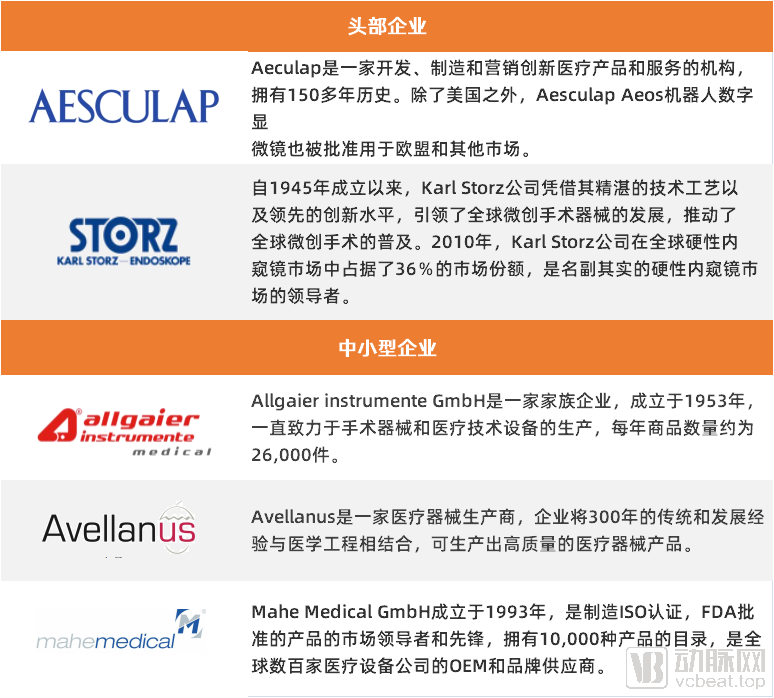
Figure 3. Typical Enterprises in the Tuttlingen Industrial Cluster
Overall, Tuttlingen has not abandoned any segment of its production lines due to competition; instead, it has implemented a comprehensive deployment across the entire industrial ecosystem of medical devices. This strategy enables leading enterprises to focus on technology while small and medium-sized enterprises engage in manufacturing, thereby forming a top-down closed-loop service system.
According to authoritative data,In 2016, the total output value of medical devices in Tuttlingen reached €1.063 billion (approximately RMB 8.2 billion), representing a nearly seven-fold increase compared to 1999.Specifically in the field of technological R&D, Tübingen has now become a "global medical technology center," with medical device products being updated every three years; whereas in the production sector,Surgical instruments account for 55% of the global market share, while endoscopes have achieved a 65% global market share., hailed as the "Global Capital of Surgical Instruments" and the "Global Base for the Endoscopy Industry."
It can be said that the Tuttlingen medical device industrial cluster has weathered the “growing pains” of transformation and entered a new stage of development with a renewed posture and industrial model. So, specifically, how did Tuttlingen successfully navigate this path?
1Leading enterprises focus on technological R&D to establish top-tier advantages for industrial clusters.
As the laws of industrial development reveal, while there may be cities that remain advanced for 50 years, it is rare for industries to do so, and there are certainly no technologies that remain state-of-the-art for half a century. Therefore, the relentless pursuit of technological advancement is the key determinant of whether an industrial cluster can achieve long-term success and sustain its competitive edge in the market.
In terms of technological R&D, Tuttlingen is primarily divided into four major directions:1. Establish a long-term partnership with the Pharmaceutical Valley and set up a joint R&D laboratory, jointly overcome technical challenges in certain niche fields;Second, increase financial investment, Tuttlingen allocates 8% of its annual sales profits to research and development. In addition, the government has established a special foundation, under which enterprises can receive up to €500,000 in health R&D funding for patents;3. Strengthen Regulatory Oversight, the Medical Device Bureau, composed of medical experts and engineers, conducts regular visits to enterprises and requires that manufactured products be updated every three years;4. Collaboration with UniversitiesBy establishing a tiered technical talent pipeline, Tuttlingen collaborates with nearby academic hubs such as the University of Freiburg, the University of Tübingen, and the University of Ulm to jointly create medical technology training institutions, laying a solid foundation for the future development of industrial technology.
2Small and medium-sized enterprises are strengthening their production capabilities, laying a solid foundational base for industrial clusters.
Tuttlingen’s medical device industry evolved from its “forged blade” craftsmanship and rose to prominence through industrialized production. However, during the development of its industrial cluster, Tuttlingen’s manufacturing sector once faced intense competition from Sialkot, which captured a significant share of the low-end medical device market previously held by Tuttlingen by leveraging competitive advantages of “low price, low quality, and high efficiency.” Rather than remaining passive, Tuttlingen took proactive measures across multiple dimensions to transform its industrial structure and revitalize its traditional manufacturing strengths.
First, clarify the responsibilities of small and medium-sized enterprises, by focusing on areas such as policy support and resource introduction, enabling small and medium-sized enterprises to devote more energy to the production side, thereby forming a business model of "specialized enterprises for specialized tasks";Next is “borrowing a ship to go to sea,” continuously refining at the production end, leveraging the advanced technologies of leading enterprises, small and medium-sized enterprises have enhanced their overall production efficiency while strengthening their own production capabilities;Finally, leveraging leading enterprises as a “springboard” to establish pathways into the global market., driven by the influence of leading enterprises, small and medium-sized enterprises have undertaken a large number of production orders, gradually expanding their market coverage from the initial domestic market in China to the European market, and ultimately to the global market.
3Introduce third-party institutions to integrate and connect the entire industry chain.
Within the framework of building the specialized model of the Tuttlingen industrial cluster, leading enterprises and small and medium-sized enterprises (SMEs) have “taken separate paths,” continuously advancing along their respective development trajectories. However, for an industrial cluster, “operating in silos” is not the ultimate goal, nor does it reflect the true value of such a cluster. Only through “collaborative cooperation” can its advantages be fully realized. So, how does Tuttlingen link its industrial interfaces?
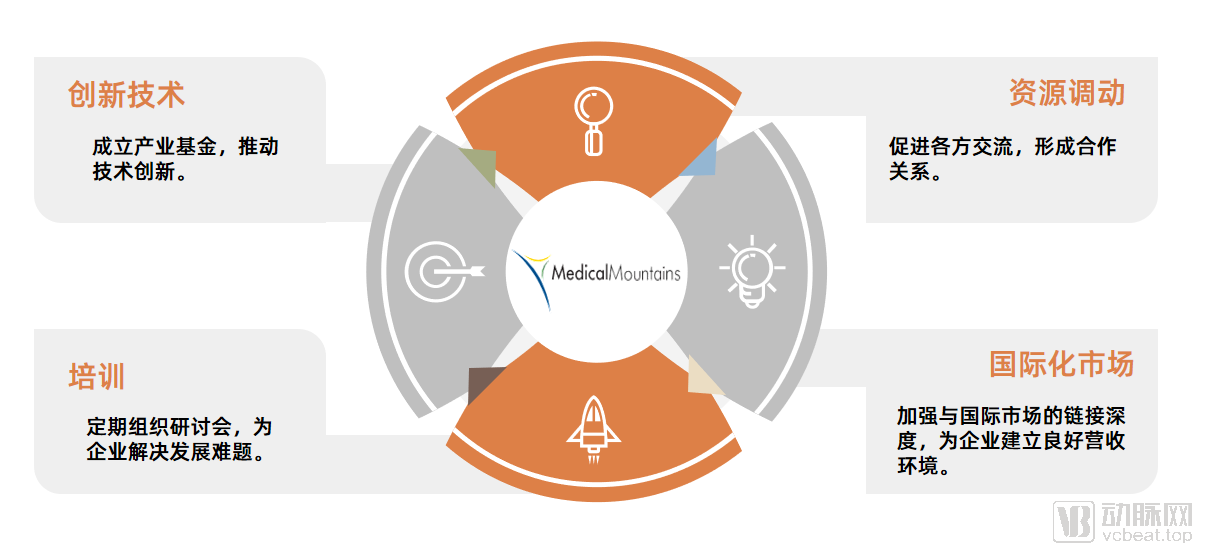
Figure 4. Introduction to the Main Functions of Yixue Shan
To facilitate exchanges among enterprises, Tuttlingen has specially established"Medical Mountain"This third-party institution is tasked with fostering close collaboration across industries and providing the impetus for industrial development. Its specific responsibilities include the following aspects:First, organize innovation forums and other activities to promote technological innovation across industries; second, hold academic seminars to regularly help enterprises resolve development challenges; third, establish channels for information exchange., promptly convene companies for meetings when new medical device regulations are introduced, and through discussion and summary, jointly issue a “Joint Statement” to articulate their position, thereby exerting a more powerful synergistic effect;Fourth, establish a procurement pool to secure lower prices for enterprises within the industrial cluster during purchasing, thereby reducing production costs at the source.
Currently, both domestically and internationally, city-level biomedical industry clusters with extensive coverage across the entire industrial chain have surpassed their initial development stage. Leveraging the advantages of group-based operations, they have established a certain influence at the industry’s apex, making it unlikely that new industry clusters will pose a significant challenge to them in the short term.
In contrast, county-level biomedical industry clusters are still in their nascent stages; nevertheless, a number of clusters with distinct regional characteristics have already emerged. Examples include Tuttlingen, known for its surgical instruments, and even its competitor, Sialkot, which focuses on the production of lower-end instruments. These clusters leverage regional industrial differentiation as their competitive advantage, thereby forging unique paths for industrial development.
Looking at the domestic market, there are also successful cases of such county-level industrial clusters, for example, ““China’s Capital of Medical Consumables” Changyuan, Henan; “National Endoscope Production Base” Tonglu, Zhejiang; and “China’s No. 1 Township for Medical Devices” Jinxian, JiangxiWait, these highly distinctive county-level industrial clusters have entered a new stage of development after undergoing a series of initial trials and tribulations.
But this is not the end. Currently, as policy and financial support continue to increase, local governments across China are vigorously promoting the formation of distinctive biomedical industry clusters. Meanwhile, they face many irreconcilable challenges in the development process that are hindering their progress. As a source of valuable external insights, what successful experiences can Tuttlingen offer to county-level industry clusters in China?
First is "specialization," focusing on building specialized industrial clusters.The development of industrial clusters must align with local conditions. For county-level industries, which lag significantly behind first- and second-tier cities in terms of policy support and resources, focusing on niche segments may be more conducive to building competitive advantages. Taking Tuttlingen as an example, the city has concentrated primarily on the manufacturing of surgical instruments. Through clustered planning and deployment, it has extended its service coverage from the upstream to the downstream sectors of the surgical instrument industry, while continuously refining its technological and production capabilities. This approach has strengthened its industrial advantages and increased its market share.
Second, “comprehensive”: systematically building a full industrial chain.For Tuttlingen, in terms of industrial development, it has engaged in both the upstream technology sector and retained the downstream production sector. Through a corporate classification system, it has formed an industrial model of “specialized enterprises for specialized tasks,” thereby constructing a full industrial chain for medical devices and establishing overall industrial advantages.
Third is “Link,” introducing third-party institutions to break down interaction barriers.For an industrial cluster, the most significant manifestation of its advantages and value lies in collaborative synergy—namely, establishing robust communication mechanisms among enterprises, between enterprises and government bodies, and between enterprises and service institutions, thereby maximizing service efficacy. Examining Tuttlingen’s development trajectory, during its critical transition period, it established “Medizinstadt” (Medical Mountain) as a third-party service organization. This initiative demonstrated substantial value in fostering close inter-industry collaboration and served as a pivotal element in the successful transformation of the industry.
Overall, for county-level biomedical industry clusters, to maintain sustained market competitiveness,First and foremost, it is essential to establish distinctive characteristics., with a specific niche within the healthcare sector as the primary entry point;Secondly, it is essential to strengthen professional capabilities in specialized fields., focusing on refining technological R&D or scaled-up production to create industry highlights;Finally, integrate all business segments., deepen collaborative cooperation, achieve mutual benefit and win-win outcomes, and demonstrate the industrial advantages of group-based operations.
Competition among future cities will inevitably center on industrial competition, particularly in the biopharmaceutical sector, which holds immense market potential and is seeing significantly accelerated pace and expanded scope of strategic deployment. This presents both a challenge of the new era and an unprecedented opportunity for development. For county-level cities urgently seeking new drivers of economic growth, accurately grasping current industrial trends and pursuing differentiated development paths—driven by collaborative efforts between government and enterprises—could enable them to become the next “Tuttlingen,” a prospect well worth anticipating.
References:
1. “Europe’s Seven Most Important Pharmaceutical Technology Clusters: Enhancing Industrial Competitiveness Through Focus”
2. “Tuttlingen – The City of Medical Devices”;
3. “Medical Devices: Where Do We Lag Behind Germany?”;
4. “From End-Point Planning to Starting-Point Planning: Implementation Innovation in Spatial Planning Driven by Industrial Development”;
5. “Exploring Issues in Biopharmaceutical Parks and Cultivating Innovation Clusters.”