

China Releases White Paper on Common Gastrointestinal Diseases to Promote Public Awareness and Early Intervention

Bayer
Pharmaceutical Product R&D Developer
Beijing, April 9, 2021 /PRNewswire/ -- On the occasion of International Stomach Day on April 9, the White Paper on Popular Science of Common Digestive System Diseases in China (hereinafter referred to as the "White Paper"), compiled and reviewed by the Gastroenterology Group of the Medical Science Popularization Branch of the Chinese Medical Doctor Association, was officially released in Beijing. As a globally renowned life sciences company long committed to popularizing knowledge about gastrointestinal health, Bayer will collaborate with the Gastroenterology Group of the Science Popularization Branch of the Chinese Medical Doctor Association, the Science Popularization Branch of the Chinese Medical Association, and the Medical Science Popularization Branch of the Beijing Medical Association to promote the widespread dissemination of the White Paper, enhance public awareness and attention towards digestive system diseases, facilitate the prevention and early detection of gastrointestinal tumors, and empower healthier every day.
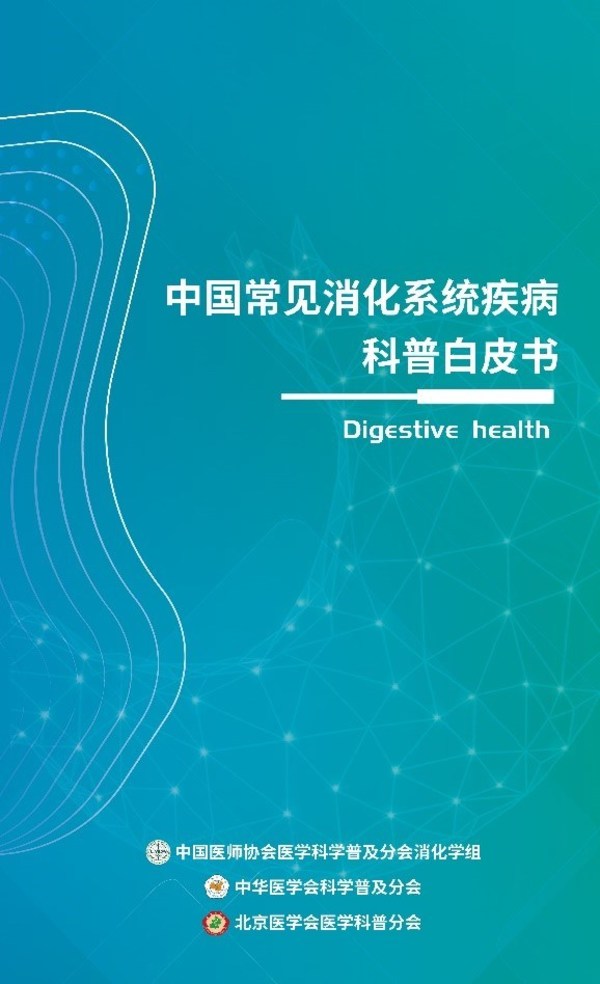
This white paper is designed for the general public, using language that is more accessible for dissemination, reading, comprehension, and mastery. It provides a detailed overview of the symptoms of common digestive system diseases, along with related lifestyle guidance, medication selection, and empirical treatment methods. The aim is to enable the public to identify typical symptoms for judging common digestive disorders, carry out reasonable empirical treatment at home, and ultimately enhance disease awareness and attention, thereby achieving the goals of early detection, early diagnosis, and early treatment.
Prevention and Treatment of Gastrointestinal Tumors: Public Education on Gastrointestinal Diseases Is Imperative
With the continuous development of the social economy, people are under increasing life stress. Coupled with certain unhealthy lifestyles, the incidence of digestive system diseases has been rising steadily. These conditions have become common and frequently occurring diseases among the Chinese population, not only seriously affecting people's physical and mental health but also potentially becoming life-threatening once pathological changes occur. Currently, both the incidence and mortality rates of gastrointestinal cancers in China remain high. The primary reason for this is delayed detection; more than 80% of gastric cancer patients are diagnosed at intermediate or advanced stages. If detected early, the five-year survival rate for patients could exceed 90%.
“Early detection, early diagnosis, and early treatment are the inevitable path for the prevention and control of gastrointestinal tumors. However, in daily life, people often underestimate digestive system diseases, assuming they are not serious and that ‘enduring them will make them go away.’ Therefore, it is particularly important to conduct science popularization education for the public to enhance their awareness and attention to gastrointestinal diseases.” Professor Li Jingnan, Standing Committee Member of the Gastroenterology Branch of the Chinese Medical Association, Vice President of the Gastroenterologist Branch of the Chinese Medical Doctor Association, and Deputy Director of the Department of Gastroenterology at Peking Union Medical College Hospital, introduced the background behind the development of the “White Paper” and emphasized that “scientific rigor is the lifeblood of science popularization; the dissemination of scientific knowledge should be led by professional physicians and institutions.” In light of this, and in response to the spirit of the “Healthy China 2030” Outline, the Gastroenterology Group of the Medical Science Popularization Branch of the Chinese Medical Doctor Association and the Science Popularization Branch of the Chinese Medical Association have launched the science popularization publication “White Paper,” aiming to provide scientific guidance for the home management of common gastrointestinal diseases, reduce disease progression, and contribute to the prevention and treatment of gastrointestinal tumors in China.‘Guankou’advancement plays a positive role.”
Interpreting Major Gastric Diseases: Authoritative Guidance on Standardized Home Medication Use
The white paper interprets more than ten common digestive system diseases, with a particular focus on major gastric conditions such as chronic gastritis, gastroesophageal reflux disease (GERD), drug-related gastric mucosal injury, peptic ulcer, and Helicobacter pylori infection, along with their core symptoms (e.g., stomach pain, heartburn, acid regurgitation, diarrhea, and constipation). This aims to facilitate consumers in self-assessing their conditions at home and rapidly identifying diseases. Meanwhile, the white paper provides guidance on disease management for certain digestive disorders that can be treated at home, covering lifestyle adjustments, medication selection, and medical consultation. It also elucidates the functions of commonly stocked household medications, such as hydrotalcite, compound calcium carbonate, and probiotic preparations, to help consumers use medications correctly, reasonably, and in accordance with standardized practices.
In medication guidance, mucosal injury is a core theme throughout the white paper. Currently, major gastric diseases cause varying degrees of gastric mucosal damage, such as gastroesophageal reflux disease, chronic gastritis, drug-induced gastric mucosal injury, and peptic ulcer disease. For the treatment of these conditions, the white paper recommends using mucosal protective agents, such as hydrotalcite, to promote mucosal healing. For patients with Helicobacter pylori infection, treatment should be conducted under medical supervision, with bismuth-based quadruple therapy and hydrotalcite-based quadruple therapy serving as the primary treatment regimens. Additionally, it is important to note that the antibiotics used in quadruple therapy can inhibit or kill other beneficial bacteria in the body, leading to gut microbiota dysbiosis and resulting in symptoms such as diarrhea. Therefore, probiotic preparations may be used before and after treatment.
Regarding the duration of medication, the white paper offers a gentle reminder to consumers: standardized treatment for chronic gastritis typically lasts 4 weeks, while conditions such as gastroesophageal reflux disease and peptic ulcers require regular medication for 6–8 weeks. “Although symptoms may alleviate after initiating treatment, the damaged mucosa may not have fully healed. Meanwhile, the newly regenerated gastric mucosa is fragile; premature discontinuation of therapy can lead to disease recurrence, making it more difficult to cure. Therefore, sustained treatment is essential for the complete healing of damaged gastric mucosa, and patients must adhere to the full course of medication,” emphasized Professor Li Jingnan.
So, how should consumers choose among the wide variety of gastric mucosal protective agents available on the market? Addressing this issue, Professor Li Jingnan summarized the medication guidelines for major gastric diseases outlined in the white paper, stating that an ideal gastric mucosal protective agent should possess three key characteristics: neutralizing excess gastric acid, adsorbing bile acids to reduce irritation; forming a mechanical barrier on the mucosal surface to block aggressive factors; and promoting mucosal healing. Hydrotalcite, for instance, is an ideal gastric mucosal protective agent for home use and is prominently recommended in the science popularization white paper.
As a public welfare supporter for the dissemination of this White Paper, Bayer will launch a "Gastric Health Self-Assessment" video series across all online platforms. Featuring easy-to-understand animations, these videos will help consumers gain a preliminary understanding of their digestive health status and coping strategies. Combined with multiple expert-led live streaming sessions, Bayer aims to convey the key messages and core content of the White Paper to the public. Meanwhile, Bayer will collaborate with chain pharmacies such as Nepstar Star Drugstore, Guoda Drugstore, and Laobaixing Pharmacy to establish "Gastric Care Centers" based on the scientific popularization content of the White Paper, and provide professional training to store staff on its contents. Consumers can scan a QR code in-store to access the electronic version of the White Paper and consult with staff for further information on common digestive diseases.