

Huihe Medical's K-Clip™ Completes First-in-Human Implantation at Zhongshan Hospital Led by Academician Ge Junbo: China on Par with Global Innovation in Tricuspid Valve Repair

H&H Healthcare
R&D and Producer of Interventional Medical Devices for Heart Disease
Under the close collaboration of a multidisciplinary team including Professor Pan Wenzhi, Professor Zhang Xiaochun, Dr. Chen Shasha, Professor Shu Xianhong, Professor Pan Cuizhen, and Professor Li Wei from the Department of Echocardiography, Professor Miao Changhong and Professor Guo Kefang from the Department of Anesthesiology, and Professor Wei Lai from the Department of Cardiac Surgery, the first implantation in the clinical trial of the K-Clip™ transcatheter tricuspid valve repair system, independently developed by HuiHe Healthcare, was successfully completed. The success of this procedure also marks the successful initiation of clinical application for the K-Clip™, ushering in a new chapter for research on domestically produced interventional devices for the tricuspid valve.
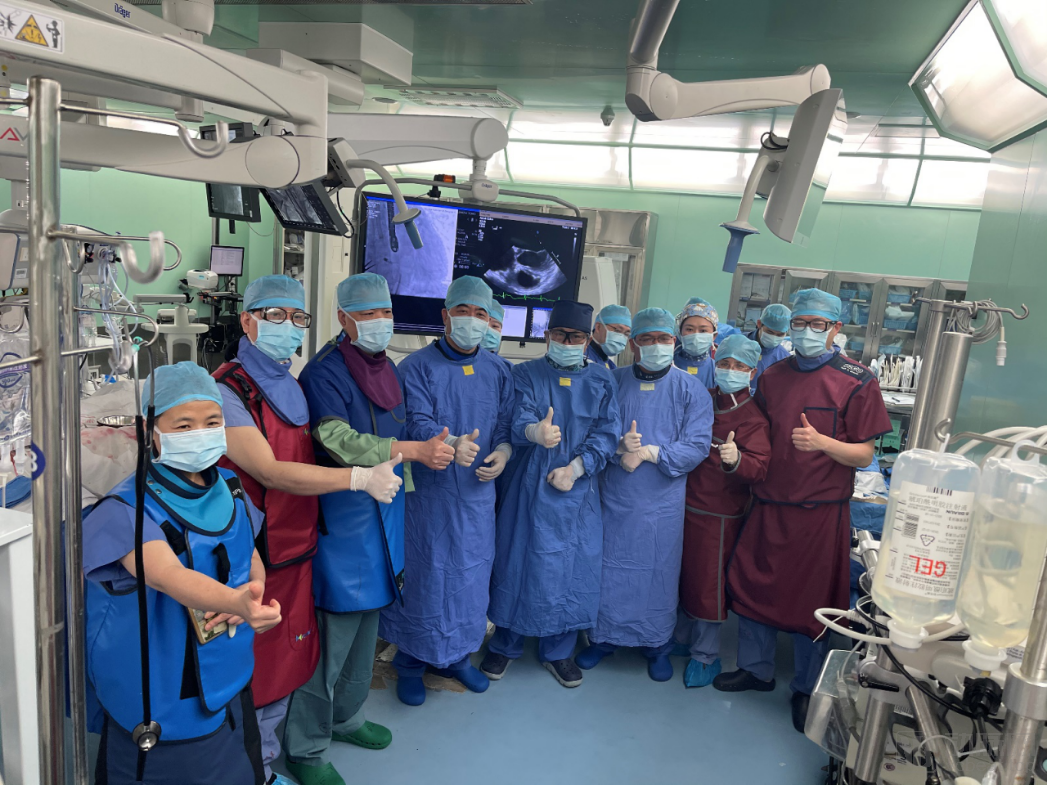
Academician Ge Junbo, Professor Zhou Daxin, Professor Pan Wenzhi, Professor Zhang Xiaochun, Dr. Chen Shasha, Professor Shu Xianhong, Professor Cuizhen Pan, Professor Li Wei, Professor Miu Changhong, Professor Guo Kefang, Professor Wei Lai, etc., from Zhongshan Hospital Affiliated to Fudan University
Patient: Male, 87 years old. History of atrial fibrillation for over 10 years. In the past year, he experienced chest tightness, dyspnea, and lower extremity edema, with orthopnea. Clinical evaluation revealed ECG findings of atrial fibrillation, frequent premature ventricular contractions (PVCs), and ST-T changes. Chest CT showed bilateral pulmonary exudates, emphysema and bullae in both lungs, and right-sided pleural effusion. Echocardiography demonstrated enlargement of both atria and the right ventricle, accompanied by mild mitral regurgitation and severe tricuspid regurgitation. CT imaging further revealed tricuspid annular dilation (diameter: 58.2 mm), right atrial enlargement (maximum diameter: 92.4 mm), and dilation of the inferior vena cava orifice.
Given the patient’s STS score of 8, the Heart Team at Zhongshan Hospital, Fudan University, conducted a preoperative discussion and determined that the patient was at high risk for surgical intervention. Consequently, a transcatheter tricuspid valve repair was performed in the hybrid operating room on April 21, 2021, at 10:30.
Step 1: Positioning of the K-Clip™ Delivery System
1) After jugular vein puncture, insert the guidewire into the superior vena cava; place a guidewire in the right coronary artery. 2) Advance the delivery system along the jugular vein guidewire to the exit of the right atrium from the superior vena cava;
Step 2: Positioning Adjustment 1) On the ultrasound working plane, position the distal end of the delivery system near the anterior aspect of the posterior tricuspid annulus.
Step 3: K-Clip™ Anchor in Position
1) Deploy the anchors of the K-Clip™ onto the tricuspid annulus;
Step 4: Clamping of the K-Clip™ clamping component
1) On the ultrasound working plane, open the clamping arms to their maximum extent, parallel to the tangent of the annulus;
2) Clip the posterior leaflet of the tricuspid annulus.
Step 5: Release
1) Detach the clamping component and the anchoring component;
2) Withdraw the catheter sheath and delivery system.
Preoperative Ultrasound: Grade 5 Tricuspid Regurgitation
Postoperative Ultrasound: Grade 2 Tricuspid Regurgitation
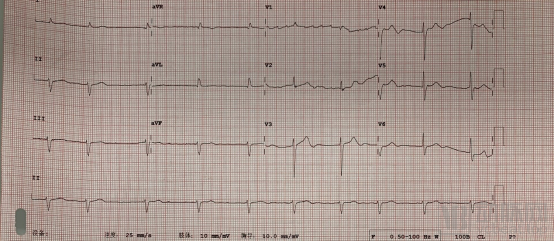
Preoperative Electrocardiogram
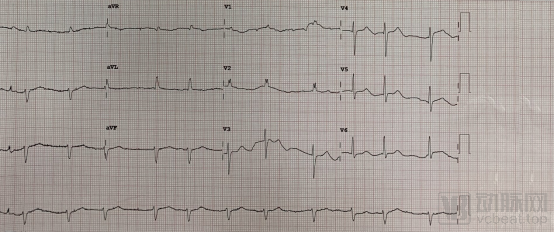
Postoperative Electrocardiogram
The patient's postoperative electrocardiogram was stable. Following K-Clip™ implantation, the patient's tricuspid regurgitation improved from severe to moderate. The procedure was successfully completed within 20 minutes.
2.5 hours postoperatively, the patient was conscious, extubated, and had stable vital signs.
Professor Zhou Daxin, Director of Structural Heart Disease at Zhongshan Hospital, Fudan University, and Principal Investigator of the K-Clip™ Clinical Study
Post-procedure, VCBeat exclusively invited Academician Ge Junbo and Professor Zhou Daxin from Zhongshan Hospital of Fudan University, the principal investigator (PI) for the K-Clip™ pivotal clinical trial, to introduce the first-ever clinical procedure using K-Clip™, analyze the direction of transcatheter tricuspid valve interventions, and outlook the future development in the field of structural heart disease.
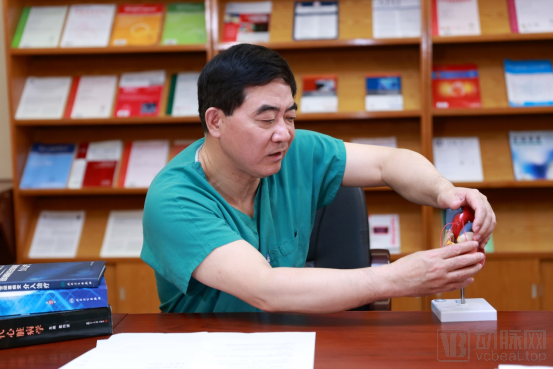
VCBeat asked Academician Ge Junbo: With the TAVR market already producing a cohort of leaders within the dynamic, beating heart, where will the next “beat” in the structural heart disease market occur?
Academician Ge Junbo’s views align with the mainstream market perspective; he believes that the future structural heart disease market will be primarily driven by mitral and tricuspid valve interventions.
“In clinical practice, the patient population with mitral and tricuspid valve diseases is larger than that with aortic valve disease; however, transcatheter interventions for aortic valve disease are advancing rapidly at this stage, while the development of interventional therapies for mitral and tricuspid valves remains relatively lagging.”
Academician Ge Junbo frankly stated, “In the research and development of transcatheter aortic valves, there is a gap of more than ten years between China and the international community. Alain Cribier performed the first transcatheter aortic valve replacement (TAVR) procedure in 2002, followed by the advent of balloon-expandable and self-expanding aortic valves. China did not perform its first TAVR procedure until 2010. In the development of transcatheter mitral valve products, the gap between China and foreign countries is gradually narrowing, but still persists. As for tricuspid valves, domestic and international companies are essentially on an equal footing.”
In the field of tricuspid valve technology, domestic and international companies are on a level playing field. This means that for Chinese enterprises engaged in tricuspid valve product development, the challenges extend beyond localization and engineering; they must also address clinical needs to achieve breakthroughs in research and development.
HuiHe Healthcare, the developer of K-Clip™, is regarded by Academician Ge Junbo as having a high starting point, consistently engaging in deep collaboration with clinical experts and adhering to original innovation. HuiHe Healthcare has introduced numerous innovative concepts in the field of mitral and tricuspid valves, pioneering the concept of systematic mitral valve repair, which involves simultaneous repair of the leaflets and annulus. The company also proposed the concept of combined percutaneous repair of both mitral and tricuspid valves and developed a "single-sheath, dual-valve" product.
By opting for the highly challenging “single-sheath, dual-valve” design, HuiHe Healthcare primarily aims to address clinical needs by adapting classic surgical procedures into minimally invasive interventions.
Academician Ge stated, “In addition to the transvascular tricuspid valve product K-Clip™, HuiHe Healthcare also offers a transvascular mitral valve repair product, enabling physicians to perform combined interventions on both the mitral and tricuspid valves in an interventional setting. This approach better aligns with real-world clinical needs and maximizes patient benefits.”