

Experts at the '301 Lun Jian' Forum Highlight Airdoc's AI Retinal Imaging Innovations for Precision Health Management

Airdoc
Artificial Intelligence Technology R&D Provider in Healthcare
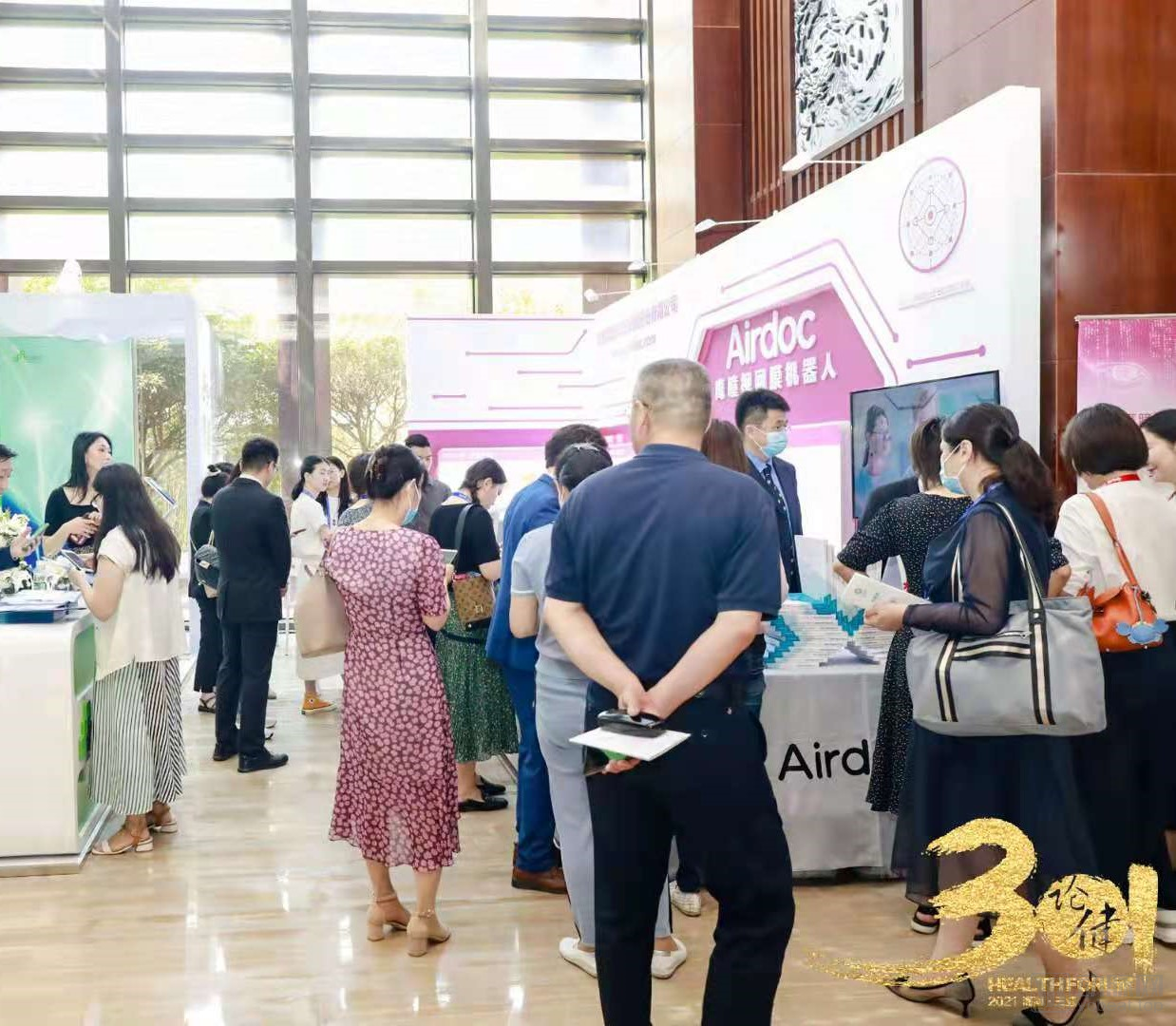
April 23–29, 2021: The 8th “301 Health Forum” & the 10th National Summit for Directors of Physical Examination Centers, and the Academic Annual Meeting of the Professional Committee on Health Management of the Chinese People’s Liberation Army, were held in Sanya.
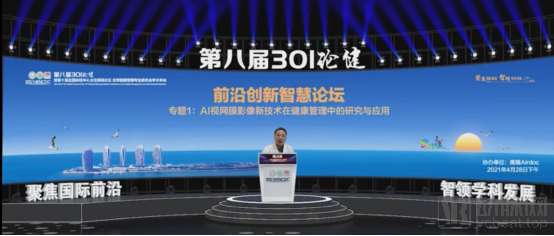
On April 28, at the “Frontier Innovation Smart Forum,” top domestic experts and industry specialists from the fields of ophthalmology, cardiology, endocrinology, health management, and artificial intelligence convened to discuss ““Research and Application of New AI Retinal Imaging Technologies in Health Management”During the themed sessions featuring presentations and dialogues, experts concluded that AI technology enables rapid image interpretation and intelligent quality control, thereby optimizing hospital workflows and enhancing the operational capabilities of health management centers. The application of AI supports precision health management, facilitates early and precise interventions for disease prevention and health promotion, and drives the transformation and sustainable development of health management institutions. In 2020, the National Medical Products Administration (NMPA) issued a total of nine Class III medical device certificates for AI-based healthcare products, marking the transition of AI healthcare in China from technological research to large-scale clinical application. For the healthcare industry, medical institutions that embrace innovation may leverage new concepts and technologies to rapidly improve diagnostic and therapeutic capabilities in certain departments, thereby enhancing their institutional influence.
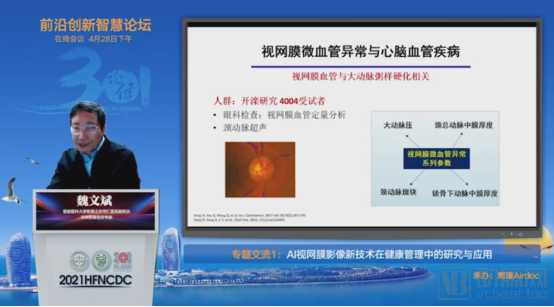
Figure 1: Wei Wenbin’s Lecture on “AI-Based Early Warning for Ocular and Systemic Diseases”
Vice President of Beijing Tongren Hospital, Expert Consultant for Central Health CareWei Wenbin pointed outMedical imaging is the most critical tool for clinical diagnosis and differential diagnosis in modern medicine. Given the close correlation between ocular health and systemic diseases, effective early retinal image screening can facilitate timely interventions for patients with systemic conditions such as hypertension, diabetes, and cardiovascular and cerebrovascular diseases. Professor Wei further emphasized that algorithms are the cornerstone of AI-based medical imaging products, illustrating the AI diagnostic workflow using Airdoc’s solutions as an example. We look forward to the early realization of Professor Wei’s vision of “cross-disciplinary integration, data sharing, and precision medicine.”
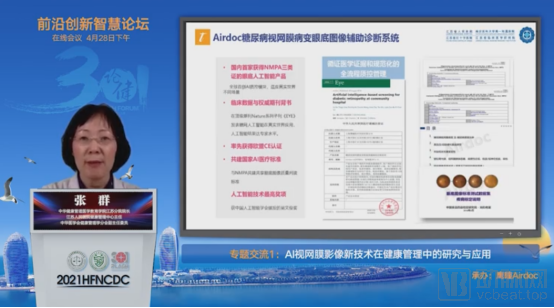
Figure 2: Zhang Qun’s Presentation on “AI Technology in Retinal Imaging and Precision Health Management”
Dean, Jiangsu Branch of the Chinese Academy of Health Management and Medical Education; Director, Health Management Center, Jiangsu Province People's HospitalZhang QunSystematicallyOverviewThe severe status of diabetic retinopathy and its complications, along with an analysis of the advantages and disadvantages of traditional fundus examination techniques, were discussed. Furthermore, by interpreting the quality control processes of Airdoc, the advanced nature of artificial intelligence-based retinal imaging technology was elucidated. Professor Zhang pointed out that the application of AI technology in health management will become increasingly profound, inevitably driving the transformation of health management towards a comprehensive, full-cycle approach, ultimately fulfilling the public's pursuit of a high-quality life.
Furthermore, Director of the Department of Ophthalmology at Shanghai Shibei Hospital, and Committee Member of the Ophthalmology Branch of the Chinese Medical Doctor AssociationChen Jili, Executive Deputy Director of the Clinical Research Institute of Peking University, and Vice Chairman of the Health Risk Assessment and Management Committee of the Chinese Preventive Medicine AssociationWu YangfengDirector of the Health Management Center, Wuhan Union Hospital Affiliated to Huazhong University of Science and Technology; Member of the National Alliance for Quality Control in Physical ExaminationXu Sanping, Deputy Dean of the Graduate School, University of Science and Technology Beijing; Executive Director of the Chinese Association for Artificial IntelligenceBan Xiaojuan, Director of the Department of Internal Medicine Teaching and Research Office at Shanghai Changhai Hospital, and Member of the Endocrinology Branch of the Shanghai Medical AssociationXu Maojin, Director of the Health Management Center at Xiangya Hospital of Central South University, and Committee Member of the Health Management Branch of the Chinese Medical AssociationLiu ShaohuiHu Yuntao, Director of the Department of Ophthalmology at Beijing Tsinghua Changgung Hospital and Deputy Leader of the Ocular Trauma Group of the Ophthalmology Branch of the Chinese Medical Association; Deputy Director of the Health Management Center at West China Hospital of Sichuan University and Member of the Expert Committee of the Special Fund for Health Check-up and Assessment Development of the China Health Promotion FoundationTang HuairongExperts from ophthalmology, cardiology, endocrinology, health management, and artificial intelligence engaged in multidimensional discussions and analyses of this new technology.
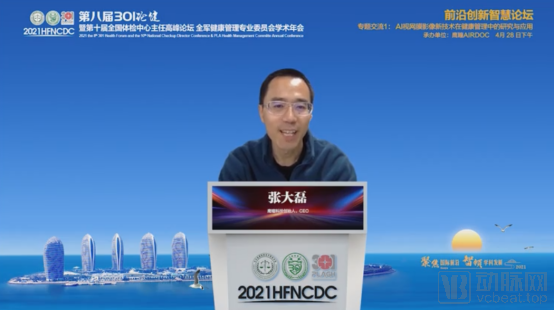
Address by Zhang Dalei, Founder and CEO of Airdoc
Founder and CEO of AirdocZhang DaleiHe stated, “Since its inception, Airdoc has upheld its corporate mission of ‘Making Health Accessible Everywhere,’ striving to enable everyone to manage their health risks anytime and anywhere. Airdoc has developed an AI-powered retinal imaging health risk assessment system based on tens of millions of cross-annotated data points. This system can detect early signs of health risks manifested in the retina, thereby playing a significant role in facilitating early detection and intervention for health risks.”
Dean, Chinese Academy of Health Management and Medical Education; Director, Institute of Health Management, Second Medical Center, PLA General HospitalZeng QiangIn summary, “The integration of artificial intelligence and health management is not only a necessity of the national health management strategy, but also a need for our professional medical institutions and health management practitioners, and indeed for the millions of patients requiring health management services. We expect Airdoc to continue increasing its investment in technological research and development, consistently reduce product usage costs, and continuously support academic seminars on health management across China, thereby providing safer, more precise, and more efficient health management services to the entire population.”