

Inno Medical: Pioneering High-Quality Venous Stents in China's Booming Peripheral Intervention Market

Innomed
Developer and Manufacturer of Implantable Medical Devices and High-End Interventional Consumables
Over the past two years, iliac vein stents, following more than a decade of research and development, have successively completed clinical trials in the United States and entered the market. Meanwhile, the centralized procurement of coronary stents has sparked exceptional enthusiasm for peripheral intervention in China’s capital markets. This heightened attention is driven by the large patient population and the promising market potential.
Peripheral interventional devices are associated with peripheral vascular disease, which includes peripheral arterial disease and peripheral venous disease. According to the "Report on Cardiovascular Health and Diseases in China 2019," the number of patients with lower extremity arterial disease in China exceeds 45 million, and the prevalence of lower extremity venous disease is 8.89%, representing nearly 100 million patients.
Based solely on the patient population base, China has 11 million patients with coronary heart disease and 13 million patients with stroke, while the number of patients with peripheral vascular disease is several times higher than that of other diseases. In terms of patient numbers alone, the field of peripheral interventions inevitably possesses a broader market space.
However, at the current stage, the market size of peripheral intervention in China is limited. According to Frost & Sullivan data, the market size of peripheral vascular interventional medical devices in China was RMB 3.01 billion in 2017, and it is expected to reach RMB 7.12 billion by 2022.
Despite the large patient population, why is the peripheral intervention market not particularly sizable at present? First, foreign brands hold the majority share of China’s peripheral intervention market, and their high unit prices limit accessibility for some patients. Second, domestic peripheral intervention companies are still in the early stages of development, with most of their innovative products undergoing clinical trials or regulatory registration. Third, peripheral vascular diseases have a low mortality rate, resulting in relatively weak patient willingness to seek medical treatment.
It is important to emphasize that while the early-stage mortality rate of peripheral vascular disease (PVD) is not high, it can lead to other diseases or complications, such as pulmonary embolism. Severe lower extremity arterial occlusion can result in amputation or even death. Additionally, Gong Xiaoyan, founder of Innomed, stated, “If peripheral vascular disease is not treated promptly, it will be directly associated with sudden cardiac events.” Therefore, following the publication of this research, peripheral vascular interventional products began to develop rapidly in the United States and Europe, whereas China started later in this field.
To address the aforementioned pain points, domestic peripheral intervention companies represented by Innomed are accelerating product launches to capture the Chinese market and strive to achieve domestic substitution.
However, for multinational giants such as Medtronic and Johnson & Johnson, where do the opportunities lie for domestic companies like Innomed? How can they win in market competition?
Facing multinational giants such as Medtronic and Johnson & Johnson, Innomed’s confidence stems from its team, technology, and high-quality innovative products.
According to reports, Gong Xiaoyan, founder of Innomed, is a Senior Fellow at Harvard University, an entrepreneurship expert under China’s National Major Talent Introduction Program, an adjunct professor at Xi’an Jiaotong University and Tongji University, and holds a Ph.D. from the University of California, Santa Barbara. He is also recognized as a Jiangsu Province “Double Innovation” Talent and a Gusu Leading Talent. Previously, he served as Chief Engineer at industry giant Johnson & Johnson, where he led the research and development of peripheral interventional devices, gaining extensive expertise in this product category. Additionally, Dr. Gong founded the consulting firm Medical Implant Mechanics LLC in Silicon Valley, where he spearheaded product development and technological improvements for numerous U.S. startups that achieved valuations exceeding tens of billions of dollars. He cultivated long-term, stable relationships with Abbott, Medtronic, and Johnson & Johnson, providing them with ongoing consulting services.
In addition, Innomed’s core team comprises six PhDs and twelve Master’s degree holders, with extensive experience and distinctive expertise in vascular stent design, manufacturing processes, fatigue testing, and durability assessment.
In terms of technology, Innomed relies on its outstanding R&D team to drive technological innovation and has already developed innovative products such as guidewires, catheters, arterial stents, and venous stents. To date, Innomed has filed over 100 patents. Gong Xiaoyan stated, “Compared with large corporations like Medtronic and Johnson & Johnson, Innomed, as a startup, possesses greater flexibility and focus, allowing us to devote full effort to product development and bring products to market more rapidly.”
In terms of product offerings, Innomed has innovated a range of products, and its arterial stents have recently received CE certification from the European Union. Taking the fatigue-resistant stent system Inno-Spring, developed by Innomed, as an example, this product overcomes the critical shortcomings of existing laser-cut peripheral vascular stents, namely weak radial force at both ends and poor fatigue resistance within the human body. The Inno-Spring features excellent conformability to adapt to the lesion structures of different patients while providing robust support. Additionally, its guidewire, the Inno-Pathwire, is equipped with a soft tip that minimizes damage to the vessel wall to the greatest extent possible. The tip is also easy to shape and maintains its form well, facilitating precise control by physicians.Superior to imported products among shapeable-tip working guidewires.
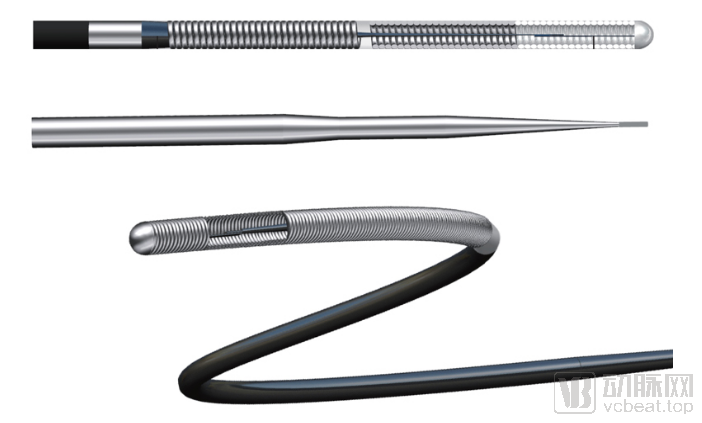
(Guidewire Inno-Pathwire)
It is reported that Innomed, leveraging the technical expertise and innovative capabilities of its R&D team, has established a presence in three key segments: peripheral vascular devices, heart valve solutions, and high-end consumables primarily focused on guidewires. Gong Xiaoyan stated, “Through our braided stent platform, Innomed has developed products such as iliac vein stents, femoropopliteal artery stents, covered stents, and thrombectomy devices. In the field of heart valves, Innomed has collaborated with senior industry experts to launch a series of new products for repair, replacement, and adjunctive therapies. Regarding guidewire products, Innomed has already commercialized several general-purpose guidewires and is currently introducing a broader range of specialized guidewire variants.”
It is precisely because of the aforementioned advantages that Innomed has developed a product portfolio in the field of cardiovascular and cerebrovascular interventions with global reach.
Currently, all iliac vein stents used in clinical practice in China are imported products. The Inno-Xmart venous stent, independently developed by Innomed, has successfully completed clinical enrollment and is currently undergoing clinical follow-up. Once launched, this product will break the monopoly of imported iliac vein stents and fill the gap in domestically produced alternatives.
Zhou Min, Clinical Head at Innomed, stated: “The Inno-Xmart venous stent is primarily indicated for the treatment of symptomatic iliofemoral venous stenosis or occlusion. In September 2019, the first patient was successfully enrolled in the clinical trial of this venous stent. The clinical trial is led by Dr. Zhang Xiaoming from Peking University People’s Hospital, with the participation of 18 hospitals across Zhengzhou, Chengdu, Luzhou, Qingdao, Shanghai, Xi’an, and Bengbu, including the First Affiliated Hospital of Zhengzhou University, the Affiliated Hospital of Chengdu University of Traditional Chinese Medicine, the Affiliated Hospital of Southwest Medical University, the First Affiliated Hospital of Bengbu Medical College, and Suzhou Municipal Hospital.”
Data indicates that in 2019, the number of patients with iliac vein obstruction in China was 700,000, and it is projected to reach 2 million by 2030. The primary treatment modalities for iliac vein obstruction include surgical intervention and endovascular therapy. Due to its advantages of minimal invasiveness, safety, efficacy, and alignment with normal human anatomy and physiology, endovascular therapy using iliac vein stents has become the predominant approach for treating iliac vein obstruction.
Data released by the renowned consulting firm Frost & Sullivan shows that the number of iliac vein stent interventions in China increased from 293 cases in 2016 to 2,207 cases in 2019, and is projected to reach 180,000 cases by 2030, representing a compound annual growth rate (CAGR) of 49.4% from 2019 to 2030.
The head of R&D at Innomed told VCBeat, “The iliac vein is situated between the iliac artery and the spine, where it is subjected to repetitive, localized compression from both structures; this is one of the causes of iliac vein obstruction. Therefore, iliac vein stents used for treatment must possess excellent radial strength to expand and maintain the patency of compressed vessels, ensuring unobstructed blood flow. Additionally, given the curved anatomy of the iliac vein, the stent must demonstrate good flexibility to ensure it adapts to and conforms well to the curved vessel.”
In fact, crush resistance and compliance are two diametrically opposed properties. Crush resistance requires the stent to be “rigid,” whereas compliance demands that it be “flexible,” representing an inherent contradiction.
Previously, peripheral stent products on the market were predominantly laser-cut stents. Such stents have not deviated from their early “ring-and-connector” design, making them unsuitable for treating iliac vein occlusions, which demand high fatigue resistance. The R&D head at Innomed stated, “In the early stages of development, there were no comparable products on the market for reference. We had to conduct our own research, communicate with physicians, and carry out independent R&D. Ultimately, we decided to develop a product distinct from laser-cut stents—a braided stent that resolves the contradiction between crush resistance and good flexibility.”
However, braided stents also present certain challenges, such as shortening, inaccurate positioning, and uneven deployment, all of which can compromise their efficacy. To address these issues, Innomed has independently developed a delivery system protected by global patents, ensuring uniform deployment of braided stents. Furthermore, this delivery system features a recapturing function, allowing physicians to retrieve and redeploy the stent before its complete release, thereby ensuring accurate positioning.
During the R&D process, Innomed engaged in in-depth exchanges with its collaborating team of physicians and received strong support from clinical experts such as Director Zhang Xiaoming of Peking University People’s Hospital. For instance, the physician team identified numerous pain points associated with iliac vein stents from a clinical perspective, which the R&D team then optimized and upgraded, ultimately achieving a synergistic integration of medical and engineering expertise with complementary advantages.
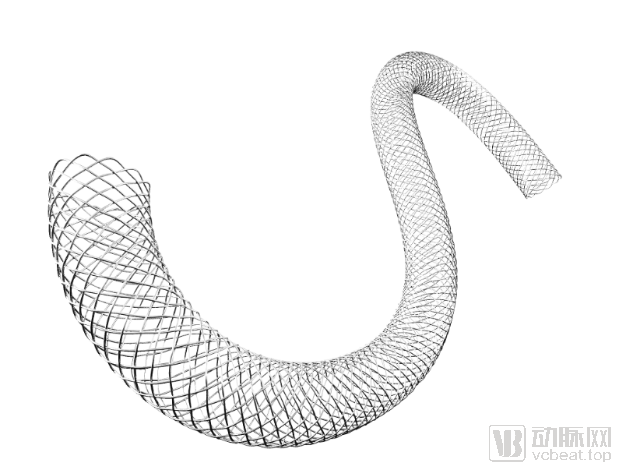
(Inno-Xmart Venous Stent)
Following innovation and optimization, the operability and clinical efficacy of Innomed’s Inno-Xmart venous stent have finally gained recognition from clinical experts. Current follow-up data from over 30 cases at one year show a primary patency rate of approximately 95%, significantly higher than the projected target.
The superior clinical outcomes are attributed to the Inno-Xmart venous stent, which combines excellent crush resistance with good flexibility, along with an innovative structural design and a precisely positioned delivery system.
Zhou Min finally revealed, “The Inno-Xmart venous stent is expected to be launched by the end of 2022 or early 2023.” Meanwhile, the team has held multiple discussions with the U.S. FDA regarding market entry into the United States, and U.S. clinical trials are anticipated to commence next year.