

EyeYon Medical Files for IPO Following $25M Series C Funding to Advance Corneal Care Innovations

EyeYon
Ophthalmic Instrument and Equipment Provider
EyeYon Medical is an ophthalmic device company based in Zion, Israel, founded in 2011. On April 8, 2021, EyeYon’s product, EndoArt®, was granted Innovative Medical Device status by China’s National Medical Products Administration (NMPA). On March 15, 2021, EyeYon Medical announced the completion of a $25 million Series C financing round.
Why Are Top-Tier Investors “Shadowing” an Israeli Startup? Let’s Examine the Allure of EyeYon.

Nahum CEO and Co-founder

Ofer, Medical Director and Co-Founder
Founder Nahum is an entrepreneur who excels at leading teams to transform simple ideas into successful products. Nahum holds a Ph.D. in Biomedical Engineering and an MBA from Tel Aviv University.
Founder Ofer is an inventor, entrepreneur, and researcher with multiple patents in the field of cornea. He is an expert in corneal therapy and cataract surgery. Ofer is also a surgeon at Assuta Hashalom Medical Center.
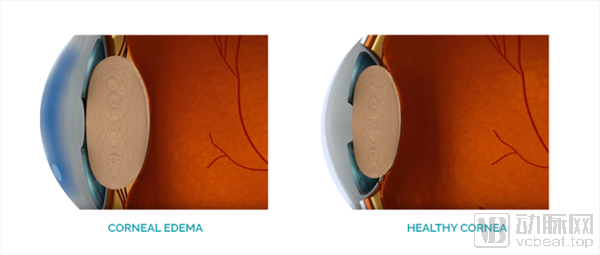
Normal Cornea and Edematous Cornea. Source: EyeYon Official Website
From 2009 to 2012, under the funding of the key advisory research project of the Chinese Academy of Engineering, "Study on Social Harm and Intervention Strategies for Infectious Keratitis in China," an epidemiological survey of infectious keratitis was organized across 10 provinces, autonomous regions, and municipalities in China (with a total sample of 191,242 individuals).
Survey Results Show:
The prevalence of corneal diseases is 2.49%. Based on the approximate population of 1.3 billion from the Sixth National Population Census, there are an estimated 32.37 million patients with corneal diseases in China.
In China, corneal diseases have caused blindness in at least one eye in 2.925 million people, with 440,000 patients suffering from bilateral corneal blindness.
Classification of Corneal Edema
Mild corneal edema generally requires no specific treatment; moderate corneal edema can be treated with topical corticosteroids, aqueous humor suppressants, and hypertonic saline; if severe corneal edema persists long-term—particularly in cases of severe or recurrent pathology—it is prone to causing corneal scarring, and corneal endothelial transplantation is the only viable option.
EyeYon’s first product, the Hyper-CL™ therapeutic contact lens, is a drug delivery platform designed to treat various corneal conditions, such as corneal edema, corneal infection, corneal inflammation, corneal erosion, entropion, bullous keratopathy, and corneal dystrophy, as well as postoperative conditions resulting from cataract extraction and corneal surgery. The Hyper-CL™ therapeutic contact lens has received CE marking and FDA clearance and is currently available in Europe and the United States.
Working Principle of Hyper-CL™ Therapeutic Contact Lenses
Compared to conventional contact lenses, Hyper-CL™ therapeutic contact lenses outperform them in reducing corneal thickness and improving visual acuity.
Hyper-CL™ therapeutic contact lenses feature a unique technology achieved through their distinctive lens design. When eye drops are administered while wearing Hyper-CL™ lenses, the design rapidly channels the droplets into the space between the lens and the cornea, locks in moisture to prevent evaporation of the eye drops, thereby prolonging the contact time between the medication and the ocular surface and enhancing the efficacy of the eye drops.
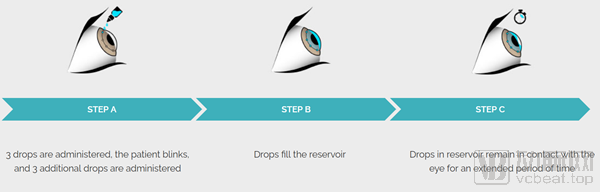
Principle of Hyper-CL™ Therapeutic Contact Lenses Image Source: EyeYon Official Website
Hyper-CL™ therapeutic contact lenses can be used to treat acute or chronic eye conditions, protecting the corneal surface and alleviating corneal pain. The lens can be worn continuously for 7 days, and after removal, it should be cleaned and disinfected every 14 days (chemical disinfection rather than heat). If needed, Hyper-CL™ therapeutic contact lenses can also provide optical correction during the healing process.
EyeYon is developing the groundbreaking product EndoArt®
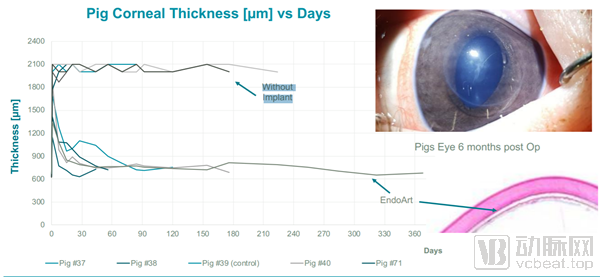
EndoArt® Animal Trials. Image source: 2019 Ophthalmic Innovation Summit
EndoArt® is the world’s first synthetic material designed as an artificial endothelial implant, enabling physicians to treat chronic corneal edema—the leading indication for corneal transplantation—through a minimally invasive and more convenient surgical approach using artificial materials.
Endothelial cells are irreplaceable: they rarely divide and cannot regenerate once damaged. To compensate for the gaps left by damaged cells, surviving cells alter their size and shape to fill the space, thereby losing the ability to clear excess fluid from the eye.
Minimally invasive, suture-free artificial endothelial implants are designed to replace dysfunctional endothelial cells, representing the current therapeutic solution for edema. Both preclinical studies and early-phase human clinical trials have demonstrated that patients experience significant alleviation of corneal edema following treatment with EndoArt®.
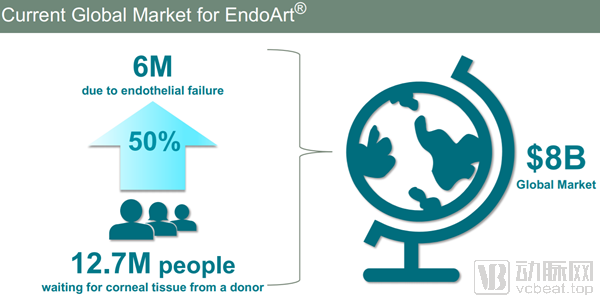
EndoArt® Outlook Analysis | Image Source: 2019 Ophthalmology Innovation Summit
EndoArt® was created to alleviate the global shortage of corneal donations, with an estimated one cornea available for every 70 people in need of a transplant.
“This will be a game-changer,” predicted Dr. Ofer, co-founder and inventor of EyeYon.
On April 12, 2021, EyeYon Medical announced the completion of a $25 million Series C financing round. The round was led by strategic leaders in the global ophthalmology industry and CR-CP Life Science Fund, with participation from Global Health Sciences (GHS) Fund, BPC, and existing investors Triventures, Rimonci, Pontifax, and Diamond BioFund. The funds will be used to expand clinical trials for EyeYon Medical’s flagship product, EndoArt®.
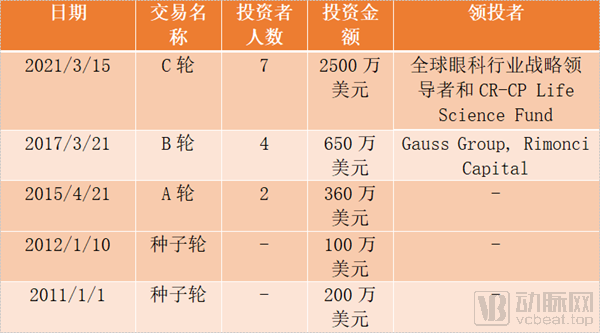
EyeYon's Historical Financing (Source: Crunchbase)
Clinical trials for EndoArt® are underway at selected medical centers in Europe (IVRC in Heidelberg, the Instituto de Microcirugía Ocular (IMO) in Barcelona, and AMC in Amsterdam) and in Israel (Soroka Medical Center, Rambam Health Care Campus, etc.). The latest clinical trials have demonstrated the safety and efficacy of EyeYon Medical’s breakthrough technology.
Following the new investment, EyeYon Medical expects to obtain regulatory approvals in the United States, China, and Europe, and to promote the product by leveraging the high demand for it.
“CR-CP is delighted to support EyeYon Medical in this innovative and meaningful endeavor. We believe it will benefit vulnerable patients facing challenges with corneal transplantation,” said Liu Da, Managing Director of the CR-CP Life Sciences Fund.
Richel Liu, CEO of Rimonci, stated, “As an early investor, we are confident in the company’s promising prospects. We also believe that approval through the NMPA’s innovative channel will facilitate the clinical adoption of EndoArt® in China and contribute to the elimination of corneal blindness in the country.”
According to CCTV News, Shi Weiyun, a deputy to the National People's Congress and director of Shandong Eye Hospital, stated in an interview that China-developed artificial corneas may be introduced into clinical practice by June 2021, bringing hope for vision restoration to patients with end-stage corneal blindness in China. After implantation of the artificial cornea, patients can achieve visual acuity of up to 1.0 with good recovery. Currently, more than 30 clinical patients have received the implant, all achieving visual acuity of 0.5 or better, demonstrating excellent outcomes.
Shi Weiyun stated that the current cost of artificial corneas in the United States is around $50,000, while domestically produced artificial corneas are expected to cost approximately $5,000—only one-tenth of the U.S. price. This is undoubtedly good news for financially disadvantaged families.