

Airdoc's Zhang Dalei at the First China Bio-Computing Conference: AI Healthcare Should Reach Rural Communities

Airdoc
Artificial Intelligence Technology R&D Provider in Healthcare
On May 10–11, the inaugural China Bio-computing Conference and Digital Medicine Innovation Summit was successfully held at the Jinji Lake International Conference Center in Suzhou. Xu Kunlin, Member of the Standing Committee of the Jiangsu Provincial Party Committee and Secretary of the Suzhou Municipal Party Committee, delivered the opening address. More than 100 industry scientists, entrepreneurs, and innovation leaders attended to share their insights, including Robin Li, Founder of Baidu and Bioto Life; E Weinan, Academician of the Chinese Academy of Sciences, Dean of the Beijing Institute for Big Data Research, and Professor at Princeton University; Shi Yigong, Academician of the Chinese Academy of Sciences and President of Westlake University; and Zhang Dalei, Founder and CEO of Airdoc. Over 1,500 attendees participated in person, while the live stream on the first day attracted more than 512,000 online viewers.
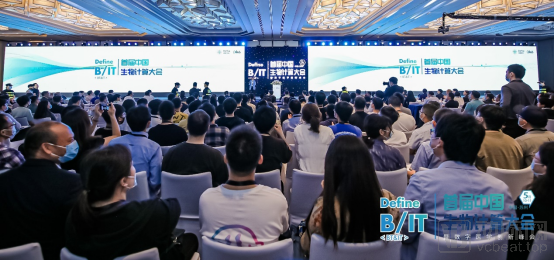
Figure 1. Scene from the First China Bio-computing Conference
In his opening remarks, Robin Li, Founder of Baidu and Biotope Bioscience, stated that biological computing is a highly interdisciplinary field. By leveraging biological computing engines to effectively harness vast amounts of biological data, it transforms drug discovery from a “needle-in-a-haystack” challenge into a targeted, systematic process, thereby advancing human health and well-being. Suzhou boasts a robust foundation in the biopharmaceutical industry and strong capabilities in artificial intelligence applications. Therefore, hosting the inaugural China Biological Computing Conference in Suzhou is both timely and fitting.

Figure 2 - Speech by Robin Li, Founder of Baidu, at the First China Bio-computing Conference
At the roundtable forum on “The Era of Multidimensional Analysis in AI + Medical Imaging,” Zhang Dalei, Founder and CEO of Airdoc, stated that the core clinical value of AI-based medical imaging products lies first in how problems are defined. These problems must focus on clinical needs and possess the capacity to address and improve current practices, such as enhancing efficiency, strengthening standardization, thereby increasing detection throughput, and reducing rates of missed and misdiagnoses—issues that are both practical and urgent. Only secondarily comes technological advancement; factors such as data volume, algorithms, and computing power serve as pathways and methods for enabling AI technologies to move out of the laboratory and effectively solve real-world problems. In summary, delivering sufficient value to physicians and patients in clinical application scenarios is the true direction for resolving commercialization challenges in today’s “AI + Healthcare” landscape.
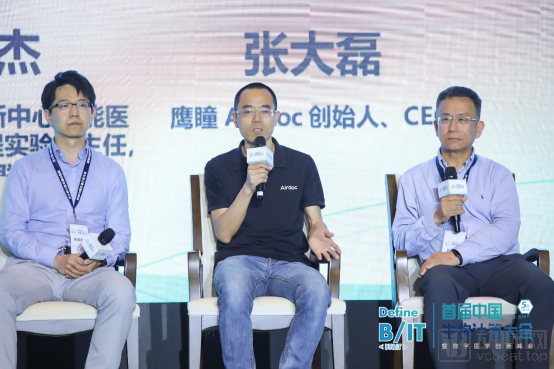
Figure 3: Zhang Dalei, Founder and CEO of Airdoc, Shares Insights at the First China Biocomputing Conference
Zhang Dalei stated, “First and foremost, I view medical AI as a healthcare product closely tied to human life, rather than an internet-based product. Just as the lifecycle of a new drug—from inception to market withdrawal—spans three to five decades, we believe that Airdoc is engaged in a similar endeavor. Therefore, our team has a clear understanding that this is a mission requiring half a lifetime of dedication. We do not dwell excessively on our current stage, industry trends, or investment climates; what truly matters is whether we have created sufficient value and service quality to ensure customers are willing to pay rather than use our products for free, and that paying customers return for repeated use instead of one-time transactions. Consequently, achievements such as obtaining regulatory approvals, inclusion in medical insurance schemes, and widespread adoption with high repurchase rates are natural outcomes of having a superior product. However, building such a product demands patience and time from everyone involved; it is not an endeavor that can be accomplished in three to five years. From our team’s perspective, achieving a state where every individual can monitor their health status anytime and anywhere may require more than ten years.”
Airdoc has developed an AI-based retinal health risk assessment system leveraging massive cross-annotated retinal images and artificial intelligence technology. This system can detect early signs of health risks manifested as abnormalities in the retina, thereby significantly facilitating early detection and intervention of potential health issues. On August 7, 2020, Airdoc received China’s first Class III medical device certificate for AI-assisted fundus diagnostic software from the National Medical Products Administration (NMPA).
The research and development, as well as the approval of this product, benefited from the dedicated efforts of industry experts. Professor Wei Wenbin, Deputy President of Beijing Tongren Hospital; Professor Li Zhaohui, Director of the Department of Ophthalmology at the Chinese PLA General Hospital; and Professor Hu Yuntao, Director of the Department of Ophthalmology at Tsinghua Changgung Hospital, served as investigators and jointly completed the product’s clinical trials. Expert teams from Zhongshan Ophthalmic Center in Guangzhou, Eye & ENT Hospital of Fudan University in Shanghai, Wenzhou Medical University Eye Hospital, and Shanghai Changzheng Hospital provided substantial guidance and support. Professor Chen Jili from Shanghai Shibei Hospital conducted a real-world study, with the findings published in *Eye*, a journal within the *Nature* portfolio.
Secondly, Zhang Dalei believes that the implementation of AI products must ensure a seamless end-to-end experience, including offering sufficiently affordable pricing to enable broader accessibility for the general public, given that China still has a large low-income population.
Currently in China, the top two leading causes of death are myocardial infarction and stroke. From the outset, Airdoc has focused on addressing the challenges associated with capturing and interpreting fundus photographs. In China, hospitals face issues such as the high cost of fundus cameras, a scarcity of physicians skilled in image interpretation, and uneven diagnostic capabilities. While Germany and Japan have achieved a certain degree of automation in their equipment, these systems are prohibitively expensive, costing hundreds of thousands of yuan, which places them out of reach for many primary healthcare institutions, rural doctors, and community hospitals. Therefore, we have strived to make the process as simple as taking a selfie, enabling widespread adoption across all primary healthcare facilities and aiming to cover an increasing number of people in China. “To refine every aspect of our service, we still need to invest more time and energy,” shared Zhang Dalei. “In 2020, our practical applications identified 4,981 individuals with life-threatening conditions (significant positive cases) who were previously unaware of their health risks. Diseases such as myocardial infarction and stroke develop over a long period, often without clear symptoms in the early stages; by the time they manifest acutely, it is often too late. Thus, I strongly encourage everyone to prioritize their health by including ‘retinal examination’ as part of their routine check-ups or local healthcare services, thereby gaining greater insight into their personal health risks.”
It is reported that the China Bio-Computing Conference was jointly organized by Bioturing and Bohe Innovation, aiming to unite industry partners in biotechnology and information technology to co-create a multi-party integrated industrial ecosystem. Through information exchange and resource sharing, the conference seeks to promote the comprehensive empowerment of artificial intelligence in the field of biotechnology.