

Mobia Medical Submits IPO Prospectus for Pioneering Stroke Rehabilitation Vagus Nerve Stimulator

MicroTransponder
Neurostimulation Device Developer
The Brain Is Often Compared to the Universe, and Humanity Has Never Ceased Its Exploration of Both. While Our Understanding of the Cosmos Has Not Yet Extended Beyond the Solar System, How Far Have We Progressed in Our Understanding of the Brain?
The human brain is arguably the most complex object on Earth, comprising at least 100 billion neurons of various types, as well as 1015a complex neural network formed by individual connections. In the last century, humanity gained a general understanding of how electrical signals carrying information in the nervous system are generated by neurons, and how they are processed and transmitted by neurons. Like dominoes, the electrical signal generated by the brain is the first domino; each neuron involved in the process is regarded as a domino. Only when every domino falls can the signal direct limb movement. But what happens if one domino gets stuck?
Apply an external force to push it over.
Neurotechnology devices serve as the “external force” within the human neural network: since information in the nervous system is transmitted via electrical signals, neurotechnology devices activate subsequent neurons by delivering electrical stimulation. With the launch of national brain science initiatives across various countries, the neurotechnology device market has entered a golden period of development.
According to Global Market Insights, the market size for neurotechnology devices exceeded $10.9 billion in 2021 and is projected to grow at a compound annual growth rate (CAGR) of 14.5% over the next decade.
The neuromodulation device market is categorized into four segments: neurostimulation, neural prosthetics, neural sensing, and neurorehabilitation. Among these, neurostimulation, also known as neuromodulation, accounted for approximately 69% of the market share in 2021, a trend that is expected to continue rising in the near future.
Based on the targeted neural segments, neuromodulation can be further categorized into deep brain stimulation, spinal cord stimulation, gastric electrical stimulation, vagus nerve stimulation, sacral nerve stimulation, and transcutaneous electrical nerve stimulation.
Epilepsy, Depression: New Focus of Vagus Nerve Stimulators—Post-Stroke Motor Disorders
MicroTransponder is a medical device company that develops vagus nerve stimulation (VNS) devices for the treatment of chronic neurological disorders. Founded in 2007 and headquartered in Texas, the company currently has its Vivistim System approved by the FDA for treating upper limb motor impairment after ischemic stroke, and it is preparing to launch the Serenity System for the treatment of tinnitus.
Introduction to the Vagus NerveHumans have 12 pairs of cranial nerves, with the vagus nerve being the tenth pair. It contains sensory, motor, and parasympathetic nerve fibers. As the longest and most widely distributed cranial nerve, the vagus nerve extends from the brainstem down to the abdomen, innervating various organs including the heart, esophagus, and lungs. Due to its extensive distribution and numerous connections within the brain, the vagus nerve serves as the foundation for neuromodulation therapies targeting a variety of diseases.
Most implantable vagus nerve stimulators consist of a pulse generator, helical electrodes, and flexible leads. The pulse generator is typically implanted subcutaneously below the left midclavicular line, a location chosen for its stability and minimal mobility. The vagus nerve is then dissected in the neck, and the electrodes are wrapped around it.
In 1997, the vagus nerve stimulator was approved by the FDA for the treatment of drug-resistant epilepsy. To date, more than 100,000 vagus nerve stimulation devices have been implanted in patients for the treatment of epilepsy or depression.
Vagus nerve stimulation for treating upper limb motor impairment after stroke is a novel research topic in recent years and represents new hope in the field of stroke rehabilitation. The Vivistim system, developed by MicroTransponder, is the first vagus nerve stimulator approved by the FDA for stroke rehabilitation, and the FDA has granted Vivistim Breakthrough Device designation.
Most medical devices lie at the intersection of mechanical engineering and medicine, a characteristic that is particularly pronounced in neurotechnology. Navzer, co-founder of MicroTransponder, holds a Ph.D. in Neuroscience from the University of Texas and is also an M.D. The company’s Vice President graduated with a degree in Electrical Engineering from Rice University and brings 30 years of clinical experience in vagus nerve stimulation. Together, they exemplify the ideal combination of medicine and engineering.
Richard Foust currently serves as the CEO of MicroTransponder. Prior to joining MicroTransponder, he held executive positions at major medical device companies, including Abbott. Richard holds a Bachelor’s degree in Applied Physics and a Master’s degree in Bioengineering, making him a highly qualified professional for the medical device industry.
Enables movement independent of the device: bypassing damaged neurons and establishing new synapses
Stroke is a leading cause of death worldwide. Survivors have essentially been pulled back from the brink of death. Approximately 80% of patients with acute stroke experience upper limb motor impairments, and more than half continue to face challenges six months post-onset, particularly with fine motor skills of the upper limbs, such as peeling an orange or holding chopsticks—tasks that are otherwise considered routine.
Similar to other vagus nerve stimulators, the Vivistim system also includes a pulse generator, leads, electrodes, programming software for controlling pulse frequency (SAPS), and a wireless transmitter.
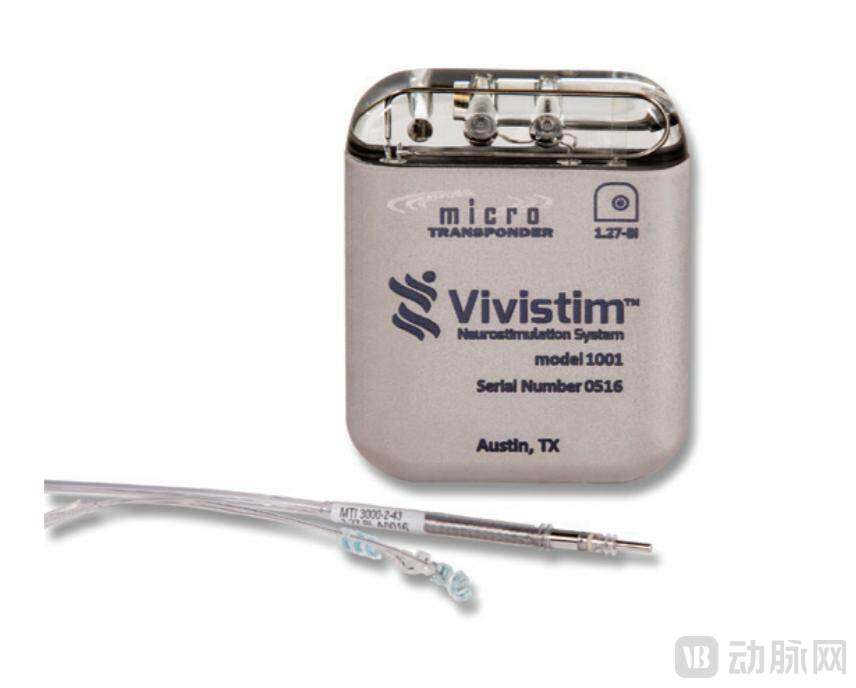
Vivistim Product Image (Source: Official Website)
The Vivistim pulse generator, weighing less than 70 g, is implanted in the left thoracic region and generates electrical pulses at frequencies ranging from 1 Hz to 30 Hz. It is connected via a subcutaneous tunnel to a spiral electrode wrapped around the left vagus nerve, using a lead wire that is 43 cm in length and 2 mm or 3 mm in diameter.
The SAPS software is installed on a laptop, allowing physicians to configure parameters such as stimulation amplitude, frequency, and pulse width of the pulse generator, as well as to record historical stimulation data. All such settings must be transmitted via a wireless transmitter to modify the pulse generator’s configuration.
This device is intended to be used in conjunction with rehabilitation exercises. The therapist presses the remote control to emit electrical signals that stimulate the vagus nerve for half a second, while the patient simultaneously performs specific movements. The rehabilitation program is recommended three times per week for six weeks, with each session lasting 75 to 90 minutes and electrical stimulation delivered every 5 to 10 seconds.
In addition to use under the supervision of a therapist, the device can also be used at home; however, the wireless transmitter must not be given to the patient. The patient must first undergo training and then receive a special magnet that can activate the pulse generator, followed by 30 minutes of stimulation daily.
In 2021, The Lancet published a research report titled “VNS-REHAB” on the Vivistim system. The study involved 108 patients, all of whom continued to experience moderate or greater arm weakness nine months after stroke onset.
According to the report, the treatment group using the Vivistim system showed a 2- to 3-fold greater improvement in arm weakness compared to the control group. This not only demonstrates the efficacy of vagus nerve stimulation in motor rehabilitation after stroke but also confirms that patients’ motor function can still improve even many years after the stroke event.
According to the MicroTransponder website, after using the Vivistim system for a period of time, patients are expected to achieve flexible upper limb movement without the device.
Currently, there is no definitive consensus in the academic community regarding “why vagus nerve stimulation can promote upper limb motor rehabilitation after stroke.” MicroTransponder posits that the underlying mechanism may involve the stimulation-induced release of neurotransmitters and the formation of new synaptic connections, akin to establishing an alternative bridge to bypass the damaged area.
The Vivistim system for stroke treatment received FDA approval in August 2021, and the company hopes its Serenity system for tinnitus treatment will gain approval by the end of this year to commence sales.
Tinnitus is a common hearing disorder, and the treatment of tinnitus through vagus nerve stimulation is also an emerging field. Some animal studies have shown that vagus nerve stimulation combined with auditory stimulation can controllably induce neural plasticity in the auditory cortex.
MicroTransponder Introduces the Mechanism of Its Serenity Device: By stimulating the vagus nerve while delivering tones outside the tinnitus frequency range, it reduces the excitability of auditory neurons, thereby remodeling them over time. The Serenity system remains an implantable device, and its clinical data have not yet been published on the company’s official website.
MicroTransponder’s vision for vagus nerve stimulation extends further; the company aims to establish a vagus nerve stimulation network covering a range of chronic neurological disorders. Richard Foust, CEO, stated that the Vivistim system is poised to become the gold standard in stroke rehabilitation in the future.
Recently, the company completed a $53 million Series E financing round, led by US Venture Partners, with participation from GPG Ventures, Exceller Hunt Ventures, Osage University Partners, Action Potential Venture Capital, and Vertical Group. The proceeds will be used to commercialize the Vivistim system.
Spinal Cord Stimulators Dominate the Neuromodulation Market
Neuromodulation is a biomedical engineering technology that utilizes implantable or non-implantable methods to improve quality of life through electrical or chemical means. Both the United States and the European Union announced brain research initiatives in 2013, proposing new measures to develop innovative neuroscience technologies, which sparked a global surge in neuromodulation-related research and applications.
North America, encompassing the United States and Canada, stands as the global hub for advancements in neuromodulation technology. Within the implantable neuromodulation market, spinal cord stimulators hold the largest market share, followed by deep brain stimulators, and then vagus nerve stimulators used for treating refractory epilepsy and depression. In terms of therapeutic applications, beyond traditional indications such as epilepsy and chronic pain, emerging neuromodulation therapies target conditions including inflammation, metabolic disorders, and cardiovascular diseases, as well as post-stroke limb motor rehabilitation, as mentioned above.
Major international medical device giants, including Boston Scientific, Medtronic, and Abbott, are all competing for market share in the neurostimulation device sector.
The development trends of neuromodulation in China are also consistent with global trends, mainly focusing on traditional areas such as movement disorders, intractable pain, and epilepsy.