

Neuralink's Setback: FDA Rejects Human Trials Amid Safety Concerns, Prompting Industry Reassessment

Neuralink
Brain-Computer Interface System Developer
In 2022, the FDA rejected Neuralink’s application for clinical trials on safety grounds. However, until Reuters recently broke the news, Neuralink had not disclosed any setbacks in its human clinical trials.
This setback stands in stark contrast to Neuralink’s rapid progress in previous years. In 2019, Neuralink implanted its “sewing machine” chip into the brains of mice, using electrodes to stimulate and “guide” them through mazes. By 2020, the test subjects had shifted to pigs, with Neuralink successfully predicting their movement trajectories by capturing the electrical signals generated by the brain-computer interface (BCI).
The most recent public promotion of BCI technology dates back to December 2022. During a recruitment event, Elon Musk and senior executives shared a video showing a monkey typing on a keyboard and controlling a mouse using only its thoughts. The footage clearly depicted a monkey with an implanted BCI device maneuvering the mouse cursor via neural signals. Reports indicated that the phrase “welcome to show and tell” displayed on the presentation screen was actually typed by the monkey.
The Fog of Dilemmas and Breakthroughs: What Situation Does Neuralink, One of the Industry’s Forefront Companies, Currently Face?
Compared with the vast majority of regulatory and approval agencies, the FDA is often more open to cutting-edge medical technologies. In 2021, it even provided general, reference-worthy recommendations for invasive brain-computer interface (BCI) medical devices during the pre-submission stage for an Investigational Device Exemption (IDE) application or market registration.
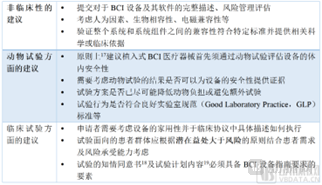
Multiple industry insiders stated that the rejection of Neuralink’s clinical trial application was expected.
Although Neuralink’s approach offers a more portable high-throughput data acquisition solution, it still entails numerous potential risks in its design.
According to anonymous sources, the two primary concerns behind the FDA’s rejection of the clinical trial are as follows: First, Neuralink’s power supply issue. To achieve high-throughput signal acquisition, Neuralink uses lithium batteries to power its implants; however, implanting batteries within the skull poses safety risks.
Second, whether subtle electrode displacement occurs after implantation in brain tissue. Since Neuralink uses flexible electrodes that lack structural support, there is a potential risk of displacement.
The safety of invasive brain-computer interfaces (BCIs) has long been a formidable hurdle for companies in the field. “Clinical requirements for invasive brain research are the most stringent, as the brain environment is subject to a wide variety of conditions, many of which can be fatal,” explained Dai Shenyi, CEO of Neuromore Technology. “Particularly with such an innovative technology, no one has previously participated in relevant trials, making it impossible to predict potential risks. Therefore, the data collection and adverse event reports from Neuralink’s animal trials may not have provided sufficient evidence, making it difficult for the FDA to assess the safety of the proposed human trials.”
Placing devices containing numerous hazardous chemicals, such as batteries, in the brain makes it difficult to ensure safety. Furthermore, when doctors implant electrodes into the brain, various free-floating cells immediately initiate a clearance response, leading to their engulfment by brain cells. “Once it is internalized by phagocytes, we no longer know what will happen next.”
Revisiting the Ethical Issues Previously Faced by Neuralink. The Physicians Committee for Responsible Medicine (PCRM) filed a complaint against Neuralink with the U.S. Department of Agriculture (USDA). According to the PCRM website, their submitted allegations stated that since 2017, Neuralink’s animal trials for brain-computer interfaces have involved invasive and often fatal brain experiments on mice, sheep, pigs, and monkeys.
Using monkeys as test subjects, although Neuralink’s approach offers a more portable high-throughput data acquisition solution, its design still carries significant risks, ultimately leading to infections in the test monkeys during the trials. The Physicians Committee for Responsible Medicine (PCRM) stated that UC Davis used 23 monkeys in Neuralink’s brain chip implantation trials, with only seven surviving and the remaining 15 being euthanized.
From an ethical standpoint, staff removed part of the monkeys’ skulls during the experiment to implant electrodes into their brains; used drugs not approved for this trial and toxic to neural tissue; failed to provide adequate care to dying monkeys; and caused seizures and recurrent infections at the implantation sites following brain chip implantation. These actions violated nine provisions of the Animal Welfare Act.
Although Neuralink denied the allegations of “abuse” in its response, it acknowledged the euthanasia mentioned by PCRM. Thus, if animal trials remain incomplete, safety and ethics will continue to be unavoidable issues for Neuralink before proceeding with human experiments.
Although Neuralink’s clinical trial application was rejected due to safety concerns, there are examples globally of brain-computer interface (BCI) technologies advancing into clinical settings. Some companies have leveraged their safety advantages to complete small-scale human trials and achieve remarkable results.
Synchron, the company backed by Amazon founder Jeff Bezos and Microsoft founder Bill Gates, is the enterprise leading the way; Shanda Network founder Chen Tianqiao’s heavy bet on brain science also refers to Synchron.
Peer-reviewed long-term safety results from a clinical study involving four critically ill patients, published in the medical journal JAMA Neurology this January, showed that 12 months after implantation of Synchron’s first-generation neural prosthetic device, Stentrode, into the cerebral vasculature, none of the four patients experienced vascular occlusion or any adverse events related to the device. In December 2021, one of these patients successfully posted a tweet using only their thoughts, becoming the first person in the world to directly publish a social media message via brain-computer interface.
Compared to Neuralink, Synchron employs an ingenious approach by utilizing a vascular intervention method to minimally invasively implant the neuroprosthetic device via the jugular vein, reaching the target intracranial location within two hours. In contrast to traditional invasive brain-computer interfaces (BCIs), Synchron’s use of the vascular pathway avoids inflammatory responses and eliminates the need for craniotomy (“drilling holes” in the patient’s skull).
However, by ensuring the safety of the implant, Synchron inevitably sacrifices some data fidelity. Neuralink’s electrodes feature over 90 data acquisition channels, whereas the Stentrode has only 16. Consequently, the Stentrode’s data acquisition capabilities still require further refinement.
The FDA’s stance indicates that, as a regulatory agency, it favors mature and safe clinical trial protocols over aggressive technological innovations.
Returning to Neuralink. To understand why Neuralink encountered numerous issues in its later stages, it is essential to examine the fundamental aspects of its product design. Multiple industry insiders stated that, beyond the two major challenges of battery performance and electrode displacement, the core reason for the failure of Neuralink’s system to secure approval for clinical trials was a design that lacked adequate consideration for regulatory requirements and clinical application.
This issue was previously exposed in earlier reports on Neuralink, with a former employee stating that Neuralink oscillated between being a “tech company” and a “medical device company.” Recurring disputes arose between neuroscientists and engineers, with Musk typically siding with the engineers.
Among the eight core scientists initially announced by Neuralink, there was also a lack of experts in medicine and regulatory affairs.
Although Musk disregards the opinions of neuroscientists, there is no doubt that regulation and clinical validation are insurmountable hurdles to transforming brain-computer interface technology into genuine medical-grade products and viable, implementable solutions.
There is a significant gap between the development of brain-computer interface (BCI) technology toward clinical implementation and its development solely as an emerging research technology. Neuralink has clearly chosen the latter path in designing its technological roadmap, overlooking numerous potential risks and regulatory requirements in its design.
With Neuralink’s prior setbacks as a cautionary tale, other companies worldwide are adopting a more cautious approach in selecting implantable brain-computer interface pathways.
Jieti Medical is a typical enterprise involved in BCI R&D. In China, Jieti Medical is also developing ultra-flexible electrodes for brain-computer interfaces. Cai Bilin, Market and Medical Director at Jieti Medical, stated, “From the outset, we considered the risks associated with implantable batteries. Implanting batteries within the skull, in close proximity to the brain, poses risks to safety and stability, and may also affect signal transmission. Issues such as heat generation and sealing integrity of the batteries also need to be addressed. Furthermore, the inclusion of implantable batteries complicates the entire clinical trial protocol, leading to stricter regulatory requirements, higher-level biological testing for the product, and increased complexity in clinical trials, thereby creating greater obstacles to product commercialization.”
Cai Bilin stated that during the early development phase, Jieti Medical fully considered the pain points and demands from the clinical side, as well as the concerns of regulatory authorities. This approach helped Jieti Medical avoid unnecessary detours and steered its technology toward practical implementation.
Taking the power supply for implantable brain-computer interfaces as an example, Jieti Medical conducted repeated simulations and analyses during the discussion of solutions. Given that current battery technology struggles to meet the clinical requirements for long-term implantation of miniature devices, Jieti Medical abandoned the implanted battery approach for its first-generation product. Instead, it opted for wireless power transmission with an external battery, incorporating a coil within the implant to receive power wirelessly from an external source. This strategy mitigates the risks associated with implanted batteries. The company plans to consider integrating implanted batteries in future products once battery technology becomes more stable and mature.
How to Address the Issue of Electrode Displacement. Jieti Medical’s approach involves fabricating electrodes that are sufficiently thin and fine. Currently, Jieti Medical’s electrodes are only one micrometer thick and less than 100 micrometers wide, achieving cellular-scale dimensions, which results in excellent tissue compatibility. To date, Jieti Medical’s ultra-flexible electrodes have been implanted in mice and macaques for nearly one year. Under continuous observation, no displacement has been detected, and the long-term biocompatibility, stability, and signal transmission performance have shown promising results. Of course, prior to future regulatory approval and market launch, further evaluation through long-term large-animal studies and human clinical trials will be required.
Beyond avoiding the pitfalls encountered by Neuralink, other companies have designed alternative pathways for implantable brain-computer interfaces.
Neuralink’s technological approach combines flexible electrodes with an implantation surgical robot. Neuralink employs microwire penetrating electrodes; a small circular section of the skull is removed via a surgical robot to implant the brain-computer interface (BCI) device, whose chip features thousands of microelectrodes on one end that connect with cerebral neurons.
Dr. Deng Chunshan of Weiling Medical told VCBeat that, in addition to Neuralink, three other major technical routes in the global brain-computer interface (BCI) market are also garnering significant attention.
First is the endovascular stent-based electrode approach.Represented by Synchron, as mentioned earlier, this approach involves placing electrodes on intravascular stents via endovascular intervention, similar to stent placement. Due to the maturity of endovascular implantation techniques, this technical route offers higher safety. Additionally, its passive design eliminates the need for implanted batteries, simplifying clinical trial protocol design. Currently, Synchron’s product has received FDA approval to conduct clinical trials. However, since it can only be deployed in large blood vessels, the number of signal acquisition channels is very limited, and the signal-to-noise ratio is extremely low, thereby restricting its future functional scalability and applicable patient population.
Another major technical route is rigid penetrating electrodesRepresentative companies include Blackrock Neurotech and Paradromics, which are developing the Utah array electrodes. Rigid penetrating electrodes do not pose displacement issues; however, they are more traumatic and exhibit poorer biocompatibility and mechanical property matching with brain tissue.
It is worth noting that both Neuralink’s filament electrodes and Paradromics’ rigid electrodes exhibit high signal-to-noise ratios in data acquisition, thus requiring an internal power source for implantation, which entails more complex regulatory requirements.
The third approach is the technology-balanced route represented by Precision Neuroscience and MicroPort NeuroTech.Precision Neuroscience and MicroLing Medical place thin-film electrodes on the surface of the cerebral cortex without implanting them into the brain parenchyma, thereby avoiding issues related to immune responses and electrode migration. In terms of signal-to-noise ratio (SNR), Precision Neuroscience has improved both SNR and channel density by one to two orders of magnitude using micro-nano fabrication processes; however, this electrode implantation method still requires a power source. To address power safety concerns, MicroLing Medical adopted a clinically mature rechargeable power solution from deep brain stimulation (DBS) systems to ensure safe and controllable power supply.
It remains uncertain which of the three major technological pathways will ultimately translate into clinical practice. However, it is undeniable that teams achieving rapid clinical progress are invariably those integrating medicine and engineering.
Dr. Deng Chunshan stated, “Brain-computer interface (BCI) technology places significant demands on a team’s systemic understanding. Initial choices directly determine many downstream technical pathways. Therefore, the team must possess a comprehensive grasp of technical principles and engineering implementation, as well as clinical applications and regulatory requirements, at the system level, which necessitates a high degree of complementarity among team members. At its inception, our team invited experts with over 20 years of experience in medical device approval to serve as advisors, ensuring compliance in system design and facilitating future clinical approvals.”
Neuralink’s Clinical Trial Application Faces Obstacles, Exposing Common Challenges in the Implantable Brain-Computer Interface Industry; However, Temporary Setbacks Do Not Invalidate the Implantable BCI Approach. Looking Ahead, Implantable Brain-Computer Interfaces Remain Regarded as the Viable Pathway for Medical-Grade Applications.
On the other hand, the lesson Neuralink offers to the industry is that innovation driven solely by engineers often tends to diverge from the rigorous standards inherent to serious medical practice. As an emerging technology, implantable brain-computer interfaces (BCIs) require teams with comprehensive understanding and extensive experience across medicine, clinical practice, regulation, and engineering systems during their translation into clinical settings. Only through such multidisciplinary expertise can BCI technology truly transition from the laboratory to clinical application.