


Author: Feifei |
Editor: Tang Shi |
Recently, SynSense (hereinafter referred to as “SynSense”) announced the completion ofPre-B+ Round Financing of Nearly $10 Million, this round of financing was led by AUSVIC CAPITAL LIMITED, with MAXVISION TECHNOLOGY CORP. participating as a co-investor.
SynSense, established in 2017, specializes in neuromorphic technology and edge computing, providing computing, software, and hardware solutions for smart homes, robotics, intelligent security, and smart care, and has now becomeA Global Leader in Neuromorphic Intelligence and Application Solutions。
01 Brain-Inspired Intelligence Becomes a Research Hotspot
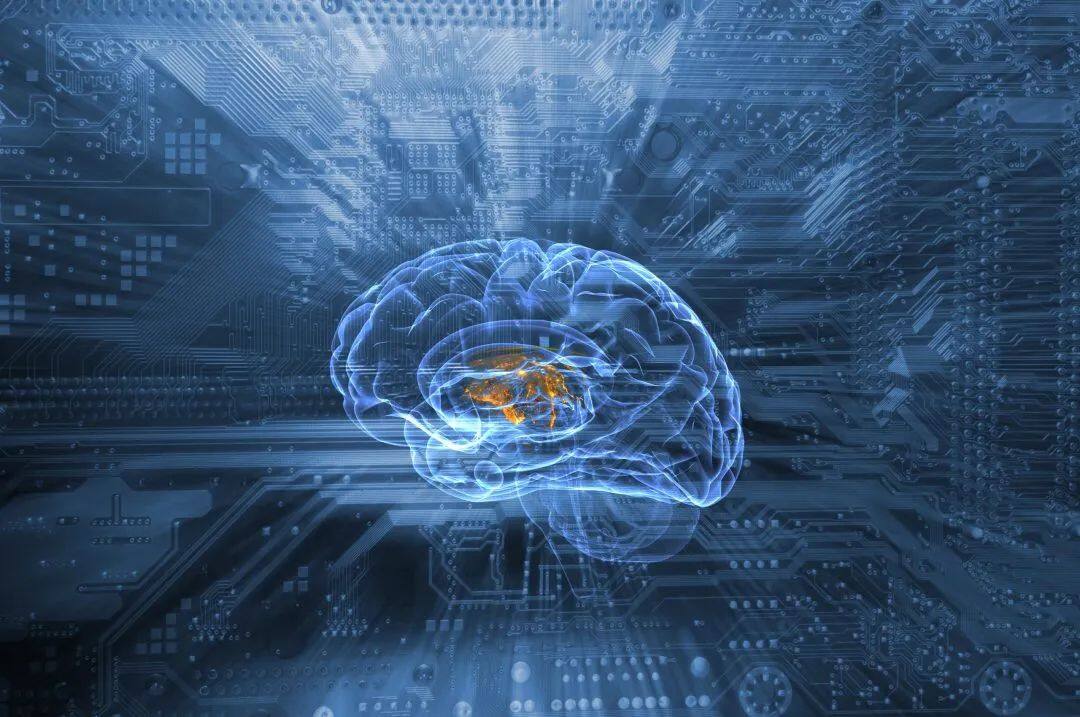
Brain-inspired intelligence is closely intertwined with daily life. In a broad sense, it is even difficult to strictly distinguish brain-inspired intelligence from artificial intelligence. Brain-inspired intelligence simulates the human brain’s information processing mechanisms through computational methods. It possesses information processing mechanisms similar to those of the human brain and exhibits intellectual capabilities comparable to human behavior.
It is not difficult to understand that the purpose of developing brain-inspired intelligence is to enable machines or systems,Computational Imitation of the Human Brain, capable of achieving cognitive abilities similar to those of humans.
With the advent of the artificial intelligence era, brain-inspired intelligence has developed rapidly. This is based on two foundations: on the one hand,Big Data Technology Makes Large-Scale Brain-Inspired Simulation Computing a Reality, which has become the foundation for advancing brain-inspired intelligence research.
On the other hand, the working principle of brain-inspired intelligence is that machines mimic the human nervous system, accompanied by the increasing maturity of brain science research,Human Understanding of the Brain Is Deepening。
Brain science was once regarded as the "ultimate goal" of human scientific research. It can be said that for thousands of years,Humanity Has Never Ceased Its Exploration of the Human Brain, which has also become the driving force behind the development of artificial intelligence. Currently, advances in brain science have facilitated further breakthroughs in artificial intelligence technologies such as deep learning.
In the field of brain-inspired intelligence, there are two key factors influencing research and development.First is perception, second is computationPerception encompasses vision, hearing, touch, and biological signals. Computation is based on massive data to perform brain-like simulations. Given the extreme complexity of the human brain and its strong creativity, achieving brain-like intelligence in machines requires extensive simulated computation.
As an emerging field of research,Brain-inspired intelligence has also become a research hotspot in the field of intelligent science., is considered one of the most promising fields in the post-Moore era.
Professional institutions project that by around 2035, neuromorphic computing will account for 15%–20% of the artificial intelligence sector, with a market size of at least RMB 100 billion. Given its broad development prospects, brain-inspired intelligence has become a key strategic frontier for enterprises.
02 Strong in R&D, Mastering Leading-Edge Technologies
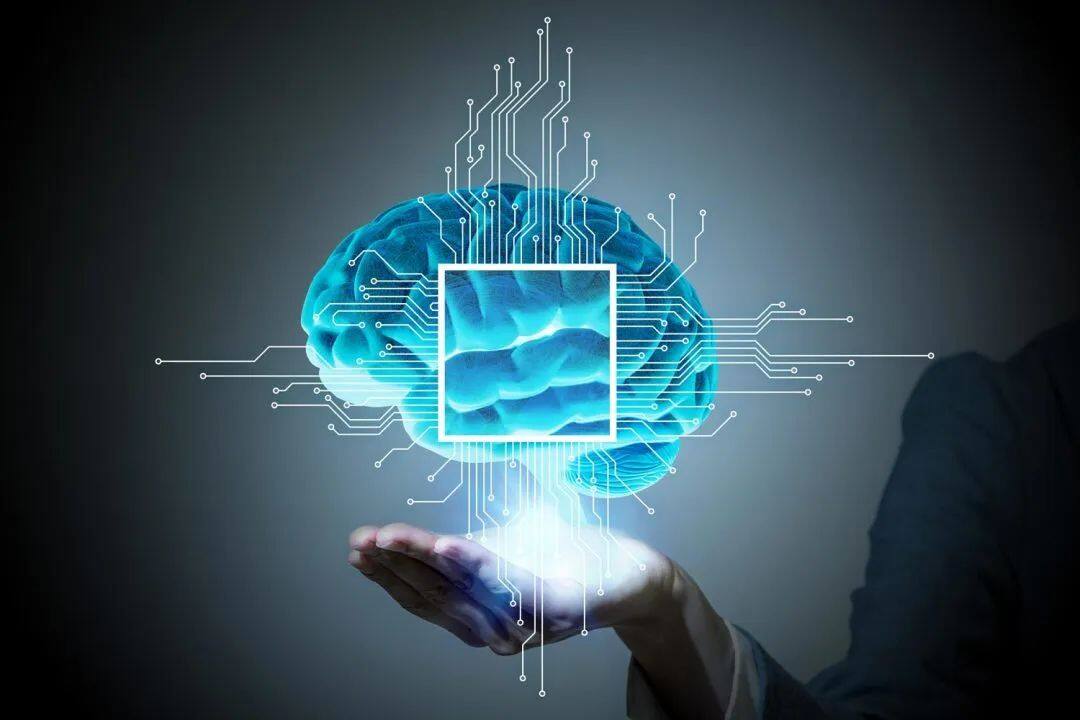
As one of the key factors influencing the development of brain-inspired intelligence,China is currently in the early stages of brain-inspired computing., nor has a clear industrial landscape taken shape; therefore, most related enterprises are still in the exploratory stage.
SynSense, established in 2017, has experienced rapid growth over the past few years. It has achieved significant breakthroughs in commercial neuromorphic chips and has become a global leading provider of neuromorphic intelligence and application solutions.
Behind its rapid growth lies a powerful R&D team. SynSense is backed by the University of Zurich and the Institute of Neuroinformatics (INI) at ETH Zurich, standing as the University of Zurich’s only overseas incubated company. Its co-founder and Chief Scientist, Giacomo Indiveri, is a tenured professor at both the University of Zurich and ETH Zurich. Ning Qiao, Founder and CEO of SynSense, joined the INI to conduct neuromorphic research immediately after completing his PhD.
It is against this backdrop that SynSense has developed rapidly. Currently, SynSense is alsoThe World's Only Neuromorphic Technology Company Integrating Sensing and Computing. Centered on edge computing applications, SynSense can develop efficient, ultra-low-power, and ultra-low-latency neuromorphic solutions for various artificial intelligence edge computing applications.
Compared with industry peers, SynSense’s solutions offer ultra-low latency in real-time processing, delivering a 10–100x improvement in real-time performance, reducing power consumption by 100–1000x, and lowering costs by up to 10x.
Since its establishment, SynSense has been favored by capital. After completing its angel round of financing at the end of 2017,Six rounds of financing have been completed to date., with both the Series A and Pre-Series B financing rounds reaching the hundred-million-yuan level. It is understood that this round of financing willPrimarily used to advance the mass production and delivery of Speck, the world’s first “sensing-computing integrated” dynamic vision intelligent SoC., and original technology research and development.
SynSense was shortlisted for MIT Technology Review’s “50 Smart Companies,” GTIC’s Top 50 Chinese AI Chip Companies, and KPMG China’s Top 50 Frontier Enterprises in “Chip Technology.” It has won multiple awards, including the Outstanding Product Award at the China Hi-Tech Fair and the Annual Benchmark Application Award at the China International Artificial Intelligence Summit.
03 Focused on Commercialization, Applicable Across Multiple Fields

Since its inception, SynSense hasFocus on the Commercialization of Neuromorphic Intelligence, its solutions can be applied across multiple fields. For instance, in robotics applications, SynSense focuses on the research and development of robot-related chips, leveraging neuromorphic intelligence to provide fully customized and comprehensive solutions.
In the field of intelligent security, SynSense’s event-driven neuromorphic processor enables event-driven, ultra-low-power, always-on, and privacy-preserving intelligent security systems through dynamic vision processing technology.
In the field of intelligent nursing, SynSense's solutions provide milliwatt-level dynamic vision interaction, enabling fall detection and real-time monitoring to empower healthcare systems with greater intelligence and safety.
Furthermore, it has applications in smart homes, intelligent toys, autonomous driving, and smart livestock farming.
It is worth mentioning that SynSense hasLaunched the world’s first “sensing-computing integrated” dynamic vision intelligent SoC, Speck, achieving a large-scale spiking convolutional neural network (sCNN) chip architecture based on the asynchronous logic paradigm,Speck integrates dynamic vision sensing and event-driven computing., capable of providing real-time, integrated, and low-power dynamic vision solutions.
In terms of performance, Speck reduces power consumption by 100–1000 times, achieves an end-to-end response time of <5 ms, and improves response recognition speed by 10–100 times. By leveraging on-device visual application processing based on spike data and supported by rich sCNN algorithms, itAutonomous Driving, Mobile Devices, Internet of Things (IoT), Smart Home Appliances, Intelligent Security Systems, Smart Livestock Farming...and other fields.
In terms of application collaboration, SynSense engages in academic and research partnerships with universities and institutions such as Tsinghua University, Peking University, Tongji University, and Sichuan University, and has established deep collaborations with BMW, Oumas, Fosun Health, and Unisplendour Intelligent Vision.
References:
1. “Neuromorphic Intelligence Becomes the Next Favorite in AI, SynSense Accelerates Commercial Deployment of Neuromorphic Chips.” Deep Tech.
2. “Developing an Intelligent Visual Sensor SoC Based on Neuromorphic Computing: SynSense Enters the Smart Home Market.” 36Kr.