Neuralink Launches First Human Clinical Trial for Brain-Computer Interface: Six-Year Study Seeks Qualified Participants Aged 22+

Neuralink
Brain-Computer Interface System Developer

Elon Musk’s Brain-Computer Interface, Neuralink, Achieves New Breakthroughs
Just today, Neuralink announced:
First batchHuman BodyClinical Trial Now Recruiting. If you have quadriplegia due to cervical spinal cord injury or amyotrophic lateral sclerosis (ALS), you may be eligible to participate.
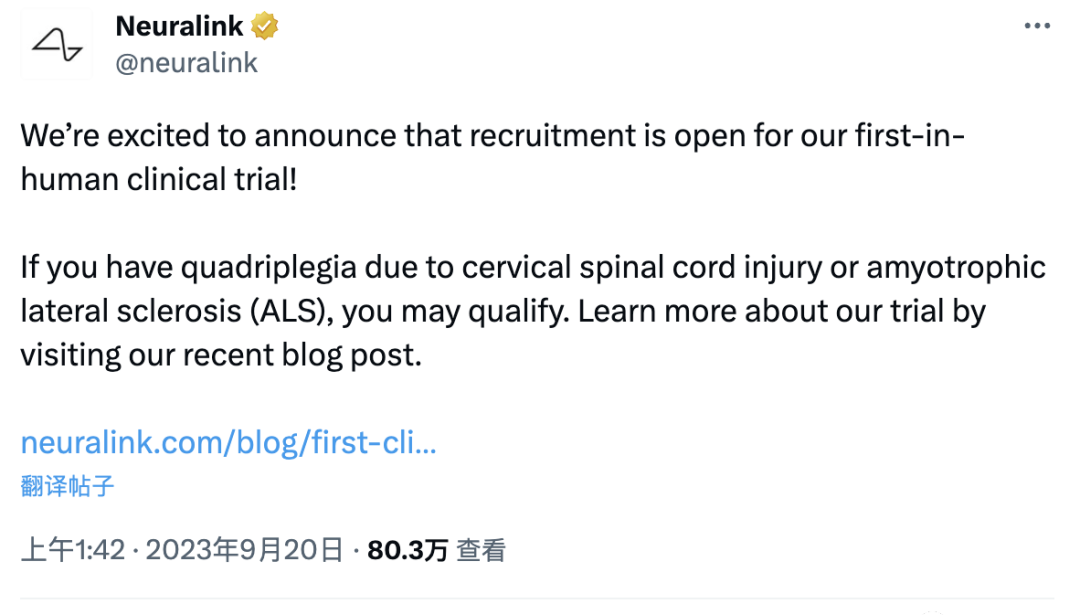
It is reported that this trial will last approximatelySix YearsTime, used to validate the company's brain-computer interface technologySafety and Functionality。
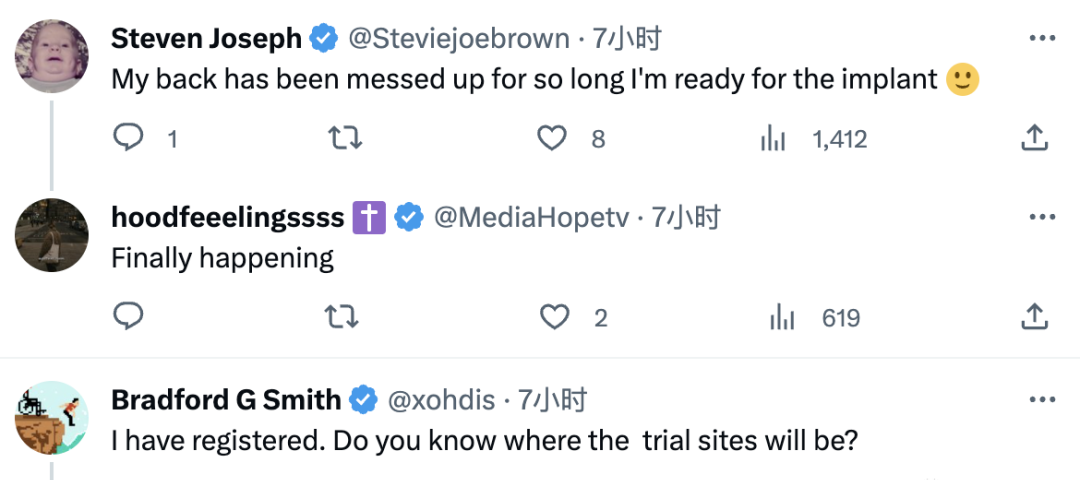
As soon as the news broke, netizens extended their warmest congratulations to Neuralink:
This is a huge step! Congratulations!

What’s more, some have already signed up~
# Neuralink Begins Recruiting for Its First Human Clinical Trials
The name of this trial isPRIME, full name “Precise Robotically Implanted Brain-Computer Interface” (robotic precise implantation of brain-computer interface).
It has obtained approval from the Independent Institutional Review Board and the first hospital site.
PRIME primarily targets Neuralink’s fully implantable wireless brain-computer interface technology.
As mentioned at the beginning,This trial will evaluate:
(1) Safety of the two devices: one is the implant, and the other is the surgical robot.
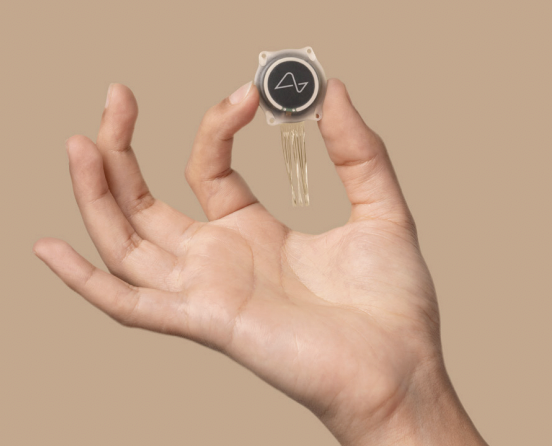
The implant features a total of 1,024 electrodes distributed across 64 threads, each thinner than a human hair.
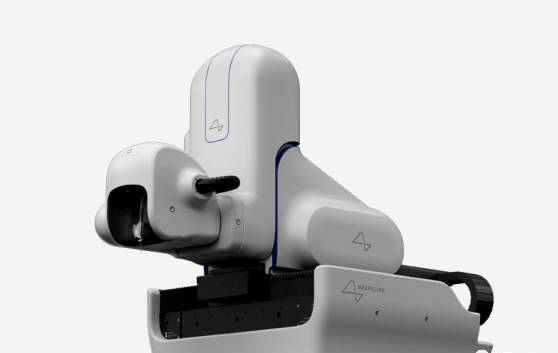
The surgical robot is meticulously designed to accurately insert the implant’s threads into the appropriate regions of the brain.
(2) Initial Functions of Neuralink’s Brain-Computer Interface Technology, enabling paralyzed individuals to control external devices with their thoughts, currently tentatively limited to the keyboard and cursor.
During the research process, the robot will implant the device into the region of the patient’s brain that controls motor intent.
After implantation, viewed from the head, it appears asInvisible. The device records brain signals and wirelessly transmits them to a program that decodes the intended signals.
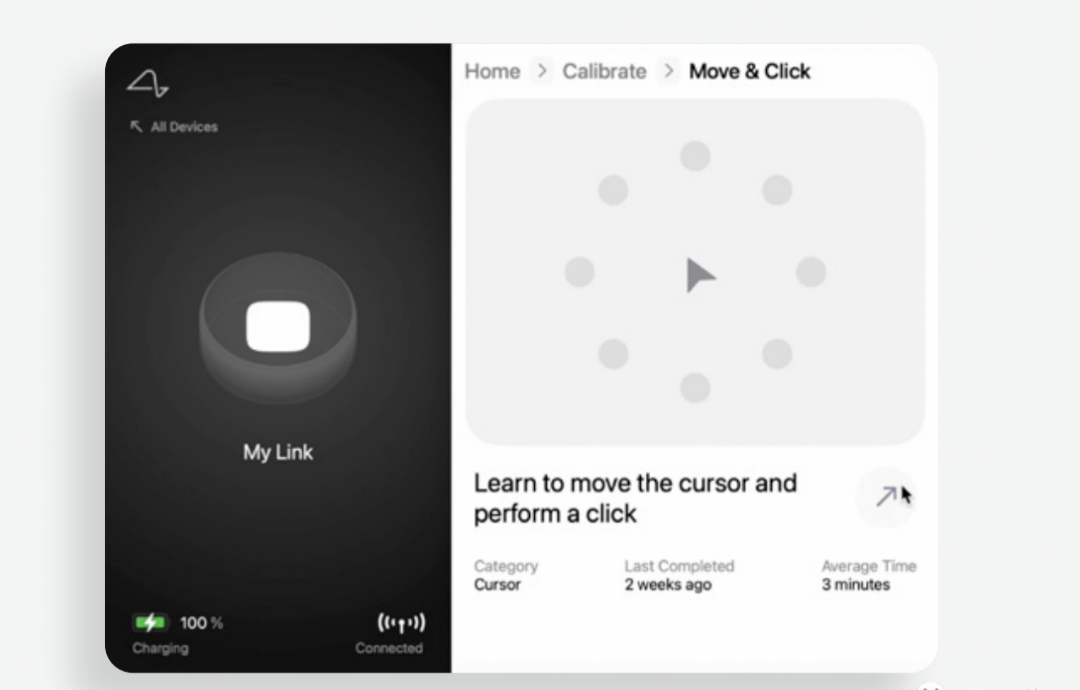
The program looks like this:
A practice interface for moving the mouse cursor is visible, displaying the time taken for each attempt.
For volunteers, Neuralink has only listed three basic requirements:
Aged 22 or older
Paralysis of all four limbs due to spinal cord injury or amyotrophic lateral sclerosis (ALS) for more than 1 year, with no improvement.
Accompanied by personal care attendants
Certainly, individuals who already have active implantable devices, a history of epilepsy, or require long-term magnetic resonance imaging (MRI) are not eligible.
The specific number of recruits was not disclosed, but according to Neuralink employees, theyThe initial expectation was 10 people, but the FDA hopes to reduce the quantity due to safety concerns.
Volunteers who ultimately qualify for the trial will undergo a six-year study:
Initially, nine consultations will be conducted, including home visits and in-person hospital appointments, over a period of one and a half years;
Twice-weekly brain-computer interface (BCI) research meetings, one hour each;
Following the initial consultation, a long-term follow-up phase commenced, spanning approximately five years with a total of 20 visits.
During this period, Neuralink will provide volunteers with certain subsidies, including round-trip travel expenses.
# Experts: Commercialization Will Take at Least Another Decade
Neuralink’s current market valuation is approximately $5 billion.
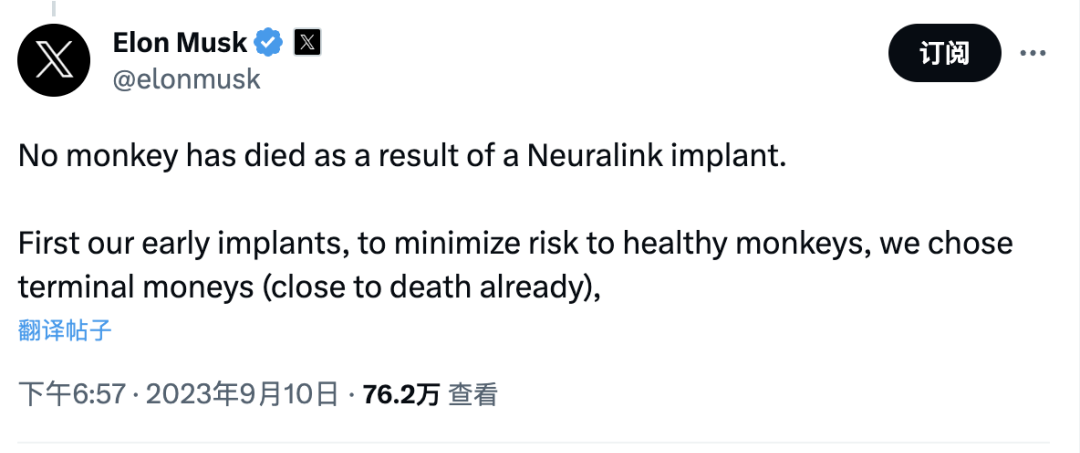
Prior to this, the company had conducted several brain-computer interface trials in animals, including monkeys and pigs.
but faced accusations of “experimental animal deaths.”
Elon Musk has denied this.
As for human trials, Neuralink was rejected by the FDA once due to “excessive safety risks” before itThis MayObtain the pass.
Whether this study can proceed smoothly and achieve success remains to be seen over time.
However, some experts have stated that even if their BCI devices are proven safe for humans, it will still take more than ten years to obtain commercial use approval for market launch.
But regardless, this news alone has already sparked great excitement among many people, particularly relevant patients.

Will Neuralink, led by Musk, change the lives of another segment of the population?

[1]https://twitter.com/neuralink/status/1704189132530974954
[2]https://neuralink.com/blog/first-clinical-trial-open-for-recruitment/
—— End ——
Source: QbitAI
For academic sharing only. If there is any infringement, please leave a message, and the infringing content will be deleted immediately!
More Reading
University of Glasgow Chinese PhD Student Proposes Computational Ghost Imaging Architecture
Expert Opinion: What Is the True Significance of Neuralink’s Recent FDA IDE Approval?
The Path of Implantable Brain-Computer Interface Technology as a Medical Device
The First Author of LMDA-Net Personally Explains Its Design Philosophy
Relationship Between Reaching Motor Imagery Training and Reaching-and-Grasping Imagery

Join Community
Welcome to the Brain-Computer Interface Community Chat Group,
Exploring Topics in the Field of Brain-Computer Interfaces: Real-Time Tracking of Frontiers in Brain-Computer Interfaces.
Join WeChat Group:
Add WeChat: RoseBrain [Note: Name + Industry/Profession].
Join QQ Group: 913607986
Call for Papers
1. Submissions are welcome. For submission inquiries, please contact us via WeChat: RoseBrain
2. To join the community as a part-time creator, please contact us on WeChat: RoseBrain