Thousands Await Surgery as Musk's Neuralink Prepares for Human Trials Next Year

Neuralink
Brain-Computer Interface System Developer

Elon Musk’s forward-thinking ideas are being realized one by one, with brain-computer interface company Neuralink set to launch human clinical trials.
Earlier this year, the U.S. Food and Drug Administration approved Neuralink to initiate human trials of its device.In September, Neuralink began recruiting participants for its first human clinical trial.According to leaks,Thousands have already expressed interest.
Previously, Neuralink had completed trials on animals such as pigs and monkeys, with a cumulative total of 155 implantation procedures performed.
The U.S. Food and Drug Administration rejected Neuralink’s request for human clinical trials in March, citing safety concerns that the wires connecting the brain chip could shift within the subject’s head or that the chip might overheat. Further damaging Neuralink’s reputation, it was later revealed that the animals used in testing had suffered from poor health outcomes.
However, regulatory authorities have clearly recognized the potential for risk reduction. This has given more people, or rather, patients, hope for participating in clinical trials.
Popular Experiments
Ashlee Vance, one of Elon Musk’s biographers, pointed out that Neuralink aims to perform surgeries on 11 patients next year and on more than 22,000 patients by 2030.
Elon Musk, the head of Neuralink Corp, stated thatWe hope to prioritize patients with quadriplegia due to spinal cord injury or amyotrophic lateral sclerosis (ALS) for the experiment.Neuralink’s device is designed to establish a symbiotic relationship between humans and machines, enabling patients with neurological impairments to send messages or play games using only their thoughts.
Nevertheless, this symbiotic implantation procedure still intimidates many. Vance stated that surgeons require several hours to perform a craniectomy, after which the robot inserts Neuralink’s device and an ultra-thin electrode array composed of approximately 64 distinct threads within 25 minutes.
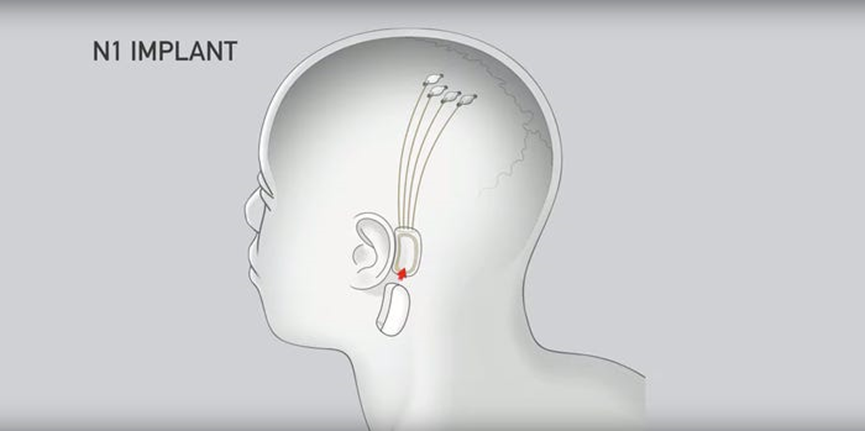
This device will replace the removed skull. Vance also added,The wires are extremely thin, approximately only one-fourteenth the width of a human hair.
Experiments involving the implantation of chips into the human brain are not new; Synchron, a competitor of Neuralink, had already completed surgical implantation of its brain device by July 2022.
This has instilled a sense of urgency in Musk, prompting Vance to warn that such frenzied urgency could lead Musk to wield the whip of overtime work as he did in managing Tesla or SpaceX.

END
Previous Issues / Review
$4.4 Billion! Urology Giant Acquires Medical Device Company Founded by Chinese Entrepreneur
Pioneering First in China! Another Innovative Device from Siemens Approved by NMPA
Leading Chinese Vascular Intervention Company Sprints Toward IPO, Raises Hundreds of Millions in Series C Funding, Previously Led by Hillhouse Capital