

Ju Zheng Medical Completes First-in-Human Clinical Implantation of Coronary Vascular Remodeling Catheter at the Second Affiliated Hospital of Zhejiang University

MARIX
Developer of Vascular Interventional Devices
In November 2023, MARIX’s coronary vascular remodeling catheter completed its first clinical enrollment.The team led by Academician Wang Jian’an at the Second Affiliated Hospital of Zhejiang University School of Medicine (hereinafter referred to as “SAHZU”) successfully applied the world’s first coronary artery remodeling catheter to treat a 60-year-old patient with coronary heart disease, effectively achieving vascular recanalization with no residual stenosis and no dissection.。
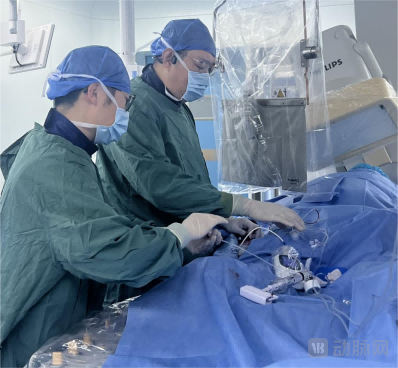
Surgical Procedure Diagram by Professor Li Changling
MARIX’s medical team pioneered the introduction of photo-crosslinking technology into the field of coronary artery treatment, developing the world’s first coronary vascular remodeling catheter to enter clinical trials. By combining this technology with traditional drug-coated balloon techniques, photosensitive materials are delivered to the diseased vessel and activated by laser light. This induces a photo-crosslinking reaction in the extracellular matrix, forming a micro-crosslinked structure that reduces elastic recoil. Furthermore, no foreign material is left behind after balloon withdrawal, truly achieving an “intervention without implantation” approach.
As a novel therapeutic device, the clinical application advantages of coronary vascular remodeling catheters lie in:
1. Reduce injury during vascular interventional procedures;
2. Inhibit elastic recoil of the vessel wall and prevent dissection formation;
3. Maintain the natural anatomical structure and physiological properties of the vascular lumen.
Coronary Vessel Remodeling Catheter Treatment for 60-Year-Old Patients with Primary Coronary Lesions Achieves No Residual Stenosis
It is reported that the patient who underwent this clinical surgery is a 60-year-old male with a history of hypertension. One month ago, he experienced chest tightness and shortness of breath after exertion, lasting for about three minutes, which was relieved by rest. He sought further diagnosis and treatment at the Second Affiliated Hospital of Zhejiang University School of Medicine. The patient was diagnosed with primary coronary artery stenosis. He has a several-year history of hypertension, diabetes, and gout.
Preoperative angiography revealed a lesion in the mid-segment of the left anterior descending artery (LAD), with a vessel diameter of 3.50 mm, a lesion length of 12 mm, a stenosis severity of 90%, and TIMI grade 3 flow. Following evaluation by Academician Wang Jian’an’s team, it was decided to treat the patient’s LAD using a coronary vascular remodeling catheter.
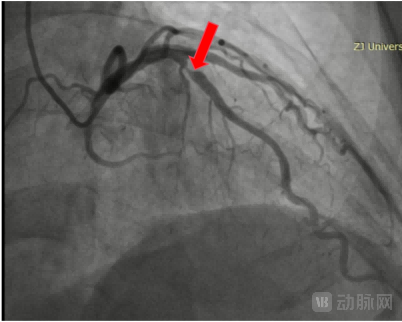
Preoperative Angiography of the Patient's LAD
During the procedure, Academician Wang Jian’an’s team first performed predilation of the diseased vessel using a 3.0×13 mm spinous process balloon. Subsequently, a 3.5×15 mm MARIX coronary artery remodeling catheter was used to dilate the vessel at 10 atm, followed by initiation of laser therapy. Postoperative angiography demonstrated favorable dilation results, with no residual stenosis or dissection and TIMI grade 3 flow, marking the successful completion of the surgery.
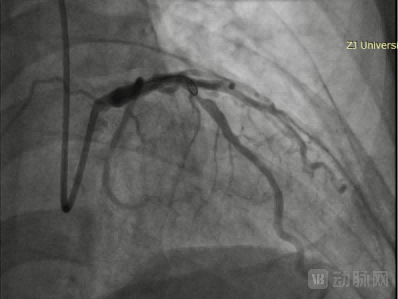
The guidewire passes through the patient's lesion site.
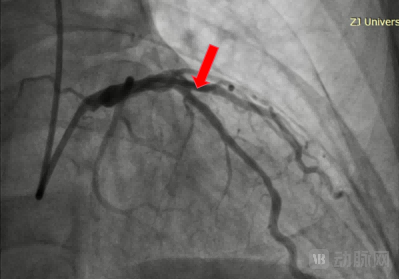
Post-LAD Angiography
Attending PhysicianProfessor Li Changling, Department of Cardiology, The Second Affiliated Hospital of Zhejiang University School of Medicine“It was noted that such vascular diseases are relatively common in clinical practice, and conventional device-based treatments often predispose patients to dissection. In contrast, this patient underwent dilation using a coronary vascular remodeling catheter without any dissection occurring. Furthermore, the overall procedural workflow remained largely unchanged, with only the addition of a laser activation step. The interventional procedure using the coronary vascular remodeling catheter is straightforward, allowing physicians to rapidly master the technique and perform surgeries more efficiently with this new technology.”
Coronary Vascular Remodeling CatheterThe coronary vascular remodeling catheter simultaneously achieves the dual effects of "balloon angioplasty" and "in-situ healing," significantly improving the efficiency of coronary artery disease treatment while effectively mitigating risks such as dissection and vessel recoil, thereby enhancing long-term prognosis. The intraoperative procedure does not require changes to the standard balloon angioplasty workflow, resulting in a short learning curve for physicians. Available in various specifications, the catheter is suitable for multiple indications, including de novo coronary lesions, in-stent restenosis, and post-balloon angioplasty restenosis, meeting diverse clinical needs.
During clinical studies, the coronary remodeling catheter demonstrated excellent performance, and its clinical value has been unanimously recognized by experts.
Academician Wang Jian'an, The Second Affiliated Hospital of Zhejiang University School of MedicineIt stated: “Guided by the philosophy of ‘intervention without implantation,’ coronary vascular remodeling catheters have pioneered a novel technical direction, with anticipation for subsequent clinical outcomes.”
Jiang Jun, Director of the Department of Cardiology at the Second Affiliated Hospital of Zhejiang University School of MedicineIntroduction: "For elderly patients with coronary heart disease (CHD) presenting with multi-vessel lesions and severe stenosis, clinicians must consider not only short-term therapeutic efficacy but also long-term prognosis. Plain drug-coated balloon angioplasty may carry risks such as dissection and restenosis, whereas coronary vascular remodeling catheters offer additional clinical options."
With the successful completion of the first clinical case, the coronary vessel remodeling catheter has officially entered clinical trials.Led by Academician Wang Jian'an as the Principal Investigator (PI), clinical studies will be conducted at more than ten hospitals across China, with clinical trials expected to be completed in 2025.。
Intervention Without Implantation: Coronary Vascular Remodeling Catheter Enables Efficient, Scar-Free Treatment
As percutaneous coronary intervention (PCI) technology in China continues to mature, with annual procedure volumes exceeding one million, there is a growing clinical demand for comprehensive treatment solutions for coronary artery disease that are both “highly effective” and “minimally invasive.” Long-term implantation of existing metallic stents may carry risks such as in-stent restenosis and thrombosis. Drug-coated balloons are associated with issues like residual stenosis post-dilation and vascular recoil. Meanwhile, bioresorbable scaffolds have limited product specifications and are more suitable for patients with relatively less complex conditions.
Driven by clinical needs, MARIX has embarked on a differentiated path by launching China’s first coronary vessel remodeling catheter, which combines the long-term support of stents with the “intervention without implantation” advantage of balloons.
Xi Tingfei, Researcher and Former Director of the Center for Biomedical Materials and Tissue Engineering at the Academy for Advanced Interdisciplinary Studies, Peking UniversityHe remarked, “The integration of drug-coated balloon technology with photo-crosslinking technology represents a major innovation in drug-coated balloon technology. Once clinically validated, this technology will usher in a new wave of research and development in the field of coronary intervention and further advance its progress.”
Building a Vascular Remodeling Catheter Series Covering Coronary, Neurovascular, and Peripheral Interventional Therapies
Currently, only one U.S. company, Alucent Biomedical, is developing vascular remodeling catheters for the treatment of peripheral artery disease. The company has previously received FDA approval to conduct two Investigational Device Exemption (IDE) studies: one for the treatment of peripheral vascular disease and another for arteriovenous fistulas (AVF) in patients with end-stage renal disease. AndMARIX is the first company in China to develop vascular remodeling catheters and the first to introduce coronary vascular remodeling catheters into clinical practice., the team possesses profound technical expertise and extensive experience in industrialization.
Building on its foundational technology platform, MARIX is developing a series of vascular remodeling catheter products that cover scenarios including coronary, neurovascular, peripheral, and natural orifice interventions, targeting the broader interventional market. CurrentlyThe company’s peripheral and neurointerventional vascular remodeling catheters have all completed type testing and will sequentially enter clinical trials.。
Innovation is the enduring core competitive factor in the medical device market. Guided by this development philosophy, MARIX has filled the domestic gap in vascular remodeling catheter products, rapidly advanced multiple product lines, and maintained its first-mover advantage. Driven by innovation, the company will realize its corporate value as a medical enterprise and provide better support to patients.

Academician Wang Jian'an
Wang Jian’an is currently a member of the 14th National Committee of the Chinese People’s Political Consultative Conference, Director of the National Key Laboratory of Transcatheter Implantable Devices, Director of the Cardiovascular Institute of Zhejiang University, Party Secretary and Director of the Heart Center at the Second Affiliated Hospital of Zhejiang University School of Medicine, Vice Dean (concurrently) of Zhejiang University School of Medicine, and Doctoral Supervisor. He was elected as an Academician of the Chinese Academy of Sciences in 2023.
MARIX
MARIX was established in August 2021, co-founded by a renowned team of scientists in the field of biomaterials in China. The company is dedicated to developing disruptive medical devices for vascular interventional therapy, providing novel treatment options for patients with cardiovascular and cerebrovascular diseases. MARIX has been recognized as a National High-Tech Enterprise, a National Technology-Based Small and Medium-sized Enterprise, and a Provincial Technology-Based and Innovative Small and Medium-sized Enterprise. It also operates a municipal-level high-tech research and development center that serves as an enabling platform.