

Musk's Neuralink Achieves First Human Brain-Computer Interface Implant; Company Valued Over $5 Billion

Neuralink
Brain-Computer Interface System Developer
Brain-Computer Interfaces See Another Major Breakthrough
On January 30, Beijing time, tech visionary Elon Musk announced on social media platforms thatNeuralink, its brain-computer interface subsidiary, has implanted a brain chip in its first human patient, who is currently recovering well.Preliminary results indicate that neuronal spike detection is promising.

A few minutes later, Musk posted an update,Neuralink’s First Product Is Named “Telepathy”Regarding the product’s prospects, he wrote, “All it takes is thought to control a mobile phone or computer, and through them, to control virtually any device. The initial users will be individuals who have lost limb function. Imagine if Stephen Hawking could communicate faster than a speedy typist or an auctioneer. That is the goal.”
Reportedly, Neuralink is a neuroscience company founded by Elon Musk in 2016 together with seven scientists and engineers. Its primary research focus is on developing an implantable brain device to enable “brain-computer interaction,” with initial efforts concentrated on two applications:First, to restore human vision; second, to help individuals with impaired muscle mobility control devices such as smartphones, and even to restore full-body function in patients with spinal cord injuries.。
To date, Neuralink has completed multiple rounds of financing,Total cumulative funding has exceeded $700 million. The most recent round of significant financing occurred in August 2023, when Neuralink announced the completion of a $280 million Series D funding round, led by Founders Fund, established by billionaire and “godfather of Silicon Valley venture capital” Peter Thiel, among others.
Although Neuralink has never publicly disclosed its valuation, according to private equity transaction information,The company’s valuation has exceeded $5 billion (approximately RMB 35.9 billion), making it the most highly valued and most closely watched brain-computer interface (BCI) company globally.。
Brain-Computer Interface Achieved, Targeting Two Major Directions: Motor Function and Vision Restoration
In May 2023, Neuralink officially received approval from the U.S. Food and Drug Administration (FDA) to conduct clinical research on its implantable brain-computer interface device in humans. In September of the same year, Neuralink began recruiting participants globally for its first human trial.
It is reported that the trial, referred to by Neuralink as the “PRIME Study,” stands for"Precise Robotic Implantable Brain-Computer Interface", primarily targeting patients with quadriplegia caused by cervical spinal cord injury or amyotrophic lateral sclerosis (ALS). Neuralink stated that this study aims to test the safety and efficacy of its wireless, fully implantable brain-computer interface, enabling paralyzed patients to control external devices using their brains.
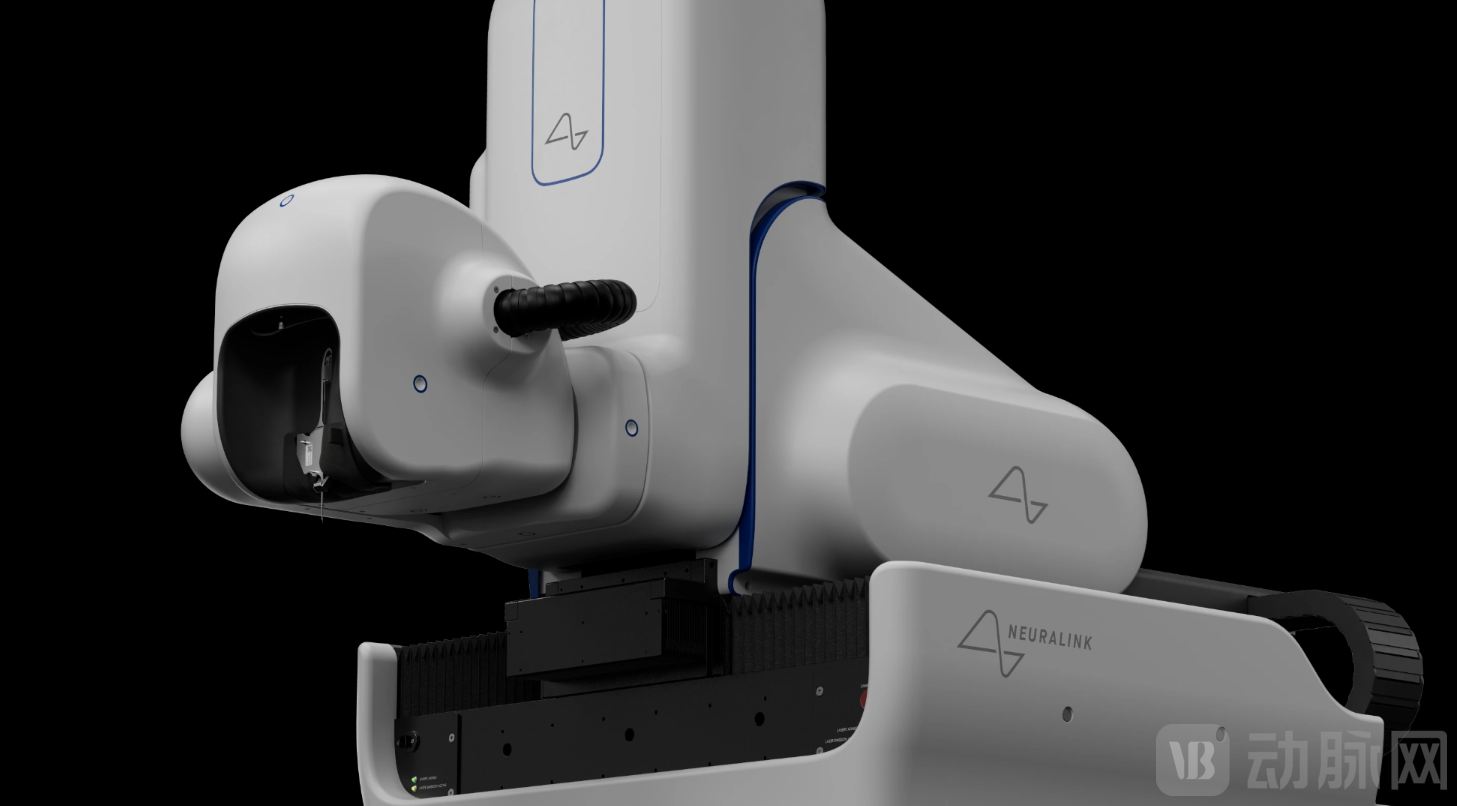 Robot “N1,” image source: Neuralink official website
According to official data, the research project focuses on three parts, namelyN1 Implant、R1 RobotandN1 User ApplicationBased on Neuralink’s brain-computer interface operational workflow, the surgical implantation of the “N1” device into the brain region will be performed by the “R1” robotic system. The “N1” implant is coin-sized; its internal miniature battery can be wirelessly charged externally via a pocket-sized inductive charger, and it records neural activity through 1,024 electrodes distributed across 64 flexible threads.
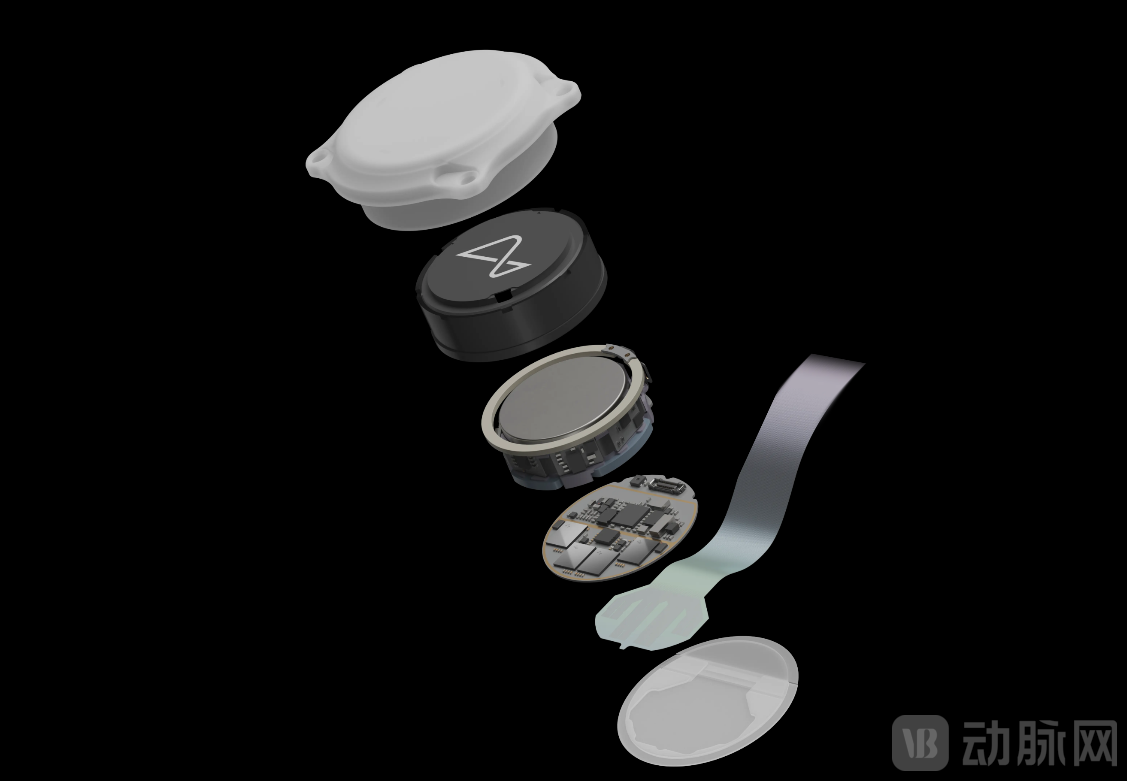 Implant “N1,” image source: Neuralink official website
Upon completion of the implantation, the chip within the “N1” wirelessly transmits brain signals to Neuralink’s application for decoding motor intent. After decoding the brain signals, the application controls external devices via a Bluetooth connection. In this way, patients can use the “N1” to achieve “mind-controlled manipulation of objects,” thereby enabling them to perform desired actions.
According to the trial protocol,Volunteers will consent to having surgeons remove a portion of their skull, allowing a large robot to insert a series of electrodes and ultra-fine wires into their brains, thereby translating human thought signals into a sequence of commands comprehensible to computers.。
Although it sounds incredibly crazy, since Neuralink announced the trial plan,Currently, thousands of people have applied to receive transplants, and ultimately 11 individuals were selected to undergo the first round of human trials.. However, this is just the beginning; according to its plan,By 2030, this figure is set to increase 2,000-fold, with Neuralink implanting brain-computer interfaces in over 22,000 individuals.。
This harbors immense commercial potential. According to Neuralink’s estimates, the cost of each implantation procedure is approximately $10,500, covering examinations, components, and labor, while the company charges insurers around $40,000.Neuralink’s Annual Revenue Expected to Reach $100 Million Within Five Years。
According to Musk, this human trial primarily seeks participants aged 22 and older who have quadriplegia resulting from spinal cord injury or amyotrophic lateral sclerosis (ALS), with no improvement observed for at least one year post-injury. The initial objective is to enable paralyzed individuals to control a computer cursor or keyboard using only their thoughts.
But in addition to helping patients regain mobility,Elon Musk Recently Revealed That Neuralink Is Developing a Visual Chip, Which Will Be Ready Within a Few Years. It is precisely for this reason that, in addition to quadriplegia, paraplegia, and major amputations, the conditions Neuralink plans to target in future patient recruitment will also include hearing loss and cataracts.
Behind the Controversy Lies Dual Pressure from Technology and the Market
Despite Elon Musk’s backing, Neuralink’s path forward has not been smooth.
In 2019, Musk unveiled his first product, which operates by using lasers to drill holes in the skull and then implanting a thread into the brain while avoiding cerebral blood vessels. Since then, Neuralink has sequentially implanted brain-computer interface chips into the brains of mice, pigs, and monkeys, generating significant industry buzz on multiple occasions.
In 2020, Musk announced that the company had implanted chips into pig brains, enabling the reading of electroencephalogram (EEG) signals; in 2021, Musk showcased a monkey with an implanted brain-computer interface (BCI), which was able to play a simple "Breakout" game using EEG signals; in 2022, the experiments were further escalated, as a monkey with an implanted BCI sat in front of a computer screen and issued commands by "typing" on a virtual keyboard.
It was precisely after this groundbreaking experiment that Musk promptly unveiled an even more ambitious plan—Conducting Brain-Computer Interface Experiments on Humans in the Next Six Months, and subsequently presented a demonstration video of human brain-computer interface implants.
Reportedly, the video features a mannequin named “Alpha” lying on a hospital bed, undergoing an implantation procedure performed by a robot designated R1. Electrodes are implanted into labeled regions of its brain to detect electroencephalographic (EEG) signals. As the procedure begins, the long needle manipulated by R1 is seen accurately penetrating the predetermined locations on Alpha’s pink-colored brain, stitch by stitch, akin to a sewing machine needle, and connecting the electrode probes. Once the electrodes are in place, they are linked to the newly developed N1 wireless transmission chip, enabling connectivity with external devices such as smartphones and computers.
However, this was soon followed by related criticisms. It is reported that on the day after the official announcement of the first-in-human trial, the Physicians Committee for Responsible Medicine in the United States alleged that Neuralink and the University of California, Davis, had abused and killed monkeys during animal testing, with 15 out of 23 rhesus macaques dying in the experiments. In fact,The FDA also raised concerns about the safety of this experiment, and as a result, Neuralink’s applications to conduct human trials have been rejected by the FDA twice from 2019 to present.。
Furthermore, over the past two years, Neuralink has also faced increasing scrutiny, as critics argue thatIts developed brain implant device misled investors on safety issuesIn November 2023, four U.S. lawmakers jointly wrote to the SEC, requesting that the agency review Neuralink, Elon Musk’s brain-computer interface company. The letter stated that records of Neuralink’s experiments on monkeys showed that the implanted brain devices had adverse effects on the animals’ health, including paralysis, seizures, and brain swelling.
In response, Musk also acknowledged that during the testing of brain-computer interfaces, some monkeys faced life-threatening conditions, and Neuralink, out of humanitarian considerations, euthanized them.
However, this does not necessarily constitute a clear violation by Neuralink. Industry experts note that Elon Musk has been deeply involved in the development progress of Neuralink’s brain-computer interface, repeatedly urging employees to accelerate their work and warning that relevant research could be shut down at any time if expectations were not met. Under pressure from Musk, many animal studies had to be expedited, with new rounds of testing commencing even before prior results had been fully analyzed. The frequent testing, coupled with inadequate preparatory measures, introduced significant risks to the experiments.
Looking outward through Neuralink’s “encounters,” it appears to share striking similarities with the current predicament facing the entire brain-computer interface (BCI) industry:On one hand, there is intense heat and attention focused on the capital markets; on the other, numerous uncertainties arise from safety concerns and frontier innovation.。
Let’s start with the exceptionally high level of interest. According to incomplete statistics from the Artery Orange database,In 2023, there were a total of 48 financing events in the field of brain-computer interfaces in China., with as many as 100 investment institutions participating, including top-tier firms such as CDH Investments, Fortune Capital, Lilly Asia Ventures, Qiming Venture Partners, Danlu Capital, and Nuoyu Capital. Looking further back, prominent investors like Sequoia Capital, Matrix Partners China, Hillhouse Capital, and Legend Capital have also successively bet on this sector.
The reason for its immense popularity was explained by an investor: “Brain-computer interface technology is quite cutting-edge, and it also holds significant market potential and room for imagination.”Its target diseases include amyotrophic lateral sclerosis (ALS), Alzheimer’s disease, and depression, for which there are currently no effective treatments; therefore, it is highly likely to represent the last blue ocean in the entire healthcare market.。”
Of course, there are still many who choose to remain “silent” on brain-computer interfaces at this stage, primarily due to safety concerns arising from the immaturity of the technology.
Among these,A typical example is the issue of maturity in implantable materials and implantation techniques.. As is well known, the brain is highly complex and fragile; invasive data acquisition devices are akin to inserting a needle into a balloon, necessitating the identification of appropriate and safe methods for implementation. Previously, a major concern raised by the FDA regarding Neuralink was that the fine wires carrying electrodes might migrate to other regions of the brain. Such migration could trigger inflammation, impair the function of critical brain areas, cause vascular rupture, and compromise the device’s efficacy, thereby increasing the risk of requiring surgical removal.
Additionally,The human body may also exhibit allergic or rejection reactions to implanted materials.. As it stands, there is still no one-size-fits-all solution for electrode implantation, which remains one of the key challenges that brain-computer interface companies such as Neuralink need to address.
Another significant technical challenge arises from the information dimension.. The human brain contains at least 86 billion neurons, with each neuron forming thousands of connections, creating a vast network whose mechanisms remain poorly understood given the current limits of human knowledge. For instance, Neuralink’s product entering clinical trials, the N1 implant (a brain-computer interface chip), features 64 threads with 1,024 electrodes distributed across them, enabling direct connection to neurons to record neural activity. Even so, this represents only one hundred-millionth of the total number of neurons in the human brain.
Of course,Brain-Computer Interfaces Still Face Significant Ethical Challenges at PresentUnlike other medical devices that can be removed at any time when no longer needed, implantable brain-computer interfaces (BCIs) continuously collect and decode vast amounts of human brain signals. Should data privacy and security issues arise, intruders could potentially eavesdrop on the “whispers within the human brain,” and might even use algorithms to exert relatively precise control over an individual’s emotions. However, from the perspective of professionals, this remains a long-term risk; current technological exploration has by no means crossed ethical boundaries.
Even so, amid a series of major breakthroughs, the brain-computer interface (BCI) industry and Neuralink continue to draw high expectations from the market. In particular, Elon Musk, one of the most influential and innovative entrepreneurs of our time, has fueled boundless imagination for this frontier field through Neuralink’s recent moves and breakthroughs in the BCI sector.
The Industry Enters a Pivotal Year: Who Is Poised to Stand Out?
Li Chengyu, Director of the Major Tasks and Technology Transfer Office at the Institute of Neuroscience, Chinese Academy of Sciences, once remarked that when we began conducting genuine brain-computer interface experiments a decade ago, there were only two or three dozen companies,But now there are already over a hundred companies. This means that,"As the industry progresses, market competition will become increasingly fierce."。
On the other side of competition, the industry is also entering a new phase. In this regard, an investor remarked, “2024 Will Be a Pivotal Year for Brain-Computer Interfaces, as Related Companies Officially Begin to "Deliver Results"。”
How should this be understood?
On one hand, there are significant breakthroughs in core technologies related to brain-computer interfaces.For instance, in recent years, the maturation of flexible electrode technology has enabled more accurate acquisition of electroencephalographic (EEG) activity with enhanced spatial resolution. Additionally, as artificial intelligence capabilities expand and algorithmic power strengthens, its application value in the field of brain-computer interfaces is rapidly increasing.
On the other hand, brain-computer interfaces have already been successfully implemented in numerous clinical scenarios.. It is reported that brain-computer interfaces (BCIs) have already demonstrated the potential for real-world clinical application across a broad spectrum of conditions, ranging from motor disorders such as amyotrophic lateral sclerosis (ALS) and spinal cord injury, to neuromodulation indications including epilepsy and pain management, and further to psychiatric disorders such as depression and obsessive-compulsive disorder (OCD).
Moreover, Neuralink’s successful implantation of a brain chip in its first human patient has greatly boosted confidence across the industry. However, questions have inevitably arisen, namelyWhat Does a Brain-Computer Interface Company Poised for Future Success Actually Look Like?
Drawing on Neuralink’s development trajectory and insights from researchers, entrepreneurs, investors, and other professionals, VCBeat highlights two key points:First, select the optimal “primary indication” and establish a clear technological roadmap, while also clearly defining the company’s future position within the entire industry chain.In this regard, an investor remarked, “Brain-computer interface technology heavily tests a team’s systemic understanding; the initial choices directly determine many of the subsequent technical pathways.”
Second, while pursuing long-term value, it is also essential to capture short-term gains and identify greater certainty within the industry.This is because not all brain-computer interface (BCI) companies can enjoy the same enduring spotlight as Neuralink. Without stable cash flow generation capabilities, coupled with the current market downturn, it is difficult for them to survive. In light of this, some investors suggest that companies should develop products capable of generating continuous cash flow over the next two to three years. However, these products must be synergistic with their core business and not overly disjointed.
DJ Seo, Co-founder and Vice President of Engineering at Neuralink, stated that the company’s short-term goal is to establish a universal brain-computer interface and restore autonomy to patients with neurological disorders who cannot be effectively treated by hospitals. Its long-term goal is to make the technology accessible to billions of people, unlocking human potential and transcending our biological limitations.
Although the goals Neuralink aims to achieve are extremely challenging, success in this endeavor will undoubtedly significantly improve the lives of many people.