

Following Musk's Announcement, Tsinghua University Completes First-in-Human Clinical Trial of Minimally Invasive Wireless Brain-Computer Interface NEO

Neuralink
Brain-Computer Interface System Developer
On January 29, 2024, Musk announced on social media that Neuralink had completed the first human implantation of a brain-computer interface device. On the same day, new progress in brain-computer interface research was also announced in China.
Tsinghua News Network released a report on January 30 stating that on January 29, Professor Hong Bo’s team from the School of Medicine at Tsinghua University and Professor Zhao Guoguang’s team from Xuanwu Hospital of Capital Medical University held a summary meeting on the progress of the clinical trial phase of the wireless minimally invasive brain-computer interface NEO (Neural Electronic Opportunity).Breakthrough Progress Announced in Brain-Computer Interface Rehabilitation for First Patient
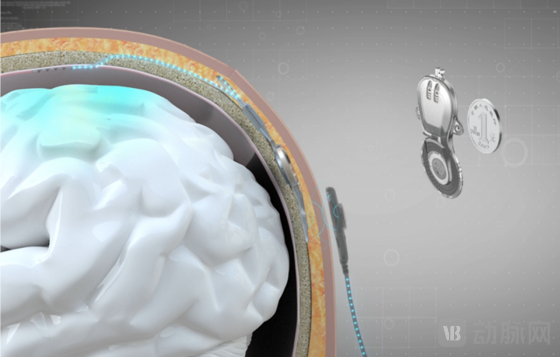 The Wireless Minimally Invasive Implanted Brain-Computer Interface NEO System and Its Implantable Unit (Image Source: Tsinghua News Network)
1. NEO, a Wireless Minimally Invasive Implanted Brain-Computer Interface, Achieves Over 90% Accuracy in Grasp Decoding
It is reported that the wireless minimally invasive implantable brain-computer interface NEO adopts a wireless minimally invasive design, with the internal device implanted within the skull and electrodes covering the epidural space (the dura mater, located between the skull and the cerebral cortex, serves to protect neural tissue).Does Not Damage Brain Cells。
On October 24, 2023,The wireless minimally invasive brain-computer interface NEO successfully underwent its first clinical implantation trial at Xuanwu Hospital.The first patient was a case of complete cervical spinal cord injury (ASIA Grade A) caused by a car accident, who had been in a state of quadriplegia for 14 years.
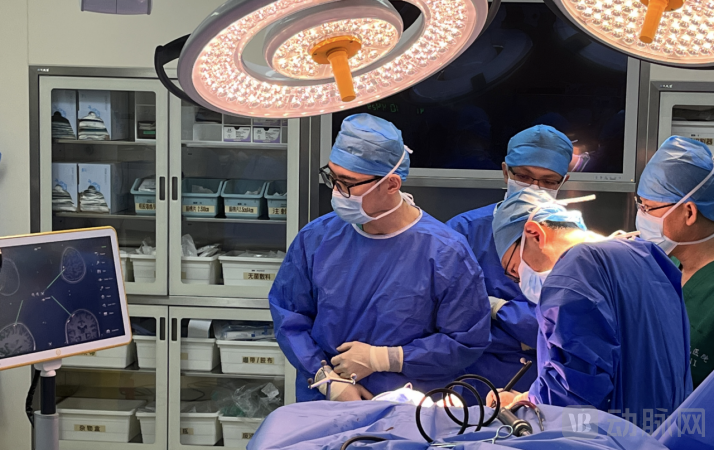 Xuanwu Hospital President Zhao Guoguang’s Team Performs First Implantation Surgery (Image source: Tsinghua News Network)
Ten days after surgery, the patient was discharged home. For home use, the external unit powers the implanted unit transcutaneously through the scalp and receives neural signals from the brain, transmitting them to a computer or smartphone to enable brain-computer interface (BCI) communication via decoding algorithms. The system employs near-field wireless power transfer and communication technologies; the implanted unit, embedded in the skull, requires no battery, allowing for lifelong use by the patient.
After three months of home-based brain-computer interface (BCI) rehabilitation training, the patient can drive a pneumatic glove through electroencephalographic (EEG) activity, achieving brain-controlled functions such as independent drinking.Grasp Decoding Accuracy Exceeds 90%;Significant improvements were observed in both the ASIA clinical scores and sensory evoked potential responses in patients with spinal cord injury.。
It is understood that,The Second Spinal Cord Injury Patient Implantation Was Successfully Performed at Tiantan Hospital on December 19, 2023, the surgical procedure was performed by Professor Jia Wang’s team; signal reception is normal, and the patient is undergoing home-based rehabilitation training.
The clinical trial of this wireless minimally invasive brain-computer interface was approved by the ethics committees of Xuanwu Hospital and Tiantan Hospital in April and May 2023, respectively, and was registered for clinical trials of implanted medical devices both internationally and domestically (NCT05920174, Shanghai Medical Device Clinical Trial Filing No. 20230175).
II. Each Has Its Own Merits Compared to Neuralink’s Brain-Computer Interface
According to Tsinghua News Network,The wireless, minimally invasive implanted brain-computer interface NEO differs from the Neuralink brain-computer interface led by Elon Musk.NEO places electrodes epidurally, developed through long-term animal trials without damaging neural tissue; it employs near-field wireless power and signal transmission, eliminating the need for an internal battery.
According to official documentation, the Neuralink brain-computer interface surgery requires the robot “R1” to implant the “N1” device into the brain. The “N1” implant is only the size of a coin, with an internal small battery that can be wirelessly charged externally via a pocket-sized inductive charger, and it records neural activity through 1,024 electrodes on 64 thin threads. After implantation, the chip inside the “N1” wirelessly transmits brain signals to Neuralink’s app for decoding motor intent; once the app decodes the brain signals, it controls external devices via a Bluetooth connection.
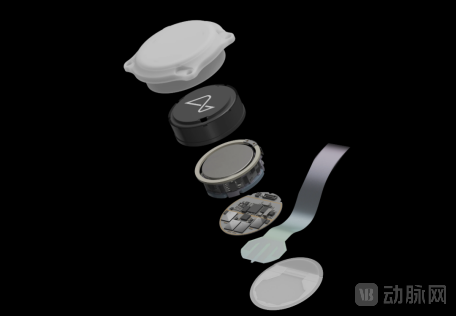
Implant “N1,” image source: Neuralink official website
Neuralink’s first patient underwent clinical implantation of the brain-computer interface on January 28, 2024. The patient is recovering, and preliminary results indicate normal neural firing signals.
3. China’s Brain-Computer Interface Market Expected to Exceed RMB 120 Billion by 2040
According to the "Implementation Plan for the New Industry Standardization Leading Project (2023–2035)" released by the Ministry of Industry and Information Technology,Brain-Computer Interfaces Have Been Listed as One of the Representative Future Industries, is a key focus of standardization efforts. Many research institutes and universities have also launched studies on brain-computer interfaces,According to incomplete statistics, there are more than 30 experimental groups conducting brain-computer interface research in China.
Center for Excellence in Brain Science and Intelligence Technology, Chinese Academy of SciencesThere are two major experimental groups at the Center for Excellence in Brain Science and Intelligence Technology, Chinese Academy of Sciences, engaged in brain-computer interface (BCI) research. Dr. Cui He primarily conducts research on the neural mechanisms of sensorimotor control and next-generation BCI systems. His laboratory has long been dedicated to elucidating the neural mechanisms underlying predictive and sequential movements. Building on this foundation, the lab develops next-generation BCI systems that align with the principles of motor neural control, for application in neuroprosthetics and rehabilitation.
Dr. Zhao Zhengtuo leverages his interdisciplinary background in biomedical engineering, microelectronics, mechanical engineering, and neural engineering to systematically develop large-scale flexible electronic neural interfaces that are biocompatible and capable of long-term stable operation.
On the enterprise side, brain-computer interfaces (BCIs) involve a relatively long industrial chain. The upstream sector includes companies specializing in EEG acquisition devices, chips, external housings, and related algorithms. The midstream sector comprises platforms such as EEG acquisition platforms and BCI interface devices. The downstream sector is primarily focused on BCI applications, including but not limited to healthcare, entertainment, and education.
Most brain-computer interface (BCI) enterprise teams have a scientific research background. For example, those established based on the Neural Engineering Laboratory of Tsinghua UniversityNeuracle Technology. According to public information, the company has accumulated years of technical expertise in the brain-computer interface (BCI) field and is China’s earliest BCI company. Its independently developed NEUSENW series amplifiers feature a wireless, portable design with excellent electromagnetic compatibility and motion artifact resistance, along with proprietary wireless synchronization technology that enables the construction of various portable BCI systems.
In addition, Dr. Zhao Zhengtuo has also establishedShanghai Jieti Medical Technology Co., Ltd., the company has currently launched a range of EEG signal acquisition devices suitable for research and clinical applications, including ultra-flexible micro-nano electrodes, the AUFEIS portable implantable system, and an integrated wireless signal acquisition system.
According to the China Electronics Standardization Institute, the global brain-computer interface (BCI) market size is projected to reach $3.7 billion by 2027. In terms of the domestic market, according to a special report by QbitAI, by 2040,The comprehensive market size of China's brain-computer interface industry is expected to exceed 120 billion yuan.The direct market size (primarily for equipment) may exceed RMB 50 billion.Among these, the research-grade market is expected to grow approximately 10-fold, while the consumer-grade market will see growth exceeding 50-fold.