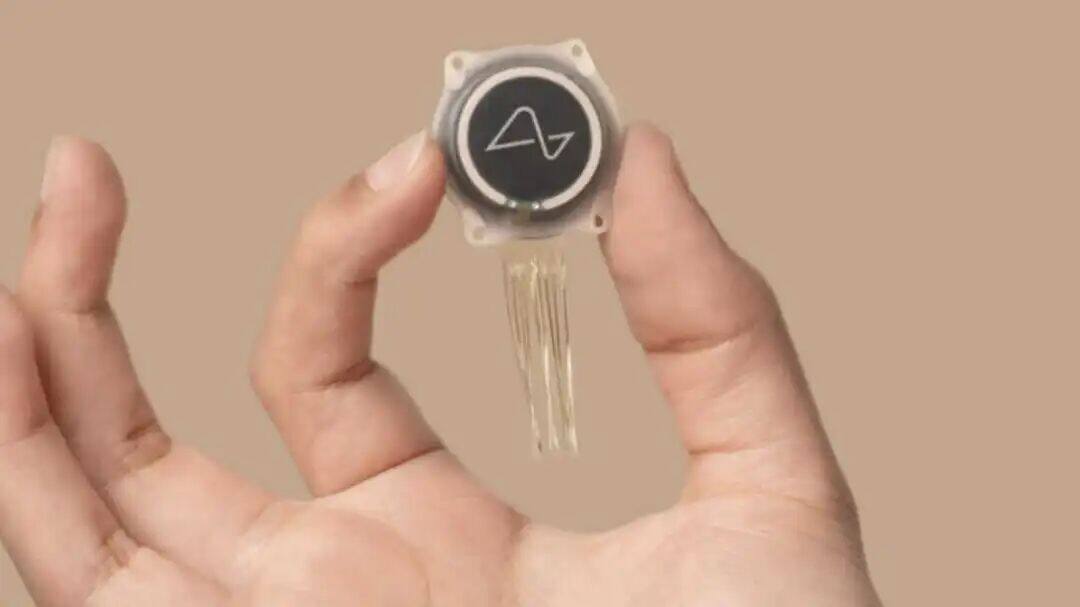
Editor’s Note: This is an article from “Medical World” focusing on cutting-edge medical advancements, detailing the story of the first brain-computer interface surgery conducted under Elon Musk’s Neuralink. Click on the “Frontiers in Medicine” column collection at the end of the article to explore more past content.On January 30 local time, the world's richest man, Elon Musk(Elon Musk)Publicly announced that its brain-computer interface company, Neuralink, has completed the first human implantation of a brain-computer interface chip.Regarding the implantation outcomes, Musk revealed only two points. First, the recipient is recovering well. Second, preliminary results indicate that their neuronal action potential spikes(neuron spike)Detection is promising. This is an electrical signal emitted by neurons. Kip Ludwig, Co-Director of the Neuroengineering Institute at the University of Wisconsin–Madison in the United States(Kip Ludwig)It is believed that this means Neuralink can collect neural signals from the brains of implant recipients.Prior to the inaugural human implantation, Elon Musk repeatedly predicted that “revolutionary brain-computer interface (BCI) human trials would commence shortly.” In his grand vision, once chips capable of capturing neural signals are implanted in the brain, they could cure intractable conditions such as paralysis and blindness. In the future, individuals would be able to visit nearby facilities where surgical robots would rapidly implant chips into their brains, enabling them to control electronic devices and access memories via “thought,” thereby tackling obesity, autism, schizophrenia, and other disorders. In late 2022, Musk publicly stated that he was willing to have the chip implanted in his own children’s brains.In the view of Li Xiaojian, a senior engineer at the Shenzhen Institute of Advanced Technology, Chinese Academy of Sciences, Neuralink’s completion of the first human implantation of a fully implantable brain-computer interface microsystem is significant, distinguishing it from previous animal implantation experiments. However, whether the surgery is ultimately successful depends on the quality of neural signals collected in the subsequent period and whether signals supporting effective decoding can be continuously acquired for more than one year; thus, it is still too early to evaluate.“We have not yet reached the stage of functional validation. The evaluation of brain-computer interfaces focuses on post-implantation functional outcomes; the criteria for success are whether the device can be used safely, stably, and effectively over the long term, and whether it achieves the specific brain-controlled functions and performance claims made by the developers,” Li Xiaojian told “Medical Circle.”The brain-computer interface chip developed by Neuralink, a brain-computer interface company.
Image source/Neuralink
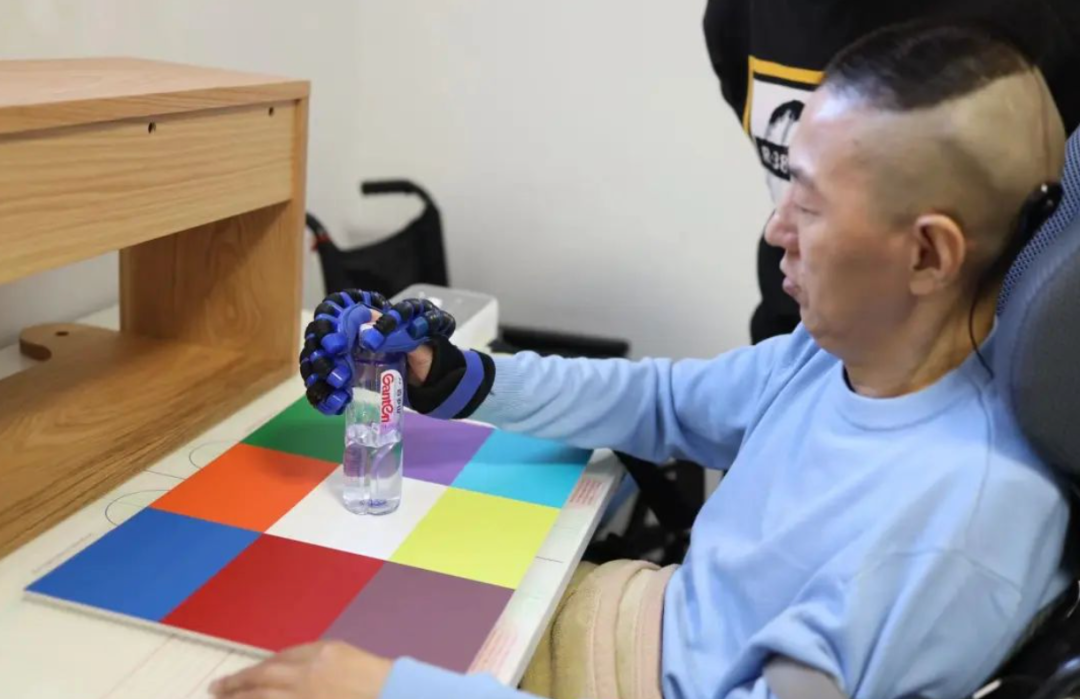
Robots Implant Chips in HumansElon Musk and Neuralink have not yet disclosed detailed information about the implant recipients. According to previous information on Neuralink’s official website, the company has been recruiting individuals with cervical spinal cord injuries or amyotrophic lateral sclerosis (ALS).(ALS)resulting in quadriplegia, with no improvement observed for at least one year post-injury, in patients aged 22 years or older.According to the clinical trial application submitted by Neuralink to the U.S. FDA, the brain-implanted chip is approximately the diameter of a one-yuan coin, with a thickness comparable to three or four such coins stacked together. It contains a battery, processing chips, Bluetooth radio, and approximately 1,000 electrode contacts—referred to as high-throughput bundles. Thanks to Bluetooth connectivity, patients will not experience situations such as having cables protruding from the back of the head after surgery.Neuralink has developed a proprietary surgical robot to perform implantation procedures, replacing human surgeons. The surgery involves placing the chip near the cerebral cortex within the cranium, with electrode contacts positioned in the sensorimotor brain regions. Each electrode is responsible for recording the activity of 0 to 4 neurons. This means that the Neuralink chip can simultaneously monitor the activity of up to 4,000 neurons. Analysts point out that this represents the highest number of neurons observable by any brain-computer interface to date.The chip will record these brain signals and transmit them to an application that decodes motor intent. According to Musk, the application will translate these signals to move a cursor, generate text, and even control devices or help paralyzed individuals walk again—in short, human thoughts can control mobile phones, computers, and any electronic device via the chip.According to Neuralink's timeline, the company will complete an additional 11 chip implantations in 2024.Premature CommercializationElon Musk gave the brain-computer interface chip a poetic name: “Telepathy”(Telepathy)“Individuals with physical disabilities will be the first users of this product,” Musk said. “Imagine if Stephen Hawking’s communication efficiency could surpass that of a typist.”However, analysts generally agree that while the outlook may be promising, it will take time for implementation to materialize.Laura Cabrera, a brain science researcher at Pennsylvania State University in the United States(Laura Cabrera)It stated that even though Neuralink employs innovative procedures such as surgical robots and implanted chips, the outcomes remain uncertain. Taking surgery as an example, risks include cerebral hemorrhage, seizures, and infection, necessitating an assessment of human safety.Earlier, Neuralink faced significant controversy over allegations of animal cruelty in its experiments. Reports indicated that during 2022–2023, alarming issues arose among the research animals, including macaques, with multiple monkeys dying from complications related to chip implantation. Due to safety concerns, Neuralink’s applications for human clinical trials were repeatedly rejected, resulting in a regulatory review process that spanned six years.More importantly, “there are no details.” Citing scholars’ analysis, Scientific American noted that, for example, Musk spoke of “promising detection of neuronal action potentials” but did not release any data.“Today you can see neuronal spike signals; tomorrow, the device may cease to function. As scientists, we must have concrete data or published papers before discussing progress and implications.” — John Philip Donoghue, Professor of Neuroscience at Brown University(John Philip Donoghue)Expressing both surprise and concern regarding the high-throughput electrode arrays and the signals they collect: “Neuralink may be able to acquire a sufficient number of neuronal signals. However, all signals are mixed together, making it impossible to isolate and process each individual neuron.”This may imply that even with a sufficient quantity and high quality of neural signals, current algorithms and state-of-the-art computing chips are unable to process the interactions of millions of neurons in real time, necessitating new breakthroughs in computational theory and integrated circuit technology.John Philip Donoghue stated that back in 1999, when he and his graduate student were looking to the future, they discussed the goal of “restoring sight to the blind, movement to the disabled, and hearing to the deaf.” “We are not lacking in knowledge; scientists have already elucidated the mechanisms of the motor cortex. Musk is standing on the shoulders of giants. What he has truly done is invest money—substantial amounts of it.”It is precisely this “financial power” that has allowed Neuralink to surge ahead. “The individual technologies used by Neuralink have long existed; its greatest value lies in their systematic integration, representing a form of integrative innovation,” Professor Duan Feng from the College of Artificial Intelligence at Nankai University analyzed in an interview with “Medical World.” “Domestic research teams and other international companies are not necessarily weaker than Neuralink in terms of individual technologies, but they lack the resources and conditions necessary for such comprehensive integration.”Li Xiaojian told “The Medical World” that Neuralink possesses unparalleled resource advantages. It has established its own complete technological and industrial supply chain, boasting a team of top-tier global talent across multiple disciplines, including neurosurgery, microelectronics, mechanical engineering, computer science, and materials engineering. More importantly, its risk resilience is strengthened by a substantial capital chain, enabling Neuralink to absorb the costs of trial and error to the greatest extent possible.In terms of technological exploration, Neuralink adopts a more cutting-edge and aggressive strategy. While its peers are still grappling with tens or hundreds of channels, Neuralink has already deployed electrodes with thousands of channels. Theoretically, this enables the acquisition of more signals and higher-quality brain data, but it also presents challenges such as the complexity of implanting electrode arrays and heat generation caused by the high power consumption of microelectronic chips.High-throughput electrodes and electronic chips increase the difficulty of research and development. Another issue lies in grasping application scenarios, including whether the brain-computer interface field truly requires such “cutting-edge” hardware under the constraints of existing clinical needs, foundational disciplinary research, and supporting infrastructure across the upstream and downstream supply chains. Developers must bear the cycle time and financial costs associated with systemic innovation, while patients must assume the corresponding safety risks.In this regard, other companies lacking the financial resources of Neuralink have adopted a more pragmatic approach. Like Neuralink, Synchron aims to help individuals with severe paralysis control digital devices. However, it employs an “endovascular” brain-computer interface, in which the chip is implanted within the cerebral blood vessels rather than in the cortical tissue. This approach sacrifices the richness of signal acquisition but offers greater safety and maturity, with relatively easier decoding. According to the latest clinical trial progress released by Synchron, four paralyzed patients have successfully controlled external devices, enabling them to perform daily activities such as sending text messages and emails, managing personal finances, and shopping online.Amsterdam-based Onward, in collaboration with the École Polytechnique Fédérale de Lausanne (EPFL) and the Lausanne University Hospital (CHUV), is developing a “brain-spine interface” that uses implants to connect the brain with spinal cord regions involved in walking. Its latest breakthrough was featured on the cover of Nature on May 24, 2023, demonstrating signs of neurological recovery in a patient who had been paralyzed for 12 years. Even with the implant turned off, the patient was able to walk with crutches. The trial utilized conventional rigid electrodes with 64 signal channels, requiring the patient to wear a signal amplifier on their head.In a 2023 interview, Kip Ludwig stated that, optimistically speaking, it would take Neuralink at least another 10 years to commercialize its brain-computer interface chip.Brain-Computer Interfaces: China Has Them TooCurrently, dozens of related companies worldwide have deployed hundreds of millions of dollars worth of equipment in the medical sector, aiming to emerge as early leaders in the field of brain-computer interfaces (BCIs). According to survey data from Strategic Market Research, the global BCI market size reached $1.5 billion in 2021 and is projected to grow to $5.34038 billion by 2030.“On the brain-computer interface track, Musk still has a formidable rival: China.” Quartz Finance reported that on January 29, just before Musk’s remarks, China’s Ministry of Industry and Information Technology and other agencies issued the “Implementation Opinions on Promoting Innovation and Development of Future Industries,” which mentioned brain-computer interfaces multiple times and stated that landmark products would be developed by 2025.Also on January 29, Professor Zhao Guoguang’s team from Xuanwu Hospital of Capital Medical University and Professor Hong Bo’s team from the School of Medicine at Tsinghua University held a summary meeting for the clinical trial phase, announcing breakthrough progress in wireless minimally invasive brain-computer interfaces.Neurosurgeons implanted two coin-sized brain-computer interface (BCI) processors into the skull of a patient who had been quadriplegic for 14 years, to acquire intracranial neural signals from the sensorimotor cortex. Unlike Neuralink’s fully implanted invasive design, the research conducted by Xuanwu Hospital and Tsinghua University places electrode contacts on the epidural surface. According to reports, the system employs specialized technology such that the intracranially implanted processor requires no battery and is designed for lifelong use.Ten days post-surgery, the patient was discharged. After three months of home-based rehabilitation training, he achieved "brain-controlled" functionality: driving a pneumatic glove via electroencephalographic (EEG) activity to independently drink water, with a grasping accuracy exceeding 90%. Significant improvements were also observed in his clinical scores for spinal cord injury and somatosensory evoked potential responses.The First Patient Successfully Achieved Brain-Controlled Grasping via a Wireless Minimally Invasive Brain-Computer Interface.
Image source: Tsinghua University's official WeChat account
Li Xiaojian told “The Medical Community” that the research conducted by Xuanwu Hospital and Tsinghua University represents a conservatively innovative combination approach, designed by integrating existing brain-implantable medical devices. Such an approach facilitates the initiation of human trials and entry into clinical research.“Based on the available information, the team has not yet disclosed details regarding information decoding, degrees of freedom in operation, and other aspects. In simple terms, it is unclear how complex the movements are that enable the so-called ‘independent drinking’; it appears to be a rehabilitative brain-computer interface (BCI) technology,” said Li Xiaojian. “Systems with fewer electrode channels offer the advantages of higher technological maturity, greater safety, and easier clinical translation. If functional substitution is achievable, clinical applications will inevitably lean toward relatively simple substitutive operations, primarily involving one- and two-dimensional information control. For instance, recent reports in professional journals have described patients using such systems to type on tablets for communication and to send voice messages.”Meanwhile, ultra-high-channel-count electrodes make it difficult to achieve wireless, high-fidelity transmission of brain signals and continuous power supply, necessitating “wires protruding from the head.” Given the associated risks, such clinical solutions have not yet received regulatory approval in China. Li Xiaojian stated that fierce competition among domestic companies on hardware alone is of limited significance. “In the short term, we should not—and indeed cannot—directly compete with Neuralink, which is also likely to adjust its design based on clinical outcomes. The key is to achieve breakthroughs in simpler application scenarios first; whoever completes system deployment and enters the application stage earlier is more likely to establish a significant market advantage.”Academician Zhao Jizong of the Chinese Academy of Sciences has publicly stated that China is capable of achieving what foreign countries have accomplished in fields such as disorders of consciousness, spinal cord injury, and assistive robotic arms. More importantly, it is crucial to engage government departments in coordinating the entire industry-academia-research-application ecosystem. “While individual cases and trials may pose no problems, widespread application to a larger patient population requires industrialization.”References:
1.Neuralink: What do brain implants do and why is Elon Musk making them?. newscientist
2.Elon Musk's Neuralink has Implanted its First Chip in a Human Brain. What's Next?. Scientific American
3.The Race Is on Between Elon Musk's Neuralink and China. gizmodo
4.How Elon Musk's Neuralink brain chip got approval for a human trial. axios
5.The Gruesome Story of How Neuralink’s Monkeys Actually Died. Wired
"Frontiers in Medicine" ColumnExplore Frontier Medicine, Showcase Innovative Technologies.
“Medical Circle” proudly launches the “Frontiers in Medicine” column, centered on the core principles of “professionalism, systematicity, high value, and breakthrough innovation,” to uncover pioneering explorations and landmark achievements in medical research, while decoding new discoveries, technologies, advances, and applications.
If your institution/organization/department has made new discoveries, achieved new progress, or developed new applications in clinical diagnosis and treatment or academic research, please feel free to contact us to jointly disseminate cutting-edge medical information.
Email:
lingjun@yxj.org.cn
xuliyan@yxj.org.cn
Source: Medical World
Responsible Editor: Tian Dongliang
Editor: Zhao Jing
*"Medical Circle" strives to ensure that the content published is professional and reliable, but makes no representations regarding its accuracy; relevant parties are advised to conduct independent verification before adopting or relying on such content for decision-making purposes.