China's Breakthrough in Minimally Invasive Wireless Brain-Computer Interface Poised to Outpace Musk’s Neuralink in Commercialization

Neuralink
Brain-Computer Interface System Developer

On January 30 (Beijing time), Elon Musk, the “Iron Man of Silicon Valley,” posted: “Yesterday, the first human patient received a Neuralink implant and is currently recovering well. Preliminary results show that spike signals have been detected.”
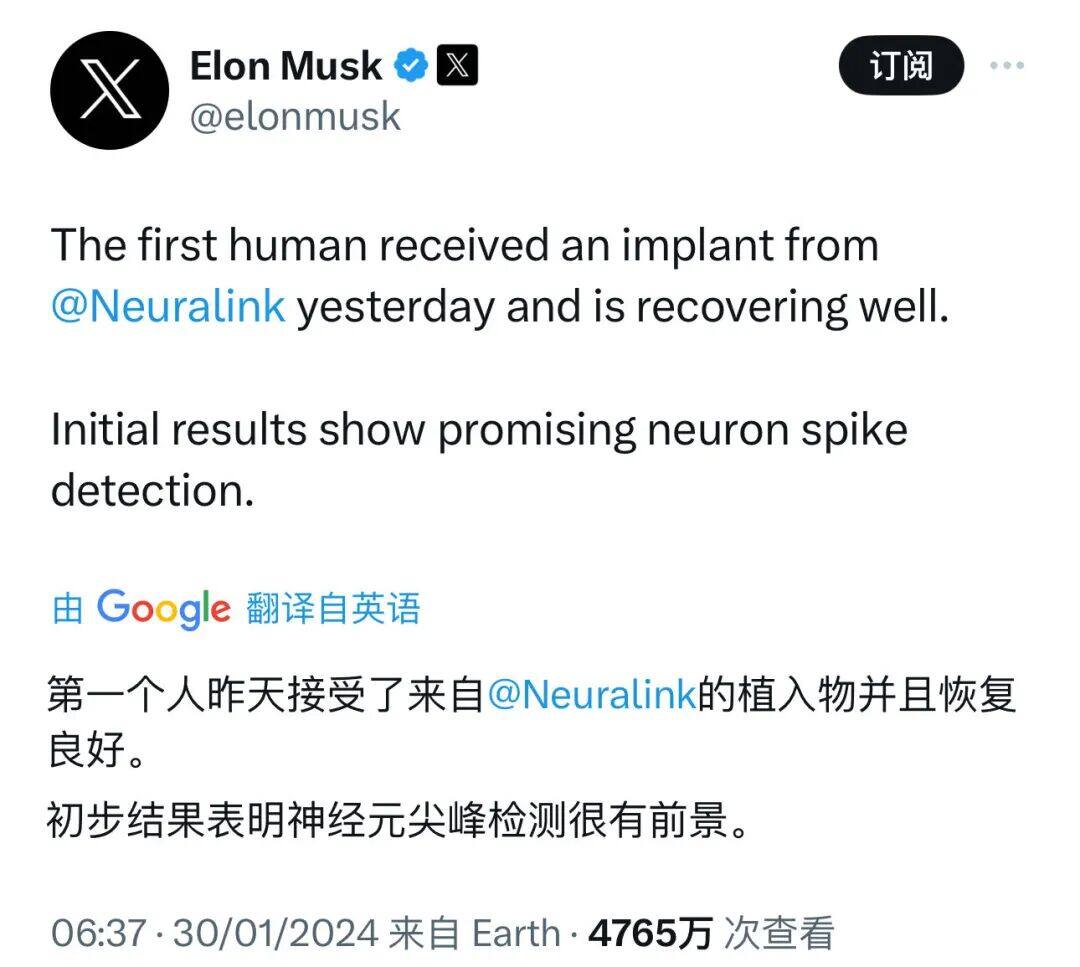
Approximately eight hours later, Tsinghua University’s official website published a news report stating that a team from Tsinghua University and Xuanwu Hospital had successfully conducted the first clinical trial of a wireless minimally invasive brain–computer interface (BCI). The report indicated that after three months of at-home BCI rehabilitation training, patients with spinal cord injuries were able to achieve brain-controlled functions such as independently drinking water.

Notably, this brain-computer interface differs from the Neuralink BCI led by Elon Musk; it places electrodes epidurally and was developed through long-term animal trials, without damaging neural tissue.
 Quadriplegic patients
Epidural Brain Chip Implantation
Achieving Autonomous Brain-Controlled Hydration
Recently, Xuanwu Hospital and the Tsinghua University team jointly announced thatWorld’s First Case of Quadriplegia Treated with an Implantable Epidural Electrode Brain-Computer Interface Achieves Breakthrough in Functional Rehabilitation, Enabling Autonomous Brain-Controlled Drinking
The patient suffered a complete spinal cord injury at the cervical level due to a car accident, resulting in long-term quadriplegia. On October 24 last year, the team led by Zhao Guoguang, President of Xuanwu Hospital, and the team led by Professor Hong Bo from Tsinghua University jointly completed the clinical implantation trial of the wireless minimally invasive brain-computer interface (BCI) NEO. The trial involved implanting two coin-sized BCI processors into the patient’s skull, successfully acquiring intracranial neural signals from the sensorimotor cortex. For home use, the external device transmits power through the scalp to the internal implant and receives intracranial neural signals, which are then transmitted to a computer or mobile phone to enable BCI communication.
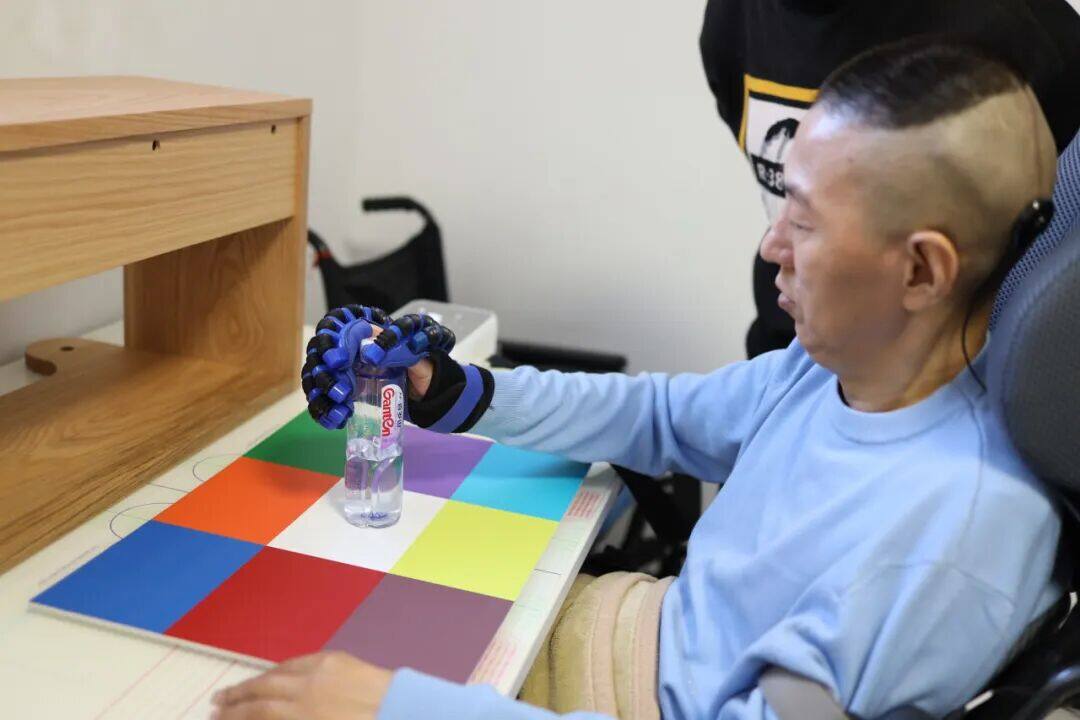
First Patient Implanted with Wireless Minimally Invasive Brain-Computer InterfaceSuccessful Realization of Brain-Controlled Grasping
Image source: Photographed by Lin Yujing, School of Journalism and Communication, Tsinghua University
After three months of home-based rehabilitation training, the patient can currently drive a pneumatic glove using electroencephalographic (EEG) activity., enabling brain-controlled functions such as autonomous drinking, with a grasping accuracy exceeding 90%.Furthermore, the patients’ clinical scores for spinal cord injury and sensory evoked potential measurements both showed improvement.
Currently, the second patient with spinal cord injury is receiving signals normally and is undergoing home-based rehabilitation training.
Data shows that this wireless minimally invasiveThe clinical trials of the brain-computer interface were approved by the ethics committees of Xuanwu Hospital and Tiantan Hospital in April and May 2023, respectively, and involved the implantation of medical devices both internationally and domestically.Medical Device Clinical Trial Registration.
 Poised to Achieve Industrialization Ahead of Musk
Introduction to the Xuanwu Hospital Team: This Project Achieves Two Major Breakthroughs.
First, during the implantation of the brain-computer interface, the team embedded the internal device within the skull and placed the electrodes over the epidural space. This approach ensures high-quality intracranial signal acquisition while avoiding damage to neural tissue. This is alsoDifferences from Neuralink's fully implantable wireless brain-computer interface.
Secondly, through near-field wireless power supply and signal transmission, the implanted device in the skull does not require battery power. "The brain-computer interface achieves direct communication between the brain and computer by recording and interpreting brain signals,"Can help patients with brain diseases such as ALS, spinal cord injury, and epilepsy to recover,It also holds promise for achieving brain-computer integrated intelligence, directly expanding the human brain’s information processing capabilities.”
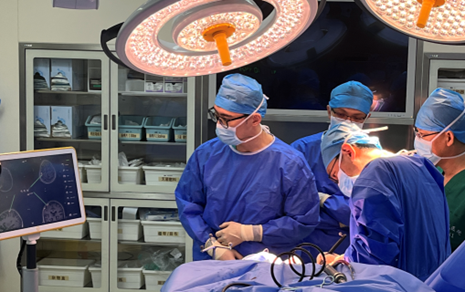
Professor Zhao Guoguang’s Team Performs First Wireless Minimally Invasive Brain-Computer Interface Implantation Surgery
Based on the method of signal acquisition, brain-computer interface (BCI) technology can be categorized into three types: non-invasive, semi-invasive, and invasive.
Non-invasive brain-computer interfaces refer to the recording and interpretation of brain activity without penetrating the brain, using only wearable devices attached to the scalp. Although this technology offers high safety, it suffers from lower signal quality and resolution due to interference from the skull and noise.
Semi-invasive brain-computer interfaces (BCIs) refer to devices implanted within the cranial cavity but outside the cerebral cortex. This technology offers higher signal strength and resolution while reducing the risk of immune responses and scar tissue formation. Invasive BCIs involve the direct surgical implantation of electrodes into the cerebral cortex, enabling the acquisition of the highest-quality neural signals. However, this approach is significantly more expensive than the other two methods and carries higher safety risks and potential complications.
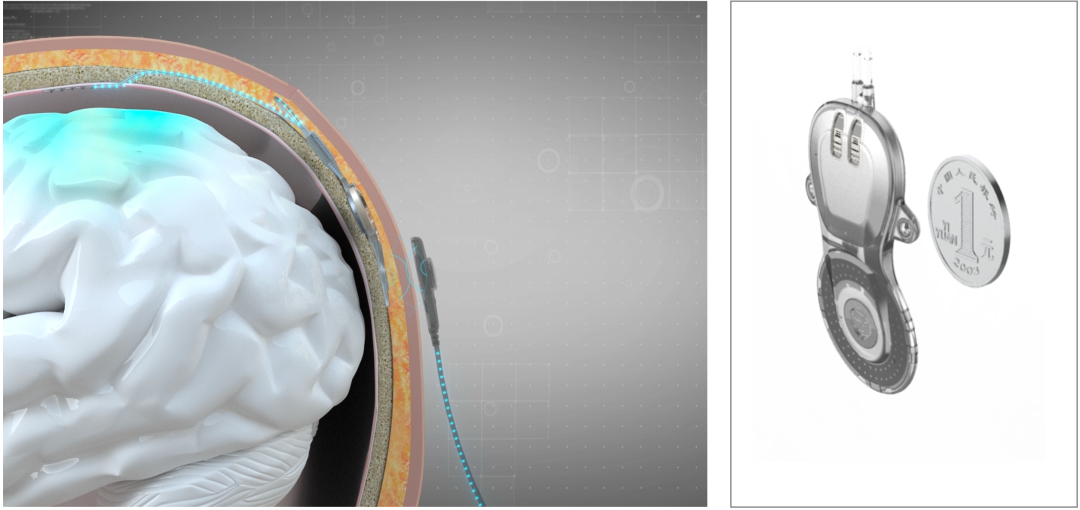
The Wireless Minimally Invasive Implanted Brain-Computer Interface NEO System and Its Implantable Unit
In medical settings, both invasive and semi-invasive brain-computer interfaces (BCIs) have their applications. However, for investment firms, the ease of commercial implementation will be a crucial factor in selecting investment targets. From this perspective, semi-invasive BCIs hold greater advantages.
Last September, Liu Dan, a senior investor in the healthcare industry, told reporters that although the state strongly supports translational research in brain science and brain-computer interfaces (BCIs), BCIs have not yet been widely adopted as medical devices on a global scale. Regulatory authorities maintain a relatively stringent stance toward the commercial application of BCIs as medical devices. Under these rigorous regulatory requirements,It is important to select technological approaches and targets with controllable long-term safety and favorable implantation convenience, seeking solutions that are safer and have greater certainty in clinical implementation.
Liu Dan believes that the fully implantable brain-computer interface (BCI) technology pathway, represented by Neuralink, is still far from genuine clinical application. It faces multiple challenges, including long-term safety and acceptance of clinical surgical procedures, suggesting that commercialization may require at least another 5–10 years. In contrast, semi-invasive electrodes represent a compromise among signal quality, implementation difficulty, and invasiveness, and are poised to become the first BCI technology pathway adopted in clinical practice.
▲ Source: CNR
▲ Please cite the source above when reprinting.


END
Previous Issues
6 Billion: Another Major Move by Haier in the Medical Field
Hiring, Promotions, Dismissals, Resignations—The Most Significant Personnel Changes in the Medical Device Sector in 2023
Major Breakthrough! China’s Highest-Frequency Intravascular Ultrasound System Achieves New Progress