Synchron Acquires Minority Stake in Acquandas to Accelerate Commercialization of Stentrode BCI Platform

Synchron
Developer of implantable neural interface products

ACQUANDAS
High-Precision Component Provider
Pioneer in Medical Device Media Coverage
Sharing Professional Medical Device Knowledge
Source:Device Home,Reposting is prohibited without authorization and may only be done after 24 hours.
On February 1, 2024, Musk's biggest rival,Synchron, a Leader in the Brain-Computer Interface Field, Announces Acquisition of a Minority Stake in German Medical Device Component Supplier ACQUANDASAs part of the transaction, Tom Oxley, CEO and Founder of Synchron, will join the ACQUANDAS Governance Committee, and Riki Banerjee, CTO of Synchron, will join as an observer.
Reportedly, ACQUANDAS’s cutting-edge medical manufacturing technology will strengthen Synchron’s supply chain, supporting the commercialization of the company’s first brain-computer interface product.
Recently, the field of brain-computer interfaces has seen a series of major breakthroughs.
Just two days ago, on January 29, Musk announced that his brain-computer interface company, Neuralink, had implanted its first product—Telepathy—into the first human patient, also translated as "telepathy," the implant recipient is currently recovering well.

Subsequently, approximately eight hours later, Tsinghua University’s official website published a news article stating that,Tsinghua University and Xuanwu Hospital Team Successfully Conduct First Wireless Minimally Invasive Brain-Computer Interface Clinical TrialNews reports indicate that after three months of home-based brain-computer interface rehabilitation training, patients with spinal cord injury can achieve brain-controlled functions such as autonomous drinking.
Stentrode
Regarding the timeline for human implantation of brain-computer interfaces, Synchron achieved its first human implant as early as 2020.In 2021, it became the first company globally to receive FDA approval for human clinical trials.In terms of technical approach, unlike Musk’s surgical implantation method involving “drilling a hole in the skull,” Synchron has adopted a minimally invasive implantation strategy akin to vascular stents, which is considered to have greater development potential.
Musk has long regarded Synchron as a formidable rival. At a company meeting last July, he stated:“We should be far ahead of Stentrode (Synchron’s brain-computer interface product). They are kicking our ass.”
Unexpectedly, just as Neuralink achieved its first human implant and the outside world perceived the gap between the two companies to be narrowing, Synchron announced the acquisition of shares in an upstream supplier as a “countermove.” In December 2023,The company also announced the appointment of Andy Rasdal, former CEO of DexCom, to its Board of Directors.He previously led DexCom through FDA approval and its eventual market launch, a strategic hire that is critical to driving Synchron’s ultimate commercialization.
A business battle centered on the “brain” has already begun.
In December 2022, Synchron stated that its device was expected to receive commercial approval and launch on the market as early as 2024, pending successful completion of the FDA’s pivotal trial.This positions the company to become the first “pioneer” in the commercialization of brain-computer interfaces. The recent acquisition of equity in ACQUANDAS may signal that product launch is approaching, as the company prepares to meet commercial demands.
According to reports, ACQUANDAS, in which Synchron has taken an equity stake, has developed a new generation of shape-memory, flexible metallic components for medical devices. These components enable the fabrication of microstructures, such as micropatterned nitinol thin films, combining high structural resolution and geometric complexity with excellent biocompatibility and enhanced mechanical properties, thereby providing Synchron with unique implantable medical device products.As part of the transaction, Synchron will obtain exclusive rights to use ACQUANDAS’s tiered medical device technology.
Synchron CEO Tom Oxley stated that although the two companies have collaborated for many years, the new partnership will help the company continue to innovate around implantable neural technology and scale to meet “very significant potential demand.”
Dr. Rodrigo Lima de Miranda, CEO and Founder of ACQUANDAS, stated, “After years of advancing our manufacturing technologies, I am pleased to welcome Synchron as an investor. This significant investment will not only strengthen our existing partnership but also play a pivotal role in expanding our facilities and capabilities. It demonstrates that our manufacturing technologies and our company are well-positioned for the market.”
“Unlocking the Brain’s Natural Highways” is the most prominent tagline on Synchron’s official website and represents the key differentiator of its brain-computer interface technology from that of other companies.
The so-called natural highways of the brain are, in fact, the blood vessels within the brain.The company’s brain-computer interface device, named Stentrode, has a diameter of 8 mm and a length of 40 mm, and is made of a flexible alloy called nitinol.It is placed in the superior sagittal sinus of the brain via the jugular vein through minimally invasive surgery.
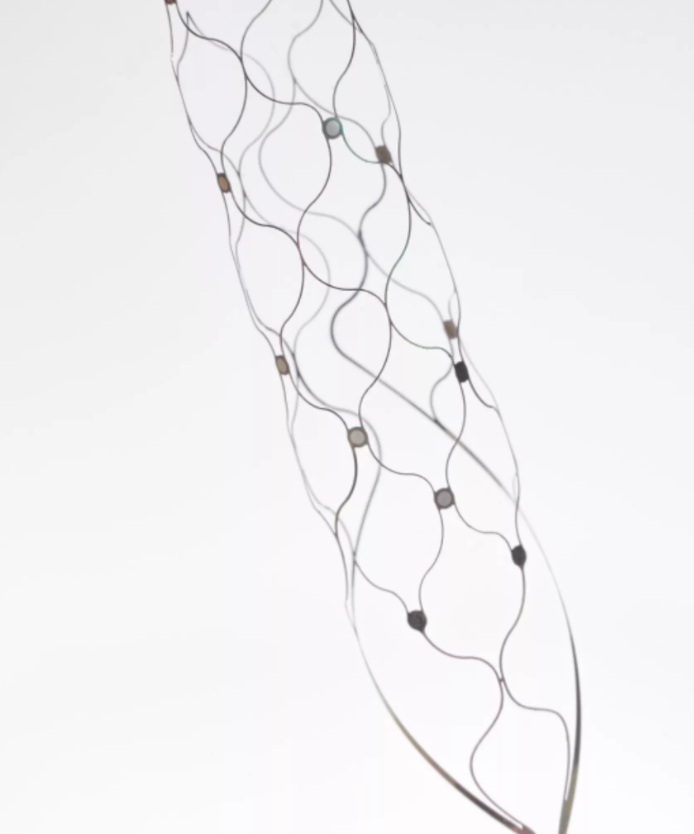
Compared with other brain-computer interfaces that require craniotomy for implantation, the Stentrode causes less trauma.Moreover, according to the company, the total length of blood vessels in the brain exceeds 400 miles, reaching virtually every part of the brain.Other implantable products can only access cranial nerves beneath the skull, with extremely limited scope of action. This innovative implantation approach enables access to brain regions that have never been studied before, yielding unprecedented volumes of data, undoubtedly unlocking a vast repository of unknowns.
This stent-like device is actually an electrode array that integrates into the vessel wall within a few days of implantation, enabling the recording or stimulation of neural signals near the vasculature without causing long-term inflammation or trauma to the brain.
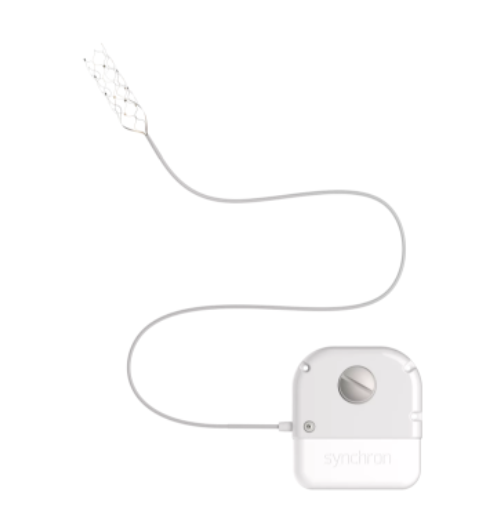
Subcutaneous Receiver
In October 2020, Synchron conducted human studies and successfully implanted the Stentrode in two patients with amyotrophic lateral sclerosis (ALS).The Stentrode is connected to a 50-cm flexible endovascular lead. The transmission line exits via the internal jugular vein between the heads of the sternocleidomastoid muscle and connects through a subcutaneous tunnel to an Implantable Telemetry Unit (ITU) housed in a subclavicular pocket. Electrical signals are wirelessly transmitted via infrared light to an External Telemetry Unit (ETU). After recovery and training, two patients achieved daily activities such as sending text messages, sending emails, shopping, and conducting online banking using thought control.
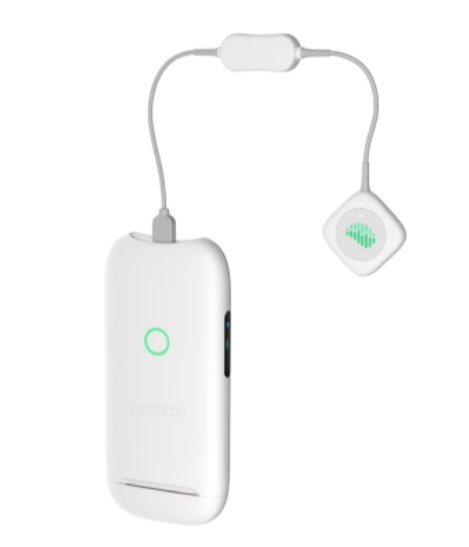
External Receiver and Transmitter Unit
In 2020, the FDA granted Stentrode™ Breakthrough Device designation. In 2021, Synchron became the first company to receive an FDA Investigational Device Exemption (IDE) for clinical trials of a permanently implanted brain-computer interface (BCI).
On December 23, 2021, Synchron helped 62-year-old ALS patient Phillip O’Keefe post two tweets within 30 minutes via a Twitter livestream.It is also the first tweet in human history sent via “mind control.”

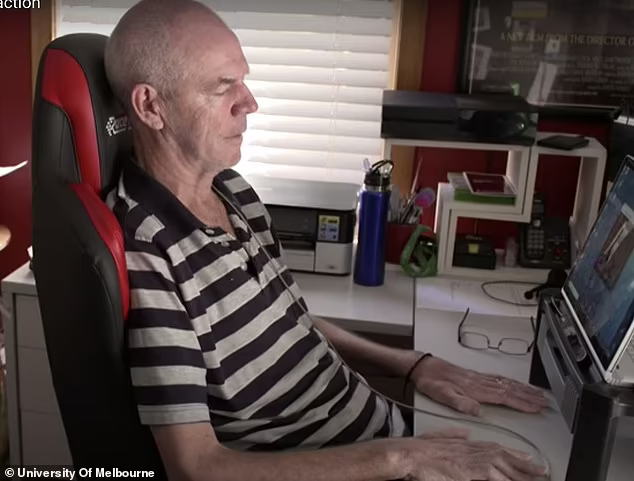
In January 2023, the medical journal JAMA Neurology published an evaluation of the long-term safety outcomes from Synchron’s brain-computer interface (BCI) system trials conducted in Australia. The study found that the technology remained safe,During the 12-month trial period, its signal quality or performance did not deteriorate.
In September 2023, Synchron announced the completion of patient enrollment in its COMMAND trial in the United States.
The COMMAND trial recruited a total of six patients in the United States., and conducted under the first Investigational Device Exemption (IDE) granted by the FDA for the evaluation of a permanently implanted BCI.
In December 2022, Synchron’s $75 million Series C financing round was oversubscribed., led by ARCH Venture Partners, a U.S.-based venture capital firm/consortium in the life sciences and healthcare sector, with participation from seven other investors including Bezos Expeditions (affiliated with Jeff Bezos) and Gates Frontier (affiliated with Bill Gates), while existing shareholders such as Shanda Group and Max Hodak, co-founder of Neuralink, continued their support.
Particularly noteworthy are the investments made by two former world’s richest individuals—Amazon founder Jeff Bezos and Microsoft founder Bill Gates—as well as Shanda Group founder Chen Tianqiao.
Synchron stated that this round of financing will accelerate the development of Synchron’s first platform product, Switch BCI, and initiate a pivotal clinical trial.
This new funding round will bring Synchron’s total financing to $145 million (approximately RMB 1.011 billion).
Brain-Computer Interface (BCI), also known as Brain-Machine Interface (BMI), refers to a direct connection established between the human or animal brain and external devices, enabling information exchange between the brain and the devices. Research on brain-computer interfaces dates back to the 1970s. After nearly five decades of investigation, the development of BCI technology has undergone three stages, and it is currently in the third stage—the phase of technological explosion.
Currently, among international companies developing implantable brain-computer interfaces, three have entered human clinical trials: Neuralink, Onward, and Synchron.
In China, on October 24, 2023, the team led by Zhao Guoguang at Xuanwu Hospital of Capital Medical University, in collaboration with the team led by Hong Bo from the School of Medicine at Tsinghua University,Jointly Completed the First Clinical Implantation Trial of the Wireless Minimally Invasive Brain-Computer Interface NEO (Neural Electronic Opportunity), two coin-sized brain-computer interface processors were implanted into the patient's skull through neurosurgical procedures, successfully capturing intracranial neural signals from the sensorimotor cortex.
Neuralink
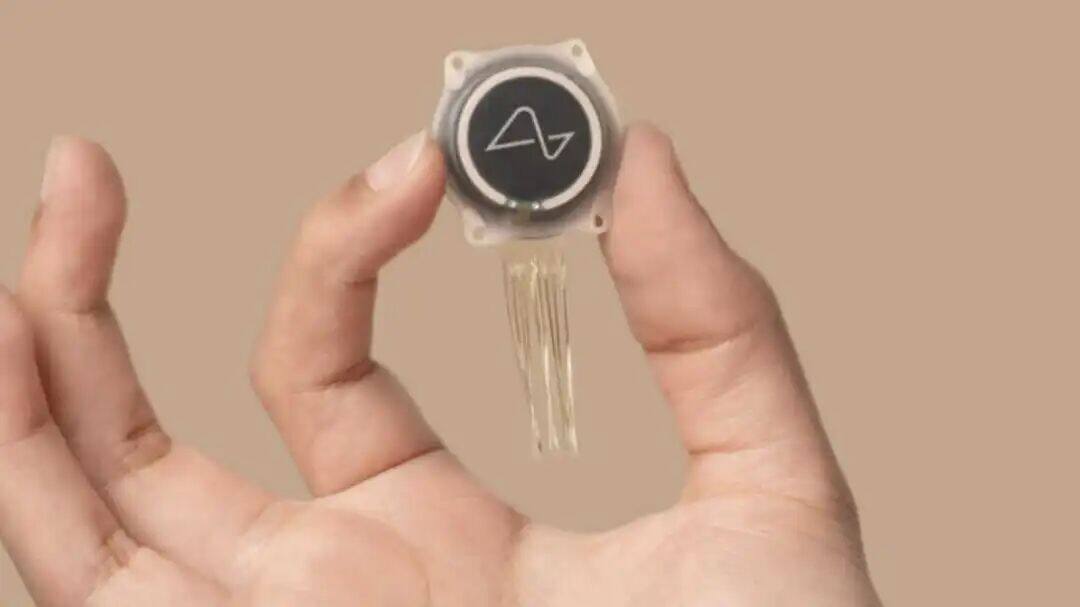
On May 26, 2023, Neuralink announced that it had received FDA approval for human clinical trials. The Neuralink device follows an invasive approach, requiring patients to undergo a approximately two-hour surgical procedure to implant a coin-sized chip in the head, which is connected to the cerebral cortex via 16 electrode threads as fine as human hair.
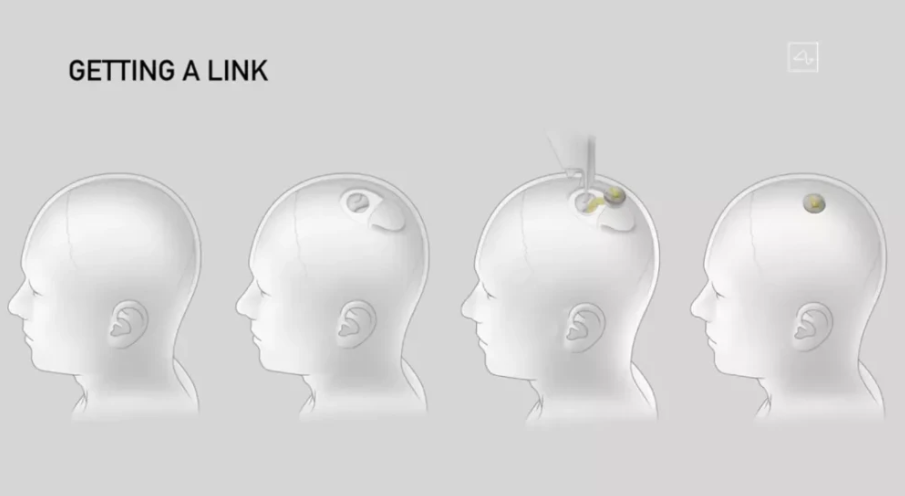
This implantation method, which involves removing part of the skull, has long been criticized for being excessively traumatic. Earlier, Reuters reported that at the request of federal prosecutors, the U.S. Department of Agriculture launched an investigation into Neuralink in recent months, concerning the unconventional deaths of approximately 1,500 animals, including monkeys and pigs, in Neuralink’s experiments.
Onward
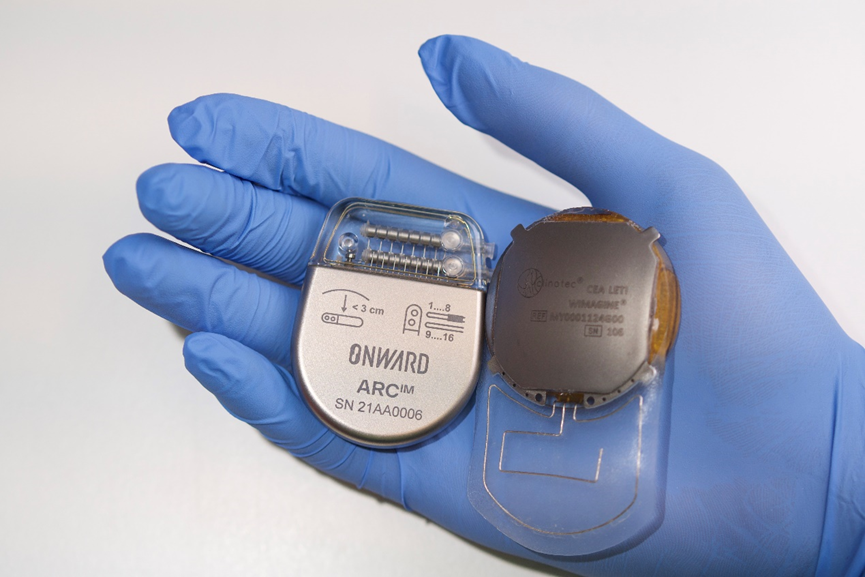
Onward, headquartered in Amsterdam, has collaborated with the Swiss Federal Institute of Technology in Lausanne and the Lausanne University Hospital to develop a “brain-spine interface” that connects the brain to the spinal cord regions involved in walking via implants.
Onward’s primary products are ARC-IM and ARC-EX. ARC-EX is an external, non-invasive platform. ARC-IM consists of an implantable pulse generator and a lead placed near the spinal cord. Onward has received five FDA Breakthrough Device designations, including for ARC-IM and ARC-EX.
The latest developments, featured on the cover of Nature on May 24, 2023, successfully demonstrated signs of neurological recovery in a patient who had been paralyzed for 12 years. The patient was also able to walk with crutches after the implant was turned off. The chip used in the trial employed traditional rigid electrodes with 64 signal channels, requiring the patient to wear a signal amplifier on their head.
Xuanwu Hospital & Tsinghua University Team
Recently, Xuanwu Hospital and the Tsinghua University team jointly announced a breakthrough in behavioral rehabilitation for the world’s first case of quadriplegia treated with an implantable epidural electrode brain-computer interface (BCI), achieving autonomous brain-controlled drinking.
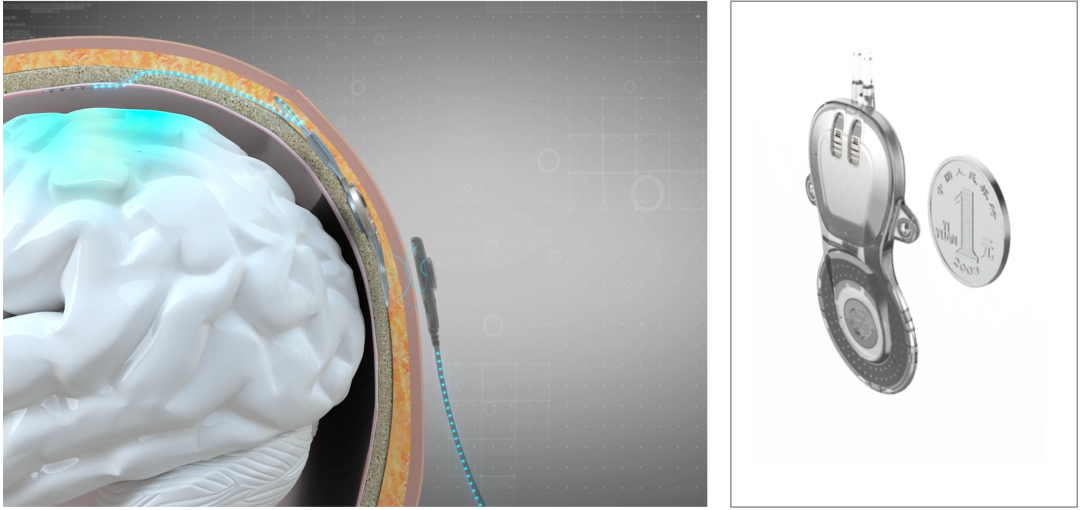
The NEO System for Wireless Minimally Invasive Brain-Computer Interface Implantation and Its Implantable Unit
The patient sustained a complete cervical spinal cord injury due to a motor vehicle accident and had been in a state of quadriplegia for an extended period.On October 24 last year, the team led by Zhao Guoguang, President of Xuanwu Hospital, and the team led by Professor Hong Bo from Tsinghua University jointly completed the clinical implantation trial of the wireless minimally invasive brain-computer interface NEO.The trial involved implanting two coin-sized brain-computer interface (BCI) processors into the patient’s skull, successfully acquiring intracranial neural signals from the sensorimotor cortex. For home use, the external device transcutaneously powers the internal implant through the scalp and receives intracranial neural signals, which are then transmitted to a computer or smartphone to enable BCI communication.
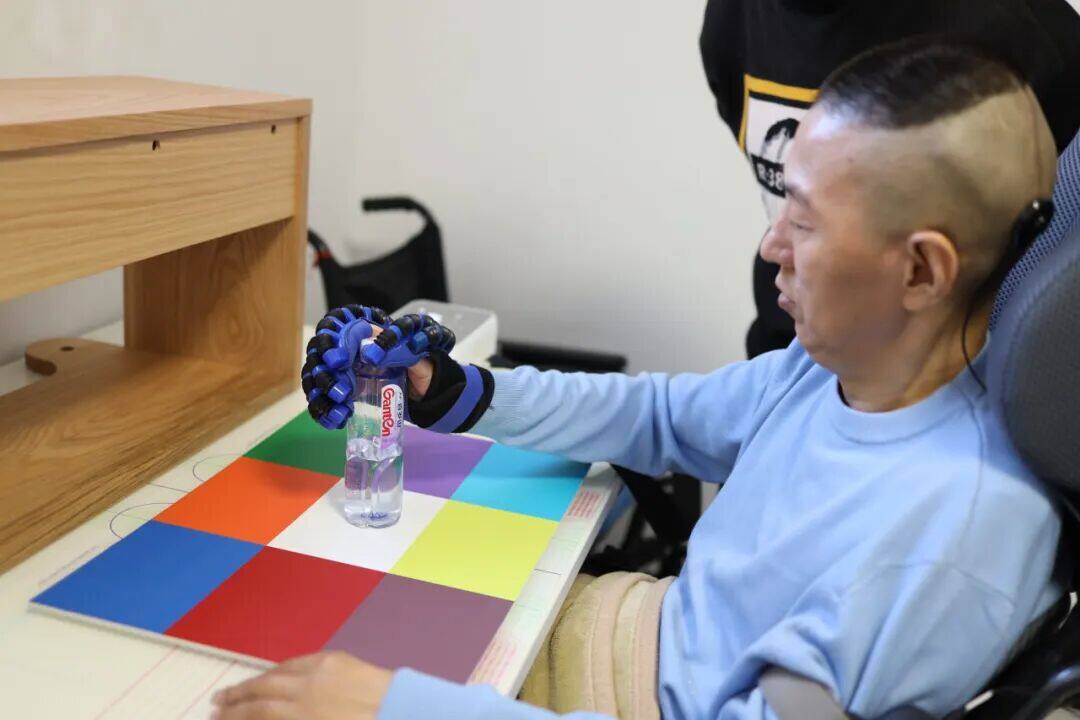
First Patient Successfully Achieves Brain-Controlled Grasping via Wireless Minimally Invasive Brain-Computer Interface
After three months of home-based rehabilitation training, the patient can currently drive a pneumatic glove using electroencephalographic (EEG) activity, achieving brain-controlled functions such as autonomous drinking, with a grasping accuracy exceeding 90%. Furthermore, the patient’s clinical scores for spinal cord injury and sensory evoked potential measurements have both shown improvement.
Currently, the second patient with spinal cord injury is receiving normal signal transmission and is undergoing home-based rehabilitation training.
Records show that the clinical trial of this wireless minimally invasive brain-computer interface passed ethical review at Xuanwu Hospital and Tiantan Hospital in April and May 2023, respectively, and was registered for clinical trials of implantable medical devices both internationally and domestically.
——
According to incomplete statistics from the Tianyancha app, since early 2023, there have been more than 17 financing events in China’s brain-computer interface (BCI) industry, with the total disclosed funding amounting to nearly RMB 1 billion.In terms of corporate layout, tech giants such as Google, Microsoft, and Huawei have already entered the field of brain-computer interfaces. Multiple BCI-related companies have also emerged in China.Including Innovative Medical, Sanbo Brain Hospital, and Guan Hao Biotechnology; MicroSpirit Medical, NeuroXess, and BrainCo Technologies.
Whether a dark horse in the brain-computer interface field capable of rivaling international counterparts will emerge in China remains to be seen; Device Home will continue to monitor developments closely.
More Exciting Content
Welcome to follow our WeChat Video Account


Strong Alliance: Mindray Announces New Partnership
Medical Device Giant: May Complete Spin-Off in First Half of 2024
7.7 Billion: Cardiovascular Giant Plans to Sell Core Business
After Laying Off 500 Employees, Medical Device Giant Divests This Product Line
Multiple First-in-China Products: Brain Science Leader Plans IPO
Over RMB 6.6 Billion: Mindray Medical Plans to Acquire Controlling Stake in Huitai
The First Internet Healthcare Stock: 50% Layoffs?
21.1 Billion Post-Merger: Orthopedic Giant “Restructures and Lays Off Staff”
Global Fourth, Domestic Leader Secures 900 Million Yuan in Strategic Financing
Beijing’s Largest Hospital to Open: Mindray, United Imaging, and GPS Among Winning Bidders


ShangBusiness Cooperation Email: qxzj@landianyiliao.com