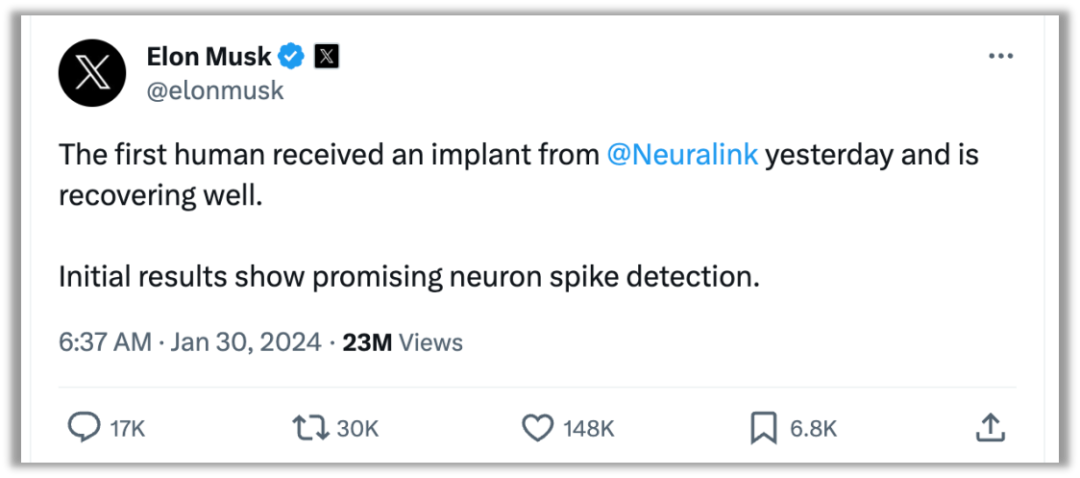
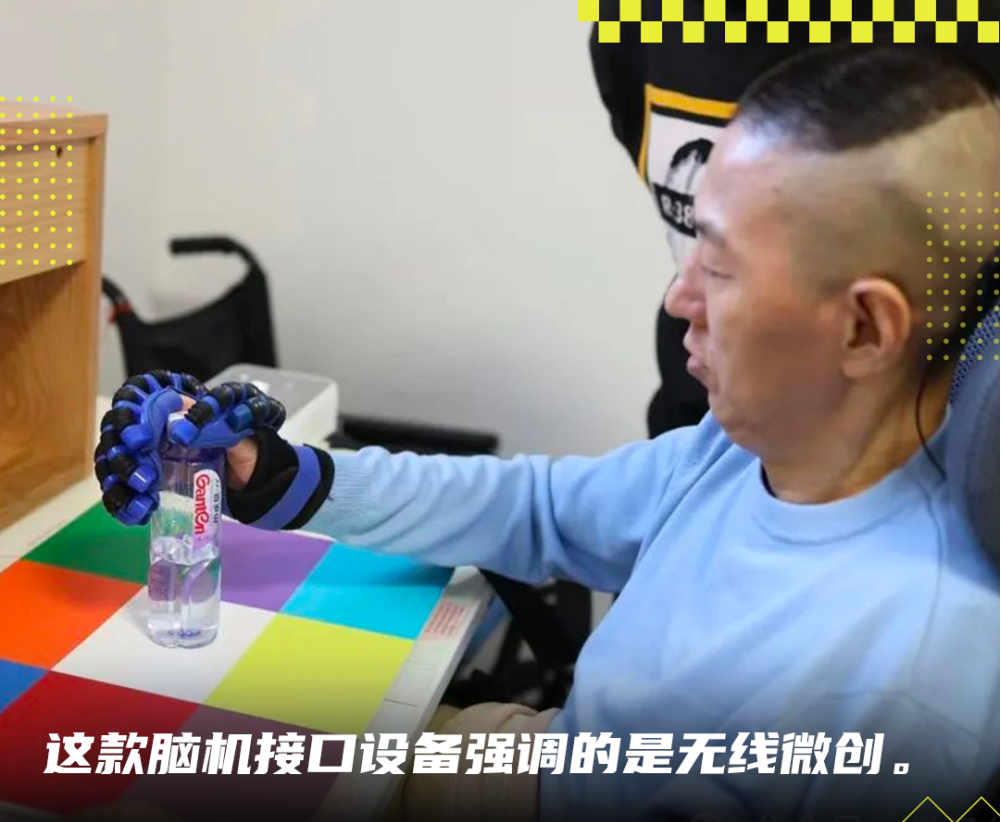
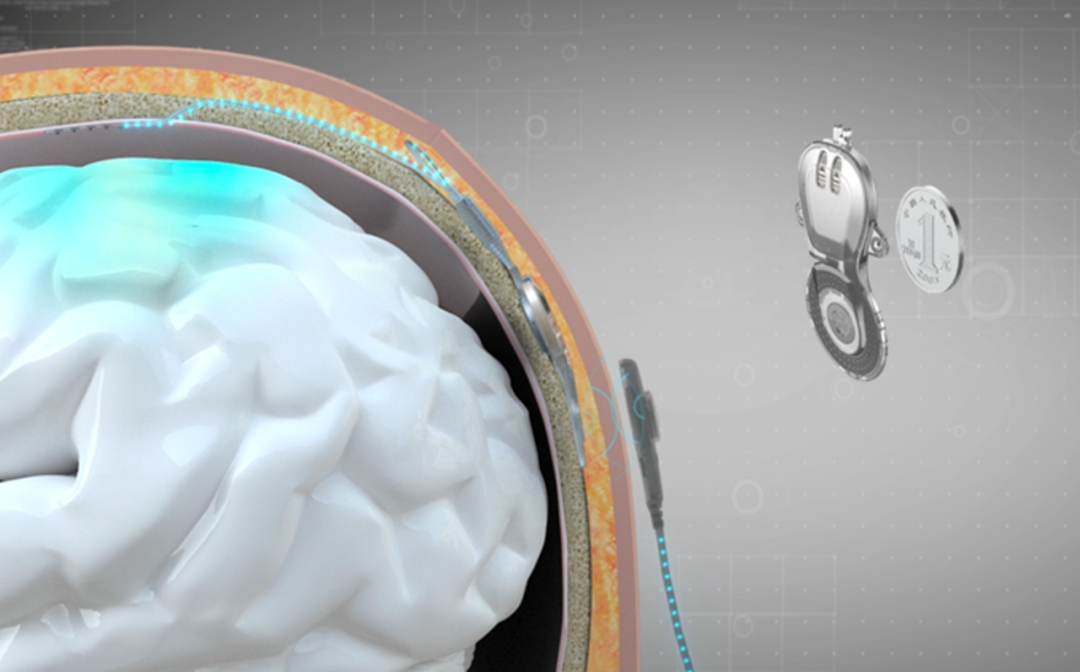
Brain-Computer Interfaces Enable Direct Communication Between the Brain and Computers by Recording and Decoding Brain Signals。On one hand, it can aid in the rehabilitation of patients with neurological disorders such as amyotrophic lateral sclerosis (ALS), spinal cord injury, and epilepsy; on the other hand, it holds promise for achieving brain-computer integrated intelligence, thereby directly expanding the information processing capabilities of the human brain.On January 30, 2024, Elon Musk posted a message on the social media platform X (formerly Twitter), stating, “Neuralink successfully performedFirst Human Brain-Computer Interface Implant Surgery, the implant recipient is recovering well. Moreover, the implanted brain-computer interface device is functioning properly and has successfully received neural signals from the recipient's brain."The team from Xuanwu Hospital of Capital Medical University and the team from the School of Medicine at Tsinghua University recently jointly announced phased progress in brain-computer interface technology.World’s First Quadriplegic Patient Treated with an Implanted Epidural Electrode Brain-Computer Interface Achieves Autonomous Brain-Controlled DrinkingThese two major milestones have undoubtedly propelled the development of brain-computer interface (BCI) technology to a new peak. This article provides an objective comparison of their technical differences and explores the respective advantages and challenges of each.BothTechnical Principles and Features1.Tsinghua University Wireless Minimally Invasive Implanted Brain-Computer Interface (NEO)Wireless Minimally Invasive Implantable Brain-Computer Interface Developed by Professor Hong Bo’s Team at Tsinghua UniversityNEO employs wireless transmission technology and minimally invasive implantation methods. This interface enables direct communication between the brain and a computer by recording and interpreting neural signals.It is characterized by the placement of electrodes in the epidural space of the brain, developed through long-term animal trials, without damaging neural tissue.Furthermore,NEO also boasts advantages such as miniaturization and low power consumption, holding promise for providing rehabilitation hope to patients with brain disorders such as amyotrophic lateral sclerosis (ALS), spinal cord injury, and epilepsy.2.Neuralink Brain-Computer Interface TechnologyUnlike Tsinghua University, Musk'sNeuralink Corp has adopted a more invasive brain-computer interface technology. The surgical implantation of Neuralink’s chip requires drilling a small hole in the patient’s skull to implant a microelectrode array into the cerebral cortex. These electrodes can capture the activity of neurons in the brain and convert it into signals that computers can understand.Neuralink's technological advantages lie in its high precision and high efficiency, holding promise for enabling direct interaction between the brain and external devices.However, this invasive procedure may carry certain risks, such as infection and bleeding.BothTechnologyWhat are the similarities and differences?Developed by Tsinghua UniversityNEO employs a wireless, minimally invasive implantation method to place electrodes in the epidural space of the brain, which is relatively gentler and causes less damage to neural tissue. In contrast, Neuralink’s technology requires craniotomy and the implantation of electrode arrays, resulting in a higher degree of invasiveness.This meansNeuralink’s technology may offer higher precision and efficiency in capturing brain signals, but it also entails greater surgical risks and a longer recovery period.The Wireless Minimally Invasive Implantable Brain-Computer Interface NEO System and Its Implantable Device. Image Design and Synthesis: Hong Bo, School of MedicineNEO employs wireless transmission technology to enable direct communication between brain signals and computers. This wireless approach offers convenience and flexibility, accommodating application needs across various scenarios. In contrast, Neuralink requires a wired connection to transmit brain signals to external devices, which somewhat restricts patients' range of movement.Due to differences in technical principles and characteristics, the two differ in their scope of application. The NEO system developed by Tsinghua University is primarily targeted at rehabilitative therapy for patients with brain disorders such as amyotrophic lateral sclerosis (ALS), spinal cord injury, and epilepsy. In contrast, Neuralink’s technology holds broader application prospects, including helping paralyzed patients restore motor function and enabling memory enhancement.Independent R&DAdvantages and Challenges1.Tsinghua University Wireless Minimally Invasive Implanted Brain-Computer Interface (NEO)Advantages:NEO employs a wireless, minimally invasive implantation method, resulting in lower surgical risk and a shorter recovery period.Meanwhile, this technology offers advantages such as miniaturization and low power consumption, facilitating portability and ease of use for patients. Furthermore, Tsinghua University possesses extensive research experience and an outstanding scientific research team in the field of brain-computer interfaces, providingprovides strong support for the further research, development, and application of NEO.Challenges: Although NEO has achieved significant results in animal trials, its safety and efficacy in humans still require further validation. Additionally, wireless transmission technology may be affected by factors such as signal interference, necessitating continuous optimization and improvement.2.Neuralink Brain-Computer Interface TechnologyAdvantages:Neuralink’s technology offers the advantages of high precision and high efficiency in capturing brain signals,Promising direct interaction between the brain and external devices.Furthermore, as a leading figure in the technology sector, Musk possesses substantial financial and resource support, which helps to driveThe Rapid Development of Neuralink Technology.Challenges: The invasive surgery required for Neuralink may entail significant risks and a prolonged recovery period, necessitating careful consideration of patient acceptance and surgical safety. Meanwhile, the wired connection restricts patients’ range of motion, requiring improvements in future research and development. Furthermore, Neuralink must also address challenges related to ethics and privacy.With the continuous advancement of brain-computer interface (BCI) technology, research institutions and companies such as Tsinghua University and Neuralink are poised to achieve further breakthroughs in their respective fields. In the future, BCI technology is expected to play a significant role in various sectors, including healthcare, education, and entertainment. For instance, in healthcare, BCI technology can help patients restore motor function and improve their quality of life; in education, it can enable personalized instruction and intelligent tutoring.However, realizing these promising visions requires overcoming numerous challenges. For instance, improving the safety and efficacy of brain-computer interface (BCI) technology, reducing surgical risks and recovery periods, and optimizing signal transmission methods. Furthermore, ethical and privacy concerns must be addressed to ensure the healthy development of BCI technology.In summary, both Tsinghua University and Elon Musk’s Neuralink Corp have made significant strides in brain-computer interface (BCI) technology. While they differ in technical principles, characteristics, and scope of application, each possesses distinct advantages and faces unique challenges. Looking ahead, as research deepens and technological innovation continues, BCI technology is poised to play a pivotal role across multiple fields, bringing greater well-being to humanity.Editor-in-Chief's WeChat
(Business Cooperation, Important Matters)


Editor Zhao's WeChat (Group Assistant)
Note: When adding on WeChat, please include your nickname, affiliation, and research area in the remark.
Life Sciences Comprehensive Exchange QQ Group: 681341860
WeChat Academic Groups: Virology Group, Neuroscience Group, Clinical Medicine Group, Oncology Group, Master’s and Doctoral Exchange Group, and Pharmaceutical Investment Exchange Group (WeChat groups have strict entry requirements; please add Editor Zhao and proactively note your institution and research focus)