

Neuralink's First Human Brain-Computer Interface Patient 'Appears Fully Recovered' Within 20 Days, Says Musk
Neuralink
Brain-Computer Interface System Developer

Article Author: sysoon
Can Implanting a Button-Sized Chip into the Human Brain Help Paraplegic Patients Control External Devices with Their Thoughts and Resume Normal Lives?
Yesterday, Elon Musk stated that the first paraplegic participant appeared to have fully recovered on the 20th day after receiving a brain-computer interface implant.
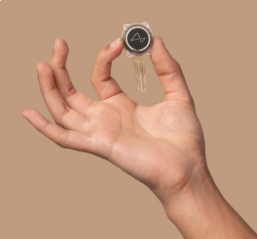
Brain-Computer Interface Device (Image source: Neuralink official website)
Full Recovery 20 Days After Implantation?
On February 20 (local time, the 19th), Musk participated in a live broadcast on X, and when mentioning the latest situation of the first human trial of Neuralink's brain-computer interface, he stated:“Progress is excellent; the volunteer appears to have fully recovered, with no known adverse neurological effects, and can control mouse movement on the screen through thought.”
"We are attempting to have patients perform more tasks on the computer, such as clicking the mouse as much as possible, clicking and dragging objects with the mouse, controlling more buttons, etc."
20 days ago,Neuralink CompletedPrecision RoboticsImplantable Brain-Computer InterfaceFirst Human Brain Implant Surgery, with Volunteer Recovering Well.Preliminary results indicate good neuronal spike detection.
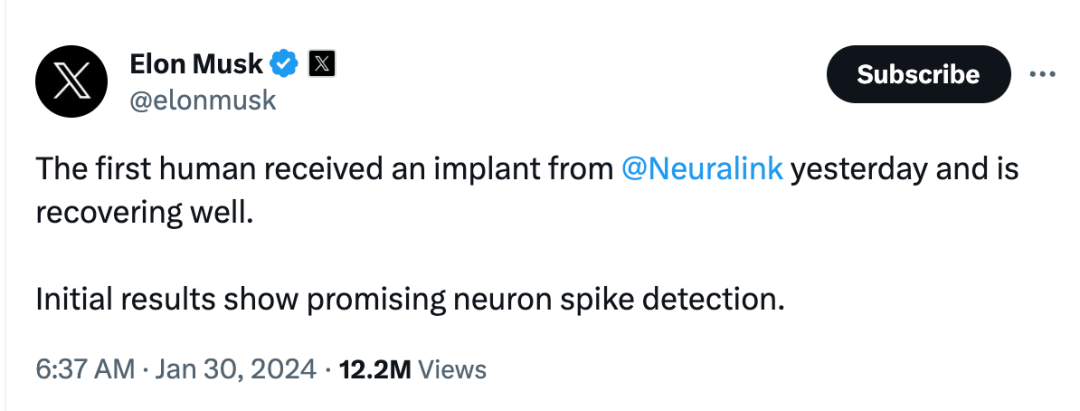 Screenshot of Elon Musk's Personal Social Media Platform
This human brain implantation surgery was, in fact, part of the Precision Robotically Implanted Brain-Computer Interface (PRIME) study. The PRIME study is conducted by Neuralink, the brain-computer interface company founded by Elon Musk, and received approval in 2023 to begin recruiting participants for its first-in-human clinical trial.
This study aims to evaluate the safety and preliminary efficacy of the implant and surgical robot, specifically assessing whether paralyzed patients receiving the implant can control external devices using their thoughts.
In the study, a surgical robot connected the implant (N1) to brain regions that control motor intent. The N1 records neural activity via 1,024 electrodes distributed across 64 threads, each thinner than a human hair, and wirelessly transmits the signals to an application that decodes motor intent, thereby enabling individuals to control a computer cursor or keyboard using only their thoughts.
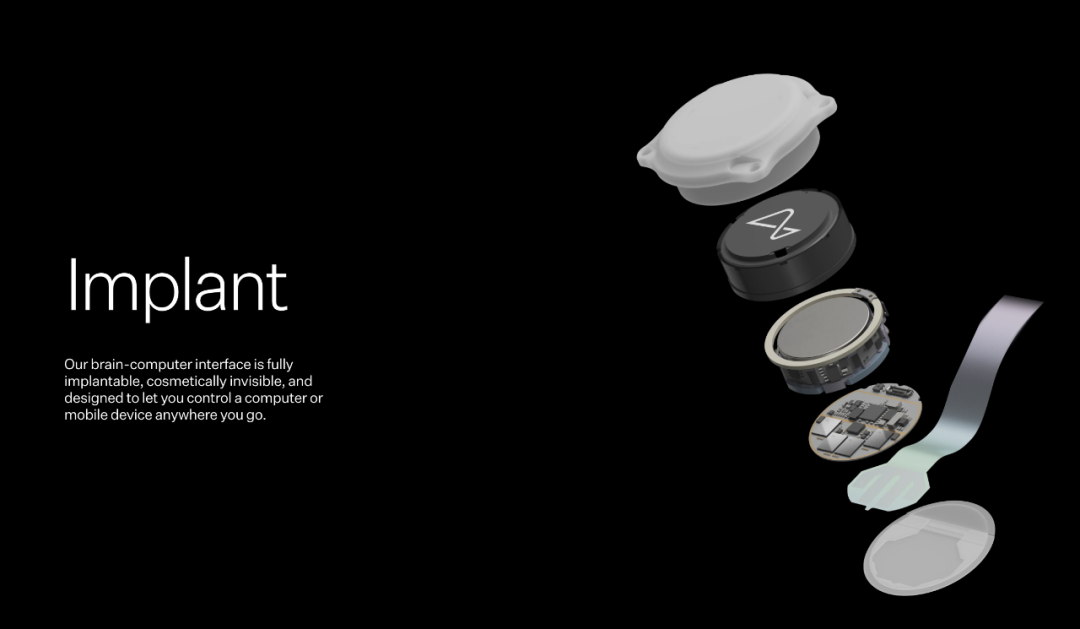
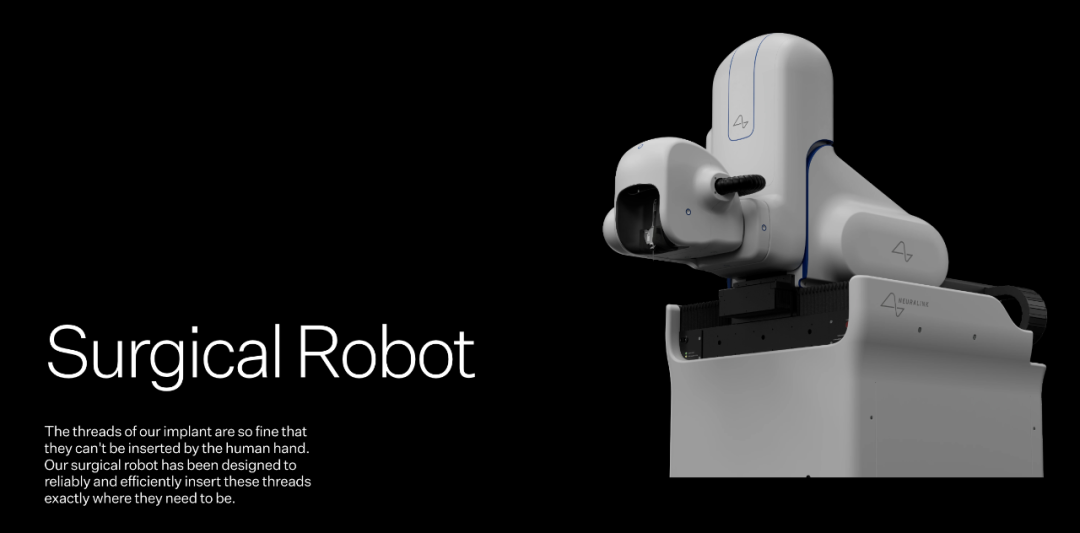
Implant N1 and Surgical Robot R1 (Image source: Screenshot from the Neuralink official website)
Introduction to Neuralink: This fully automated robotic surgery requires no general anesthesia, can be completed within an hour, and allows patients to be discharged on the same day. For subsequent daily use, the related device only needs to be charged overnight, providing a full day of battery life upon waking.
Neuralink stated that patients with quadriplegia resulting from cervical spinal cord injury or amyotrophic lateral sclerosis (ALS) may be eligible for enrollment. Participants are required to undergo 18 months of continuous clinical management, and the entire trial is expected to be completed in approximately six years.
FDA Rejects Then Approves, Sparking Ongoing Controversy
Before formally recruiting human volunteers for enrollment, Neuralink had already achieved success in experimental pigs.
On August 29, 2020, at the Neuralink brain-computer interface chip launch event, Musk provided an update on the latest status of the pigs implanted with the chips: they were in high spirits, and their electroencephalograms (EEG) could be visualized via the signals transmitted by the chips.(Click to view previous articles: Musk Unveils Brain-Computer Interface: Successfully Implanted in Pig Brains Without Damage, Trials to Be Conducted on Paraplegic Patients)
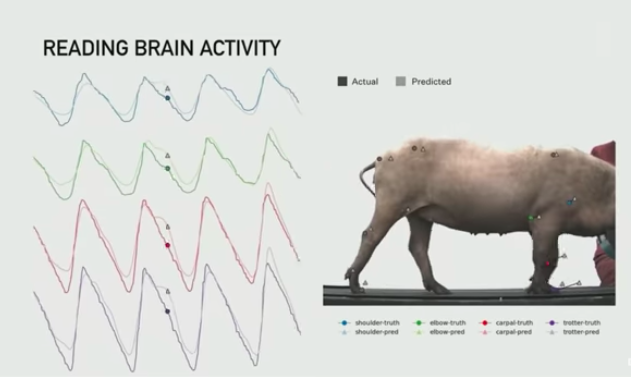
Image source: Screenshot from the released video
However, Neuralink’s initial application for human clinical trials was not approved by the FDA.
In 2022, the FDA rejected Neuralink’s related application due to “significant safety risks” and raised dozens of safety issues, including 10 that must be resolved before conducting human trials.including the safety of the device’s lithium battery, the potential for the implant’s micro-wires to migrate to other regions of the brain, and whether and how the device can be removed without damaging brain tissue.
Subsequently, Neuralink continued to submit relevant documentation, leading to a shift in the FDA’s stance.
On September 19, 2023, Neuralink’s official website issued an announcement stating that the PRIME Study had received approval from an independent institutional review board.Concurrently, the first hospital site was approved, initiating recruitment for the study’s first-in-human clinical trial.
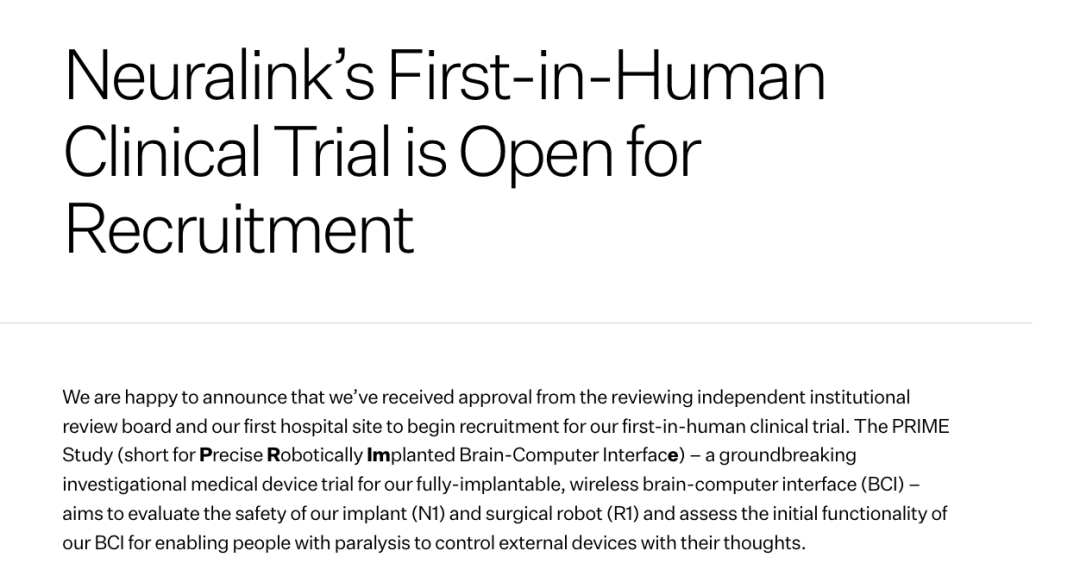
Image source:Neuralink