Omron to Cut 2,000 Jobs Amid Manufacturing Green Transition Push by Chinese Authorities

Neuralink
Brain-Computer Interface System Developer


Comprehensive Medical News
1. Seven Departments, Including the Ministry of Industry and Information Technology: Significant Results in Green and Low-Carbon Transformation of Manufacturing by 2030
Recently, the Ministry of Industry and Information Technology (MIIT) and six other departments issued Guiding Opinions on Accelerating the Green Development of the Manufacturing Sector. By 2030, significant progress will have been made in the green and low-carbon transformation of manufacturing; traditional industries will achieve an overall leap in their level of green development; industrial structure and layout will be markedly optimized; the proportion of green and low-carbon energy utilization will increase substantially; comprehensive resource utilization will steadily improve; pollutant and carbon emission intensities will decline significantly; total carbon emissions will peak; emerging industries will play a more prominent role as engines of green growth, with further improvements in scale and quality; the share of green and low-carbon industries will rise considerably; new forms of green integration will continue to emerge; foundational capabilities for green development will be greatly enhanced; green and low-carbon competitiveness will be further strengthened; and green development will become a solid foundation for advancing new-type industrialization. (Ministry of Industry and Information Technology)
2. National Health Commission: Over 6,700 college graduates recruited as village doctors in 2023
Recently, the State Council Information Office held a regular policy briefing. Li Bin, Deputy Director of the National Health Commission (NHC), announced at the meeting that the NHC, in collaboration with the Ministry of Agriculture and Rural Affairs and eight other departments, has established a special task force to strengthen the rural doctor workforce. The policy of “county-level management for township use, and township recruitment for village use” has been promoted, resulting in the recruitment of over 6,700 college-educated rural doctors in 2023. In coordination with the State Commission Office for Public Sector Reform, policies have been introduced to guarantee staffing quotas (bianzhi) for these college-educated rural doctors. Regarding increased investment in grassroots healthcare institutions, the central government has allocated 456 million yuan to support the enhancement of medical service capabilities and equipment facilities in 228 township health centers across 12 western provinces and the Xinjiang Production and Construction Corps. Moving forward, the NHC will further promote the development of a high-quality and efficient grassroots healthcare service system. (National Health Commission)
3. Guangdong Province Issues Action Plan for Cultivating Future Life and Health Industry Clusters
Recently, the Department of Science and Technology of Guangdong Province, the Development and Reform Commission of Guangdong Province, and the Department of Industry and Information Technology of Guangdong Province jointly issued the “Notice on the Action Plan for Cultivating Future Life and Health Industrial Clusters in Guangdong Province.” Guangdong will focus on cultivating and developing five industrial clusters: future electronic information, future intelligent equipment, future life and health, future materials, and future green low-carbon industries. The province will implement five key tasks: building systematic innovation platforms, improving the system for tackling key core technologies, establishing a tiered enterprise cultivation framework, fostering agglomeration zones for industrial innovation and development, and optimizing the ecosystem for the future life and health industry. Additionally, five major priority projects will be launched in gene technology, cell therapy, AI + biopharmaceuticals, synthetic biology, and brain science and brain-inspired research. By 2035, Guangdong aims to gather a group of innovative enterprises with international influence and voice, and to establish several globally leading hubs for the future life and health industry. (Guangdong Provincial Department of Science and Technology)
4. FDA Identifies Issues at Neuralink’s Animal Laboratory
Recently, less than a month after Neuralink announced approval for human testing of its brain-computer interface, the U.S. Food and Drug Administration (FDA) identified issues in the company’s animal experiment record-keeping and quality control. Investigators found quality control deficiencies at Neuralink’s California animal research facility, while similar inspections of its Texas facility revealed no problems. Issues identified by FDA inspectors included missing instrument calibration records. Other deficiencies included the failure of quality assurance officers to sign final study reports and the lack of documentation for any deviations from approved protocols or standard operating procedures. Currently, Neuralink is conducting human trials aimed at helping patients paralyzed due to spinal cord injuries or amyotrophic lateral sclerosis (also known as ALS) regain communication capabilities through brain-computer devices. (Jinrong Jie)
5. Shrinking Market Demand Leads to 2,000 Layoffs at Omron
Omron Corporation Announces Restructuring Plan to Cut Approximately 2,000 Jobs GloballyRecently, Omron Corporation of Japan announced that it has formulated a corporate restructuring plan to improve profitability. The company will lay off approximately 2,000 employees within its group both in Japan and overseas to optimize total personnel costs. In addition, Omron will seek voluntary early retirement applications from around 1,000 employees. Eligible candidates are regular employees who are aged 40 or above and have been with the company for three years or more as of July 20 this year. Omron is advancing measures to maximize the operating profit margin of its control equipment business and continues to optimize its business portfolio. Compared with the forecasts for fiscal year 2023, Omron expects its fixed costs in fiscal year 2025 to decrease by approximately JPY 30 billion (about RMB 1.435 billion). Data shows that the Omron Group has a global workforce of 39,427 employees. The headquarters employs 4,621 staff members, with an average age of 45.5 years. (China.org.cn)
6. Swiss Electrophysiology Company Argá Medtech Secures €54 Million in Series B Funding
Recently, Argá Medtech, headquartered in Switzerland, announced the completion of an oversubscribed Series B financing round totaling €54 million. The round was led by existing investors Advent Life Sciences and Earlybird Health, with participation from new investors Gilde Healthcare and an unnamed strategic investor. This funding will enable Argá Medtech to conduct Investigational Device Exemption (IDE) studies in the United States and CE marking studies in the European Union, thereby advancing the development of its innovative Coherent Sine-Burst Electroporation (CSE) Pulsed Field Ablation (PFA) system for the treatment of atrial fibrillation. Argá Medtech is a private medical device R&D company developing a next-generation non-thermal cardiac ablation system based on Coherent Sine-Burst Electroporation (CSE) technology for the treatment of cardiac arrhythmias, including atrial fibrillation. (EqualOcean)
7. “World’s First” Compliant Digital Product – “Compliance Connect”
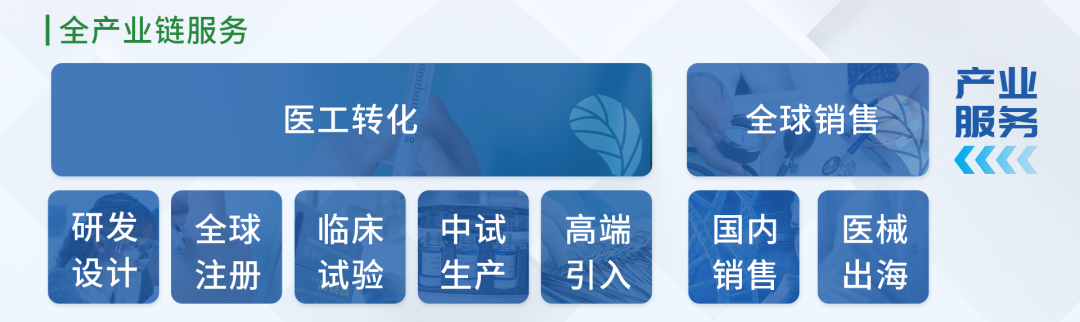
Since the comprehensive implementation of Good Manufacturing Practice (GMP) for medical devices in 2018, regulatory oversight has become increasingly stringent. Professionals in the medical device industry now face normalized product sampling inspections, routine unannounced audits, and regular public disclosure of regulatory information. To help medical device enterprises mitigate risks during the compliance process and achieve their compliance objectives, Ozda—a global leader in medical device industry services and regional medical device industry operations—has independently developed and launched “HeGuiTong,” a pioneering digital compliance product. This solution provides enterprises with a one-stop compliance service covering the entire lifecycle of medical devices, facilitating the advancement of compliance initiatives and enhancing operational efficiency. (Compiled by Ozda)
8. New Algorithm TarCA Reveals Early Cell Fate Determination
Recently, Professor He Xionglei’s team from the School of Life Sciences at Sun Yat-sen University constructed a developmental cell lineage tree based on cell lineage tracing technology. By integrating this with the classical coalescent theory from population genetics, they established a statistical method called TarCA to estimate ancestral cell population sizes, thereby investigating the dynamic changes in cell populations during embryonic development. The TarCA algorithm developed in this study can estimate the number of ancestral cells for any cell population without requiring prior information about progenitor cells. It can also infer driver genes within small cell subsets to predict early cell fate differentiation tendencies, helping to address issues related to developmental plasticity and age-related degeneration of tissue function. The relevant findings were published in Nature Methods. (Science Net)