Motif Neurotech Submits IPO Prospectus Following Successful First-in-Human Trial of Minimally Invasive, Skull-Penetrating Brain-Computer Interface

Neuralink
Brain-Computer Interface System Developer

Synchron
Developer of implantable neural interface products

In the World of Brain-Computer Interfaces,NeuralinkIt seemed to capture everyone's attention.
Not long ago, the company on X (formerlyTwitter) The platform released a video showcasing the company’s first human subject to receive a brain implant, named Telepathy.
The participant is a 29-year-old man with paralysis below the shoulders. After implantation of the chip, he can play chess and move a cursor using his brain. In the video, he stated that learning to control it was “like using the Force.”
This human trial caused a sensation, not because the subjects accomplished any special tasks.
In fact, scientists had already successfully achieved cursor control via brain implants as early as 2006; the ensuing sensation was solely due to the highly advanced nature of the technology.
The device it uses is small and wireless. The electrodes inside the device are thin and fragile, and must be implanted into the brain by a robot.
Meanwhile,NeuralinkElon Musk, the founder of Neuralink, is a figure who naturally attracts public attention. He has made bold claims about the company’s technology, and many people closely follow his every word and action.
It is well known that Elon Musk is interested in using brain-computer interface chips not only to restore functions lost due to injury or disease, but also to enhance cognitive capabilities.
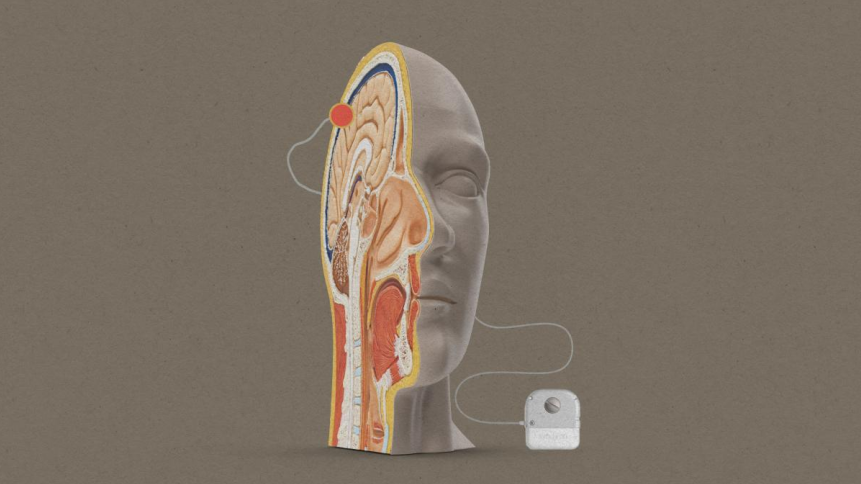
(Source: STEPHANIE ARNETT/MITTR | ENVATO, SYNCHRON VIA BUSINESSWIRE (DEVICE))
But among all the companies attempting to use brain-computer interfaces to help people who have lost the ability to move or speak,NeuralinkIt is not the only one.
With funding from Bill Gates and Jeff Bezos, New York-based Synchron has implanted brain-computer interface devices in 10 people.
Last week, it launched a patient registry program aimed at preparing for larger-scale clinical trials.
Now, let’s examine which other companies are developing brain chips, how much progress they have made, and what different technologies and approaches they have adopted.
Most companies working in this field share the same goal: to extract sufficient information from the brain to decode user intent.
This is designed to facilitate communication for individuals with limited mobility or speech capabilities, either by enabling them to control a computer cursor or by translating their brain activity into speech or text.
There are many ways to classify these devices, but Jacob Robinson, a bioengineer at Rice University in the United States, prefers to categorize them based on their invasiveness.
This represents a technical trade-off. The deeper the electrode, the greater the surgical invasiveness required for implantation, and consequently, the higher the risk.
However, deeper electrodes also come closer to the brain activity these companies aim to record, as they can capture higher-resolution information.
For example, enabling the device to decode speech. This isNeuralinkand the goals of companies such as Paradromics.
Jacob Robinson is the CEO and co-founder of Motif Neurotech, a company developing a brain-computer interface that penetrates only the skull (to be discussed in detail later).
In contrast,NeuralinkThe device is equipped with electrodes that penetrate the cerebral cortex. Robinson described it as being “within the outermost few millimeters.”
Two other companies, Austin-based startup Paradromics and Blackrock Neurotech, have also developed chips capable of penetrating the cortex.
Robinson said, “This allows you to get closer to neurons and obtain information about what each brain cell is doing.”
Positioning electrodes closer to neurons and increasing the number of electrodes capable of “listening” to their activity can enhance data transmission speed or “bandwidth.” The greater the bandwidth, the more likely the device is to translate brain activity into speech or text.
In terms of the number of participants, Blackrock Neurotech is far ahead. Since 2004, its Utah Array has been implanted in dozens of individuals. Many academic laboratories in the United States are using this array.
It is this array that forms the basis of Blackrock’s MoveAgain device, which received Breakthrough Device designation from the U.S. Food and Drug Administration in 2021. However, Robinson stated that its bandwidth may be lower thanNeuralinkequipment.
Robinson said, “Paradromics has the highest-bandwidth interface, but they have not yet demonstrated this in humans.”
Its electrodes are mounted on a chip the size of a watch battery, but the device requires a separate wireless transmitter that must be implanted in the chest and connected to the brain implant via wires.
However, all these high-bandwidth devices share a common drawback. In his 2022 TED Talk, Synchron founder Tom Oxley noted that they all require craniotomy, but “the brain really doesn’t like having needles inserted into it.”
Synchron has developed a stent-mounted electrode array, identical to the devices physicians use to support occluded arteries.
This device, known as the Stentrode, can be delivered via an incision in the neck into blood vessels above the motor cortex.
This unique delivery method avoids craniotomy. However, Robinson stated that placing the device above the brain rather than within it limits the amount of data it can capture.
He doubted whether the device could capture enough data to move the cursor, but it was sufficient to generate clicks. “They can click yes or no, up or down,” he said.
ByNeuralinkNewcomer Precision Neuroscience, founded by former executives, has developed a flexible electrode array thinner than a hair, resembling a strip of tape. It is slid onto the top of the cortex through a small incision.
The company launched its first-in-human trials in 2023. In these preliminary studies, the array was temporarily implanted in individuals undergoing brain surgery for other indications.
Last week, Robinson and his colleagues atScience AdvancesThe first-in-human trial of the Motif Neurotech device, which penetrates only the skull, was reported.
They temporarily placed this small, battery-free device above the motor cortex of a patient who was already scheduled to undergo brain surgery.
The device is referred to as Digitally Programmable Over-brain Therapeutic (DOT). When they activated the device, they observed movement in the patient’s hand.
The ultimate goal of Motif’s devices is not to generate movement, as they are targeting an entirely different application: alleviating mood disorders.
Robinson said, “Among all individuals with spinal cord injuries, many suffer from severe depression, and medications are ineffective for them. Their despair is no different from that of the general population; it simply goes unrecognized.”
However, research indicates that the device’s intensity is sufficient to stimulate the brain, marking the first step toward practical application.
According to reports, the device is positioned above the brain and therefore cannot capture high-bandwidth data. However, since Motif does not attempt to decode speech or assist users in moving a cursor via brain signals, such a high volume of data is not required.
Robinson said, “Your emotional changes are far less rapid than the words you speak.”
It remains to be seen which of these companies will emerge as the leader, but as the field begins to yield results, controlling devices with the brain no longer seems like a plot from science fiction.
Nevertheless, these devices will still be primarily used in individuals with severe physical impairments.
As forNeuralinkThe so-called “redefining the boundaries of human capability” and “expanding the ways in which we experience the world” should not lead one to expect that brain implant technology will achieve these goals anytime soon.
Support: Ren
Layout: Luo Yi


01/ A Major Step for AI Toward Biological-Level Intelligence: Beihang University Team Develops Novel Artificial Neural Components Capable of Ultrafast and Ultra-Precise Responses to External Signals