Neuralink Announces 'Blindsight' as Next-Generation Product to Restore Vision for the Blind

Neuralink
Brain-Computer Interface System Developer

“Blindsight is the next”。
“Blindsight is next” — Elon Musk

On Thursday, Musk stated that following “Telepathy,” the next product from his brain-computer interface company, Neuralink, will be “Blindsight,” designed to help blind individuals restore their vision and regain sight.
Here, "blindsight" primarily refers to vision loss caused by optic nerve damage, but it may also refer to vision loss resulting from all optic nerve disorders.
Previously, Musk retweeted a video from Neuralink, showcasing its first brain-computer chip recipient using thought alone to play chess and video games on a computer.
Elon Musk’s fan “DogeDesigner” subsequently shared a video clip of Musk’s previous remarks, in which he stated, “Even if someone has never had vision, as in the case of congenital blindness, we believe we can still use Neuralink to restore sight.” Musk responded, “Blindsight is the next Neuralink product after telepathy.”
Elon Musk and Neuralink’s Blindsight product is not merely a technological innovation, but a profound transformation for human society. It will help blind individuals living in darkness regain the ability to perceive the colors and light of the world, representing a significant enhancement to the quality of human life.
Meanwhile, the launch of the Blindsight product will further drive the development and application of brain-computer interface technology, bringing humanity more unprecedented possibilities.
We must also clearly recognize that this technology still faces numerous challenges and uncertainties. For instance, how can the safety and stability of brain-computer interface (BCI) technology be ensured? How can long-term biocompatibility with the brain be maintained after chip implantation? Furthermore, could this technology have potential impacts on an individual’s cognition and behavior? These questions warrant in-depth reflection and discussion. Encouragingly, Musk and Neuralink’s Blindsight product has opened a new frontier, revealing the boundless possibilities of integrating technology with human nature.
We look forward to the further development of this technology and hope it will bring light and hope to more people in need.
On the Visual System of the Human Brain
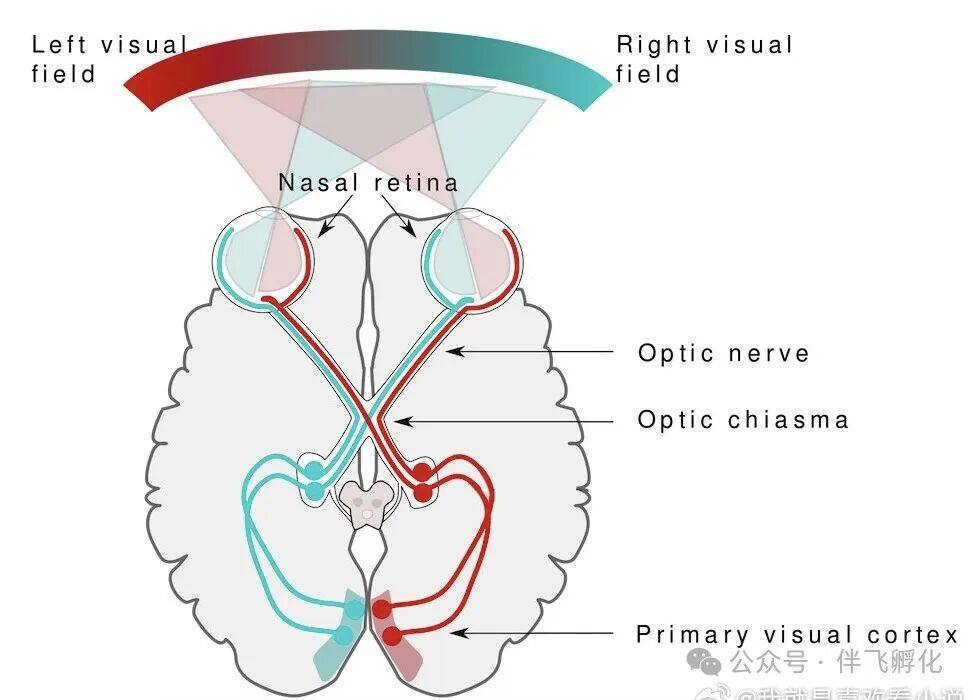
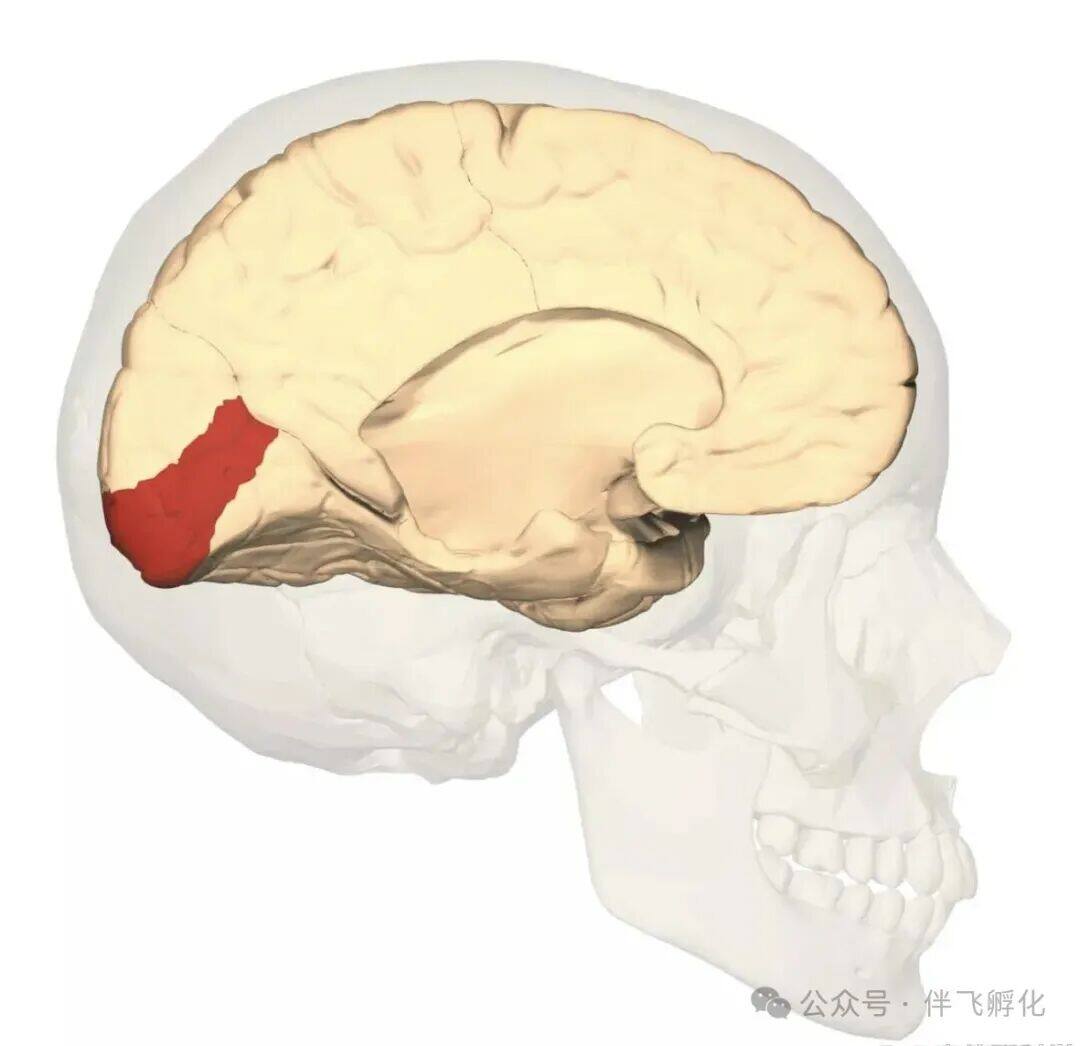
By way of analogy, the brain’s “graphics card” is located in the occipital lobe, at the back of the head, and is known as the primary visual cortex (or striate cortex).
However, mammals have two “graphics cards”: in addition to the more advanced one mentioned above, there is also a primitive one.
This low-spec “graphics card” is common to all vertebrates, including fish, amphibians, and reptiles; it is located in the optic tectum of the midbrain and also receives signals from the retina.
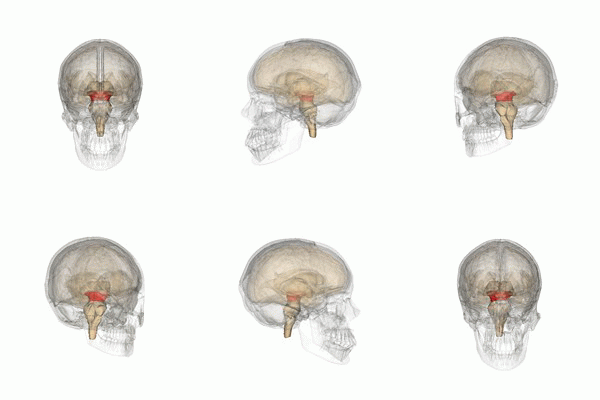
The optic tectum is one of the most conserved “hardware” components in the vertebrate brain, present in both primitive vertebrates (such as lampreys) and humans.
Due to its overly basic and hardcore functionality, no vertebrates have eliminated it.
What is the function of the tectum?
By leveraging place cells that recognize internal landmarks, head-direction cells that track head orientation, and border cells that identify boundaries, the optic tectum can assist vertebrates in predation, escape, and head turning.
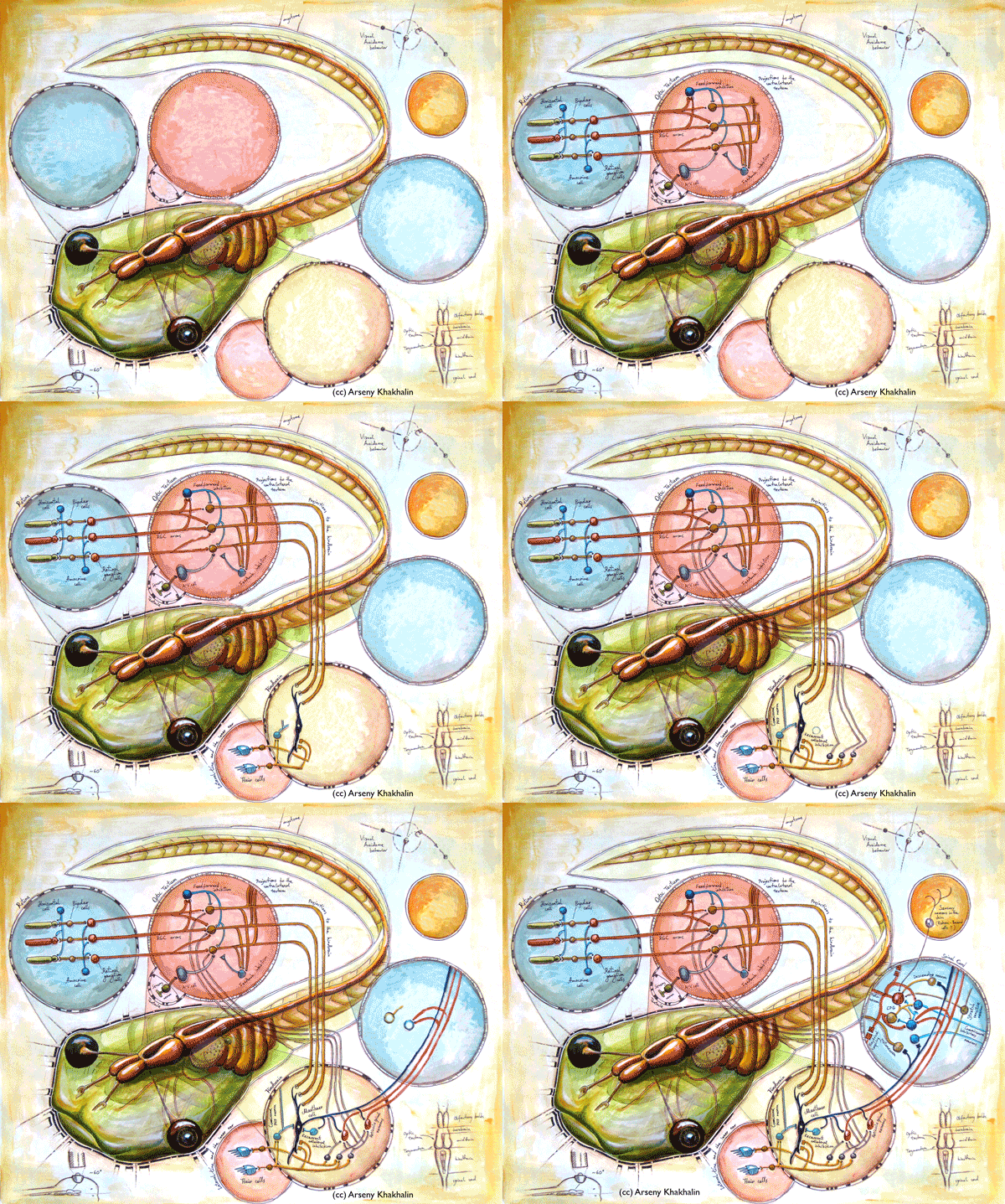
However, the degree of reliance on the optic tectum varies among different vertebrates. Richard Held, a professor of brain science at the Massachusetts Institute of Technology, pointed out that the midbrain visual system plays an important role in lower mammals.
Manipulating the optic tectum with minor interventions can even control certain simple vertebrates, such as zebrafish, inducing “hallucinations” in them.
Zebrafish are more primitive than humans, and their behavior is governed by the optic tectum. Although primates, which are evolutionarily closer to humans, are not entirely controlled by the optic tectum, they can still rely on it for navigation in the event of blindness.
—— End ——
Source: Banfei Incubation
Reference: Hithink RoyalFlush 7x24 News Flash, Xidekan Technology
For academic sharing only. If there is any infringement, please leave a message, and the infringing content will be deleted immediately!

Join the Community
Welcome to the Brain-Computer Interface Community Group Chat,
Explore Topics in the Field of Brain-Computer Interfaces and Track the Frontiers of BCI in Real Time.
Join WeChat Group:
Add WeChat: RoseBrain [Note: Name + Industry/Profession].
Join QQ Group: 913607986
Submissions Welcome
1. Submissions are welcome. For submission inquiries, please contact us on WeChat: RoseBrain
2. To join the community as a part-time creator, please contact WeChat: RoseBrain