FDA Approves First Gene Therapy for Fatal Pediatric Neurological Disease MLD

Neuralink
Brain-Computer Interface System Developer


Comprehensive Medical News
1. Call for Information on Relevant Enterprises and Institutions for the Development of Two Technical Review Guidelines for In Vitro Diagnostic Reagent Registration by the Center for Medical Device Evaluation
Recently, in accordance with the 2024 plan for the development of guidelines, and to further improve the technical review of related products, the Center for Medical Device Evaluation of the National Medical Products Administration (NMPA) has solicited information from relevant enterprises and institutions for the development of two registration review guidelines for in vitro diagnostic reagents. These are the "Guideline for Registration Review of Dengue Virus NS1 Antigen Detection Reagents" and the "Guideline for Registration Review of Helicobacter pylori Drug Resistance Gene Detection Reagents." The deadline for submission is April 12, 2024. (Center for Medical Device Evaluation)
2. The 2024 National Cosmetics Supervision and Administration Work Conference Was Held in Hangzhou
Recently, the 2024 National Conference on Cosmetics Supervision and Administration was held in Hangzhou, Zhejiang Province. The conference emphasized the need to accurately understand the current landscape of cosmetics supervision and comprehensively grasp the current direction of regulatory efforts. The conference outlined five key tasks for cosmetics supervision in 2024: strengthening the capacity building for cosmetics supervision and improving the regulatory legal framework; employing various measures comprehensively to enhance the safety assurance capabilities of cosmetics supervision; continuously innovating management systems to promote high-quality development of the cosmetics industry; providing guidance and services to ensure the smooth implementation of the cosmetics safety assessment system; and highlighting political integrity while coordinating the development of the cosmetics supervision workforce. (National Medical Products Administration)
3. Jilin: Further Improve the Medical Insurance Payment and Administrative Management of Family Doctor Contract Service Fees
Recently, the Jilin Provincial Healthcare Security Administration issued a Notice on Further Improving the Medical Insurance Payment and Administrative Management of Family Doctor Contracted Service Fees. The Notice specifies that services should prioritize key populations, with a particular focus on contracting and providing services to individuals aged 65 and above, patients with chronic conditions such as hypertension and diabetes, persons with disabilities, patients with severe mental disorders, and families under special family planning programs. Services for other groups shall be implemented in accordance with the requirements of the health authorities. Key services provided to contracted individuals include medical consultations and prescription issuance, treatment referrals, policy guidance and education regarding outpatient chronic disease categories, benefits, and certification procedures, as well as psychological support and health education. The family doctor contracted service fee and the general consultation fee shall not be charged or reimbursed concurrently. For insured individuals who have signed contracts, no separate charges shall be levied for items already included in the basic service package, such as general consultation and registration fees. For insured individuals who have not signed contracts, the existing policies on charging and medical insurance reimbursement for general consultation fees shall continue to be implemented. (Jilin Provincial Healthcare Security Administration)
4. Neuralink’s First Brain-Computer Interface Chip Recipient Can Now Play Chess
Recently, Neuralink, the brain-computer interface (BCI) company under Tesla CEO Elon Musk, disclosed the latest update on its first human implant recipient, stating that the quadriplegic man can now play video games and online chess using only his thoughts. Video footage shows the patient, Noland Arbaugh, playing chess and the video game Civilization VI on a computer. Arbaugh, 29, suffered a spinal cord injury in a “bizarre diving accident” eight years ago, leaving him paralyzed from the shoulders down. He was discharged the day after undergoing the Neuralink procedure in January, with the surgery proceeding very smoothly. (The Paper)
5. FDA Approves First Gene Therapy for Treating Fatal Neurological Disease in Children
Recently, the U.S. Food and Drug Administration (FDA) announced the approval of Lenmeldy, a gene therapy developed by Orchard Therapeutics, for the treatment of pediatric patients with metachromatic leukodystrophy (MLD) who meet specific criteria. This marks the first MLD therapy approved by the agency. MLD is caused by mutations in the arylsulfatase A (ARSA) gene, leading to the accumulation of sulfatides in the brain and other parts of the body. This results in neurological damage, causing motor, behavioral, and cognitive decline, as well as severe spasticity and seizures. The safety and efficacy of Lenmeldy were evaluated based on data from 37 pediatric patients, with the primary efficacy endpoint being survival without severe motor impairment. (Health界)
6. Vascular Intervention Innovator Hengyu Medical Secures Tens of Millions in Financing
Recently, Tianjin Hengyu Medical Technology Co., Ltd. announced the completion of a financing round amounting to tens of millions of RMB. The round was led by existing shareholder Tasly Capital, with participation from a biomedical fund jointly established by Haihe Fund and Haitai Capital. The proceeds will support R&D, manufacturing, and regulatory registration, with a particular focus on accelerating the commercial promotion of already marketed products. Founded in 2016, Hengyu Medical specializes in the independent R&D, production, and sales of intravascular ultrasound (IVUS) systems and catheters, optical coherence tomography (OCT) systems and catheters, integrated IVUS/OCT dual-catheter systems, non-invasive fractional flow reserve (FFR) platforms based on IVUS and OCT, single-source dual-modality OCT-NIRS technology combining OCT with near-infrared spectroscopy, and intravascular laser plaque ablation technology. (Medical Observer)
7. “World’s First” Compliance Digital Product – “Compliance Connect”
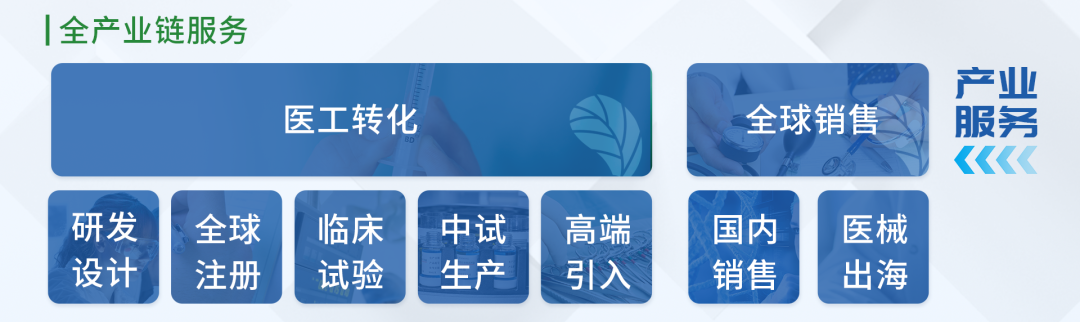
Since the comprehensive implementation of Good Manufacturing Practice (GMP) for medical devices in 2018, regulatory oversight has become increasingly stringent. Professionals in the medical device industry now face normalized routine sampling inspections, unannounced audits, and public disclosure of regulatory information. To help medical device enterprises mitigate risks and achieve compliance objectives during their compliance journey, OSCIDA, a global leader in medical device industry services and regional industrial operations, has independently developed and launched “HeGuiTong” (Compliance Connect), a pioneering digital compliance solution. As a guide to regulations throughout the entire lifecycle of medical device products, HeGuiTong ensures comprehensive compliance in corporate operations and product development. It intelligently enables presetting of compliance standards, real-time feedback on compliance status, proactive screening of compliance risks, and provides precise guidance for responsive compliance actions. (Compiled by OSCIDA)
8. Dutch Scientists Announce Successful Removal of HIV from Cells
Recently, researchers from the University of Amsterdam in the Netherlands announced at a recent medical conference that they had successfully excised HIV from infected cells using gene-editing technology. Operating on a principle similar to that of scissors, this gene-editing technique removes or inactivates HIV-infected cells by cutting DNA. According to the researchers, existing antiretroviral drugs for HIV treatment can only suppress the virus but cannot eliminate it. If this new technology is further developed, it holds the promise of clearing all HIV from the human body, thereby curing AIDS. Currently, this technology remains at the “proof-of-concept” stage, and it will take a considerable amount of time before it can be truly applied to the treatment of AIDS. Further research is still needed to address potential off-target effects and long-term side effects associated with this technology. (Guangming Online)