

Neuralink's Second Human Subject Achieves Complex Tasks Including CS Gaming and CAD Modeling via Brain-Computer Interface

Neuralink
Brain-Computer Interface System Developer

Neuralink Announces Second Subject Has Begun 3D Modeling via Brain-Computer Interface
On August 21 local time, Neuralink, the brain-computer interface company under Tesla CEO Elon Musk, stated that the second subject who received a brain-computer interface implant is recovering well.
After being connected to the computer, the subject was able to control the cursor with his mind in less than five minutes. Currently, his ability to play video games continues to improve, and he has begun learning how to use computer-aided design (CAD) software for 3D modeling.
Neuralink emphasized that this marks another significant step toward “high-performance interaction,” which is expected to enhance the control of digital devices by individuals with quadriplegia and help them regain their independence.
The second subject began modeling using CAD software.
Introduction to Neuralink: The subject, named Alex, was formerly an automotive technician who repaired various types of vehicles and heavy machinery before sustaining a spinal cord injury.
The subject also recovered rapidly. The surgery was performed at the Barrow Neurological Institute, and Alex was discharged from the institute the day after the procedure.
Alex stated that he enjoys using brain-computer interfaces to play the first-person shooter game Counter-Strike (CS). Such games involve relatively complex controls, typically requiring multiple input methods, including two independent joysticks (one for aiming and the other for movement) and a series of buttons.
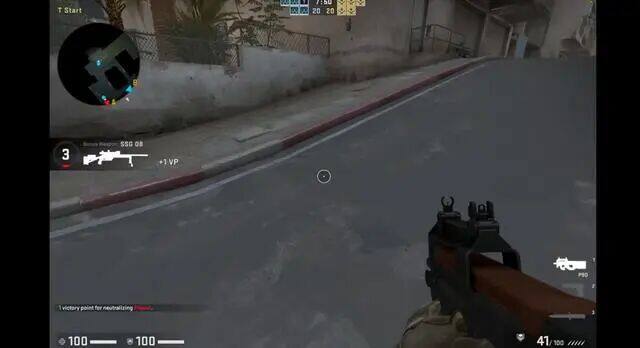
Alex is playing "Counter-Strike" (CS).
Unlike Neuralink’s first disclosed trial participant, Alex has also made significant progress in 3D modeling. On the second day of using the brain-computer interface (BCI), Alex successfully designed a custom mount for a BCI charger using the CAD software Fusion 360, which was then 3D-printed and integrated into his device.
“We are collaborating with Alex to expand his control options by mapping intended actions to different types of mouse clicks (e.g., left-click, right-click, middle-click), enabling him to rapidly switch between various modes in CAD software (such as zooming, scrolling, panning, and click-and-drag), thereby enhancing his work efficiency when using the brain-computer interface,” stated Neuralink.
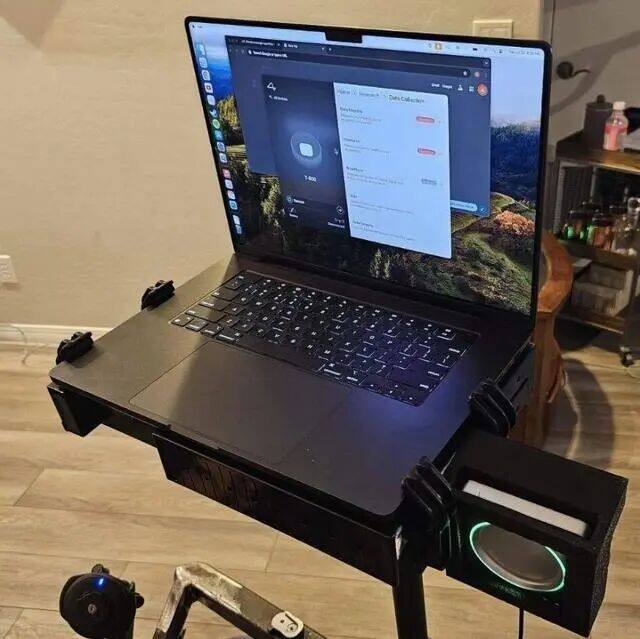
To the right of Alex's laptop is a 3D-printed charger stand designed by him.
Resolution of the Wire Retraction Issue in Brain-Computer Interfaces
It is worth noting that this subject did not experience the wire retraction observed in the first surgical case.
Neuralink Introduction: To reduce the probability of wire retraction in the second participant, a series of protective measures were implemented, including minimizing brain movement during surgery and reducing the gap between the implant and the brain surface.
On January 29 this year, Noland Arbaugh, the first human patient, received a Neuralink implant. Musk introduced, “You can control your phone or computer just by thinking, and through them, control almost any device. The initial users will be those who have lost their limbs. Imagine if Stephen Hawking could communicate faster than a typist or an auctioneer. That is our goal.”
On February 20, during a SpaceX live broadcast on X, Musk once again revealed new progress, stating that Arbaugh “appears to have fully recovered, with no adverse effects known to us. The subject can move the cursor on the computer screen simply by thinking.”
However, on May 8, Neuralink revealed that some of the electrodes implanted in Arbaugh’s brain tissue had retracted and become dislodged, impairing data transmission rates, causing partial data loss, and rendering the device inoperable.
Neuralink also updated in its latest blog post that the issues of wire retraction and detachment in the first patient have been resolved, and the current status of the subject using the brain-computer interface is very stable.
Neuralink, founded in 2016, focuses primarily on brain-computer interfaces (BCIs), aiming to enable “human-brain–machine interaction” through the development of implantable brain devices. Since its inception, the company has secured multiple rounds of financing. According to foreign media reports, Neuralink’s valuation had already exceeded $5 billion by June 2023.
In Musk’s view, Neuralink has the potential to enhance AI safety. The slow speed of human communication inevitably weakens the connection between humans and computers. If human output rates could be significantly increased, humans would be better able to integrate human intent with artificial intelligence. He believes that, with the help of brain-computer interfaces, human information output rates could potentially increase by three, six, or even more orders of magnitude.
In a recent interview, Elon Musk revealed that Neuralink is expected to provide implants to eight additional patients this year. This means that Neuralink will have completed clinical trials of brain-computer interface implants in a total of 10 patients this year.
Source: The Paper; Reporter: Wu Yuli
For academic sharing only. If there is any infringement, please leave a message and it will be deleted immediately!

Join the Community
Welcome to the Brain-Computer Interface Community Exchange Group,
Explore topics in the field of brain-computer interfaces and track cutting-edge developments in real time.
Join the WeChat group:
Add WeChat: RoseBCI [Note: Name + Industry/Profession].
Join QQ Group: 913607986
Submissions Welcome
1. Submissions are welcome. For submission inquiries, please contact us via WeChat: RoseBCI
Click to Submit:Submission Guidelines for Academic News in the Brain-Computer Interface Community
2. To join the community as a part-time creator, please contact us on WeChat: RoseBCI

One-click Triple Action: “Share,” “Like,” and “Watch”
Stay Ahead of Every Breakthrough in Brain-Computer Interface Technology