Recently, Elon Musk revealed on a podcast that his brain-computer interface company, Neuralink, has successfully implanted its device in a second human patient.He stated that although he did not wish to jump to conclusions prematurely, the project appeared to be progressing quite smoothly, with strong brain activity signals observed in the patient and the implanted device currently functioning well.This February, Musk announced that the first patient to receive a brain-computer interface implant from Neuralink Corp was recovering well, with no adverse effects observed, and had already achieved the ability to move a cursor on a screen using only their thoughts.This news not only marks another major breakthrough for Neuralink in brain-computer interface technology, but also rekindles a glimmer of hope for families affected by autism.No.1
The Historical Development and Current Breakthroughs of Brain-Computer Interfaces
Brain-Computer Interface (BCI) technology is not a new concept; it was first proposed in 1973 by Jacques Vidal of the University of California, Los Angeles.BCI technology aims to achieve information exchange and functional integration between the nervous system and external devices by establishing a direct connection between the human brain and those devices. This technology bypasses conventional peripheral nerve and muscle output pathways, creating a novel communication and control channel directly between the brain and external devices.After decades of development, brain-computer interface (BCI) technology has made significant progress. According to reports, the global BCI market size reached $1.98 billion in 2023 and is projected to grow to $3.3 billion by 2027, with a compound annual growth rate (CAGR) of approximately 14%. This rapid market expansion is driven by the continuous emergence of new technologies, increased emphasis on national strategies, and expanding application demands.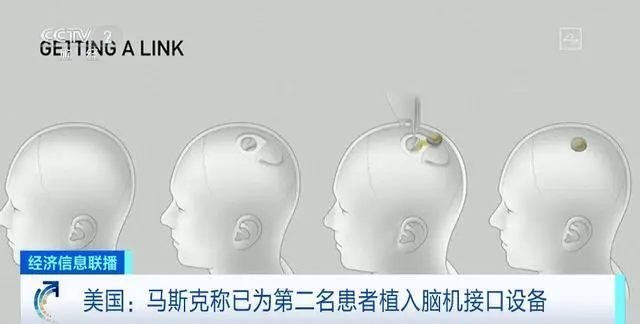
In the classification of brain-computer interface (BCI) technologies, invasive BCIs have garnered significant attention due to their ability to directly acquire high-quality neural signals. However, this technology requires surgical implantation of electrodes into the cerebral cortex or gray matter, entailing substantial surgical risks and costs. In contrast, non-invasive BCIs record and interpret brain activity via wearable devices attached to the scalp. Although these systems yield lower signal quality, they eliminate the need for surgery, thereby reducing risk and facilitating experimental procedures.Neuralink, under Elon Musk’s leadership, is undoubtedly a frontrunner in the field of invasive brain-computer interfaces (BCI). Since its establishment in 2016, Neuralink has been dedicated to developing novel microdevices capable of enabling direct communication between the brain and computers.In May 2023, Neuralink received approval from the U.S. Food and Drug Administration (FDA) to officially launch its first human clinical study. This milestone paved the way for Neuralink’s brain-computer interface (BCI) technology to transition from the laboratory to clinical application.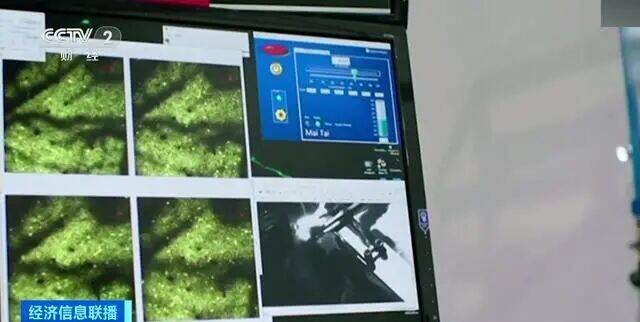 In early 2024, Neuralink announced the successful implantation of a brain-computer interface device in its first human patient and subsequently revealed that the patient was recovering well, able to control a computer cursor and keyboard using thought alone.This achievement not only demonstrates the feasibility of Neuralink’s technology but also instills strong confidence in its subsequent clinical trials.Subsequently, Musk announced on the podcast that Neuralink had successfully implanted a brain-computer interface device in its second patient, with the project progressing smoothly; the patient’s brain activity signals were strong, and the implanted device was functioning well.However, Neuralink’s development path has not been smooth. Despite significant technological breakthroughs, controversies surrounding its safety and ethics have never ceased. When approving Neuralink for human clinical trials, the U.S. Food and Drug Administration (FDA) raised concerns about the device’s safety, including the safety of the implanted lithium battery and the potential risk of tiny wires migrating to other areas of the brain.Furthermore, reports have indicated that Neuralink’s experiments on monkeys resulted in adverse outcomes such as paralysis, seizures, and cerebral edema, sparking widespread public skepticism regarding the safety of its technology.
Neuralink’s BCI technology holds broad application prospects. Musk has stated that the ultimate goal of this technology is to go beyond restoring lost cognitive functions in individuals with disabilities, including those with autism, by endowing humans with superhuman capabilities.He envisions that, in the future, users will be able to control Tesla’s humanoid robot, Optimus, via Neuralink devices using their thoughts, potentially even achieving “human-machine symbiosis.” This vision is not only exhilarating but also sparks boundless imagination about the future of technological life.
In the medical field, Neuralink’s brain-computer interface (BCI) technology holds immense potential. For individuals who have lost limb function, this technology promises to restore their ability to control external devices, thereby significantly improving their quality of life.Furthermore, Neuralink is also exploring the application of BCI technology in treating neurological disorders such as autism, enabling paralyzed individuals to walk again, and restoring vision to the blind. These prospective applications not only bring hope to patients but also open up new research directions for the medical community.
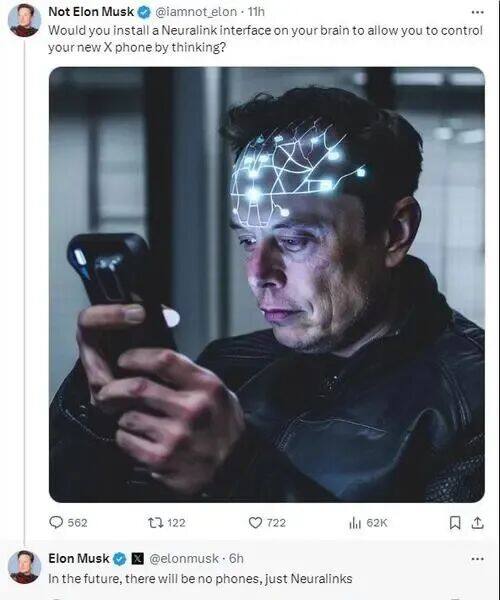
However, the application of BCI technology also faces numerous challenges. In addition to technical safety concerns, ethical controversies are another aspect that cannot be overlooked. Brain-computer interface devices directly reflect brain signals, which may infringe upon personal privacy rights. Furthermore, as the technology continues to advance, brain-computer interfaces may impact social equity in the future, a matter that also requires attention and resolution.Globally, brain-computer interface (BCI) technology is in a phase of rapid development. In addition to Neuralink, numerous other companies are developing similar BCI technologies and have already entered the stage of human clinical trials.For example, Chinese teams have also made significant progress in the field of brain-computer interfaces. The wireless, minimally invasive implanted brain-computer interface NEO, jointly developed by the team from Tsinghua University School of Medicine and Xuanwu Hospital, has achieved breakthrough progress in clinical trials.At the policy level, governments around the world are also actively promoting the development of brain-computer interface (BCI) technology. For instance, China has launched the "China Brain Project," aiming to achieve internationally leading outcomes over the next 15 years in three frontier areas: brain science, early diagnosis and intervention for brain disorders, and brain-inspired intelligent devices. Furthermore, the "Implementation Opinions on Promoting Innovation and Development of Future Industries," jointly issued by seven departments including the Ministry of Industry and Information Technology, explicitly lists brain-computer interfaces as one of the ten landmark innovative products.
No.2
Revisiting the Therapeutic Potential of Brain-Computer Interfaces for Autism
Although autism cannot be completely cured by brain-computer interfaces, some patients may benefit from professional training to improve their social and communication skills.This is because brain-computer interface technology can influence human behavioral patterns, particularly those related to social interaction, by monitoring and modulating brain activity.
For example, non-invasive brain-computer interface devices can enable early diagnosis and intervention by monitoring patients’ electroencephalogram (EEG) data, and provide targeted coaching and training based on the data to improve their social skills.
Particularly invasive brain-computer interfaces, such as the devices being developed by companies like Neuralink,Brain chips can be surgically implanted to directly monitor and regulate neural activity, thereby altering neuronal excitability and adjusting brainwave states, which may potentially alleviate symptoms in patients with autism.
However, it is important to note that research in this field remains in the exploratory and early-stage trial phase, as the pathogenesis of autism spectrum disorder is not yet fully understood and invasive surgical procedures carry significant risks.In addition, brain-computer interface technology can monitor and analyze patients' electroencephalogram (EEG) data,To provide auxiliary tools for the early diagnosis of autism. This facilitates timely detection and intervention for autism symptoms, thereby improving patient prognosis.During the treatment of autism, brain-computer interface technology can also be used to evaluate therapeutic efficacy. By comparing changes in patients' electroencephalogram (EEG) data before and after treatment, the effectiveness of the intervention and the patient's recovery status can be objectively assessed.
It is worth noting that invasive brain-computer interface surgery carries significant risks, such as infection, hemorrhage, and rejection. Furthermore, the long-term operation of implanted devices within the human body may also lead to other complications.Therefore, ensuring the safety of the technology is a critical prerequisite for the application of brain-computer interface technology in the treatment of autism.Currently, the research, development, and application costs of brain-computer interface (BCI) technology are relatively high, which may pose an unaffordable burden for most families.Therefore, reducing technological costs and increasing adoption rates are also key areas for future efforts.As technology continues to advance and its applications expand, brain-computer interface (BCI) technology is poised to bring transformative changes to human life in the future. Through the collective efforts and continuous exploration of the global scientific and technological community, BCI technology will gradually mature and become more refined. For families affected by autism, this may represent a new beacon of hope.