

Exclusive Interview with Yu Xiang of CAS Star: BD Frenzy + Commercialization Pressure, How to Invest in Early-stage Hard-tech Healthcare?
In 2025, innovative healthcare in China once again achieved a breakthrough.
Taking the most intuitive product end as an example,In 2025, a total of 76 innovative drugs were approved for marketing in China, nearly doubling the number from 2024, including 11 first-in-class drugs globally., covering multiple fields such as oncology, metabolic diseases, autoimmune diseases, and rare diseases. The same is true for medical devices. According to data from Yaozhi Medical Device,In 2025, a total of 109 innovative medical devices were approved for marketing in China, among which the number of Class III innovative devices reached a record high, increasing by 19.67% year-on-year.。
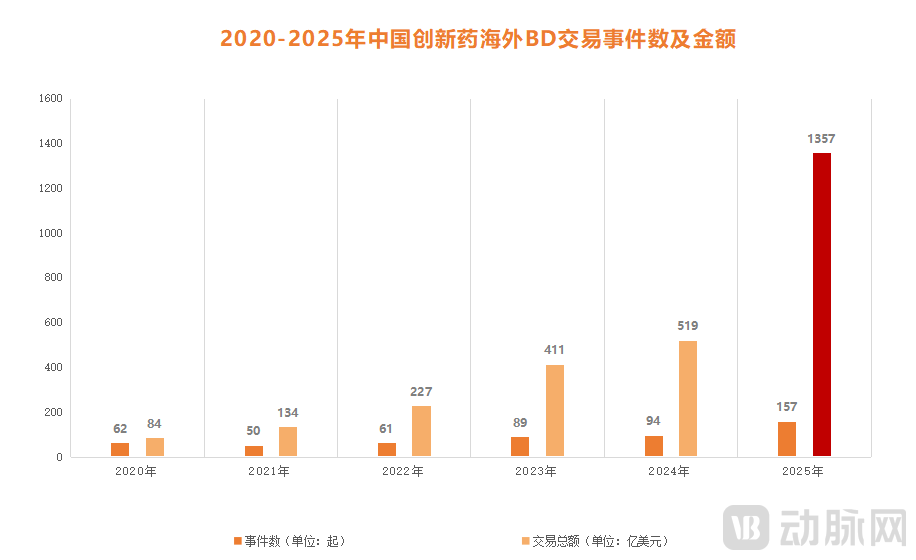 Figure 1. Number and Amount of Overseas BD Deals for Innovative Drugs in China, 2020-2025 (Data Source: PharmaCube)
In addition to the significant increase in quantity, the innovation of products is also improving remarkably, which has been well validated by the booming BD deals. According to the PharmaCube database,In 2025, China's innovative drug sector completed 157 BD overseas licensing deals, with a total transaction value of $135.655 billion, including $7 billion in upfront payments. These three key figures all set new historical records.At present, the momentum of global capital rushing to invest in China's innovative drugs continues, and it has become a key strategic source for many multinational pharmaceutical companies to address the patent cliff and replenish their innovative pipelines.
Compared with innovative drugs, domestically produced innovative medical devices, although lacking BD support, have shown remarkable performance in mergers and acquisitions and overseas expansion. Taking mergers and acquisitions as an example, according to data released by VCBeat Capital,In 2025, the domestic medical device M&A transaction volume in China surged by 45% year-on-year, with PE/VC participation accounting for 67% of domestic M&A deals in the first half of the year, nearly twice that of strategic investors.In terms of going global, in 2025, the overseas revenue of many device companies achieved significant growth. Moreover, the exported products are no longer dominated by traditional low-value consumables. High-end device products such as cardiovascular intervention, surgical robots, medical imaging equipment, and electrophysiology have gradually entered the mainstream global market.
Obviously,"Innovation" remains the core engine for breaking through the current困境 of internal competition in the medical industry and unlocking the增量 market.. Thus,"Invest early, invest small, invest long-term, invest in hard technology"The industry consensus will gradually deepen by 2025, with a large amount of leading capital flowing towards key innovative forces that are guided by real clinical needs, building technical barriers at the source, and driving the medical industry from "follower competition" toward "original breakthroughs."
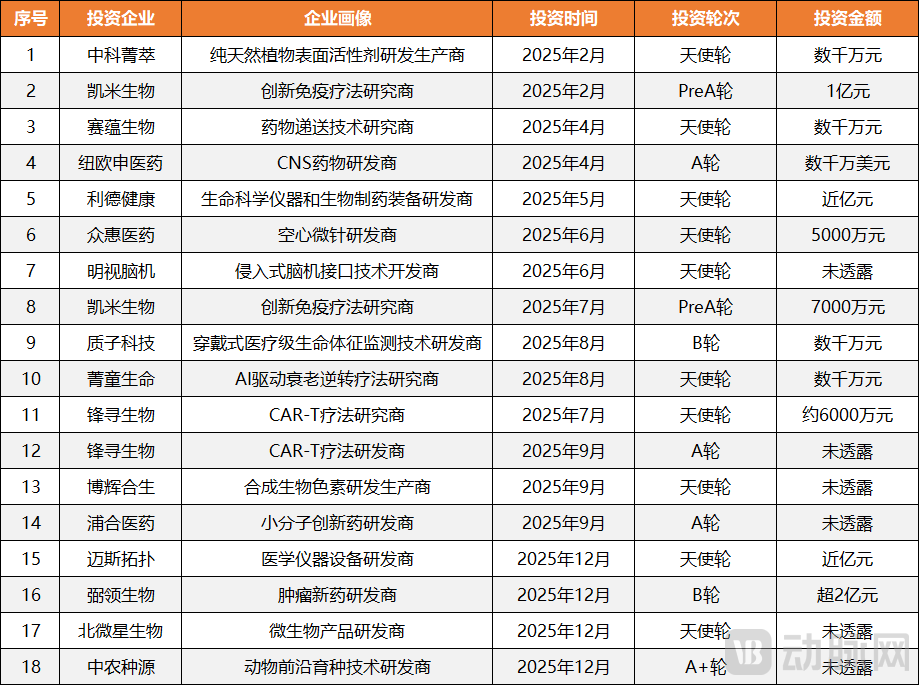
Figure 2. CAS Star 2025 Investment List of Medical Enterprises (Data Source: VCBeat Database)
As a pioneer in "hard technology" investment, CAS Star maintains a high-frequency investment approach and focuses on source innovation in the medical field in 2025.A total of 18 investments were completed throughout the year, with nearly 90% of them being pre-Series A financing., mainly targeting frontier fields such as gene editing, cell therapy, targeted delivery technology, wearable smart medical devices, and brain-computer interfaces. Entering 2026, it continues to increase its investment. As of the time of writing, Zhongke Chuangxing has already completed four investments in the medical field this year, including a high-performance signal chain integrated circuit developer.CorePower, Tumor New Drug R&D ManufacturerBilin Biotech, Protein Degradation Technology New Drug DeveloperAtekand AI-driven aging reversal therapy research providerJing Tong Life。
So, how did all of this happen?
During the Spring Festival, VCBeat conducted a special interview.Yu Xiang, Group Leader of Zhongke Chuangxing Biomedical Team and Managing Director, hoping to further explain the core logic of Zhongke Chuangxing's "investing early, investing small, and investing in long-term hard technology" through an in-depth dialogue, and comprehensively look forward to the investment trends and opportunities in China's innovative healthcare sector by 2026.
For readers' better comprehension, the following is the edited dialogue between VCBeat and Yu Xiang, Managing Director of CAS Star.
How Has the Logic of Healthcare Venture Investment Changed in 2025?
VCBeatIn 2025, the "shrinking volume with rising value" characteristic became prominent in China's medical venture capital sector, where the number of investment events decreased but the total investment amount significantly increased. The funds were highly concentrated in mature projects validated by the market and innovative medical fields with high technological barriers. As a deep participant in this field, what are the tangible insights from Zhongke Chuxing?
Yu Xiang: As the national strategy further focuses, industry consensus has been formed in multiple细分 tracks. Capital is highly concentrated in leading projects, especially in cutting-edge fields such as brain-computer interface, innovative drugs, and high-end medical devices. In addition, we have observed that institutions that mainly invested in the mid-to-late stages are also moving towards early-stage布局. Therefore, teams with particularly high technical barriers are receiving significant market attention.
VCBeat:Compared with a few years ago, will there be any subtle changes in 2025 for Zhongke Chuangxing's overall strategy of "investing early, small, long-term, and in hard tech"? Currently, when selecting specific investment targets, what kind of innovative medical projects would be more preferred? Why?
Yu Xiang:The investment strategy of Zhongke Chuangxing has not had major directional changes over the years, but there will be minor adjustments at the execution level based on the current state of the industry, specifically reflected in:First, explore "advanced incubation" and "deep incubation"., actively cultivate original innovation projects in the laboratory stage or concept validation phase;Second, increase the investment amount for individual early-stage projects., helping startup teams achieve milestone breakthroughs;Third, continuous multi-round investment and long-term support., which also helps to build confidence for other investors to participate in the project investment together.
Of course, CAS Star is also very cautious in selecting projects,The core screening criterion is the necessity of possessing underlying original innovative technology; the future growth engine will inevitably come from original innovations that can define new tracks and solve global clinical challenges.Therefore, we hope to find and support those teams and projects that possess the breakthrough capability of "from 0 to 1" and have the potential to achieve technological leadership.
IPO Resumption and Overseas Expansion Heat Up: How Can Healthcare Venture Capital Seize Structural Opportunities?
VCBeat:After nearly two years of stricter IPO reviews, China's medical enterprises finally welcomed a long-awaited boom in IPOs in 2025, with a total of 37 medical companies successfully going public, doubling the 17 in 2024. Currently, there are 108 medical enterprises in the queue for listing on the Hong Kong Stock Exchange and A-share market. Against this backdrop, which sub-tracks in the field of medical innovation are more likely to benefit from the "IPO opening" dividend? How should early-stage investment strategies be positioned in advance?
Yu Xiang: The venture capital industry definitely has cycles, so it cannot be simply understood as "opening the floodgates." We should view the issue with a more developmental perspective. The capital market is also maturing, and the roles of different stock exchanges at different stages will change accordingly. However, overall, we believe that those sectors aligned with the direction of the country’s future industries, positioned at the forefront of global technology, and possessing high barriers as well as clear clinical and commercial value will certainly have more opportunities for going public.
For CAS Star,We focus on cutting-edge fields such as biomanufacturing, brain-computer interfaces, innovative drugs, and AI + healthcare. On this basis, we continue to increase our investment in "deep incubation," proactively laying out the groundwork for source innovation. We are actively building an ecosystem platform that connects top scientists, clinical experts, industry players, and capital—such as the ongoing "Cape of Good Hope Science Salon." This initiative aims to further accelerate the transformation efficiency of original innovations from the laboratory to the market and reserve high-quality hard-tech investment opportunities in the medical field.
VCBeat: Currently, the overseas expansion of medical enterprises is shifting from an "option" to a "must," becoming not only a survival necessity for many innovative companies but also a key pathway to unlocking a second growth curve. So, what kinds of innovative medical projects are more likely to enter overseas markets? Reflecting on the venture capital field, what changes have occurred in investment judgment and valuation logic as a result?
Yu Xiang: Medical hard-tech projects, due to the significant technical challenges they face, naturally possess a global gene. Therefore, "going overseas" is actually about seeking larger markets and participating in the global supply chain, among other things. Of course, this is not easy and will certainly present numerous challenges. Higher demands are placed on the project's original innovation and technical capabilities, whether there is internationally recognized clinical data, the layout of global intellectual property rights, significant "cost-efficiency" advantages, as well as an international team and flexible cooperation models.
The core shift in the reverse哺ing to the venture capital investment field lies in three aspects:On the one hand, overseas potential has become a key investment evaluation indicator; on the other hand, projects should focus on the quality of clinical data and the ability to communicate with international regulatory bodies; the final point is that platform-based, high-quality assets capable of continuously producing globally innovative pipelines are often more likely to receive higher premiums.。
The industry enters a crucial year, where is the next stop for medical venture capital?
VCBeatHow to judge the development trend of the medical industry in 2026? Especially the dynamic changes in products, investment, IPOs, and overseas expansion?
Yu Xiang: From the current perspective, the industry as a whole is transitioning from being driven by the domestic market to a new cycle driven by globalization: Firstly, in terms of products, original innovation projects with global competitiveness will gain more favor; secondly, on the capital front, there will be a stronger focus on high-quality assets that can deliver clinical value and have the potential to expand overseas; finally, in the IPO process, while continuing to enjoy the benefits of industry recovery, companies will also face increasingly stringent listing screenings.
VCBeat: Based on these industry insights, how will Xi'an CAS Star lay out its strategy in 2026? What significant changes will be made to the investment approach? For instance, the selection of targeted niche areas or the development of the investment ecosystem, etc.?
Yu Xiang: We will still adhere to ""Invest early, invest small, invest long-term, invest in hard technology"The fundamental strategy is to deeply focus on innovative targets at the forefront of national future industries and global technology. In terms of specific investment strategies, adhere to long-term thinking and practice "ESK" (E is Economic, pursuing economic returns; S is Social, reflecting social responsibility; K is Knowledge, emphasizing technological advancement.) Value investing philosophy, more closely linking with top research institutions and universities such as the Chinese Academy of Sciences, safeguarding the entrepreneurial journey of scientists, and capturing historical opportunities brought by original innovation and globalization in the industry.
A Decade of Dedication, Witnessing the Surge of China's Healthcare Wave; A New Journey Begins, Building a High Ground for Asset Value Together!
The 10th Future Healthcare 100 Summit 2026 will kick off in Shanghai from May 19th to 21st. This year's conference focuses on the core of China's innovative healthcare assets, gathering over 8,000 industry and capital elites to explore the entire industrial ecosystem in fields such as digital health, innovative medical devices, and novel drugs, creating diverse connections to activate global value. Meanwhile, the 2026 Future Healthcare 100 selection has been fully upgraded, with submission channels now open. We sincerely invite you to join the ranking, attend the grand event, and explore opportunities in healthcare innovation together!
As the core circle of friends for the conference and list selection, CAS Star will also provide full support for this grand event.

Scan the QR code to register for the "2026 Future Healthcare 100 Strong" conference and enjoy early bird discounts.

Scan the code to enter the application channel for the "2026 Future Healthcare 100 Strong" awards.