

Dialogue with Shanghai BioPharma M&A Fund: How Patient Capital Reshapes the Logic of the Biopharmaceutical Industry through Kanghua's M&A

Kangh
Biological Products Research and Development, Manufacturer
In 2025, the Shanghai Biomedical M&A Fund quickly established its market position in the wave of biomedical industry consolidation with the posture of "patient capital." This state-owned fund, initiated by the Shanghai Industrial Group with an initial scale of 5.01 billion yuan, has completed three investment deals in just nine months since its establishment in March 2025, accounting for 34% of its total investment, demonstrating highly efficient decision-making and execution capabilities.
From a temporal perspective, the rise of this fund is well-timed. In December 2024, Shanghai released the "Action Plan to Support Mergers and Acquisitions of Listed Companies," which explicitly aims to cultivate around 10 internationally competitive listed companies in key industries such as biomedicine by 2027. As of October 2025, the Shanghai Biomedical Industry Fund and the Shanghai Future Industry Fund have collectively invested nearly 6 billion yuan in biomedical sub-funds, leveraging a capital amplification effect of nearly six times to build a model of "patient capital + full-cycle empowerment."
With the dual support of policy and capital, the Shanghai Biomedical M&A Fund has not only become a key fulcrum in the local state-owned capital fund matrix but also demonstrated through cases like Kanghua Bio (Kangh) that when capital is willing to slow down its exit pace and genuinely invest time in strengthening enterprises' R&D capabilities and sustainable profitability, it serves as a profound response to the "high barriers, strong regulation, and long cycle" characteristics of the pharmaceutical industry.
In the new year, the Shanghai Biomedical M&A Fund will continue to advance in the pharmaceuticals industry, adhering to the evaluation principles of asset quality, special transaction opportunities, and safety margins. It will focus on a few high-quality platforms for external expansion, transforming capital from a "determinant" of industrial rise and fall into a "partner" in value creation, thereby finding the key to navigating cycles.With reflections and insights on the pharmaceutical M&A industry, Li Chen, Co-President of Shanghai BioPharma M&A Fund and fund partner, engaged in a dialogue with VCBeat. Below is the conversation about rationality, patience, and cycles (to ensure smooth readability for the audience, VCBeat has edited the text without altering its original meaning):
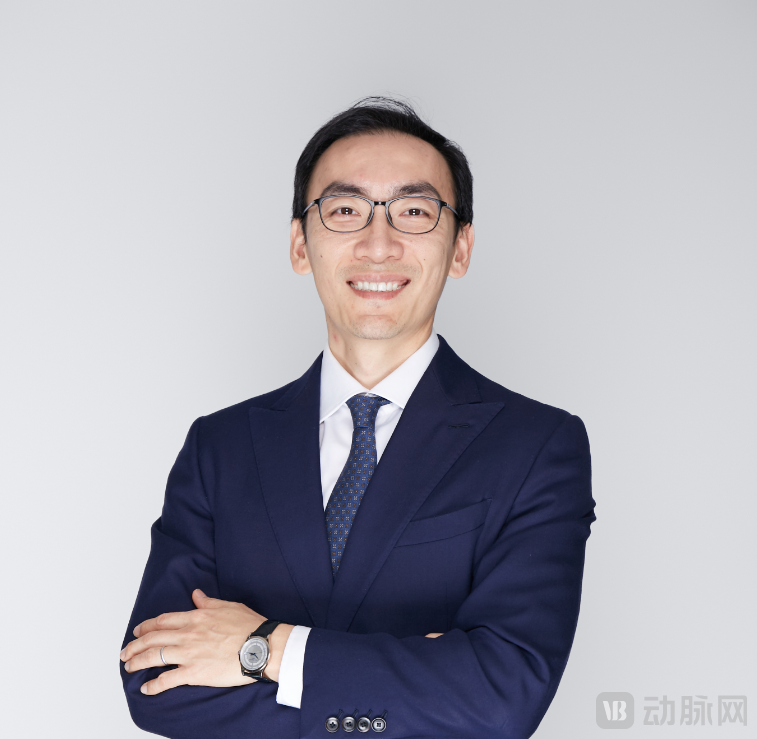
Li Chen, Co-President of Shanghai Biopharmaceutical M&A Fund
Kanghua Bio: A Practical Example of Controlling M&A in A-shares
VCBeat: If you were to summarize 2025 with a few keywords, which ones would you choose?
Li Chen:Challenges and Opportunities.The Challenge: Since its establishment in March 2025, the Shanghai Biomedical M&A Fund has efficiently completed three projects in just nine months: assisting Shanghai Pharmaceuticals in acquiring Shanghai Hutchison, strategically investing in MicroPort Medical, and taking a controlling stake in Chengdu Kanghua Biological Products Co., Ltd. During the execution of these projects, the team indeed faced and overcame numerous challenges. Meanwhile, the emergence of the Shanghai Biomedical M&A Fund also brought new opportunities for value enhancement and value reshaping to these enterprises.
VCBeat: Kanghua Bio is the first A-share controlling transaction of your fund. As the fund partner and project leader, could you look back on this project from initial contact to closing, and share some impressive moments?
Li Chen:Kanghua Bio is the first time we have gained controlling interest in an A-share listed company, which is of great significance. The emergence of this transaction opportunity has a certain degree of contingency and inevitability. Contingency refers to the fact that the transaction opportunity appeared before us due to some special reasons. Behind the inevitability is our team's long-term research and tracking of the vaccine and biologics industry. When the transaction opportunity arose, we were not unfamiliar with it, but instead quickly proceeded to conduct an overall assessment of Kanghua Bio.
Kanghua Bio's core product, the diploid rabies vaccine, although classified as a Category II vaccine, possesses "essential demand" attributes due to its clinical necessity and technological leadership. Once rabies symptoms appear, the fatality rate is nearly 100%, making the demand for human rabies vaccines relatively unaffected by economic status or birth rate fluctuations. China has long ranked first globally in both production and usage of human rabies vaccines, with an annual exposure risk affecting approximately 13 to 15 million people and a stable market size of around 50 million doses annually. Furthermore, Kanghua Bio's human diploid technology platform holds a leading position within the industry, supported by well-established sales, research, and production systems, which can unlock greater industrial value with our support.
The depth of post-investment integration was the biggest surprise.We formed an integration team of about 20 people, consisting of the fund's core team, expert advisors, and professional managers, and developed a comprehensive post-investment management plan within the few months between signing and closing. After the closing, the professional managers truly "stepped into the arena" to become senior executives of Chengdu Kanghua Biological Products Co., Ltd., participating in and leading the company’s development. This level of deep involvement from preparation to integration is unprecedented in our previous non-controlling investments. I would also like to take this opportunity to thank the professional managers for their expertise and dedication, which has allowed us to confidently entrust them with critical post-investment management responsibilities.
VCBeat: Looking back at this project, were there any unforeseen challenges?
Li Chen:During the project advancement, the types and attributes of issues that emerged were basically consistent with our prior predictions, but the depth of the problems and the granularity of their solutions exceeded expectations.We have summarized two experiences: objectively, during due diligence, the other party is still the counterpart, and there indeed will be some information barriers; but more importantly, our team should strive to uncover information, thoroughly investigate, and solve problems from the very beginning of the project. Kanghua Bio is an excellent example. In the future, we will encourage the team to "ask themselves more questions," and not stop even when faced with obstacles. This is where I believe we can do better.
VCBeat: Can these project experiences form a replicable SOP?
Li Chen:We are standardizing the entire process.Danaher is our benchmark — it operates like a "private equity fund disguised as an industrial company," conducting long-term tracking and analysis of sectors, making decisive moves with systematic acquisitions, and implementing clear post-investment management. We hope to systematize the experience from projects like Kanghua Bio (Kangh) into a manual, so that even if there are personnel changes in subsequent teams, new members can directly learn and apply based on the SOP.
Patient Capital: The Logical Shift from Capital Arbitrage to Deep Cultivation of R&D and Profitability
VCBeat: As a platform with state-owned capital background, is "patient capital" an idea or a concrete institutional guarantee for the team?
Li Chen:Patient capital is something that needs to be practiced and implemented in person. Looking back at the rise and fall of the biopharmaceutical industry over the past few years, we can see that the fate of many companies has been influenced by capital. For example, early financing terms such as buybacks, gambling agreements, and IPO clauses have led founders to overdraw future company resources in order to meet targets, causing subsequent business development actions to become distorted.
We have the courage and determination to take over the controlling stake of Kanghua Bio (Kangh) because we are not pursuing short-term capitalization gains. Instead, we aim to spend time helping the company improve its fundamentals step by step: increasing revenue, enhancing profitability, and strengthening R&D capabilities. If we were focused on a short-term exit, we might end up over-exploiting Kanghua Bio’s future resources and doing things that harm its long-term development, which would be irresponsible to other shareholders. The industry will soon see that our subsequent improvements to Kanghua Bio stem from the logic of solidly enhancing its fundamentals.
VCBeat: On January 28, 2026, Kanghua Bio announced the proposed acquisition of Nemeixin. This acquisition, led by the Shanghai Biomedical Industry Fund, corresponds to what you mentioned earlier about helping Kanghua Bio enhance its R&D capabilities and revenue-generating abilities. Will such acquisitions between domestic pharmaceutical companies become a trend?
Li Chen:We dare not say it will become an industry trend, but can only explain our logic. In evaluating this transaction, the first question we need to answer is: Will the merger of Kanghua and Namexin produce a substantial value enhancement?
The answer is yes. Namexin is a project independently incubated by the Shanghai Biomedical Fund under Shangshi Capital. After five years of close collaboration, we have a profound understanding of the team’s capabilities and integrity. Its R&D pipeline and philosophy can directly empower Kangh Bio, refreshing its R&D system. In the past, Kangh Bio's R&D platform was not at the forefront of the industry, resulting in insufficient differentiation competitiveness in its pipeline. After the integration of Namexin, the differentiation competitiveness of the R&D pipeline will be significantly enhanced. Moreover, although several of Namexin’s R&D products will not hit the market in the short term, they have already entered clinical trials and will positively contribute to Kangh Bio’s revenue in the future.
Target Screening Logic: Asset Quality, Special Transaction Opportunities, and Safety Margins
VCBeat: In 2026, what goals or plans does the Shanghai Biopharmaceutical M&A Fund have in the pharmaceutical M&A sector?
Li Chen:Our core idea is to focus on a few high-quality industry platforms (listed or unlisted) for external integration, with not many moves expected—perhaps 7 to 8 times throughout the entire lifecycle.Relying on these trustworthy teams, we will gradually integrate through the platform's own self-sustaining capabilities and financing abilities, rather than aggressively expanding by patching together stories. In 2025, we are quite fortunate to have invested in three projects within nine months, with a total amount exceeding 1.5 billion yuan, accounting for 30% of the 5-billion-yuan fund. This year, we are also highly motivated, with several projects already entering the reserve pipeline and currently in the execution process.If everything goes smoothly, we will make 1-2 more moves in 2026, on tracks different from before, but each track has its unique barriers and safety boundaries.
VCBeat: What are the core criteria for selecting targets for Shanghai's biopharmaceutical M&A fund?
Li Chen:Three criteria. First, the asset quality and team must be good; we basically do not engage in "turnaround" transactions.For example, when a company enters bankruptcy liquidation, we may buy it in the hope of "turning around" the company, helping it "come back to life," and thus exiting smoothly. This is an extremely difficult task, but we do not completely rule out such companies; we are just doubly cautious when dealing with them.
Second, there must be special trading opportunities.Including some of the transactions we previously encountered, they were all due to some unexpected situations at the shareholder level, which led to the emergence of transaction opportunities.
Third, the design of valuation and safety margins must leave sufficient room.Years of experience have taught me that everything that can go wrong will go wrong, so you shouldn't imagine your business plan to be overly optimistic. Visible risks, potentially visible risks, or even invisible ones—all could happen. Therefore, the transaction structure and valuation must leave enough room to withstand future pressures.
When we screen targets, we basically need to meet these three criteria before we can proceed.
VCBeat: The Spring Festival is a time for bidding farewell to the old and welcoming the new. Facing a market environment in 2026 that may still be full of uncertainties, what blessings do you have for medical entrepreneurs who are seeking acquisition or merger opportunities?
Li Chen:I personally admire entrepreneurs who focus on solid work rather than simply pursuing capitalization and cashing out. The role of Shanghai Industrial Group and the Shanghai Biomedical M&A Fund in the ecosystem is based on resource integration, helping companies find their "second growth curve" — through the synergy of capital and industry, via external mergers and acquisitions and asset consolidation, to achieve a multiplier effect where 1+1>2. We hope that good entrepreneurs with ideas can reach out to us, so we can exchange thoughts earnestly, explore cooperation opportunities, and jointly create a better industrial atmosphere.
Shanghai Industrial Capital, a fund management platform under Shanghai Industrial Group (a state-owned enterprise of Shanghai), currently manages multiple biopharmaceutical and green technology funds, including the Shanghai Biomedical Fund, Shanghai Biomedical M&A Fund, Shanghai Biomedical Innovation and Transformation Fund, and Hong Kong Biotechnology Fund. It aims to build an innovative investment ecosystem that "is based in Shanghai and Hong Kong, linked with the Yangtze River Delta, and oriented towards the globe."
The 10th Future Healthcare 100 Summit 2026 will kick off in Shanghai from May 19th to 21st. This year’s conference focuses on the core of China's innovative healthcare assets, gathering over 8,000 industry and capital elites to explore the entire industrial ecosystem in fields such as digital health, innovative medical devices, and novel drugs, creating diverse connections to activate global value. Meanwhile, the 2026 Future Healthcare 100 evaluation has been fully upgraded, with submission channels now open. We sincerely invite you to join the list, attend the grand event, and explore innovation opportunities in healthcare together!
As the core circle of friends for the conference and list selection, Shanghai Industrial Capital and its subsidiary Shanghai BioPharmaceutical M&A Fund will also provide full support for this grand event.

Scan the code to register for the "2026 Future Healthcare and Pharmaceutical 100 Strong" conference and enjoy early bird discounts.

Scan the code to enter the "2026 Future Healthcare 100 Strong" selection application channel