Synchron's Brain-Computer Interface Achieves Clinical Safety Milestone with Successful Year-Long Implant Study

Synchron
Developer of implantable neural interface products

Pioneer in Medical Device Media Coverage
Sharing Professional Medical Device Knowledge
Synchron’s brain-computer interface implant passed a one-year safety study.Synchron reported that its minimally invasive brain-computer interface implant, delivered via the vasculature to record activity from the cerebral cortex, demonstrated no serious adverse events in a one-year human safety study. This represents a significant milestone in the clinical safety of implantable brain-computer interfaces.
After conducting a year-long safety study, Synchron’s brain-computer interface implant achieved a milestone advancement.
Synchron stated that the procedure to deploy its catheter-based, electrode-fixed Stentrode implant into the brain’s motor cortex via the jugular vein—similar to stents used for cardiovascular disease—takes an average of 20 minutes.
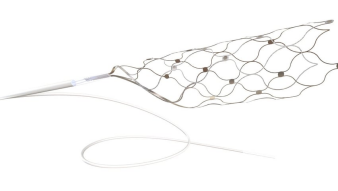
Synchron stated that its one-year human safety study showed no serious adverse events.
The company’s trial enrolled six participants who had lost arm function due to paralysis and was supported by the NIH BRAIN Initiative. All six patients met the study’s primary endpoint, demonstrating no device-related serious adverse events.
Participants also demonstrated that the wireless Stentrode device can capture motor signals and convert them into inputs to perform a series of digital tasks, such as pointing the cursor and clicking.
“Users can generate digital motor output using BCI,” said Tom Oxley, founder and CEO of Synchron, in a report. “These are simple expressions of intent originating from thought, which are translated into digital actions on a computer.”
Synchron, a Highly Anticipated Innovative Company
Synchron is an innovative company focused on the development of minimally invasive neural interface technology, headquartered in New York City with offices and R&D facilities in Silicon Valley and Melbourne. The company was founded by Thomas Oxley, who serves as its Chief Executive Officer. Oxley possesses extensive expertise and experience in the field of neuroscience.

Synchron Successfully Integrates Brain-Computer Interface Technology with Apple Vision Pro Headset, Enabling Patients to Control the Device via Thought. This Innovation Not Only Enhances Patient Interaction Experience but Also Paves New Ways for Combining Brain-Computer Interface Technology with Consumer Electronics.
In addition to its partnership with Apple, Synchron has also collaborated with OpenAI to integrate artificial intelligence models into the chat functionality of its brain-computer interface platform, providing users with a generative chat experience. This feature can accept text, audio, and image inputs, helping users interact with the external world more efficiently and naturally.
Synchron’s brain-computer interface technology has been adopted and supported by multiple renowned medical institutions and universities, including the University at Buffalo and Carnegie Mellon University. These collaborations have driven further technological advancement and provided more treatment options for patients with paralysis.
Based on feedback from clinical trials, Synchron’s brain-computer interface device has achieved significant success in helping paralyzed patients restore their ability to communicate with the outside world. Patients are able to use thought control to operate computer cursors and keyboards, enabling them to type messages for communication or access social media platforms.
Synchron has completed multiple rounds of financing, attracting support from renowned investment firms including ARCH Venture Partners, Khosla Ventures, and Bezos Expeditions. Notably, Shanda Group, founded by Chen Tianqiao, was an early investor in Synchron during its Series B round.In August 2021, Synchron announced the completion of a $40 million Series B financing round, led by Silicon Valley venture capital firm Khosla Ventures, with participation from Shanda Grab Ventures (under Shanda Group), the University of Melbourne, and more than ten other institutions and existing shareholders. The U.S. and Australian governments supported this financing round. These funds have provided strong support for Synchron’s research and development as well as market expansion.
According to public information, Synchron raised a substantial amount of capital in its recent financing round to further advance the research and development and commercialization of its brain-computer interface technology.
Currently, brain-computer interface (BCI) technology is in a phase of rapid development, with research institutions and enterprises worldwide increasing their investments in this field. According to data from market research firms, the size of the BCI market is projected to continue expanding in the coming years.
In the medical field, brain-computer interface (BCI) technology is widely applied in the treatment and rehabilitation of conditions such as paralysis and epilepsy. With continuous technological advancements and expanding applications, BCIs are poised to play a significant role in various sectors, including healthcare, rehabilitation, and smart home systems.
In addition to Synchron, several other companies are actively developing brain-computer interface (BCI) technology, such as Neuralink and Paradromics. These companies each have their own unique characteristics in terms of technical approaches and application scenarios, collectively driving the advancement of the BCI field.
In summary, Synchron has made significant strides in the field of brain-computer interfaces (BCIs), injecting new vitality into the sector through its safety research, technological collaborations, clinical trials, and successful fundraising efforts. Under the leadership of founder Tom Oxley, Synchron is well-positioned to maintain its leading role in the BCI landscape and provide more treatment options for patients with paralysis. Meanwhile, as BCI technology continues to advance and the market expands, the field is poised for even broader growth prospects.
More Exciting Content
Welcome to follow our WeChat Channels


Mindray Leads: Brand Rankings in the County-Level Ultrasound Market Over the Past Three Years
ZEISS Launches New Surgical Robot
Century-Old Imaging Giant Cuts 2,000 Jobs
Leading Ophthalmic Device Maker Enters the Beauty Economy
Cardiovascular Device Giant Officially Announces Spin-Off
Medtronic, Class I Recall
Medical Device Giant: To Resolve 30,000 Lawsuits
Top 100 Medical Device Companies, Leadership Change
Johnson & Johnson Plans to Lay Off 231 Employees
Philips, Another Class I Recall

ShangBusiness Cooperation Email: qxzj@landianyiliao.com